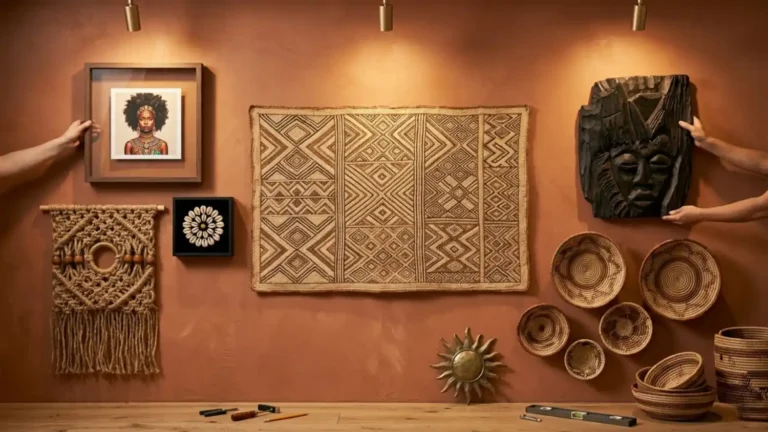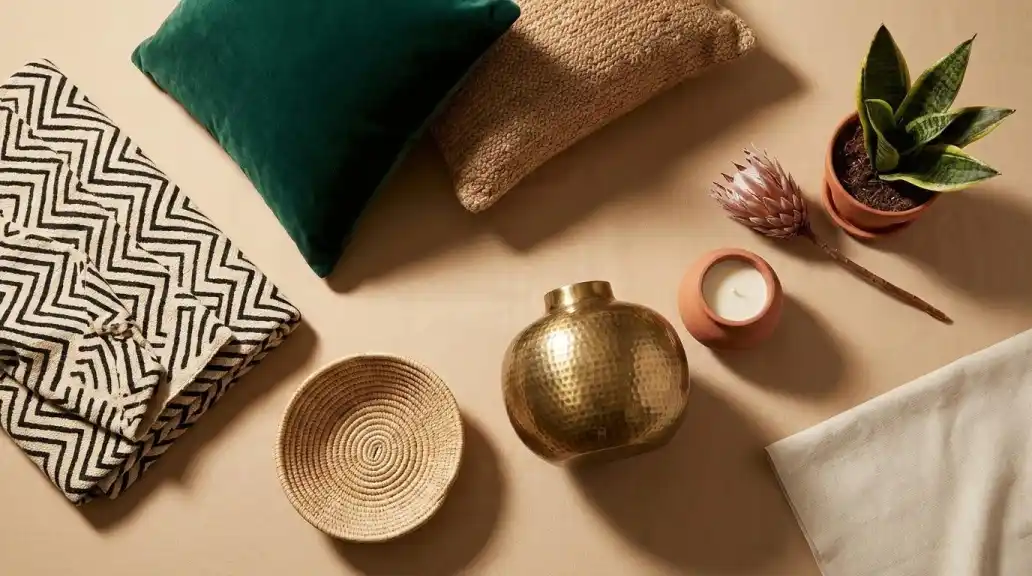
Afro Bohemian Bedroom Decor Must-Haves for Beginners
The Afro Bohemian bedroom is the most approachable room in the house to start with.
Every other room has constraints — the kitchen can’t run on textiles, the bathroom has scale limitations, the office has to stay functionally clear. The bedroom has none of these.
It’s a room built entirely for rest and personal expression — which means the full Afro Bohemian toolkit is available from the first purchase.
The challenge isn’t access to the aesthetic. It’s knowing which piece to buy first and why the sequence matters as much as the pieces themselves.
This list gives you both.
Quick Takeaway:
- The mud cloth throw comes first — it sets the pattern reference, the palette, and the material standard that every subsequent textile and object decision responds to.
- The lighting architecture comes second — wrong bulbs and a single overhead source will make every correct piece read wrong no matter how good the individual choices are.
- Build the floor layer after the wall and bed layers are in place — the floor layer’s job is to ground what’s above it, and you can’t know how much grounding is needed until the upper layers exist.
The Palette Framework: Earth, High Contrast, and Life Tones
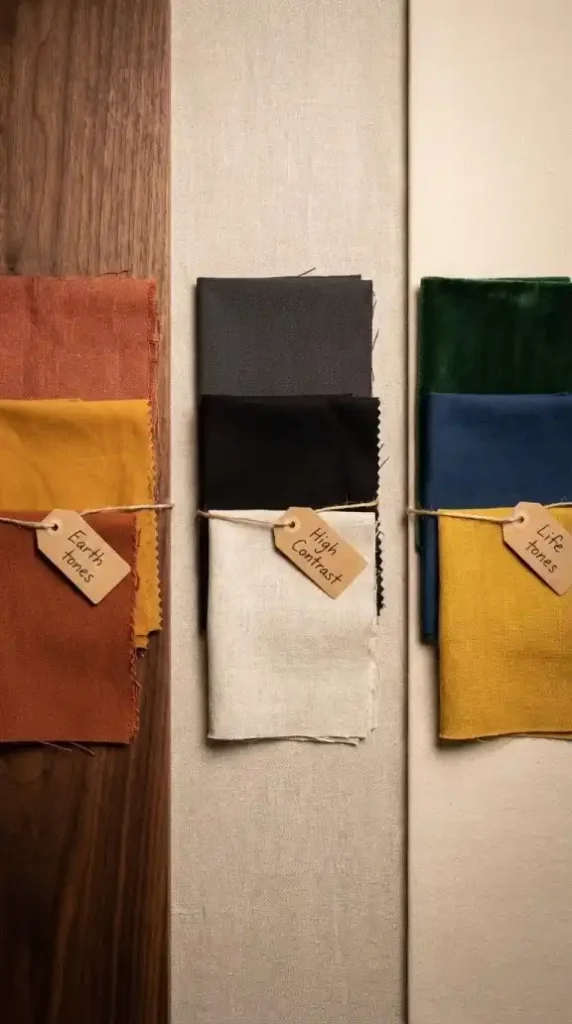
Before buying anything, understand the three palette categories and what each one does in the room.
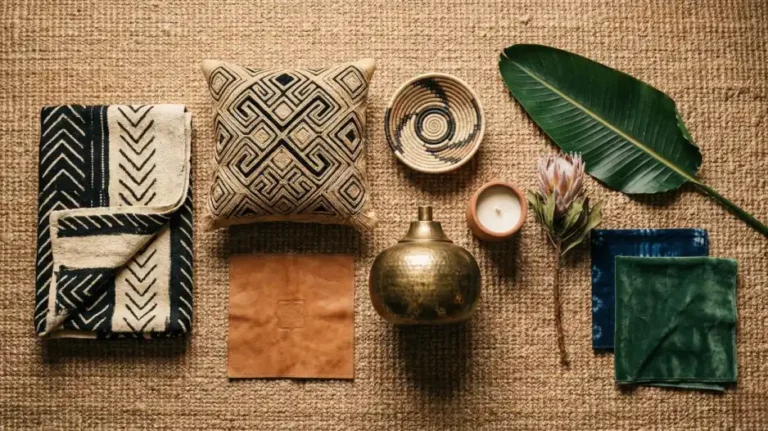
The Earth tones — terracotta, ochre, burnt sienna — are the dominant. They live in the wall color, the rug, the wood furniture, and the base textile layer. The largest surface areas. The warmth and grounding foundation.
The High Contrast tones — charcoal, ebony, bone — give the geometric textile patterns their legibility. Mud cloth only reads as geometric because the black and cream contrast is high enough for the eye to resolve the pattern. Without the contrast tones present, the patterns flatten into undifferentiated texture.
The Life tones — forest green, deep indigo, mustard — are the accent. Used sparingly at the cushion, curtain, and throw level. They add the vibrancy that stops the earth palette from feeling heavy.
Every purchase on this list sits in one of these three categories.
Buy in the right ratio — earth tone dominant, high contrast structural, life tone accent — and the room assembles into coherence without effort.
First Purchase: A Malian Mud Cloth Throw
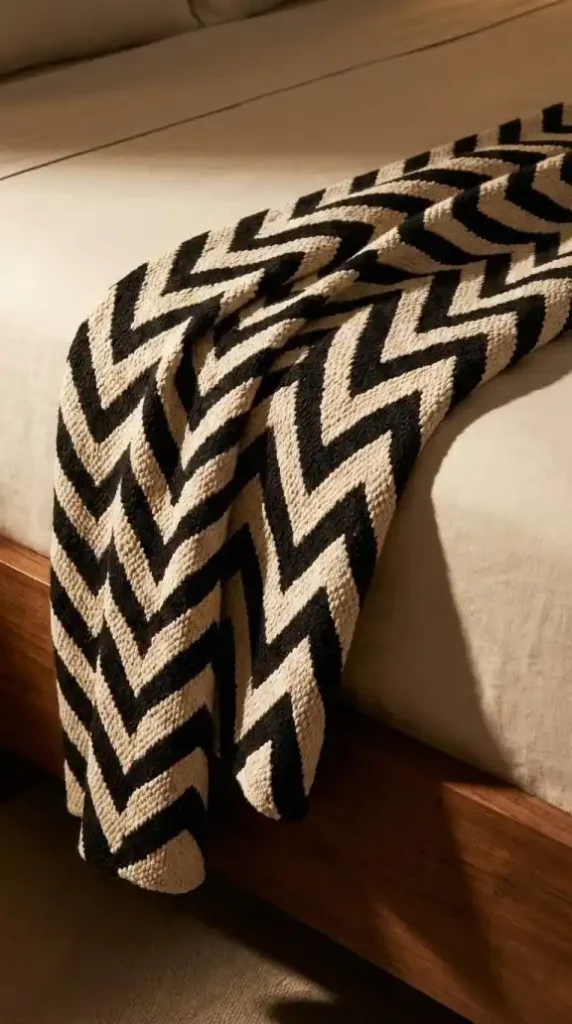
The mud cloth throw is the room’s foundation purchase — and it comes before the rug, before the cushions, and before any wall piece.
Bògòlanfini from Mali carries the black and cream geometric pattern tradition that anchors the entire Afro Bohemian bed composition. Its colorway gives you the high-contrast palette reference in a single object — warm black as the dominant, undyed cream as the ground, and the geometric pattern scale that every other textile in the room responds to.
Buy a throw rather than cushion covers if budget allows only one piece.
A throw has significantly more surface area than cushions — it carries more visual weight, makes a stronger palette statement, and gives you a clearer material reference for every subsequent purchase.
Authentic hand-woven bogolan is the ideal. If budget is a constraint, hand-loomed cotton with genuine geometric pattern in warm black and cream is an acceptable starting point — as long as the surface has raised weave texture. A printed flat fabric with a geometric pattern is not a substitute. The texture is structural, not decorative.
Second Purchase: 2700K Warm Bulbs and a Rattan Pendant
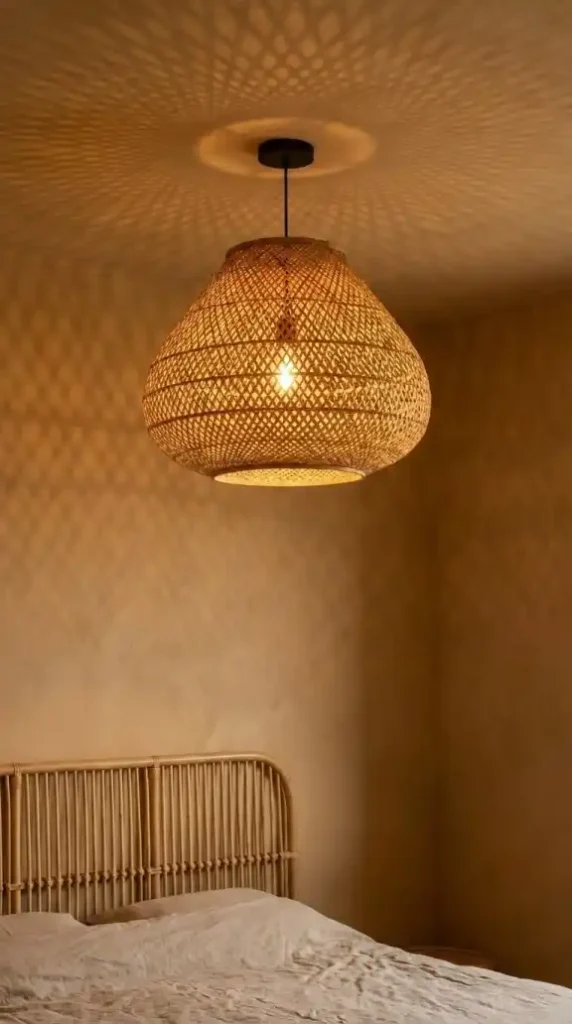
The lighting purchase comes second — not last.
Every styling decision made under the wrong light temperature is a decision made under false conditions. Replace the bedroom bulbs with 2700K warm LED before evaluating the mud cloth throw you just bought, before choosing a wall color, before deciding whether the existing furniture works.
The throw that looked warm and rich in the store under warm showroom lighting may look flat and grey under your existing cool-white overhead. Fix the light source first. Then evaluate everything.
The rattan or bamboo pendant is the bedroom’s primary fixture and its ceiling-level textural element simultaneously.
After dark the open weave casts intricate geometric shadow projections across the ceiling and upper walls — a visual layer the room doesn’t have during the day and that no solid shade can replicate.
Buy the pendant before the bedside lamps.
It sets the overhead light position and the shadow projection zone that determines where the mid-height and ground-level lamps need to be positioned to complement it rather than compete with it.
Third Purchase: Bone or Sand Linen Sheets
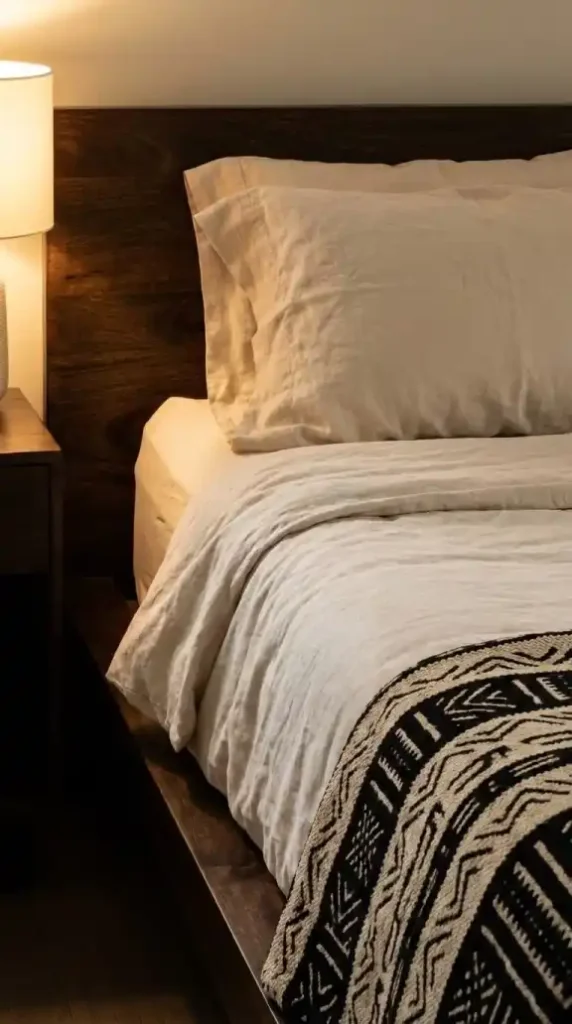
The linen foundation sheets are the bed’s neutral base — the visually quiet ground that every expressive layer above reads against.
Bone, sand, or charcoal. Not white.
White sheets pull cool against the earth palette and create visual disconnection between the linen base and the mud cloth throw above it. Bone and sand share the same pigment origin as the earth tones — they read as part of the same material family rather than a background imposed upon it.
Natural linen is preferable to cotton for the base layer — its slight surface texture and breathable weight read as materially honest in a way that smooth percale cotton doesn’t.
Buy at minimum a flat sheet and two standard pillowcases at this stage.
The duvet cover comes later — once the soul layer textiles are chosen — because the duvet cover needs to respond to the mud cloth pattern and velvet cushion colors already established, not the other way around.
Fourth Purchase: Velvet Jewel Tone and Jute Cushion Set
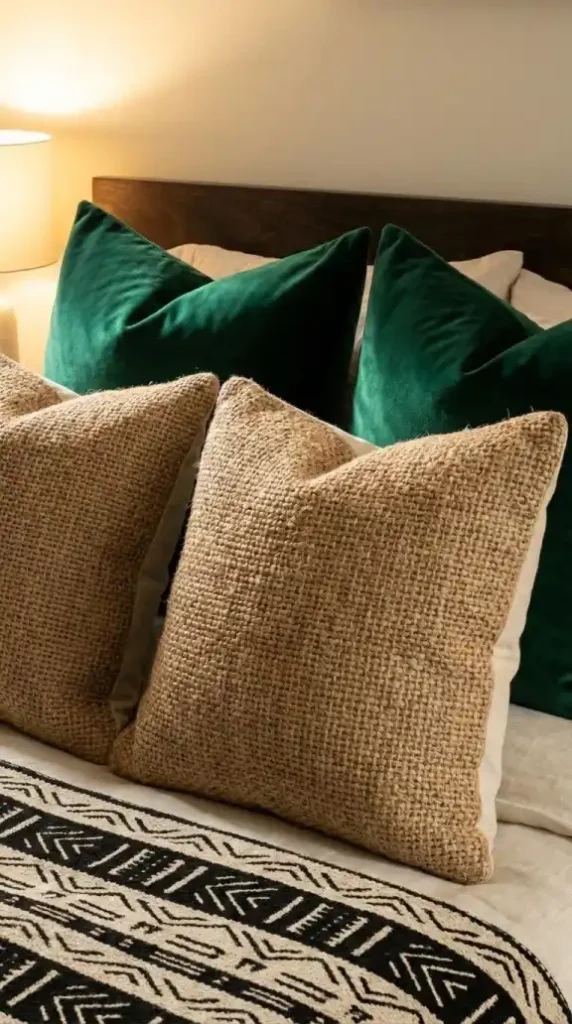
The texture contrast layer is what separates an Afro Bohemian bed from a well-made bed with a pattern throw.
Two elements working in opposition: deep velvet cushions in a jewel tone, and rough jute or raffia cushions in natural fiber.
Choose one jewel tone from the Life palette category — emerald, deep plum, forest green, or deep indigo. One jewel tone only. Two different jewel tones at the cushion level splits the accent layer and reduces the impact of both.
The emerald or plum velvet reads more luxurious next to the rough jute. The jute reads more tactile and organic next to the smooth velvet. Each material makes the other more legible by contrast — which is the entire logic of the texture contrast layer.
Buy the jute cushion covers before the velvet if budget requires choosing one first.
The jute sits in the Earth and organic texture palette categories — it can’t be wrong in this context. The velvet jewel tone requires more consideration because the Life tone accent has to be chosen in response to the mud cloth colorway already established.
Fifth Purchase: A Large Sisal or Seagrass Base Rug
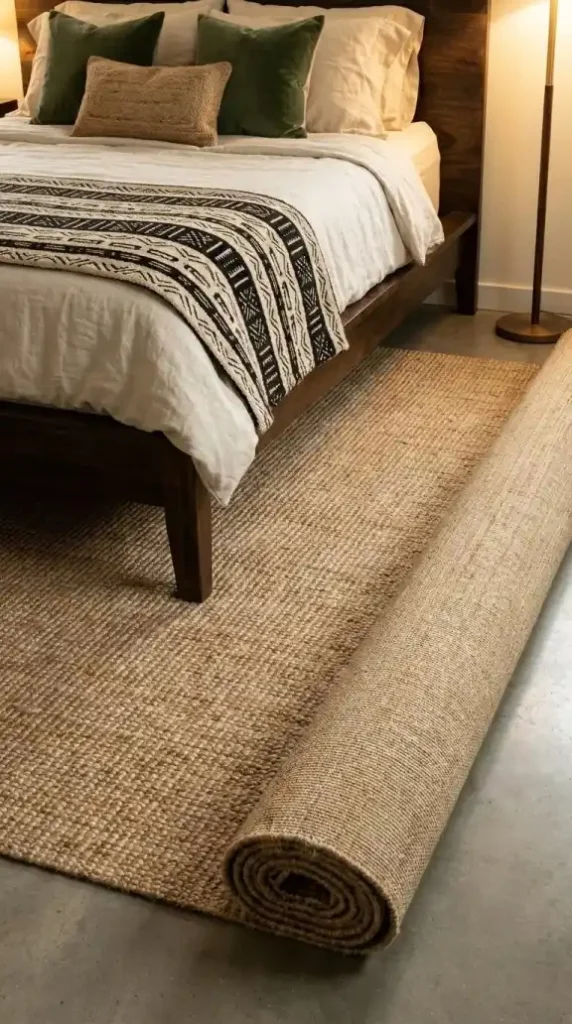
The sisal or seagrass base rug is the floor layer’s foundation — and it should be bought large enough to extend under the bed frame on both sides.
A rug that stops at the bed edge creates visual disconnection between the floor layer and the furniture layer. A rug that extends beneath the frame creates a unified ground plane that the bed sits within rather than sits on top of.
Natural sisal and seagrass handle bedroom foot traffic well and their rough organic fiber reads as materially cohesive with the jute cushions and mud cloth throw above — all three sit within the natural fiber vocabulary.
Buy the sisal base rug before the kilim accent rug.
The base rug determines the floor color temperature and texture register. The kilim accent rug is chosen in response to it — its geometric pattern and color palette needs to complement the sisal’s neutral fiber tone rather than compete with it.
Sixth Purchase: A Kilim or Moroccan Accent Rug
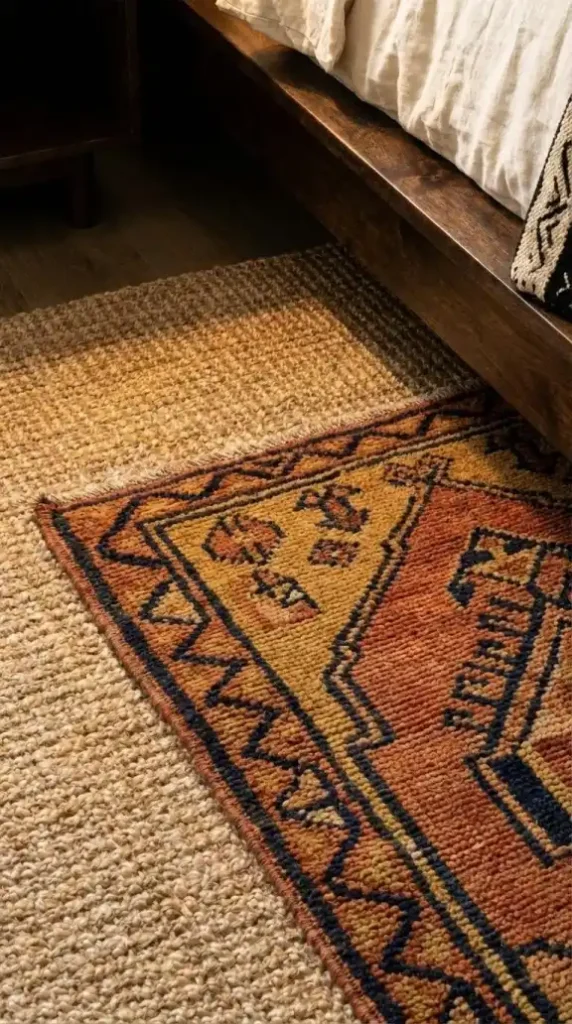
The kilim accent rug layered on top of the sisal at the bedside adds geometric color pattern at the floor’s most intimate position — the point of first foot contact when rising.
A Moroccan-style or kilim rug in ochre, terracotta, and deep indigo sits within the Earth and Life palette categories simultaneously — grounding the floor layer with earth tones while introducing the indigo accent at floor level.
Size the kilim to cover approximately one third of the sisal base rug’s visible surface — large enough to read as a design layer, small enough that the sisal beneath remains the dominant floor material.
The layered composition creates the material transition the aesthetic intends: rough sisal underfoot in the wider room, denser warmer kilim underfoot at the most used floor position.
Two rugs, two material characters, one cohesive floor layer.
Seventh Purchase: A Juju Hat
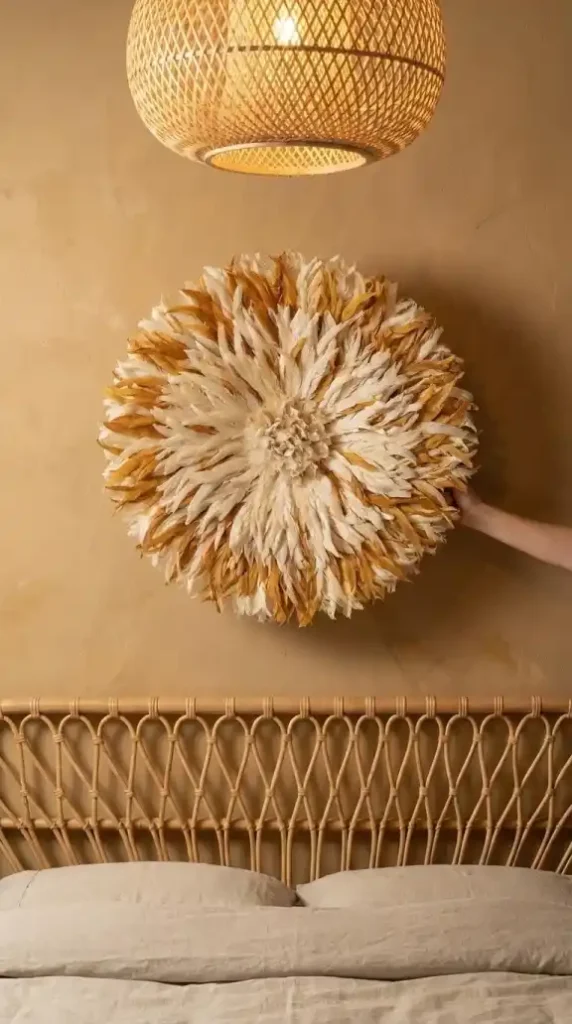
The Juju hat is the bedroom wall’s primary statement — and it comes before the basket gallery, before the photography, and before any framed art.
The Bamiléké feathered headdress from Cameroon brings three things simultaneously that no other single wall piece can deliver: extraordinary surface texture through the layered feather construction, a circular form that breaks the rectangular geometry of the bed composition, and genuine cultural heritage as a ceremonial object.
Buy large — 60cm diameter minimum.
A small Juju hat reads as an accessory. A large Juju hat reads as an architectural element. The scale is not negotiable if it’s going to function as the room’s primary wall anchor.
Cream and ochre feather colorways sit directly within the Earth palette. Black feather Juju hats sit in the High Contrast category and read more dramatically against a warm sand wall. Deep indigo or forest green feathered versions are the Life tone accent option — more unusual, higher impact, and requiring more confidence in the palette logic to execute correctly.
Start with cream and ochre for the first purchase. It’s the most palette-forgiving entry point.
Eighth Purchase: Hammered Brass Bedside Lamps
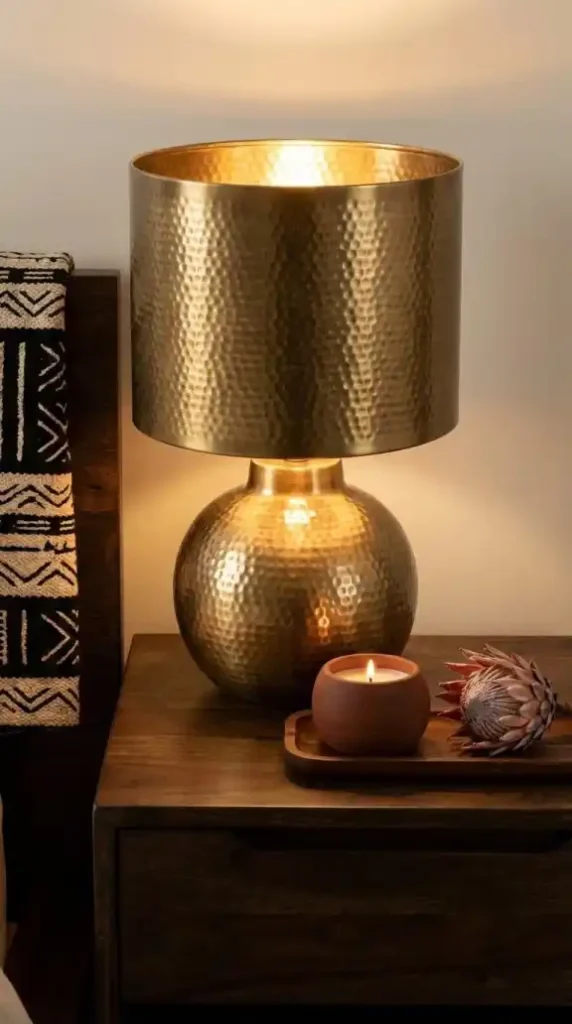
Hammered brass or copper bedside lamps are the bedroom’s mid-height warm light source and its primary metallic element simultaneously.
The hammered surface creates multiple small light-catch points that shift as the viewing angle changes — a living surface quality that smooth metal bases eliminate. Under 2700K, the hammered brass glows warm amber rather than cool gold, sitting firmly within the Earth palette’s warm metallic register.
Buy two matching lamps for bilateral symmetry at the bed level.
Symmetry at the nightstand is the one formal element in an otherwise asymmetric room — and it creates a sense of composed calm at the most intimate bedside scale that counterbalances the layered complexity of the wall and textile compositions around it.
Pair each lamp with a sandalwood, myrrh, or amber candle in a terracotta or dark unglazed ceramic holder on a small dark wood tray.
The candle adds the fourth sensory light source — warm flicker that no electric bulb replicates — and the scent that makes the bedroom immersive rather than just visual.
Ninth Purchase: Statement Greenery in the Right Positions
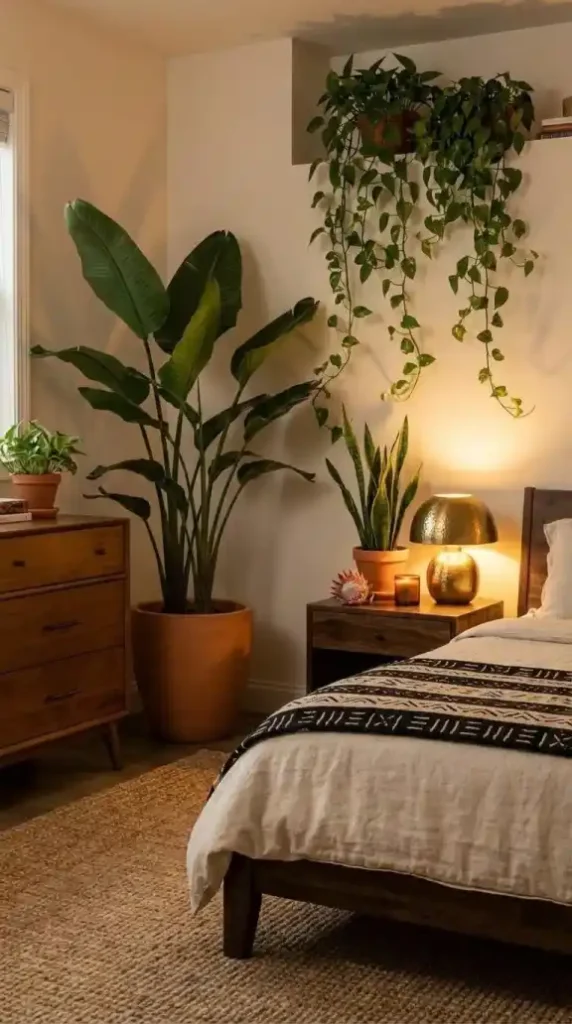
Greenery is the final structural layer — not a decorative addition made after everything else is complete.
Each plant fills a specific spatial zone that no object can address.
The large corner position: a Bird of Paradise or Fiddle Leaf Fig in the room’s most open corner. The broad tropical leaf silhouette of the Bird of Paradise fills the floor-to-ceiling zone with organic drama. The structured upright form of the Fiddle Leaf Fig does the same at a slightly more restrained visual register. Buy whichever has better access to indirect natural light from the bedroom window — light availability determines long-term plant health, and a declining plant does the opposite of structural work.
The high shelf position: a trailing String of Hearts or Pothos above the dresser or wardrobe. The cascading growth fills the dead zone where wall meets ceiling — the upper corner that accumulates architectural awkwardness without organic softness to address it.
The bedside position: a Snake Plant — Sansevieria — on the nightstand or lower shelf. Native to West Africa, structurally upright, low-maintenance, and visually present at the intimate scale of the bedside without overwhelming the lamp and candle vignette beside it.
All three in terracotta pots.
The earth-colored clay container keeps the greenery materially connected to the palette. A plastic nursery pot visible in an otherwise correctly assembled Afro Bohemian bedroom is the single most common material break — and it’s also the easiest fix. Repot into terracotta before the plant enters the room.
The One Piece to Buy Last
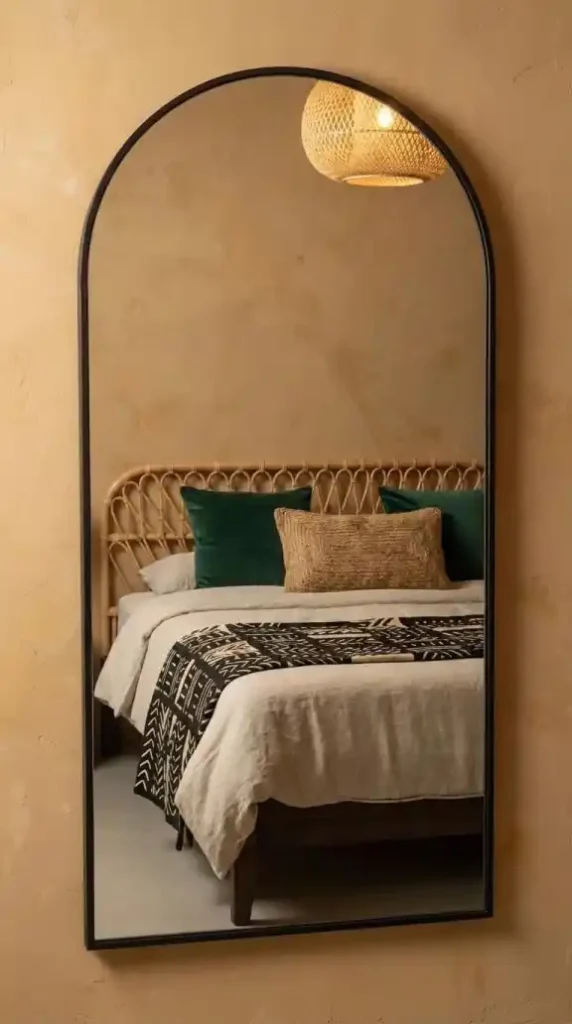
The large arched floor mirror with a thin matte black frame is the bedroom’s modern minimalist anchor — and it should be the last piece added, not an early purchase.
Its role is to frame what’s already assembled — to reflect the layered bed composition, the warm pendant glow, and the Juju hat wall piece back into the room and double the visual depth of everything around it.
Bought too early, before the layers it reflects exist, it reads as an empty frame leaning against a bare wall.
Bought last, after the bed textiles, the wall composition, and the lighting are all in place, it reads as the piece that pulls the entire room together — reflecting the full layered depth back at the viewer from the moment they enter.
Lean it rather than mount it. The leaned position reads as deliberate casual — a piece that belongs to the lived-in quality of the aesthetic rather than the formal precision of a mounted and framed installation.
The Beginner Buying Sequence at a Glance
Before making any purchase answer these questions:
- Is the current bedroom lighting at 2700K warm? If not that’s the first intervention — before the mud cloth throw arrives, before the sheets are replaced, before any styling decision is made. Evaluate nothing under cool-white light.
- What is the current bed frame material and tone? Dark acacia, teak, or mango wood frames sit within the aesthetic. Light-toned or cool-grey wood frames create material tension with every textile layer placed on top. Identify whether the frame is correct before buying textiles that will need to sit against it.
- What is the largest undecorated wall surface above the bed? Measure the width and height before buying the Juju hat. The hat diameter needs to sit within the wall width with clearance on both sides — a hat that’s too large for the wall position reads as crowded rather than dramatic.
- Is there floor space in at least one corner with access to indirect natural light? Identify it before buying the Bird of Paradise or Fiddle Leaf Fig — the plant’s position determines its long-term health and therefore its structural contribution to the room.
- What is the current floor covering? Existing carpet in a non-earth tone creates palette tension beneath the sisal and kilim layer. If the carpet can’t be removed, the sisal rug needs to be large enough to cover the majority of the visible carpet surface — account for that in the size selection.
- Is there a wall section with enough floor clearance — 150cm height, 60cm width — to lean the arched mirror? Identify it now even though the mirror is the last purchase. Knowing the position in advance means the wall section stays clear as the other elements are assembled around it.
Nine pieces. One sequence. The full beginner bedroom.
The mud cloth throw sets the pattern and palette anchor. The 2700K pendant and bulbs reveal it correctly after dark. The linen sheets build the neutral base beneath it. The velvet and jute cushions complete the texture contrast above it. The sisal base rug grounds the floor plane. The kilim accent adds pattern and warmth at the most intimate floor position. The Juju hat anchors the wall. The hammered brass lamps and candles complete the sensory lighting layer. The greenery fills the spatial zones that no object can address.
Each piece earns its place by doing something no other piece on the list is already doing.
That’s not a shopping list. That’s a room-building system — and the bedroom is where it performs at its fullest.
What to Read Next:
- Afro Bohemian Bedroom: The Complete Style Guide — Understand the full material and cultural framework behind every bedroom decision — from the mud cloth soul layer to the three-height lighting architecture — as a unified system.
- 11 Afro Bohemian Bedroom Ideas for a Warm and Layered Sleep Space — See the layering logic and material contrast principles applied across 11 specific bedroom moves, each one with a reason behind the sequence.
- How to Style an Afro Bohemian Bedroom — Follow the full ten-step styling process in the exact order that makes each decision easier than the last — from lighting setup to the sensory finishing layer.