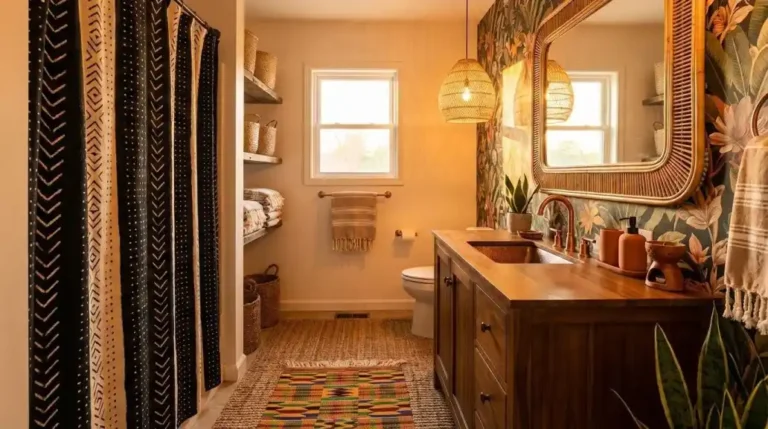
How to Style an Afro Bohemian Bedroom
Styling and layering are not the same thing.
Styling is placing objects in positions that look considered. Layering is building a room where each element does specific material work that no other element is already doing — and where the sequence in which things are added determines whether the whole holds together or reads as accumulated decoration.
The Afro Bohemian bedroom is a layered room. Which means the sequence matters as much as the pieces.
This guide covers the full styling process in the order that makes each decision easier rather than harder — from the bed foundation to the sensory finishing layer.
Quick Takeaway:
- The bed is built in sequence — neutral linen base first, mud cloth or Kuba cloth soul layer second, velvet and jute texture contrast third. Adding these out of order produces a different and less resolved result.
- The wall above the bed is styled before the floor layer — because the Juju hat and basket gallery set the visual weight that determines how much the floor layer needs to do.
- The modern minimalist accents — arched mirror, matte black floor lamp, slim curtain rod — are added last, not as afterthoughts but as the contemporary frame that stops the room from closing in on its own heritage references.
Step 1: Set the Lighting Before You Style Anything
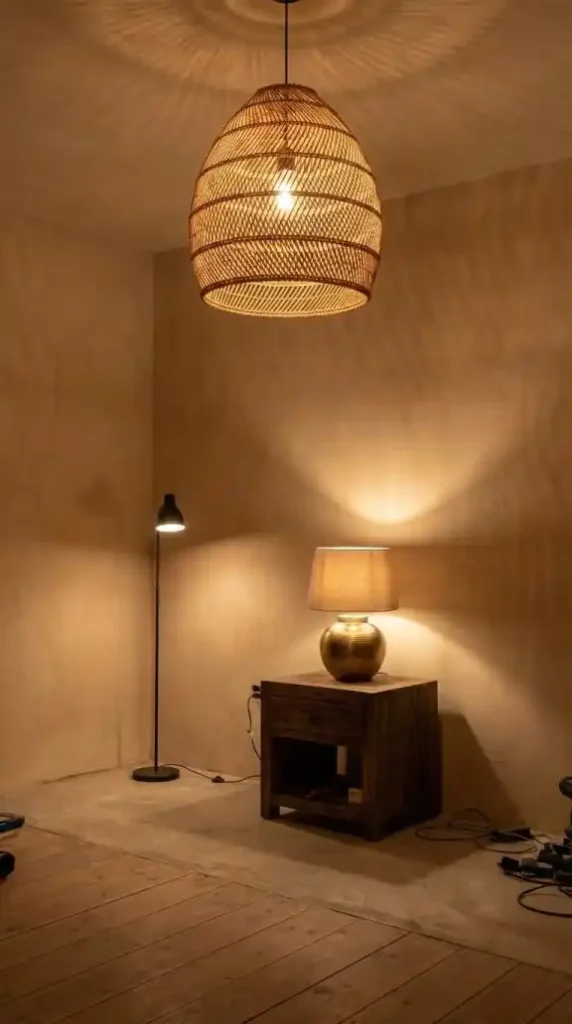
Before a single textile is placed or a single object positioned, the lighting architecture has to be in place.
This is the rule that most bedroom styling guides skip — and it’s the reason most Afro Bohemian bedrooms are evaluated under the wrong conditions throughout the entire styling process.
Install three light sources at three heights before anything else.
A large bamboo or rattan pendant overhead — this is the room’s primary atmospheric source and its ceiling-level textural element. Hang it lower than standard height: 180–190cm from floor to pendant base. The lower position brings the shadow projections down onto the upper wall where they’re visible, rather than disappearing into the ceiling void.
A hammered brass or copper table lamp on the nightstand — this is the mid-height warm source that makes the bed textile layers visible at their best. The hammered surface creates multiple small light-catch points that shift as the viewing angle changes.
A slim matte black floor lamp in one corner — this is the ground-level source that separates the lit floor zones from the shadow zones and gives the room its depth separation after dark.
All three at 2700K. Evaluate every subsequent styling decision under these three sources — not under a ceiling downlight and not in daylight alone.
Step 2: Build the Bed Foundation
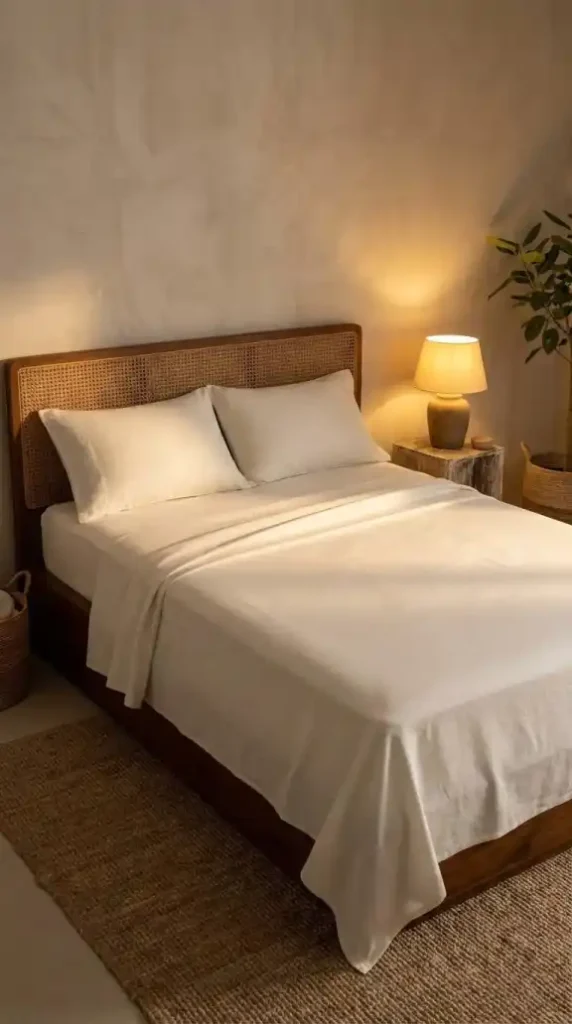
The bed foundation is the neutral base that every expressive layer above reads against.
Linen or cotton sheets in bone, sand, or charcoal — breathable, naturally textured, visually quiet. This layer is not where pattern or color lives. Its job is to be a calm, warm-toned canvas.
Iron the linen flat or leave it with intentional relaxed folds — never crisp hospital corners. The slightly rumpled quality of well-worn linen reads as authentically lived-in, which is the register the Afro Bohemian bedroom operates in.
The bed frame at this stage should also be confirmed as correct before adding any textiles.
Dark acacia, teak, or mango wood frames — with visible grain variation and warm undertone — sit within the organic material vocabulary. Light-toned or cool-grey wood frames reference a Scandinavian or contemporary aesthetic that sits outside the palette. Confirm the frame is right before building the textile layers on top of it.
Step 3: Add the Soul Layer
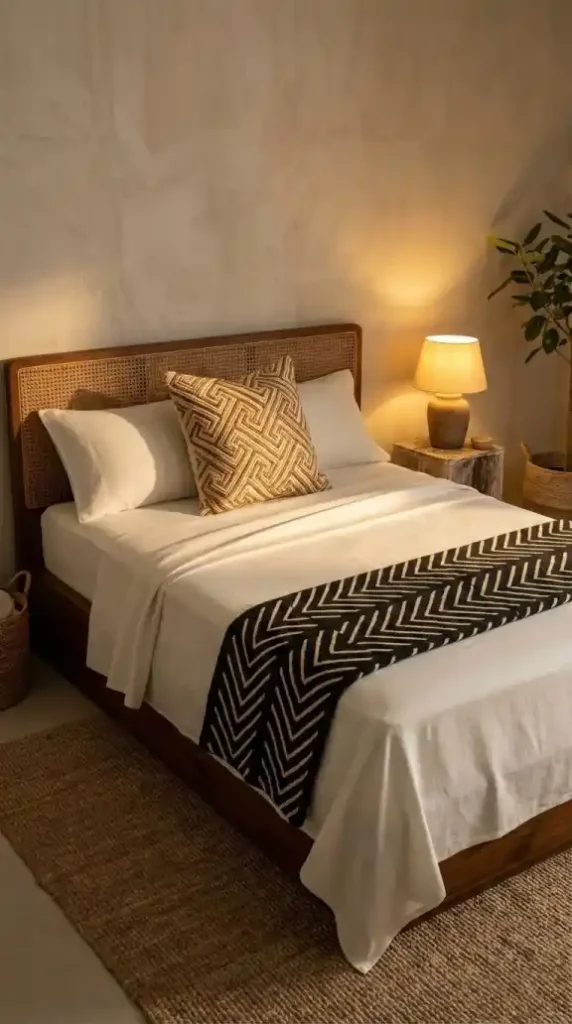
The soul layer is the bed’s primary pattern element — and it’s placed before the cushions because it determines the color and pattern references that the cushion layer responds to.
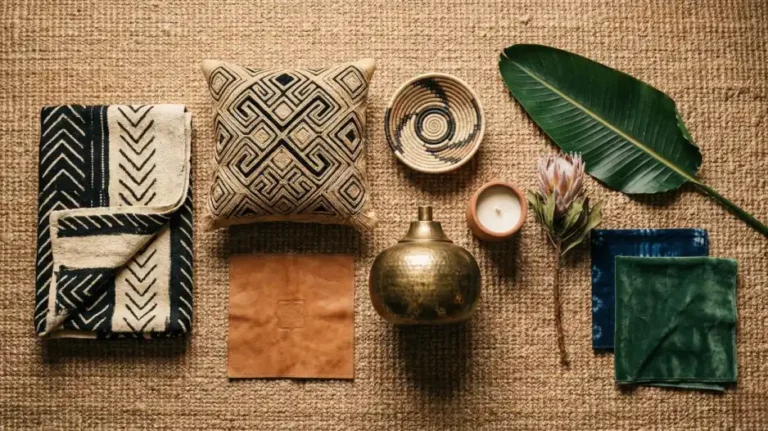
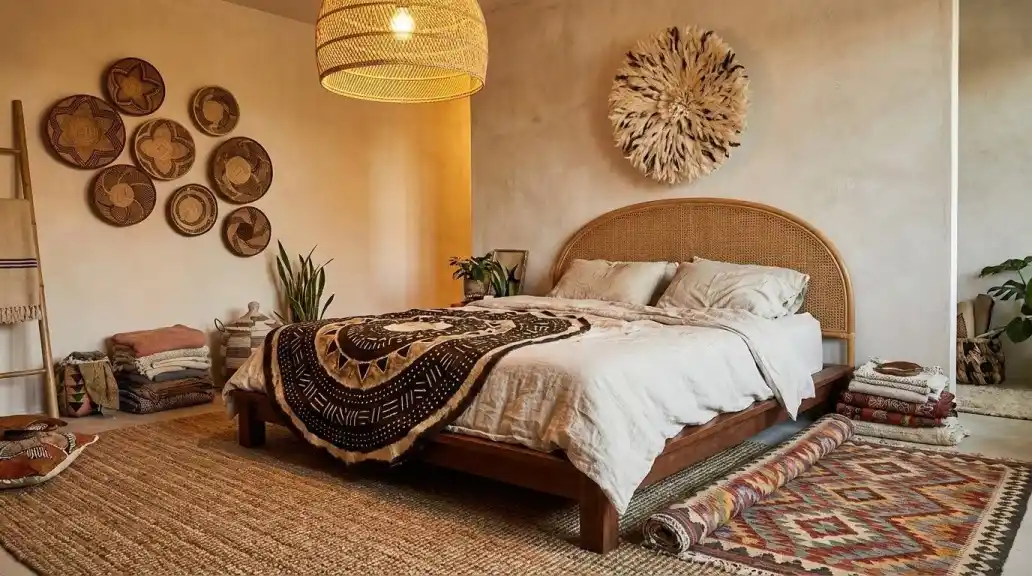
A Malian mud cloth throw — Bògòlanfini — folded in thirds and laid across the lower third of the bed. The geometric black and cream pattern establishes the high-contrast accent that anchors the entire bed composition. Its position at the foot rather than pulled up to the pillows keeps the foundation linen visible as the dominant surface and the mud cloth as the accent layer.
A Kuba cloth cushion cover against the headboard extends the soul layer into the pillow zone at a different geometric pattern — the raffia-inspired interlocking patterns of Kuba cloth complement the cleaner chevron of mud cloth without competing at the same visual scale.
Live with these two pieces for a day before adding the next layer.
The soul layer should feel complete on its own — because if it does, the texture contrast layer will enhance it. If it doesn’t, adding more cushions on top of an unresolved foundation produces a bed that reads as busy rather than layered.
Step 4: Add the Texture Contrast Layer
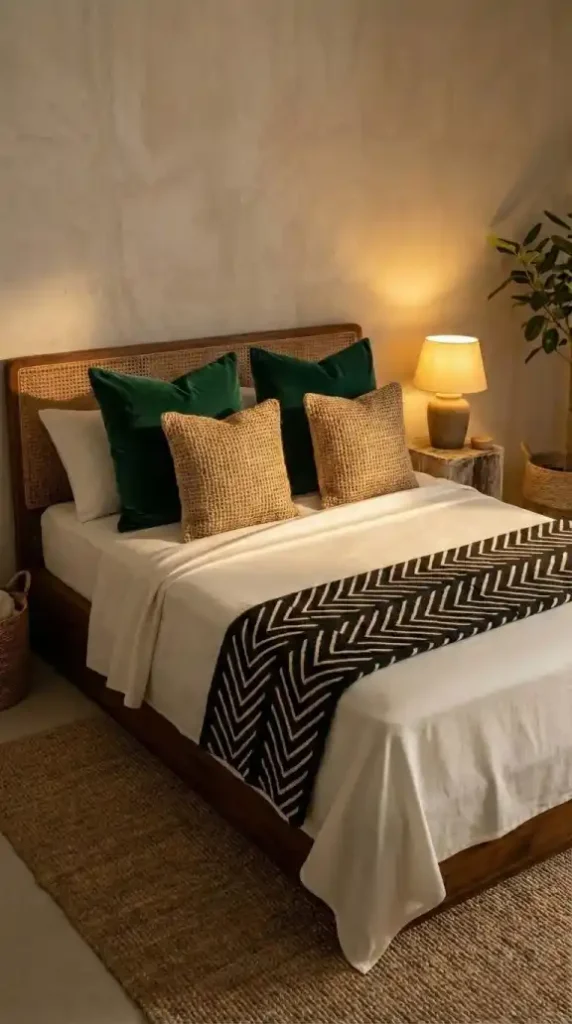
The texture contrast layer is the final stage of the bed composition — and its material opposition is the point, not an accident.
Deep velvet pillows in jewel tones — emerald, deep plum, or mustard — placed behind or beside rough jute or raffia cushions. The velvet reads more luxurious next to the jute. The jute reads more tactile next to the velvet. The contrast between them creates more visual interest than either material could produce alone.
Jewel tones sit in the Life tone category of the bedroom palette — the 10% that adds vibrancy to the earth-tone dominant. Emerald and forest green reference West African plant-dye traditions. Deep indigo references batik dyeing. Mustard bridges the Earth and Life palette categories.
Choose one jewel tone maximum per bed composition.
Two different jewel tones competing at the pillow level pulls the cushion layer in two directions simultaneously. One jewel tone plus the earth-toned jute cushions creates a resolved accent — a single color statement that reads with clarity.
Step 5: Mount the Wall Above the Bed
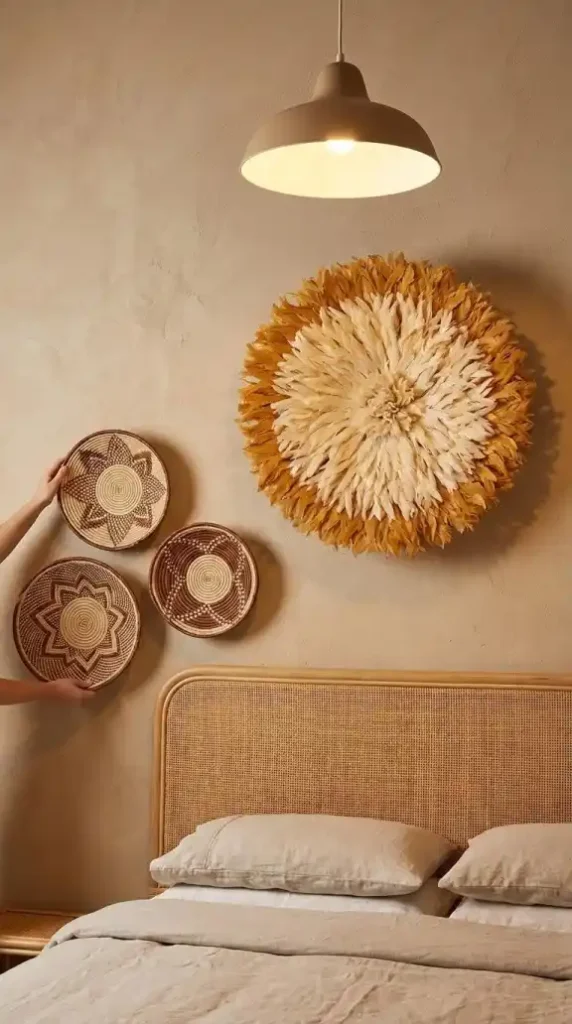
The wall above the bed is styled as a composed gallery — not as isolated pieces placed at convenient positions.
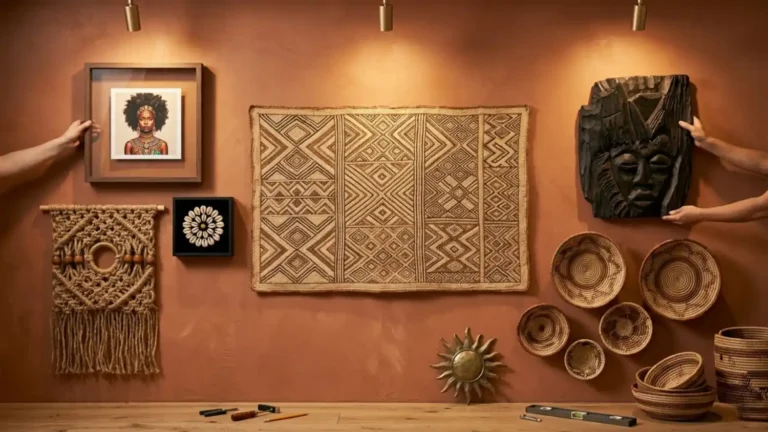
Start with the Juju hat centered above the headboard. This is the primary element and its position sets the center axis that everything else organizes around. Minimum 60cm diameter. Minimum 30cm clearance above the headboard top.
The Juju hat’s circular feathered form introduces surface texture and organic scale that no flat wall piece can match. Its ceremonial origin — the Bamiléké headdress from Cameroon — carries cultural depth that reads in the room even without explanation.
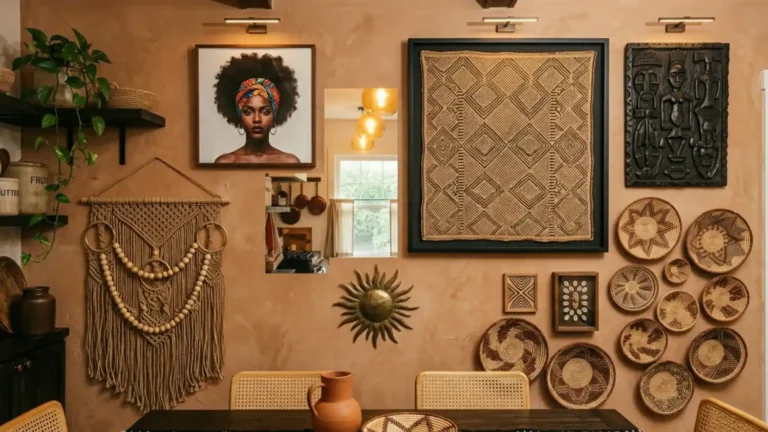
Once the Juju hat is mounted, position the Binga or Tonga basket gallery as the secondary wall element to one side — not symmetrically mirrored on both sides, which would create a formal balance the aesthetic doesn’t support.
Five baskets in graduated sizes, asymmetrically arranged, at a slightly lower height than the Juju hat center point.
The large-scale film photography piece — grainy portrait or African landscape silhouette — sits at the third scale position within the same wall composition, on the opposite side from the basket cluster or on the adjacent wall where it reads as part of the broader bedroom gallery without crowding the bed wall.
Step 6: Lay the Floor Layer
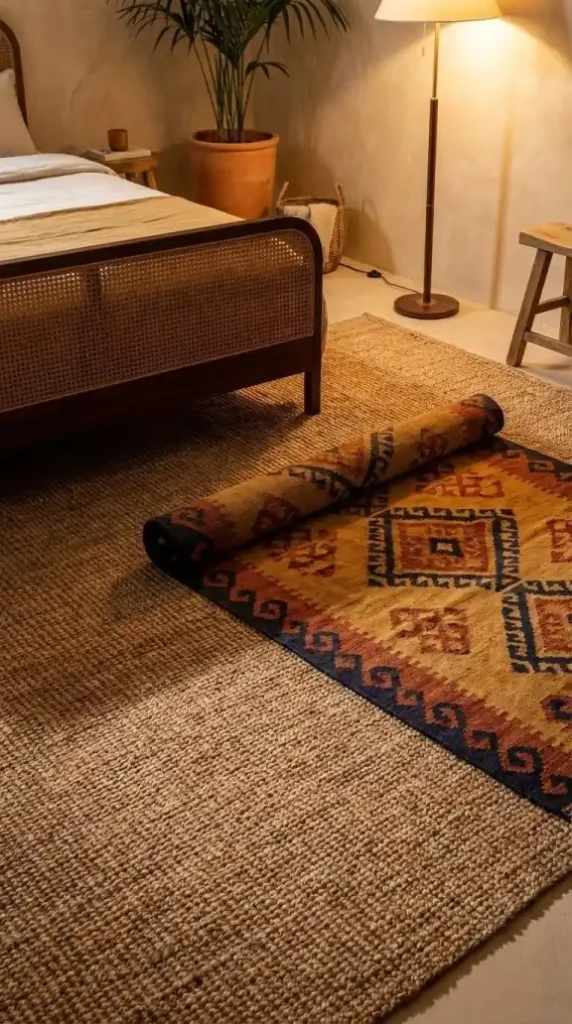
The floor layer is assembled after the wall composition because the wall’s visual weight determines how much the floor layer needs to contribute.
A wall composition with a large Juju hat, a basket gallery, and a film photography piece is visually substantial. The floor layer in response should be grounding and textural rather than pattern-forward — which is exactly what the sisal base rug provides.
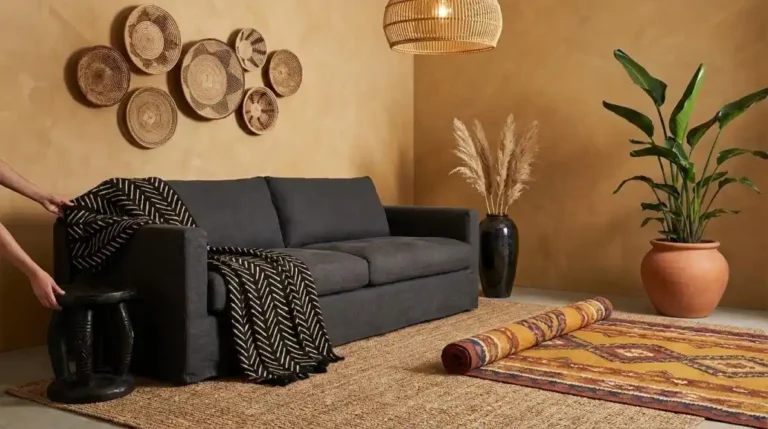
Roll the large sisal or seagrass rug out first — extending it under the bed frame on both sides and beyond the foot of the bed. The rug should cover the majority of the floor plane, not float in the center of the room.
Then position the smaller kilim on top at the bedside — the point of first foot contact when rising. The kilim‘s geometric pattern in ochre, terracotta, and deep indigo adds the color and pattern accent that plain sisal can’t provide at the most intimate floor position in the room.
The layered composition — rough sisal base, denser kilim accent — creates the material transition that makes stepping out of bed a sensory experience the way the aesthetic intends.
Step 7: Position the Low-Profile Seating
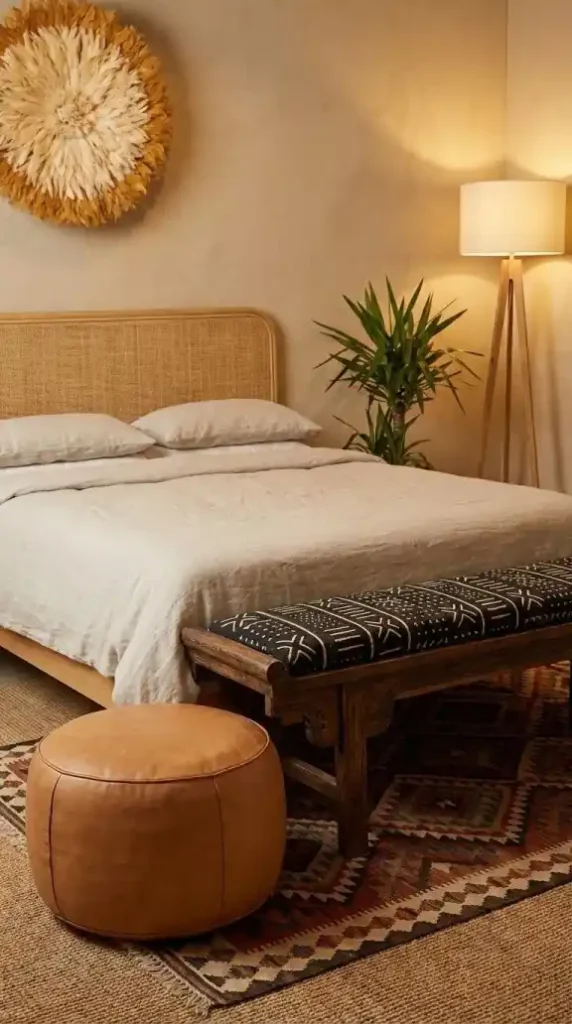
The foot of the bed and the bedside are the bedroom’s secondary furniture zones — and they’re filled after the rug is in place because the rug surface determines what scale and material the seating pieces need to sit against.
A vintage dark wood bench in acacia, teak, or mango along the foot of the bed serves both as seating and as the surface on which the mud cloth throw naturally drapes when the bed is fully made. The two elements — bench and throw — connect visually when they share the same floor zone.
A leather African pouf in warm tan or deep brown at the bedside sits below the sightline of the bed composition, adding low-profile seating without cluttering the visual flow.
Position the pouf on the kilim — not on the bare sisal — so it reads as part of the layered floor composition rather than an isolated object placed beside the bed.
Step 8: Add the Modern Minimalist Accents
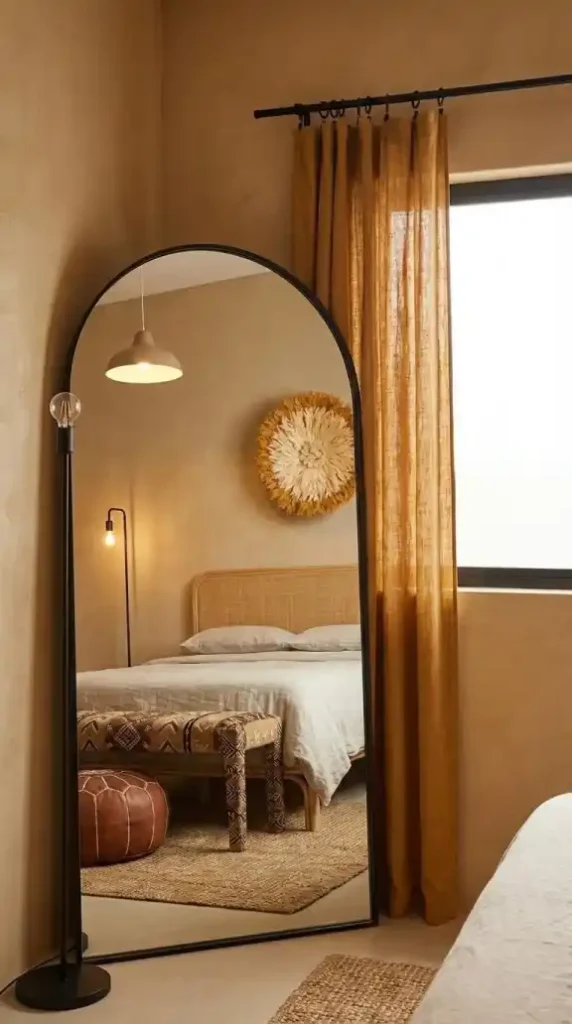
The modern minimalist accents are added after the heritage and handmade layers are fully assembled — not because they’re less important but because their role is to frame what’s already there, not to lead.
The large arched floor mirror with thin matte black frame is the single most effective piece in this category. Leaned against the wall rather than mounted, it reads as deliberately casual. The arch form introduces a soft geometric line that references the circular Juju hat without repeating it. And the mirror doubles the room’s visual depth — the layered bed, the pendant glow, the Juju hat wall composition all reflect back into the space.
A slim matte black floor lamp beside the mirror provides both the third light source and a sharp contemporary vertical line that frames the organic elements around it.
A matte black slim curtain rod at the window — holding raw linen panels in ochre or charcoal — completes the modern minimalist layer at the window position. The rod’s thin black line is the contemporary frame for the softer linen textile beneath it.
These three matte black elements — mirror frame, floor lamp, curtain rod — create a subtle visual thread of contemporary minimalism running through the room that prevents the layered heritage aesthetic from feeling sealed in its own references.
Step 9: Place the Greenery
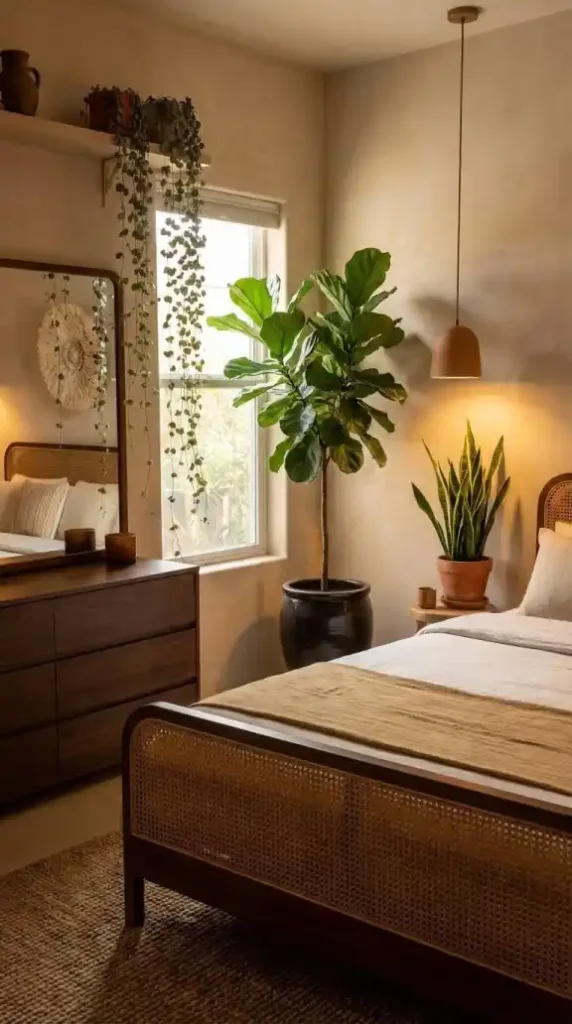
Greenery is placed last — not because it’s the least important, but because its spatial positions are determined by what’s already in the room.
Three zones, three plants, three distinct spatial contributions.
The large corner position goes to a Bird of Paradise or Fiddle Leaf Fig — whichever has access to the most natural light from the bedroom window. The broad tropical leaf silhouette fills the floor-to-ceiling corner zone that no furniture piece occupies and no wall element reaches.
The high shelf position above the dresser or wardrobe goes to a trailing String of Hearts or Pothos. The cascading vines fill the dead zone where wall meets ceiling — the upper corner that accumulates visual awkwardness without organic growth to soften it.
The bedside or lower shelf position goes to a Snake Plant — Sansevieria. Native to West Africa, low-maintenance, upright in form. Its strong vertical lines provide structural counterpoint to the softer trailing plants at height and the broad horizontal leaves of the corner plant. It’s also the plant the sleeper sees most closely — and its quiet, architectural presence reads as intentional rather than decorative at that proximity.
All three in terracotta pots where possible. The earth-colored clay container keeps the greenery layer materially connected to the palette — plastic nursery pots break the organic logic the moment they’re visible.
Step 10: Add the Sensory Finishing Layer
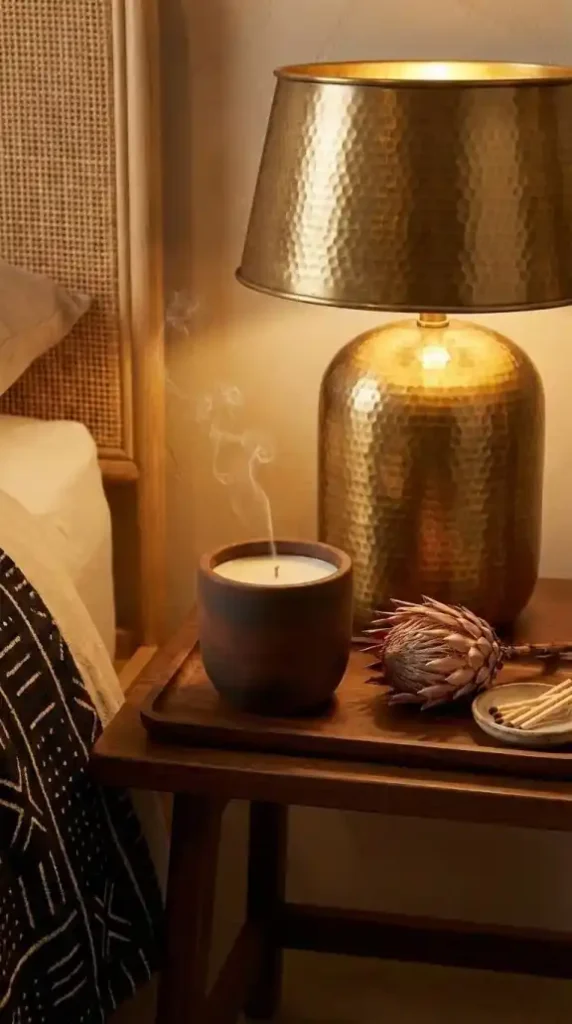
The sensory finishing layer is the last thing added and the first thing experienced when entering the room.
Scent engages the room before the eye has resolved the visual composition. Sandalwood, myrrh, and amber candles in terracotta or dark ceramic holders on the nightstand complete the Afro Bohemian bedroom at the olfactory level — they reference the same material origin as the earth palette through scent association rather than visual means.
Position each candle on a small dark wood tray beside the hammered brass lamp. The tray does two things: it groups the lamp and candle into a composed bedside vignette, and it elevates the candle holder so both elements read at similar heights within the same arrangement.
A single dried protea seed head or a small bundle of dried botanicals on the same tray completes the nightstand vignette with organic material at the smallest scale — texture and scent present simultaneously in the one spot the sleeper occupies most closely.
The sensory layer doesn’t need to be elaborate. One candle. One dried stem. One hammered metal lamp. Three elements on a dark wood tray. That’s the full nightstand composition — and it reads as complete precisely because nothing beyond those three elements is needed.
Checking the Room Before You Call It Finished
Walk through the fully assembled bedroom and answer these final questions:
- Stand at the bedroom entry point. Where does the eye land first? It should land on the Juju hat above the bed. If it lands elsewhere, the primary wall element either needs to be larger or the competing element beside it needs to be reduced in visual weight.
- Is the bed composition resolved in three distinct material stages — smooth linen base, geometric mud cloth or Kuba cloth soul layer, velvet and jute texture contrast? If any stage is missing the bed reads as incomplete regardless of how correct the individual pieces are.
- Look at the floor layer. Does the sisal base extend under the bed frame on both sides? A rug that stops at the bed edge rather than extending beneath it disconnects the floor layer from the furniture layer.
- Count the matte black elements in the room — mirror frame, floor lamp, curtain rod. Is the contemporary line present without dominating? If there are more than three matte black pieces the modern minimalist accent has tipped from framing element to dominant visual theme.
- Is every greenery pot terracotta or dark ceramic? Check for any plastic nursery containers still visible — they’re the single most common material break in an otherwise correctly assembled Afro Bohemian bedroom.
- Light the candles and sit on the bed in the evening. Does the room feel inhabited or decorated? The answer to that question tells you whether the sensory layer is complete — and whether the sequencing that built the room produced the result the aesthetic is capable of delivering.
The Afro Bohemian bedroom is the one room in the house where every styling decision has an equivalent sensory outcome.
The mud cloth throw isn’t just pattern — it’s weight and texture under your hand at the foot of the bed. The hammered brass lamp isn’t just warm light — it’s the living metal surface that catches the candleflicker beside it. The sandalwood candle isn’t just scent — it’s the signal that the room has shifted from functional space to restorative one.
Style it in sequence. Build it over time. And evaluate it always under warm lamplight at 7pm — the conditions under which the Afro Bohemian bedroom performs at its full capacity.
While you’re here:
- Afro Bohemian Bedroom: The Complete Style Guide — Understand the full material and cultural framework behind every bedroom decision — from the mud cloth soul layer to the three-height lighting architecture — as a unified system.
- 11 Afro Bohemian Bedroom Ideas for a Warm and Layered Sleep Space — See the layering logic and material contrast principles applied across 11 specific bedroom moves, each one with a reason behind the sequence.
- Afro Bohemian Bedroom Decor Must-Haves for Beginners — If the layering system feels abstract, start here with the nine physical anchor pieces that make the palette logic and material sequence concrete from the first purchase.