11 Afro Bohemian Kitchen Ideas for a Warm and Functional Space
The kitchen is the room where most Afro Bohemian attempts stall.
The aesthetic runs on textiles everywhere else — and textiles don’t belong in a cooking zone.
So the kitchen has to deliver the full visual language through a tighter vocabulary: surface material, lighting temperature, and object curation. No throws. No tapestries. No layered rugs.
These 11 ideas work within that constraint — each one is a specific move that translates the Afro Bohemian material logic into a functional kitchen space without forcing the aesthetic where it doesn’t belong.
Quick Takeaway:
- Surface material does the work textiles do in other rooms — backsplash tile, cabinet finish, and countertop surface are the primary aesthetic decisions.
- Every counter object should be functional and have natural material identity — terracotta, dark wood, coiled grass, matte ceramic.
- Kitchen lighting at 2700K is non-negotiable — cool-white kitchen lighting destroys earth pigments faster than in any other room.
1. Install a Terracotta Handmade Tile Backsplash
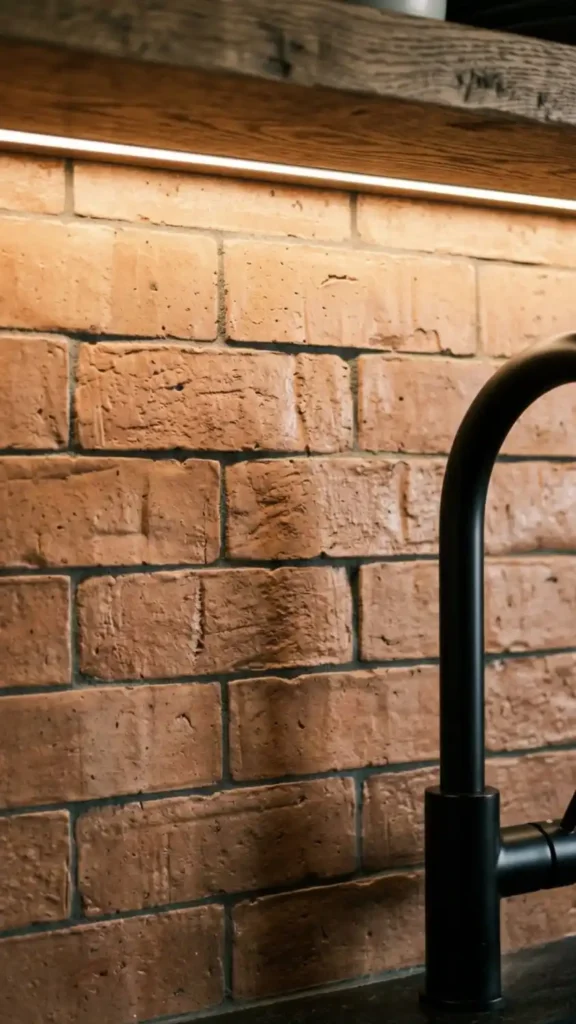
The backsplash is the kitchen’s primary vertical surface — and handmade terracotta tile is the most direct application of the earth pigment logic to a permanent kitchen material.
The slight glaze variation and surface irregularity of handmade tile creates differential light response across the backsplash — each tile catches 2700K warm light slightly differently, giving the surface the depth that uniform machine-made tile can’t produce.
Even a partial terracotta tile installation — behind the cooktop only — shifts the room’s material reading more than any styling or object change.
If full replacement isn’t feasible, terracotta-toned grout applied to existing neutral tile changes the visual temperature of the entire backsplash surface at low cost and low intervention.
2. Switch to Dark-Stained Open Wood Shelving
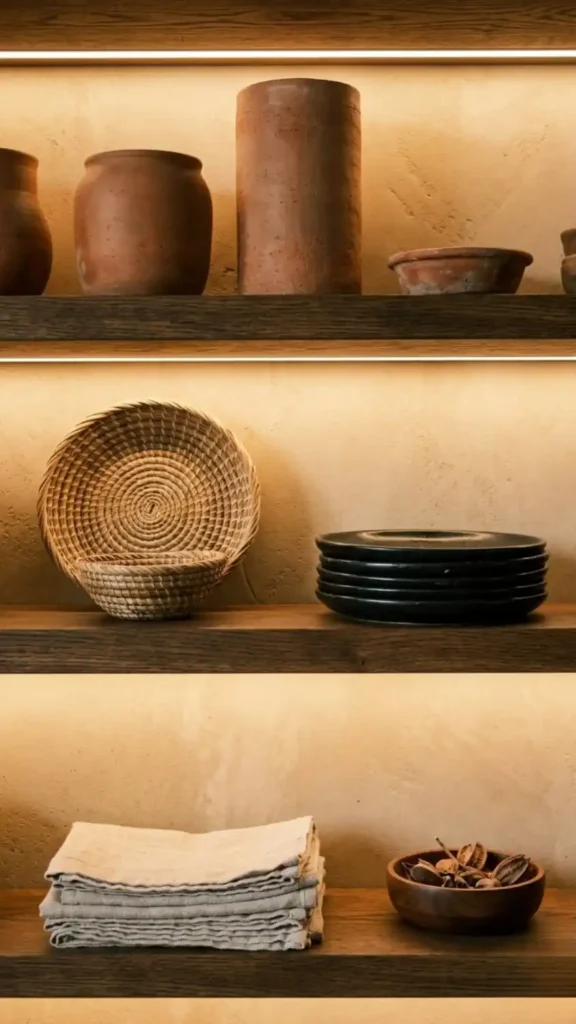
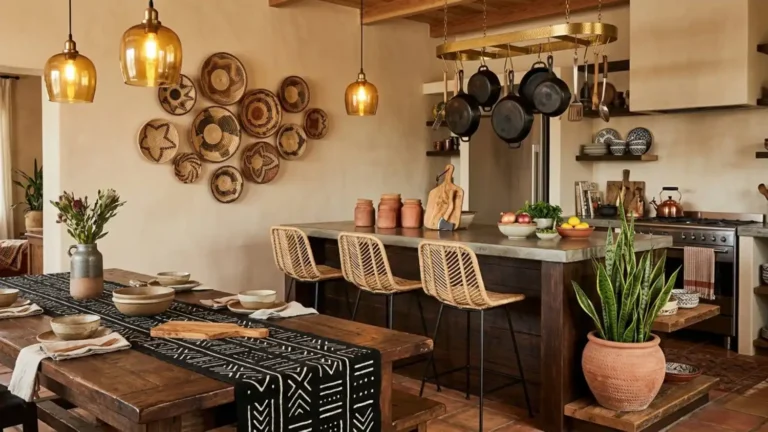
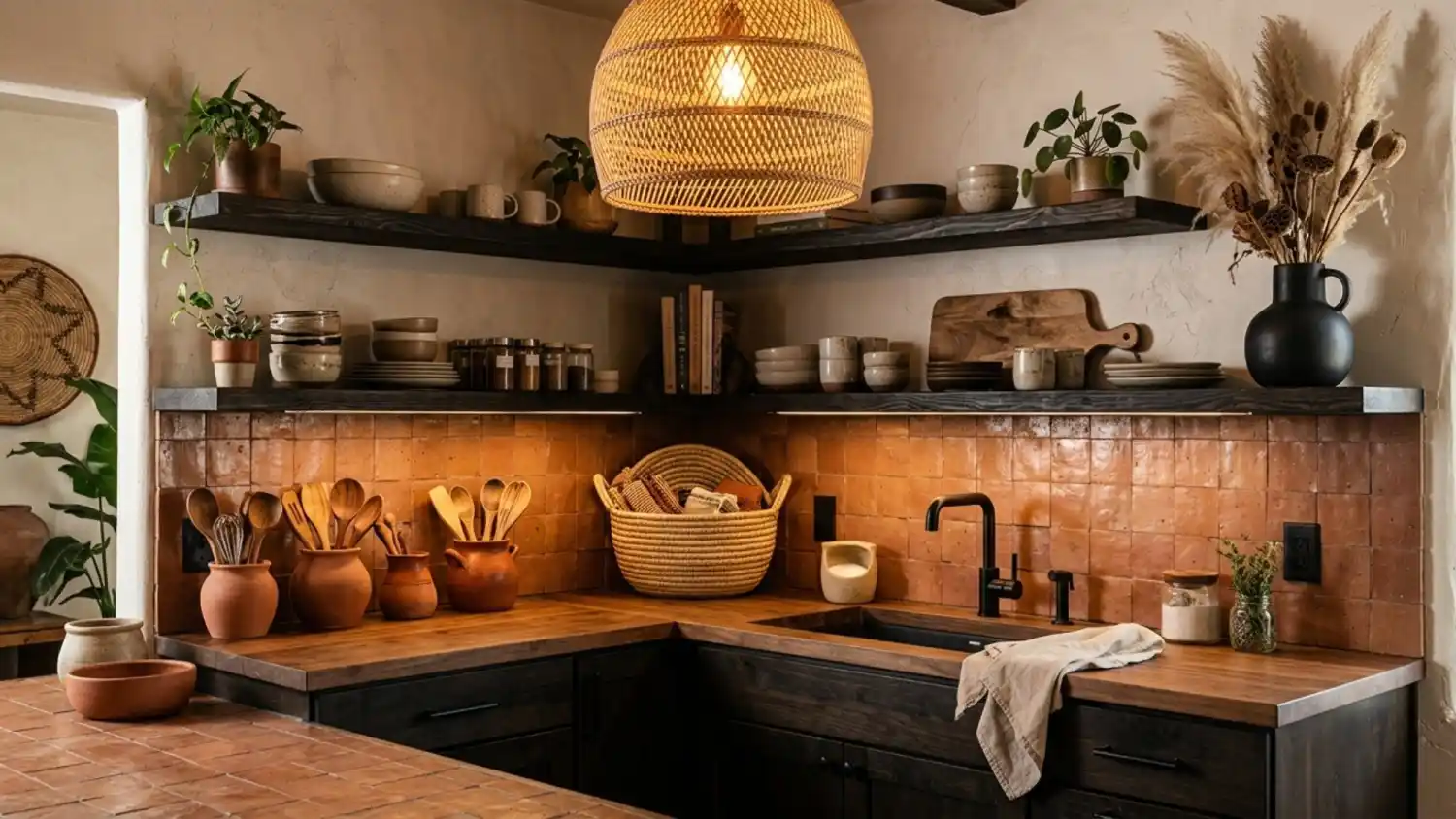
Open shelving is the single most effective kitchen feature for delivering the Afro Bohemian object layer.
Dark-stained wood shelves — walnut, ebony-stained oak, dark mango — provide the same value anchor as dark furniture elsewhere in the house.
Against a warm sand or ochre wall, the dark wood creates the contrast that prevents the kitchen from reading as undifferentiated warmth.
Style the shelves with functional objects that carry material identity: terracotta vessels, linen napkins, coiled baskets, matte ceramic plates, dark wood boards.
Every object on the shelf should be used. The aesthetic comes from choosing everyday kitchen objects in the right materials — not from adding decorative pieces into a functional space.
3. Replace Every Bulb With 2700K Warm Light
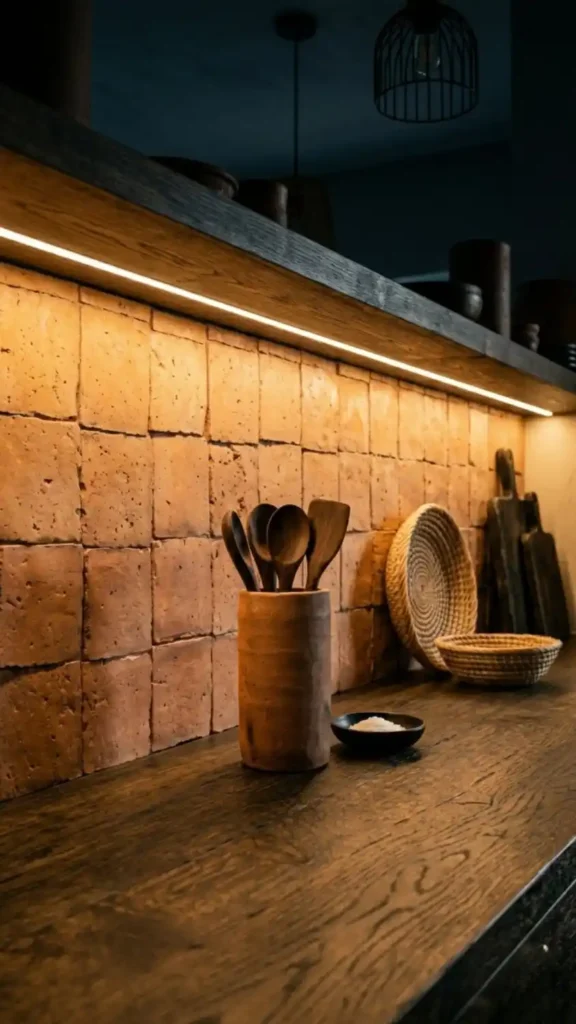
Cool-white kitchen lighting is the single fastest way to flatten an Afro Bohemian palette.
Terracotta greys out. Ochre goes muddy green. Dark wood loses its warmth and reads as flat charcoal.
Replace overhead downlights, under-shelf strips, and any pendant fixtures with 2700K warm equivalents before evaluating any other element in the kitchen.
Under-shelf lighting at 2700K is the highest-impact single lighting position — it rakes warm light across the backsplash and counter simultaneously, revealing tile surface texture and warming every object on the counter at the same time.
This is the lowest-cost, highest-impact kitchen intervention on this list.
4. Hang a Rattan Pendant Over the Island or Dining Area
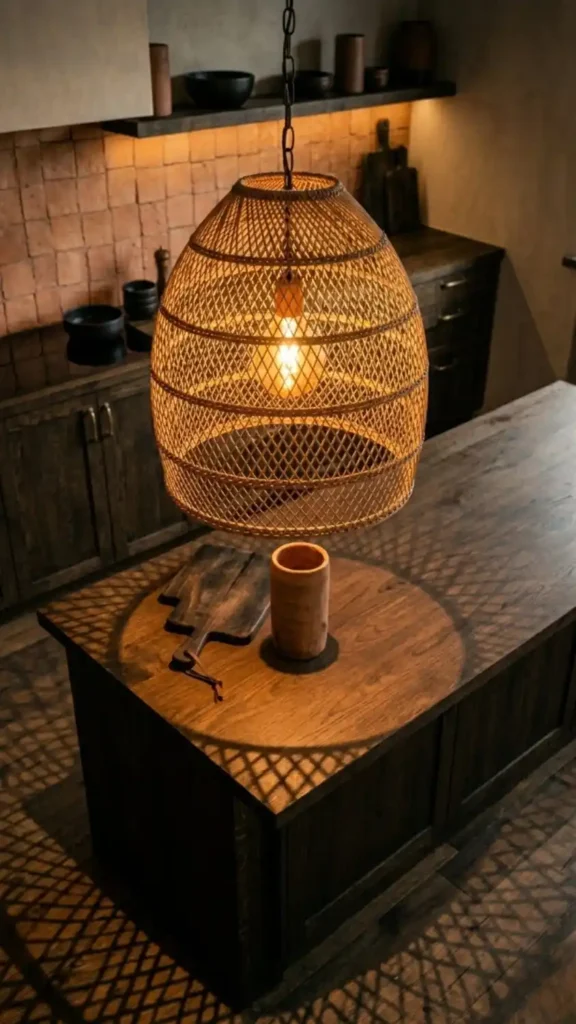
A rattan pendant over the kitchen island or dining area ties the kitchen into the broader material vocabulary of the house.
The open weave casts geometric shadow projections onto the island surface and surrounding floor after dark — adding visual texture to a room that can’t rely on wall textiles for surface interest.
It also functions as a ceiling-level textural element during the day, reading as part of the natural fiber vocabulary alongside the coiled baskets and linen textiles on the shelves.
Size matters: a pendant too small for the island reads as an accessory rather than an architectural element.
For a standard kitchen island, a 50–60cm diameter rattan pendant is the minimum scale to read correctly.
5. Use Terracotta Vessels as the Primary Utensil Storage
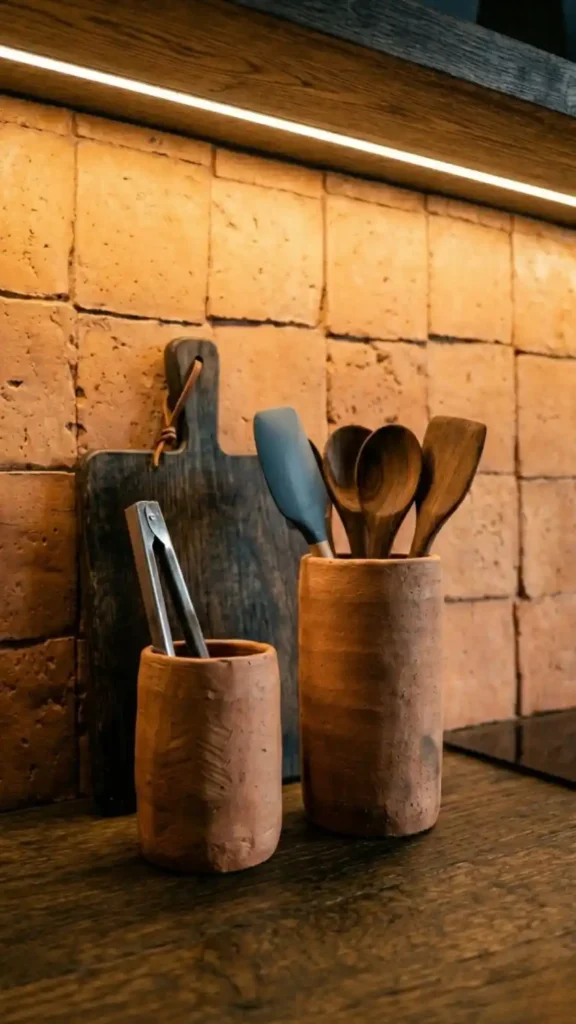
Terracotta utensil holders are the kitchen’s highest-impact counter object because they’re functional and materially correct simultaneously.
Two hand-thrown terracotta vessels at different heights — one tall for long utensils, one shorter for serving tools — create an odd-number grouping with natural height variation without requiring any purely decorative object.
The functional objects inside them — wooden spoons, dark metal tongs, ceramic ladles — extend the material palette into the utensil layer.
Avoid plastic utensils visible in an open terracotta holder. They break the material logic instantly.
Dark wood, metal, and ceramic kitchen tools in the right tones are widely available and inexpensive — the utensils are as much a part of the aesthetic as the vessels holding them.
6. Choose Matte Black Fixtures and Hardware
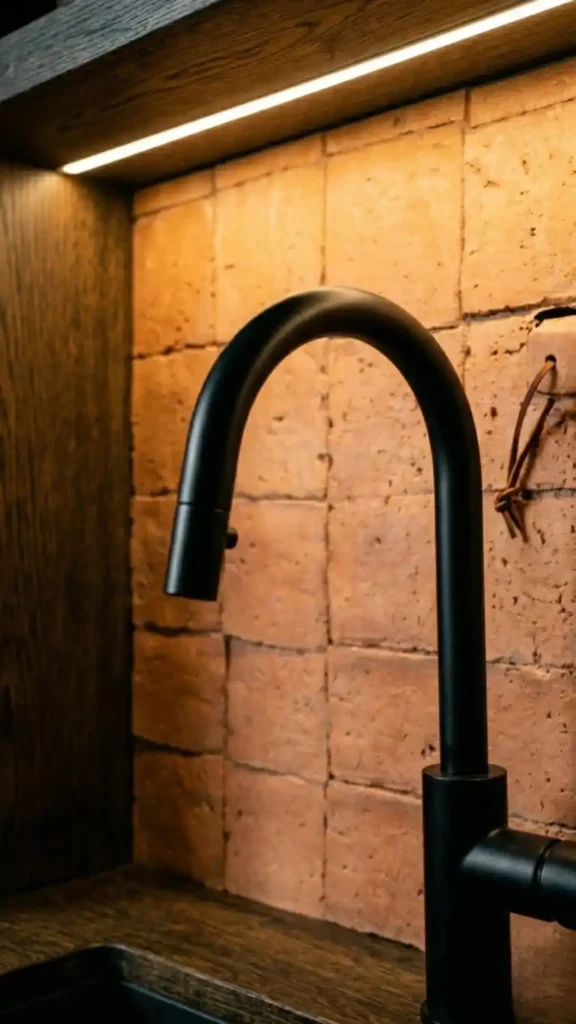
Matte black fixtures — faucet, cabinet handles, range hood — play the same structural role in the kitchen that warm black plays in the mud cloth palette.
They anchor the earth tones, create value contrast against the terracotta and ochre surfaces, and prevent the kitchen from reading as undifferentiated warmth.
Matte finish is critical — polished black reads as contemporary and cool. Matte black reads as warm, grounded, and materially cohesive with the handmade objects around it.
If full fixture replacement isn’t feasible, matte black cabinet hardware — handles and pulls — is the most accessible single hardware intervention and changes the kitchen’s visual tone significantly relative to its cost.
7. Add a Coiled Grass Basket for Dry Storage
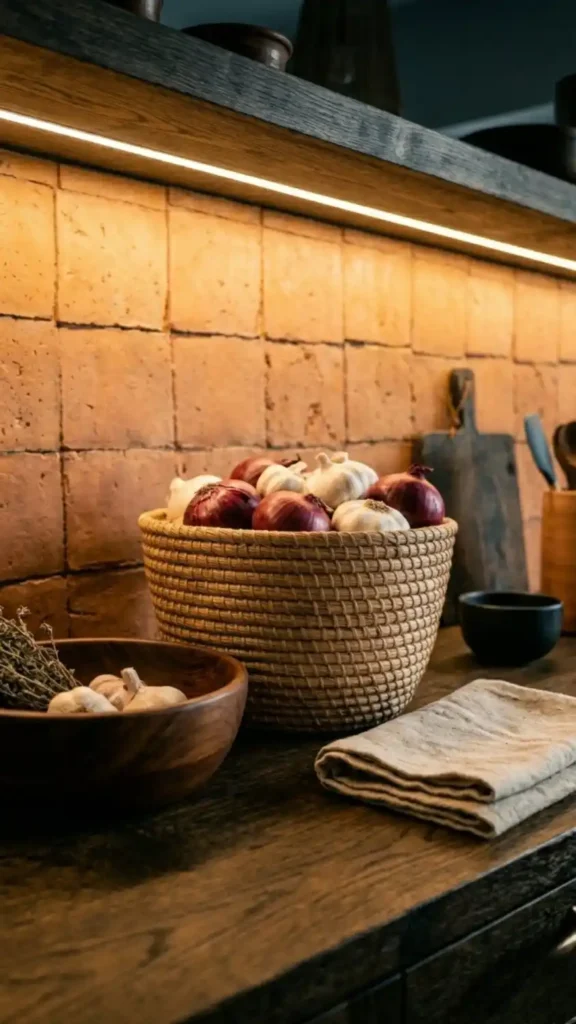
A coiled grass basket on an open lower shelf introduces the natural fiber vocabulary into the kitchen as a functional storage object.
Used for dry goods — onions, garlic, loose fruit — it reads as both materially correct and practically useful. The coil pattern adds geometric surface interest to the shelf layer without requiring a decorative object.
One large floor-level or lower-shelf basket is more effective than several small ones scattered across the kitchen.
The single large basket has the visual weight to read as a room element from across the kitchen. Multiple small ones read as accessories and add object density without structural value.
8. Paint or Plaster One Wall in Warm Sand or Ochre
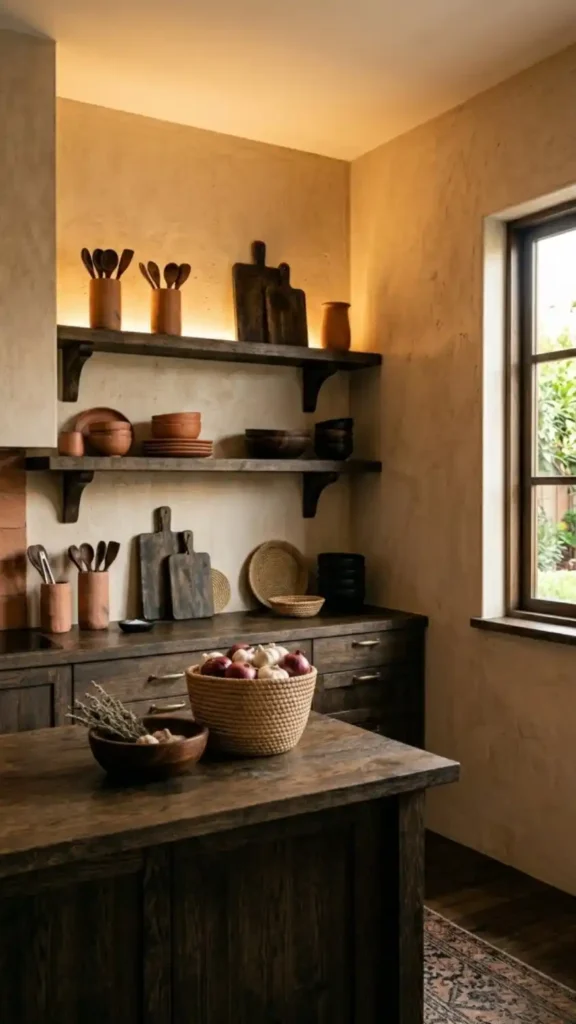
The wall tone above the shelving line and on any kitchen wall without tile or cabinetry is the kitchen’s background decision — and it carries more visual weight than most kitchen renovations acknowledge.
Warm sand, raw ochre, or a limewash plaster finish in a warm earth tone brings the wall into the palette as an active participant rather than a neutral background.
Even a single accent wall — the wall behind open shelving or the wall facing the kitchen entry — shifts the room’s entire temperature reading.
Textured plaster finish is preferable to flat paint — the surface variation catches 2700K light the same way handmade tile does, creating depth rather than flatness.
9. Use a Dark Wood Cutting Board as a Counter Display Object
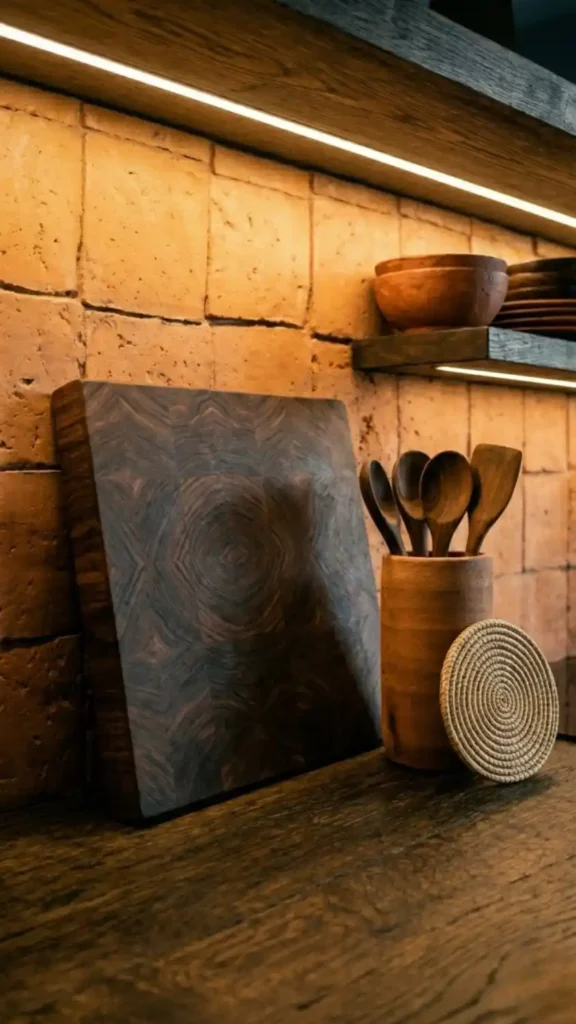
A large dark wood cutting board leaning against the backsplash is a functional object that simultaneously acts as a vertical surface element on the counter.
End-grain walnut or dark-oiled hardwood cutting boards have a surface richness — deep grain variation, slight color irregularity — that reads as a handmade object rather than a kitchen tool.
Leaned vertically against the backsplash rather than laid flat, it creates a dark value accent at counter level that anchors the earth tones around it.
It’s also used daily — which means the aesthetic isn’t being maintained, it’s being lived.
That distinction matters in a kitchen more than any other room.
10. Introduce Dried Botanicals at Counter or Shelf Level
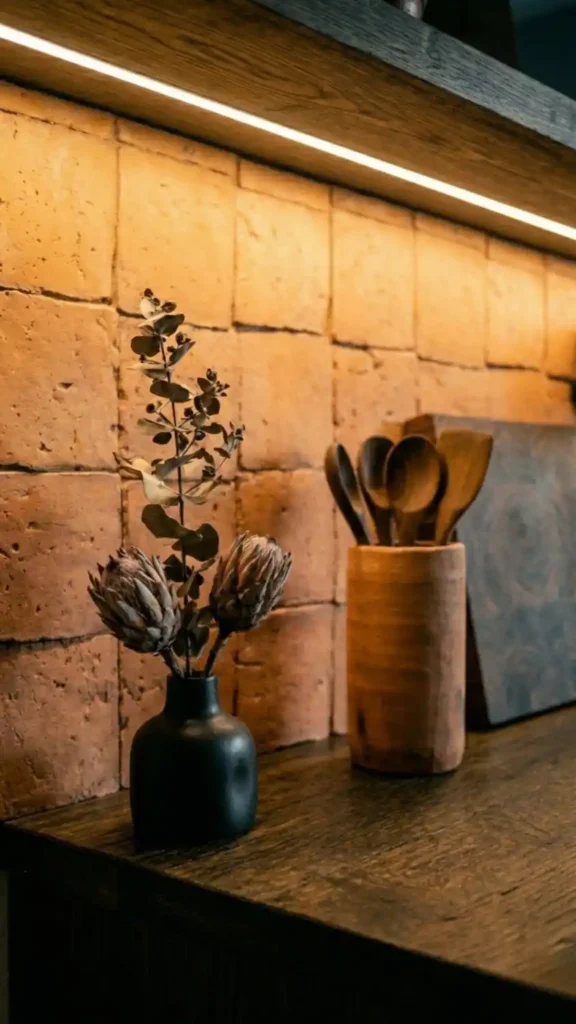
Dried botanicals are the one decorative object category the kitchen can hold without disrupting functional logic.
A single small arrangement — two or three dried stems in a matte black or dark ceramic vessel — positioned at the counter edge or on an open shelf introduces the organic material layer without creating a maintenance or hygiene issue.
Dried pampas, protea seed heads, and preserved eucalyptus all work at kitchen scale.
The arrangement should sit at the perimeter of the counter — not at the working center — and have deliberate negative space between it and the functional objects beside it.
One arrangement per kitchen. The botanical layer is a single accent in this room, not a repeated element the way it might be elsewhere in the house.
11. Keep Counter Negative Space Intentional
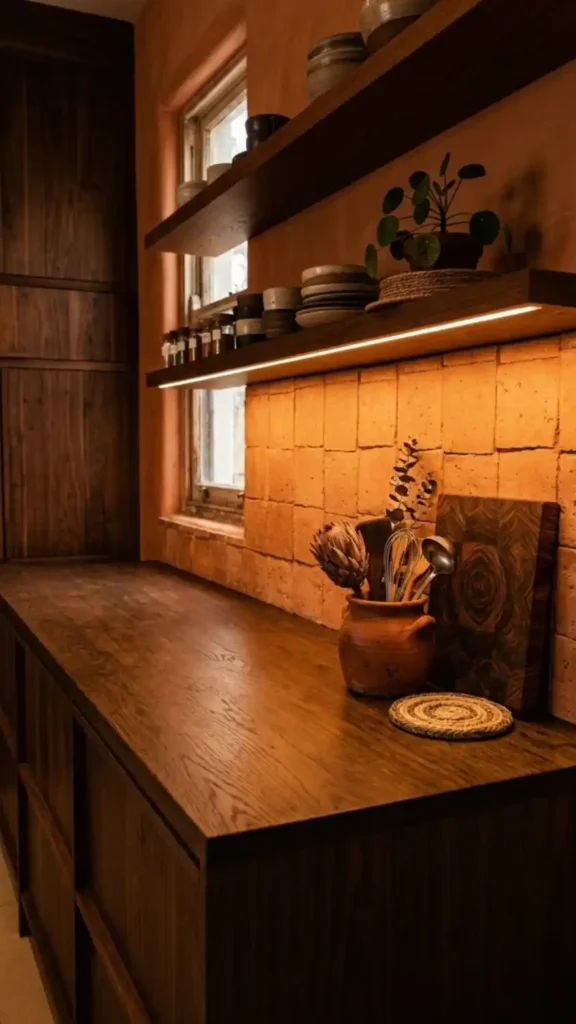
Counter negative space in an Afro Bohemian kitchen is a deliberate design decision — not the absence of objects still to be added.
Group all functional counter objects at one end of the run. Leave the rest of the counter clear.
The clear counter surface provides the visual rest that a bare plaster wall provides in other rooms. Without it, the kitchen reads as cluttered rather than curated — and in a functional space, visual clutter is also cognitive clutter.
The grouped objects read more powerfully against the clear counter than they would distributed across the full surface.
Restraint in a kitchen is both an aesthetic and a practical virtue. Let both requirements point in the same direction.
Reading Your Kitchen Before You Change Anything
Walk through the kitchen and answer these questions first:
- What is the current light temperature? Replace bulbs before evaluating any surface or object.
- Is the backsplash within the earth pigment range? If not, is a partial terracotta tile installation behind the cooktop feasible as a first intervention?
- Is there open shelving? If all storage is behind closed cabinet doors, installing one section of open dark wood shelving is the highest-impact single structural change available.
- What materials are the current counter objects made from? Identify any plastic, chrome, or synthetic-finish items and note which natural material equivalent — terracotta, dark wood, coiled grass, matte ceramic — could replace them.
- What is the cabinet finish? Is dark hardware replacement feasible if the finish itself can’t change?
- How much counter negative space currently exists? If every surface run is fully occupied, identify the least functional object grouping and remove it entirely before adding anything new.
An Afro Bohemian kitchen doesn’t need a renovation to read correctly.
It needs the right surface materials at the backsplash and shelving level, the right light temperature throughout, and counter objects chosen for material identity rather than visual interest alone.
The constraint of no textiles doesn’t limit the aesthetic — it clarifies it.
Every element earns its place by being both used and materially correct. That’s a higher standard than decoration. And the rooms that meet it consistently read as the most cohesive in the house.
Continue building your Afro Bohemian kitchen:
- Afro Bohemian Kitchen: How to Bring the Aesthetic Into a Functional Space — Understand the full material logic before applying any idea
- How to Style an Afro Bohemian Kitchen — Layer every styling level from wall gallery to sensory detail
- Afro Bohemian Kitchen Decor Must-Haves for Beginners — Follow a beginner-friendly buying sequence from first piece to last