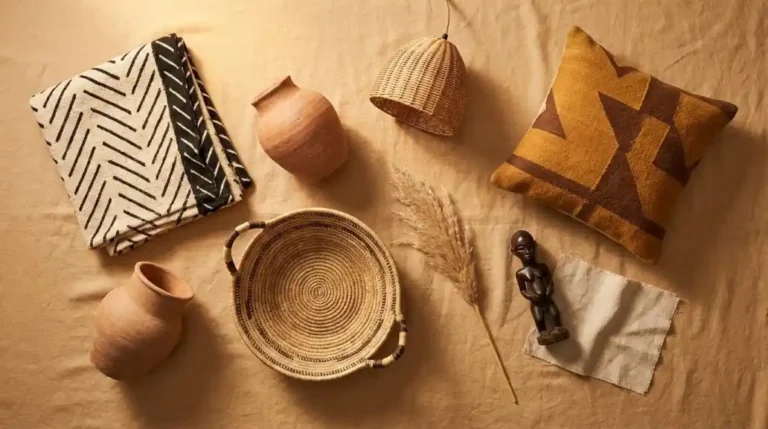
Afro Bohemian Wall Art: The Complete Guide
Most wall art decorates a room. Afro Bohemian wall art defines it.
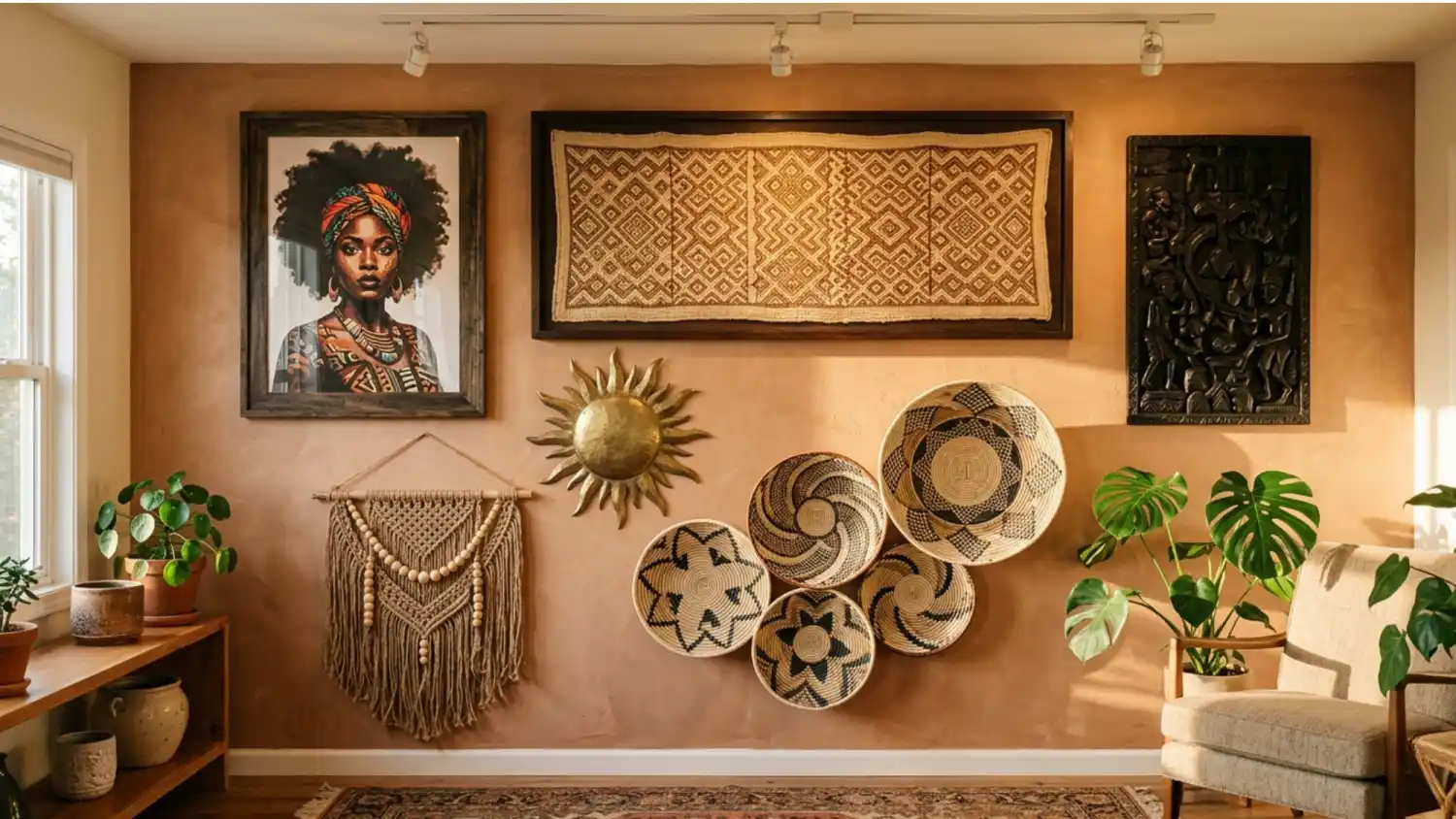
The difference is in what the art is made of and what it’s made from. A standard gallery wall hangs framed prints on painted drywall. An Afro Bohemian gallery wall layers symbolic textiles, three-dimensional woven baskets, carved wood relief panels, figural portraits celebrating natural beauty, and fiber art hangings in jute and black cord — each piece carrying cultural depth that a print-on-canvas approach can’t access.
The result isn’t just a visually richer wall. It’s a wall that reads as a statement about identity, heritage, and the soulful intersection of African design tradition with the free-spirited layering logic of bohemian aesthetics.
This guide covers the complete Afro Bohemian wall art system — from the symbolic textile panel that anchors the gallery to the macramé fiber art that completes it at the outer edge.
Quick Takeaway:
- Symbolic textiles — Kuba cloth, mud cloth, Kente, and Ankara — are the gallery’s primary art pieces, used as framed or hung panels rather than as soft furnishings.
- Figural imagery — the Afro Queen portrait, the line art silhouette, the cowrie shell cultural artifact — provides the identity and cultural heritage layer that abstract pattern alone can’t deliver.
- Three-dimensional wall pieces — Tonga baskets, carved ebony relief panels, jute macramé fiber art — extend the gallery from the wall surface into the room’s depth, creating a composition the eye reads across multiple spatial planes.
The Afro Bohemian Gallery Wall System: Four Layers at Four Scales
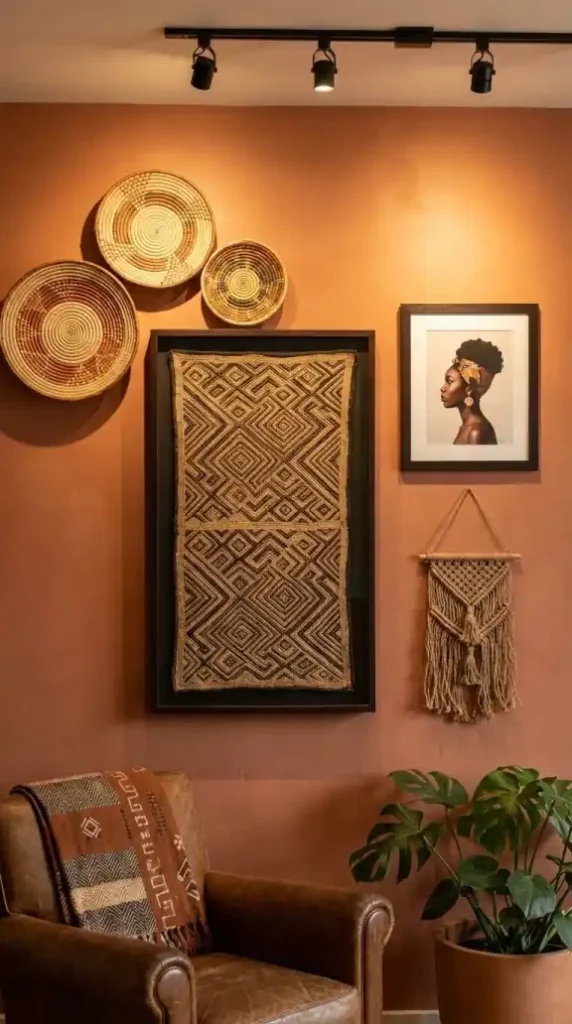
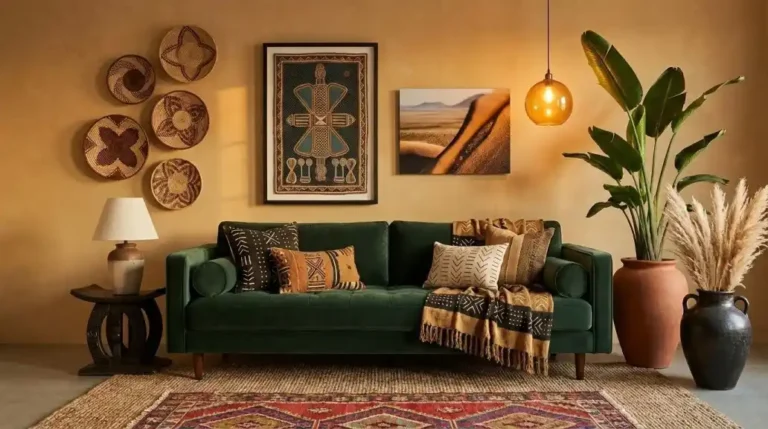
The Afro Bohemian gallery wall operates across four distinct layers — each at a distinct scale, each in a distinct material register, each contributing something the other three layers can’t provide.
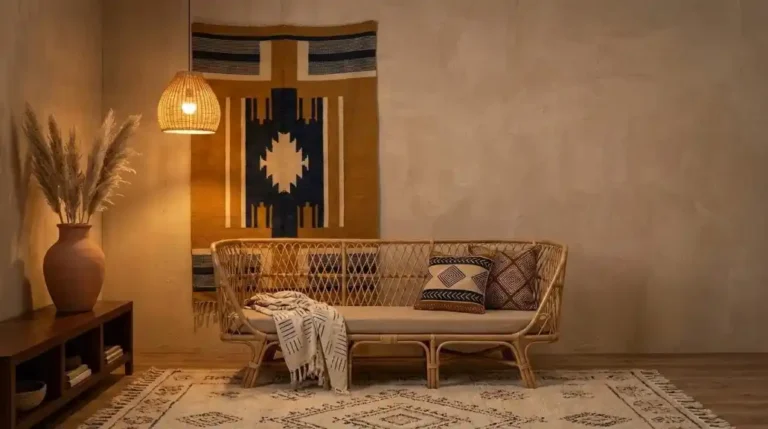
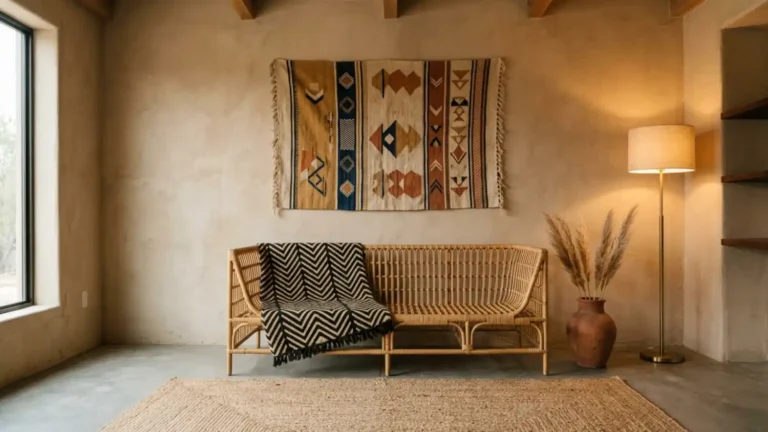
Layer one is the symbolic textile anchor — the largest piece in the gallery and its primary focal point. A framed or stretched Kuba cloth panel, a mud cloth wall hanging, a Kente or Ankara print mounted at architectural scale. This is the piece the eye enters on when it first encounters the wall.
Layer two is the figural imagery — the portrait, the line art silhouette, the cultural artifact piece. This layer provides the identity and cultural heritage depth that the abstract pattern of the textile anchor doesn’t deliver on its own. The Afro Queen portrait, the continuous-line figure drawing, the framed cowrie shell arrangement — all operate at this secondary scale within the gallery composition.
Layer three is the three-dimensional textural element — the Tonga or Binga basket cluster, the carved ebony wood relief panel, the macramé fiber art hanging. These pieces extend the gallery from the flat wall surface into the room’s depth — creating a composition the eye reads across multiple spatial planes rather than as a flat arrangement.
Layer four is the detail accent — the small celestial symbol in muted brass, the abstract geometry print, the single cowrie shell arrangement in a small frame. These are the pieces the eye discovers after the primary layers have been processed — the gallery’s close-range reward for sustained looking.
All four layers operating simultaneously at four distinct scales on the same wall is what makes an Afro Bohemian gallery read as composed rather than assembled.
Symbolic Textiles as Primary Wall Art
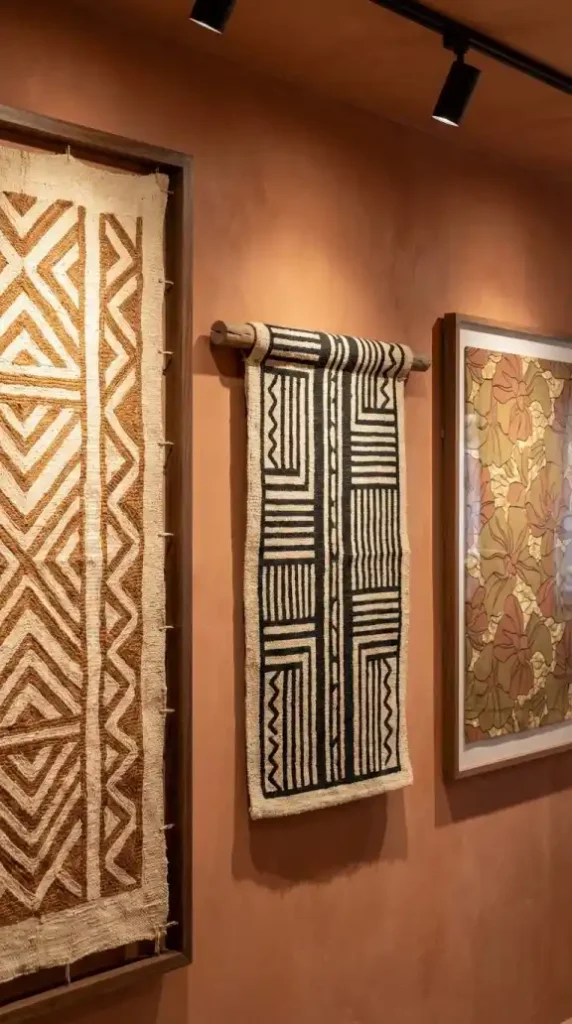
Symbolic textiles are the Afro Bohemian wall art system’s primary medium — not as decorative accessories hung beside conventional art but as the primary art pieces themselves.
Kuba cloth panels from the Congo — handwoven from raffia palm fibers with complex improvisational geometric patterns and a cut-pile velvet-like surface texture — are the system’s most materially distinctive textile wall art. Stretched on a dark wood frame and mounted at 90cm wide minimum they read as a formal art piece with the visual weight of a large canvas painting. The surface depth — the slight raised relief of the woven raffia pattern — catches warm track light in a way that flat canvas can’t, creating shadow variation across the panel that shifts with the light source angle and time of day.
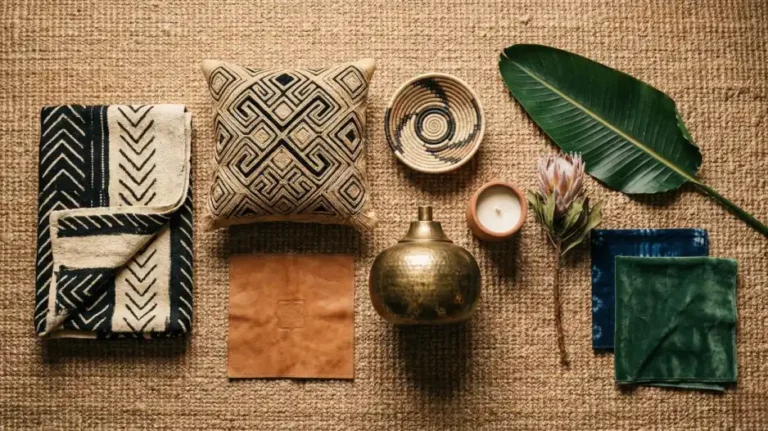
Mud cloth panels — Bògòlanfini from Mali, hung from a dark wood dowel rod — introduce the bold linear symbolic geometric patterns at the wall’s secondary textile position. The fermented mud dyeing process produces a surface depth and slight tonal variation across the black and cream pattern that machine-printed fabric eliminates. A large mud cloth panel hung from a dowel rod reads as both a textile object and a cultural artifact simultaneously.
Kente and Ankara prints bring the vibrant maximalist side of the Afro Bohemian textile vocabulary. Modern interpretations of Kente motifs in muted gold and terracotta tones translate the structured geometric weaving tradition into a wall art format that sits within the earth palette. Ankara wax-print fabrics in abstract floral and geometric patterns framed under glass introduce the vibrant wax-print tradition as a contemporary art medium.
Figural Imagery: Identity and Heritage at the Gallery Center
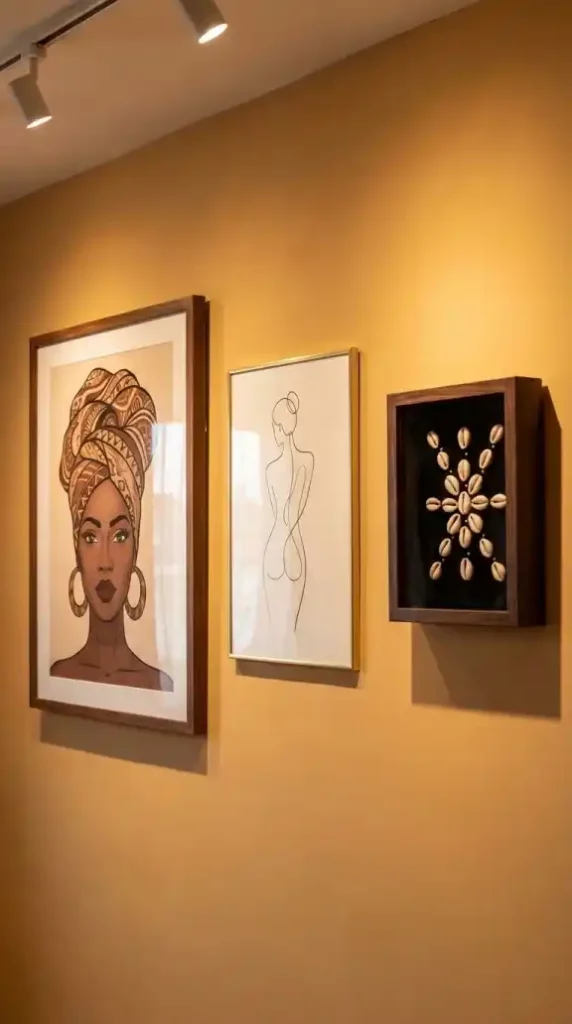
Figural imagery is the Afro Bohemian wall art gallery’s identity layer — the pieces that anchor the cultural heritage celebration at the human scale rather than at the pattern and material scale.
The Afro Queen portrait is the gallery’s most culturally specific figural piece. Stylized portraits of Black women featuring intricate natural hairstyles — Afros, braids, locs — colorful headwraps, and vibrant jewelry celebrate identity and natural beauty as primary subjects of fine art. These portraits aren’t decorative wall prints. They’re cultural statements about representation and heritage that carry weight beyond their visual appeal.
Buy large format — 60x80cm minimum. The Afro Queen portrait needs to read as a primary gallery element from the room’s entry point. At smaller scales it recedes into the gallery composition rather than anchoring it at the figural layer.
Line art silhouettes — minimalist continuous-line drawings of figures that emphasize organic movement and grace — operate at the gallery’s secondary figural scale. Their clean minimal aesthetic provides contrast to the textural density of the Kuba cloth panel and the Tonga basket cluster — the gallery’s visual breathing room at the figural layer.
Framed cultural artifacts — cowrie shell arrangements on dark velvet in shadow box frames, framed Afro pick compositions, traditional mask depictions — provide the heritage object layer at the gallery’s detail scale. Cowrie shells carry centuries of symbolic weight across West and Central African cultures — their association with wealth, protection, and fertility making them among the most culturally specific objects available in Afro Bohemian wall art at a small accessible scale.
Three-Dimensional Wall Pieces: Extending the Gallery Into the Room’s Depth
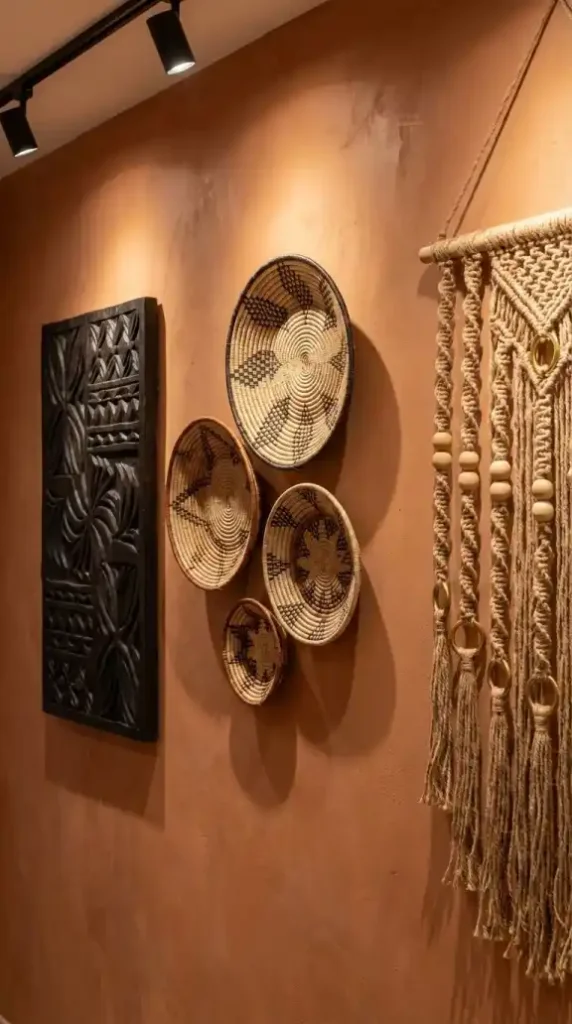
Three-dimensional wall pieces are the Afro Bohemian gallery system’s most distinctive contribution — extending the composition from the flat wall surface into the room’s physical depth and creating a gallery the eye reads across multiple spatial planes rather than as a flat arrangement of framed art.
Carved ebony or mahogany wood relief panels bring the ancestral craft tradition to the wall at the three-dimensional object scale. The carved surface — geometric motifs, organic forms, relief depth that catches warm track light in deep highlight and shadow — creates a wall piece that reads as sculpture as much as decoration. Dark ebony or mahogany wood provides the High Contrast grounding element at the gallery’s three-dimensional layer.
Tonga and Binga basket wall clusters bring circular organic forms to a gallery composition otherwise dominated by rectangular frames and linear arrangements. Five to seven baskets in graduated sizes arranged asymmetrically create visual movement across the wall that no rectangular composition can produce. The circular basket forms break the gallery’s rectangular geometry — the eye moves between circular and rectangular elements rather than reading the composition as a single rectangular field.
Jute and black cord macramé fiber art hangings — updated from standard boho macramé with dark-toned cords, wooden beads, and brass ring accents — introduce the fiber art tradition at the gallery’s textural edge. The rough twisted cord surface, the smooth wooden bead, and the warm hammered brass ring create material contrast within a single fiber art piece that reads as specifically Afro Bohemian rather than generically bohemian.
Earth-Rooted Motifs: Botanical, Celestial, and Abstract Geometry
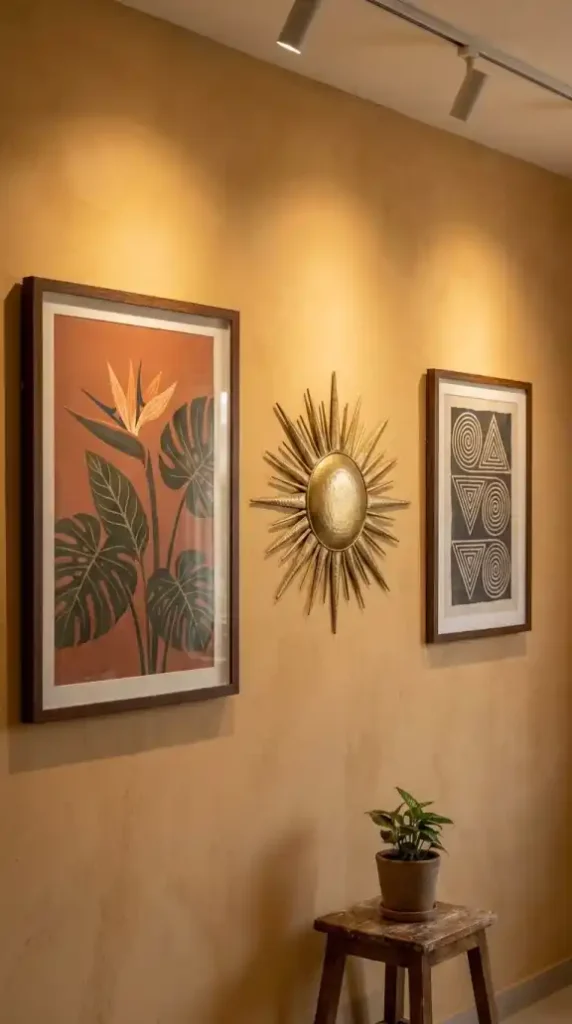
Earth-rooted motifs provide the Afro Bohemian gallery wall’s thematic layer — the visual references that connect the art to the natural world, the celestial realm, and the body marking traditions of African cultures.
Botanical prints featuring monstera leaves, bird of paradise, and palm fronds on terracotta or burnt sienna backgrounds swap the standard pastel boho botanical for a sun-baked earth palette equivalent. These prints sit within the Foundation Earth Tone palette category while delivering the lush botanical visual vocabulary that the bohemian side of the aesthetic requires. Position them at the gallery’s secondary scale — large enough to read as a significant element, smaller than the primary textile panel anchor.
Celestial symbols — suns and crescent moons — rendered in warm muted gold, muted brass, or clay tones rather than bright white or silver. A hammered brass sun wall sculpture or a muted gold crescent moon piece provides the celestial motif at the three-dimensional object scale — sitting between the flat framed pieces and the fully three-dimensional basket and macramé hangings in terms of spatial depth. The warm metallic tone of the brass celestial piece connects to the room’s broader brass accent thread — the desk lamp, the picture frame edges, the curtain rod hardware.
Abstract geometry prints featuring spirals, triangles, and dot patterns that reference traditional scarification patterns or tribal marking traditions bring the body art vocabulary into the gallery at the print scale. Rendered in charcoal and cream or muted gold on terracotta backgrounds these abstract geometry prints sit within the High Contrast Neutral and Foundation Earth Tone palette categories simultaneously — anchoring the gallery at the detail scale with cultural pattern references that read as specific without requiring explanation.
The Wall Art Palette: Grounded, Vibrant, and Contrast
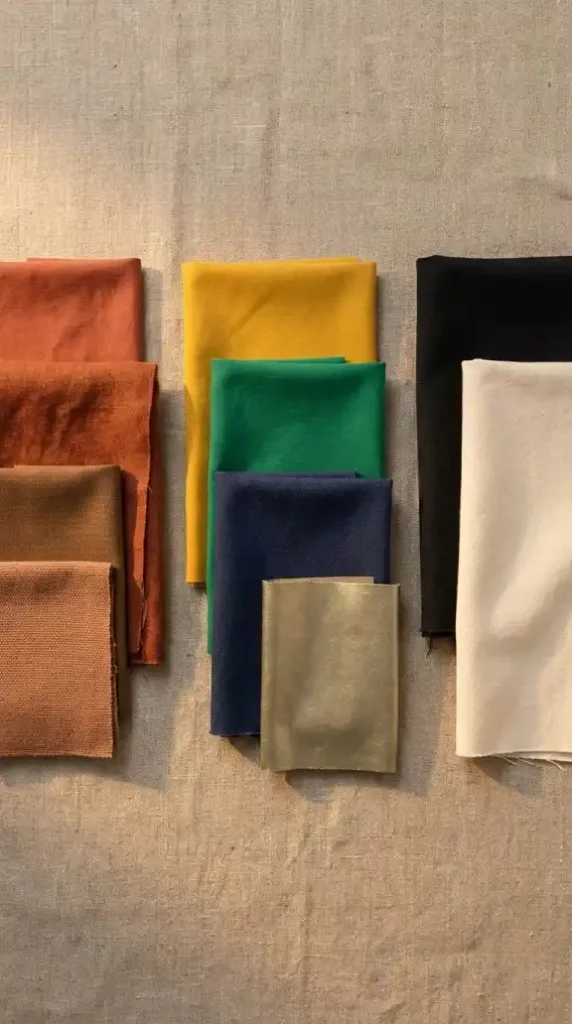
The Afro Bohemian wall art palette runs across three categories — and all three must be present in the gallery composition for the visual hierarchy to read as cohesive rather than monochromatic.
Grounded tones — terracotta, burnt sienna, umber, clay — are the gallery’s dominant color register. The plaster wall behind the gallery, the dark wood frames, the terracotta botanical print background, the natural fiber of the Kuba cloth and macramé. These tones anchor the gallery in the earth palette that grounds the broader Afro Bohemian decor system.
Vibrant tones — mustard yellow, emerald green, indigo, muted gold — provide the cultural energy and visual dynamism that prevent the grounded earth palette from reading as flat. The Ankara wax-print panel’s vibrant abstract pattern, the Afro Queen portrait’s colorful headwrap and jewelry, the muted gold celestial sun piece, the deep indigo in the Tonga basket weave accents. These tones appear at the detail scale — not as dominant wall colors but as the vibrancy within individual pieces that makes the gallery feel alive.
Contrast tones — bold charcoal black and cream ecru — give the geometric textile patterns their legibility and sharpen the gallery’s visual hierarchy. The mud cloth panel’s bold black and cream geometric patterns, the line art silhouette’s crisp cream ground and charcoal ink, the carved ebony wood’s deep near-black against the terracotta plaster wall. Without the contrast tones the gallery reads as warm but flat. With them it reads as structured and resolved.
How to Arrange an Afro Bohemian Gallery Wall
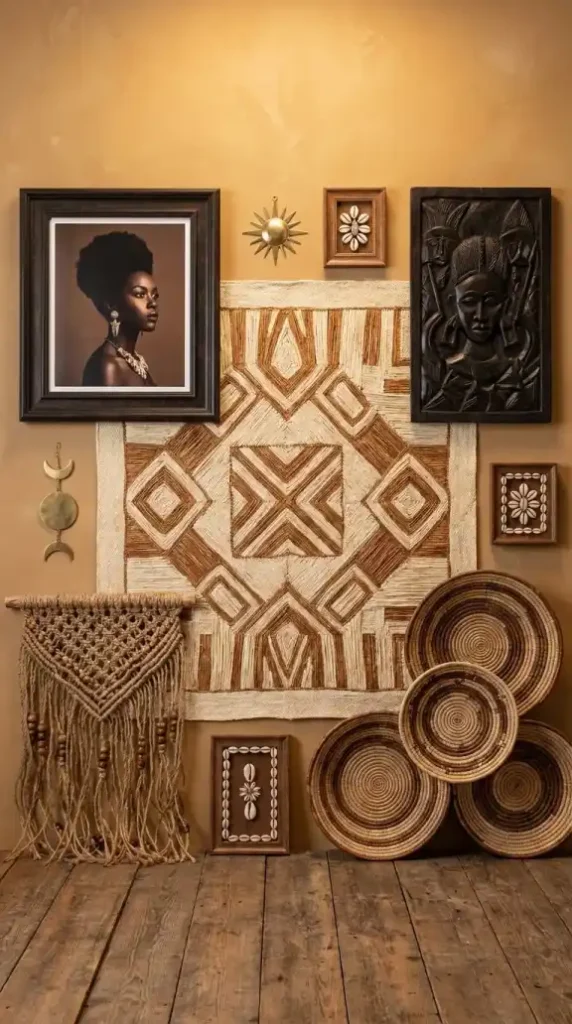
Arranging an Afro Bohemian gallery wall follows a specific sequence that produces a composed result rather than an assembled one.
Start by laying every intended gallery piece on the floor in front of the wall. Arrange them into the planned composition on the floor first — confirming the scale relationships, the spacing, and the compositional balance before a single nail goes into the wall.
Identify the primary anchor: the largest piece with the most visual weight. This is almost always the symbolic textile panel — the Kuba cloth or mud cloth hanging. Center it on the floor layout and build everything else around it.
Position the figural imagery at the secondary scale — the Afro Queen portrait at the upper left or right of the anchor, creating the first asymmetric movement away from the center.
Position the three-dimensional elements — basket cluster, carved wood relief — at the tertiary scale on the opposite side from the figural piece, creating the compositional balance through material contrast rather than symmetry.
Fill the compositional gaps with detail accent pieces — the celestial motif, the cowrie shell shadow box, the small abstract geometry print. These pieces shouldn’t be placed last as an afterthought. They should be planned into the composition from the floor layout stage as the pieces that complete the gallery’s reading at close range.
Transfer the floor arrangement to the wall by measuring the center points of each piece and marking them before hanging. The floor layout is the plan. The wall is the execution of a plan already confirmed as correct.
Auditing Your Wall Art Before Adding Anything New
Before adding any new piece to an Afro Bohemian gallery wall answer these questions:
- Is the gallery operating across all four layers — symbolic textile anchor, figural imagery, three-dimensional textural element, and detail accent? Identify which layer is missing and address it before adding more pieces from layers already represented.
- Is there at least one three-dimensional piece — a Tonga basket cluster, a carved wood relief panel, or a macramé fiber art hanging — that extends the gallery from the flat wall surface into the room’s physical depth? If every piece in the gallery is flat-mounted behind glass the three-dimensional layer is absent and the gallery reads as a print collection rather than a curated wall system.
- Are all three palette categories represented — Grounded earth tones, Vibrant accent tones, and Contrast black and cream? Identify which category is underrepresented and select the next addition from that palette category specifically.
- Is there a figural piece — an Afro Queen portrait, a line art silhouette, or a cowrie shell cultural artifact — in the gallery composition? If every piece in the gallery is abstract pattern or decorative motif the identity and heritage layer is absent from the wall art system.
- Is the gallery arranged asymmetrically? If the pieces read as a grid or mirror-symmetrical arrangement the composition is operating in a conventional interior design register rather than the free-spirited eclectic logic the Afro Bohemian aesthetic requires.
- Stand at the room’s entry point and count how many distinct gallery layers the eye can identify simultaneously. If the answer is fewer than three the gallery needs additional scale differentiation — either enlarging the primary anchor or reducing the size of pieces that are competing at the same visual scale.
The Afro Bohemian gallery wall performs at its highest level when every layer is operating simultaneously — when the Kuba cloth textile panel anchors the composition at architectural scale, the Afro Queen portrait delivers the identity layer at the figural scale, the Tonga basket cluster extends the gallery into three-dimensional depth, and the cowrie shell shadow box rewards close inspection with cultural specificity at the detail scale.
That four-layer system — textile, figural, three-dimensional, detail — applied across the full palette of Grounded earth tones, Vibrant cultural accents, and High Contrast black and cream is what makes an Afro Bohemian gallery wall read as the room’s most powerful single statement.
Not a decorated wall. A heritage display — built from materials and imagery that carry cultural meaning as deep as the visual beauty that communicates it.
Take the Afro Bohemian gallery wall further:
- 11 Afro Bohemian Wall Art Ideas for a Warm and Layered Home — Browse 11 specific wall art moves organized by layer, scale, and material register — each one building the conditions for the next.
- How to Style Afro Bohemian Wall Art in Any Room — Follow the complete ten-step sequence from lighting installation to the final detail accent in the exact order that makes every placement decision easier than the last.
- Afro Bohemian Wall Art Must-Haves for Beginners — Get the exact pieces and mounting sequence for building your first gallery wall — from the basket cluster anchor to the macro photography layer.