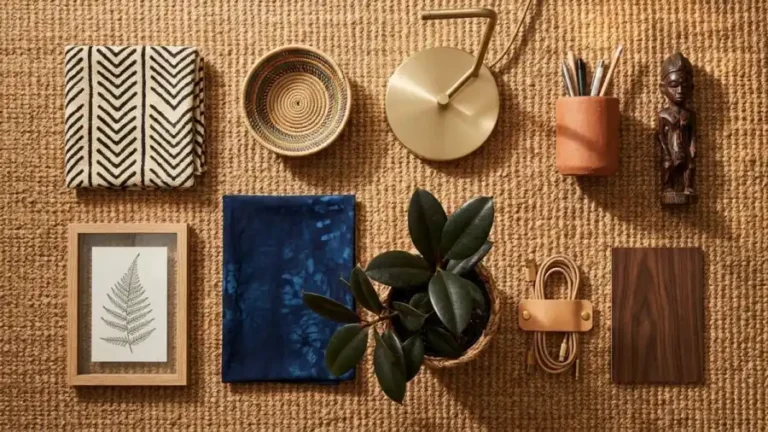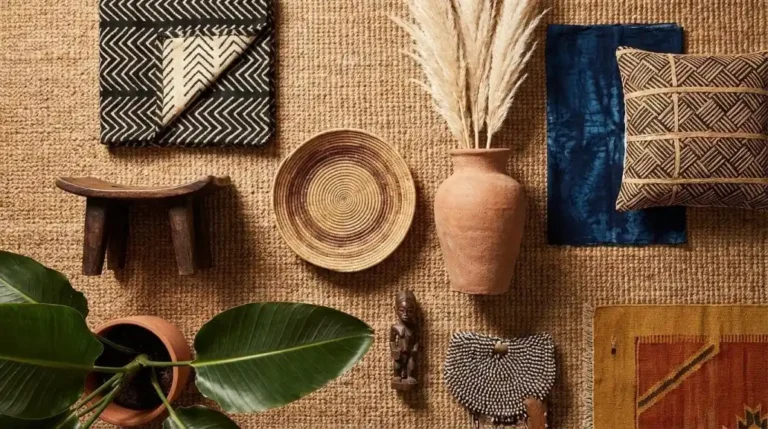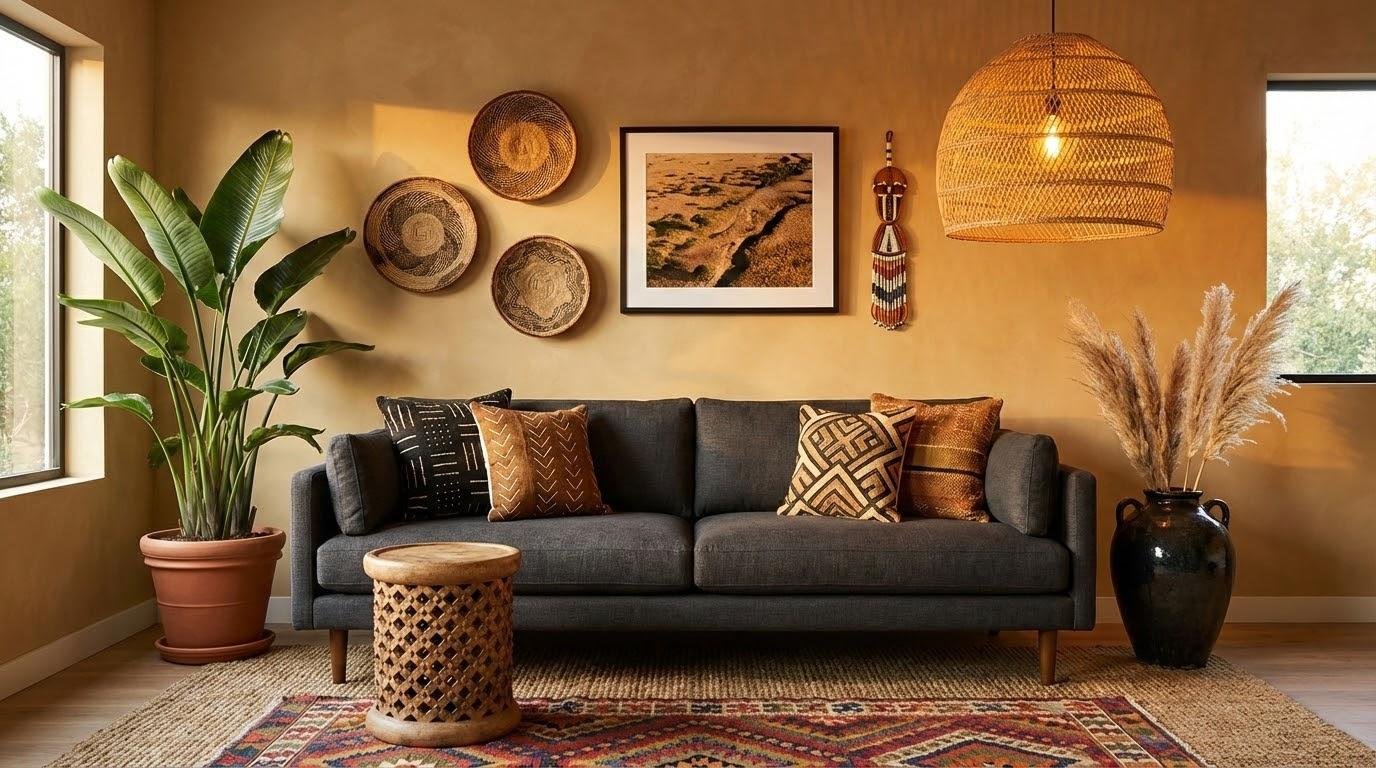
11 Afro Bohemian Decor Ideas for a Warm and Layered Home
Afro Bohemian decor doesn’t have a single entry point.
You can start with a textile, a wall piece, a plant, or a piece of furniture — and build the full system outward from whichever element you begin with.
What makes the starting point matter is the sequence that follows it. Each element you add should respond to what’s already in the room rather than existing independently of it. That responsive layering is what produces a home that reads as cohesive rather than collected.
These 11 ideas follow that logic. Each one is a specific decor move with a specific reason — and each one creates the conditions for the next.
Quick Takeaway:
- The High-Low Mix governs every pairing decision — one modern functional silhouette beside one raw ancestral artifact at every scale from furniture to wall art to object.
- The mud cloth anchor comes before any other pattern textile — it sets the geometric scale and colorway that Kuba cloth, indigo batik, and Kente-inspired prints all respond to.
- Both greenery registers — living tropical plants and dried botanical arrangements — need to be present for the botanical layer to read as complete rather than decorative.
1. Apply the High-Low Mix at Every Scale
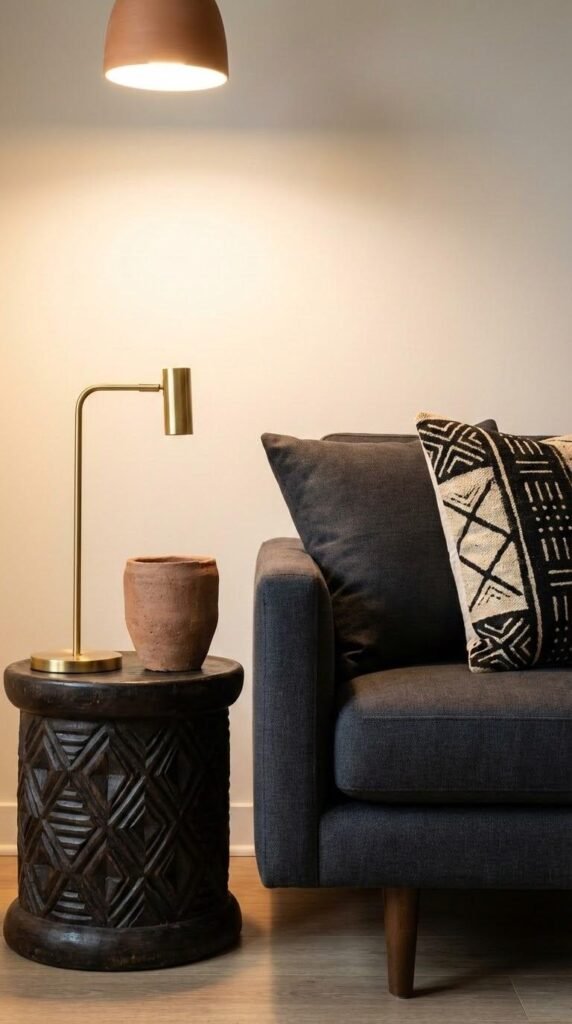
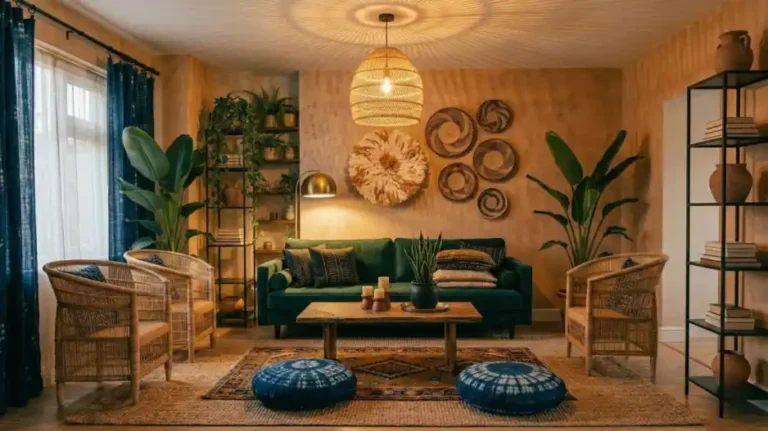
The High-Low Mix is the one decor principle that governs every other decision in an Afro Bohemian room.
At the furniture scale: a clean-lined mid-century sofa beside a hand-carved Ashanti stool used as a side table. The modern functional silhouette beside the raw ancestral artifact.
At the object scale: a minimalist brass lamp beside a hand-thrown terracotta vessel. The contemporary finish beside the handmade earth-pigment form.
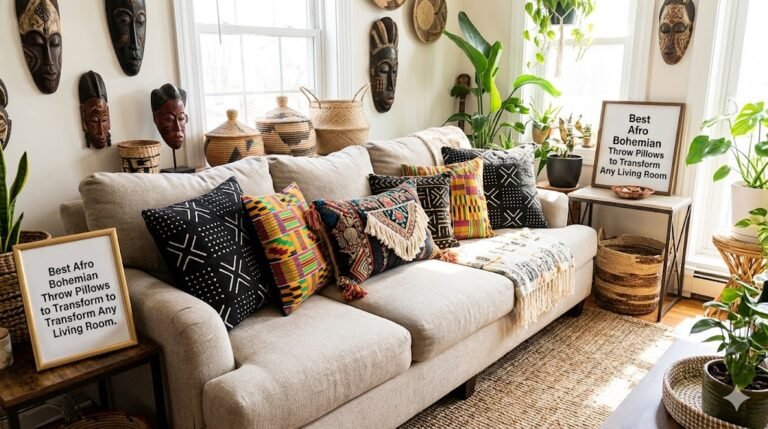
At the textile scale: a smooth charcoal linen cushion beside a rough mud cloth geometric cushion. The refined finish beside the rough-woven organic surface.
The contrast between the two registers at every scale is what prevents the room from reading as either a contemporary interior with ethnic accessories or a cultural exhibition with furniture placed inside it.
Apply it consistently — at every pairing decision in the room — and the High-Low tension becomes the room’s most distinctive visual quality.
2. Anchor Every Room With a Mud Cloth Piece
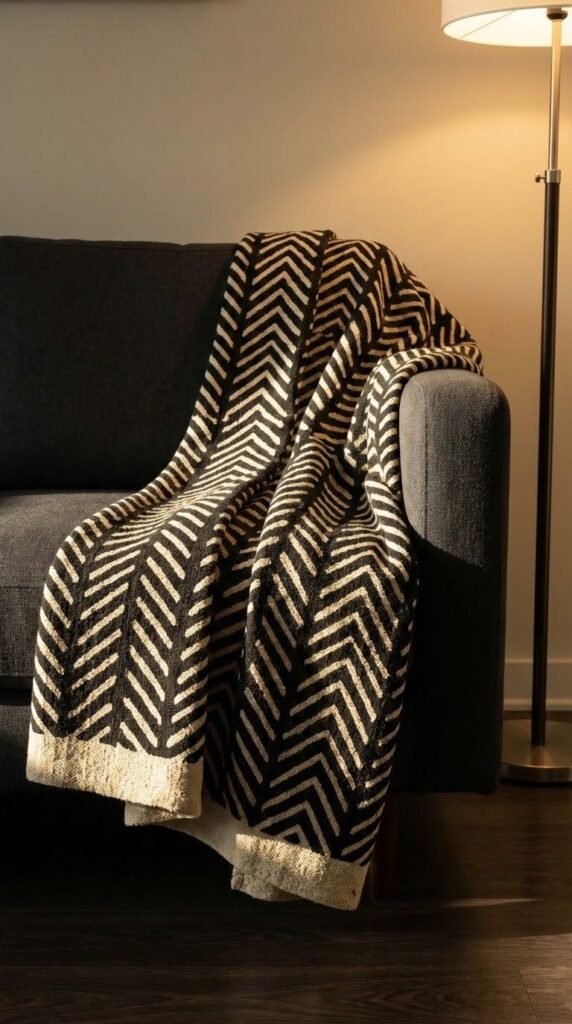
Malian mud cloth — Bogolan — is the Afro Bohemian decor system’s primary pattern anchor.
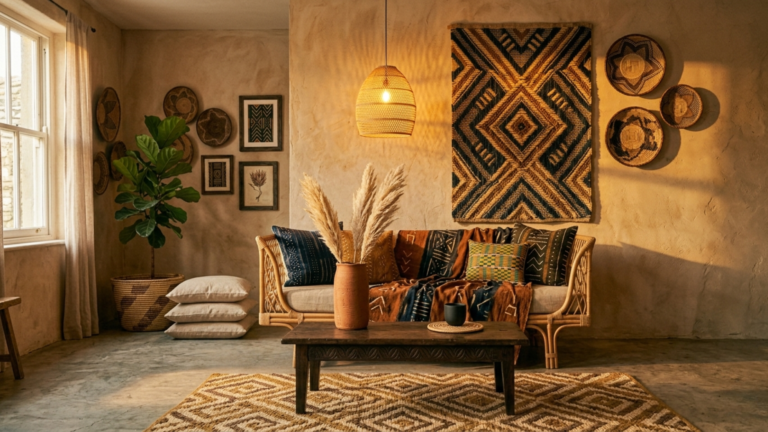
Its bold geometric patterns in black, white, and ochre carry enough visual weight to anchor an entire room’s color and pattern palette from a single piece.
Buy the mud cloth piece before any other pattern textile in the room.
The mud cloth’s colorway — warm black as the dominant, undyed cream as the ground — gives you the High Contrast neutral component in a single object. Every other pattern textile introduced after it — the Kuba cloth, the indigo batik, the Kente-inspired print — is chosen in response to the mud cloth’s geometric scale and colorway rather than independently of it.
A mud cloth throw at the sofa. A mud cloth cushion set at the bed headboard. A mud cloth runner on a console. The entry point varies by room. The anchoring logic is identical in every one.
3. Use a Hand-Carved Wood Stool as a Side Table
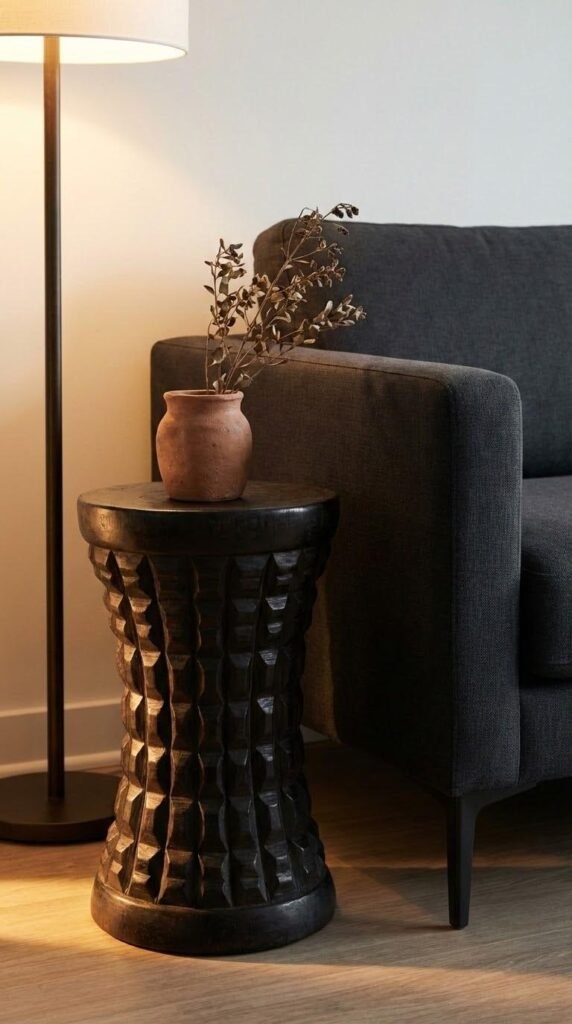
A hand-carved Ashanti or Senufo stool repurposed as a side table is the High-Low Mix’s most powerful single furniture expression.
The Ashanti stool’s geometric carved base is a ceremonial object from the Akan people of Ghana — its form carries cultural specificity that reads from across the room even to viewers who can’t name its origin.
Used as a side table beside a contemporary sofa or beside a bed, it creates the ancestral-modern pairing at the furniture scale that defines the High-Low Mix.
The seat surface — originally carved from a single piece of wood — functions as a small surface for a terracotta vessel, a candle, or a book. It’s functional. It’s materially correct. And it’s the single object that most clearly differentiates Afro Bohemian decor from generic bohemian in a room.
Buy dark-stained or naturally dark wood — ebony, mahogany, or dark-oiled teak. Light-toned wood stools reference a Scandinavian or contemporary register that sits outside the material vocabulary.
4. Layer Kuba Cloth and Indigo Batik Over the Mud Cloth Foundation
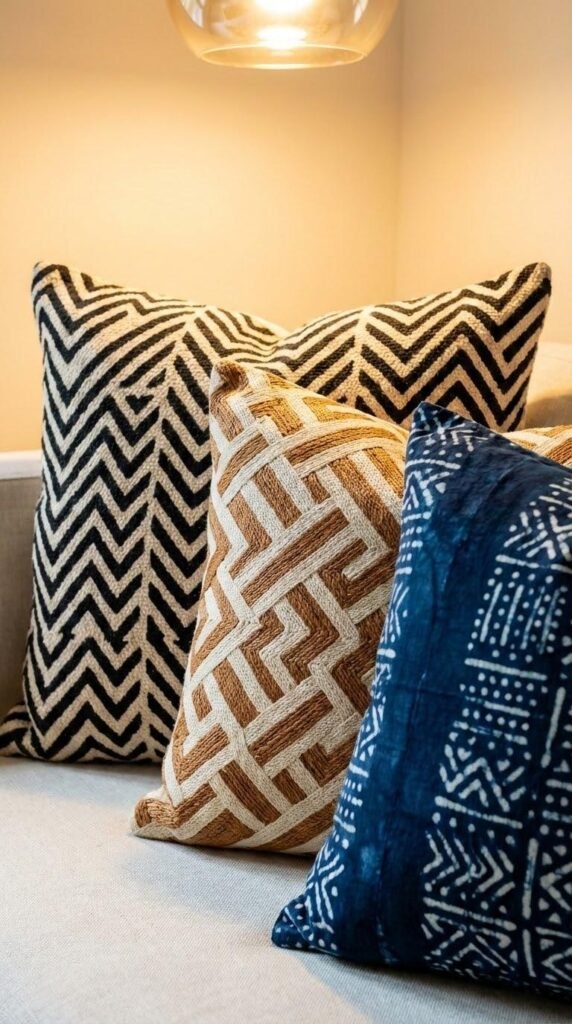
Once the mud cloth anchor is in place the secondary textile layer adds depth at a different geometric scale and palette category.
Kuba cloth from the Congo — its rhythmic patch-like embroidery and earthy cream and warm brown tones — sits at the mid-scale pattern layer. Its dense raffia-inspired surface adds maximalist pattern density without competing at the same geometric scale as the mud cloth’s cleaner chevron or diamond repeat.
Indigo batik provides the cool contrast at the third textile position. The hand-dyed wax-resist patterns in deep indigo and cream introduce the Life tone cooling accent that balances the warm earth palette dominant.
A modern Kente-inspired print in muted gold and terracotta geometric repeat sits at the fourth textile position — the accent cushion or runner that adds the vibrant Kente motif vocabulary in earth-palette tones rather than the original high-chroma colorway.
Four textile traditions. Four distinct geometric scales. One cohesive textile composition.
5. Build a Tonga Basket Gallery Wall
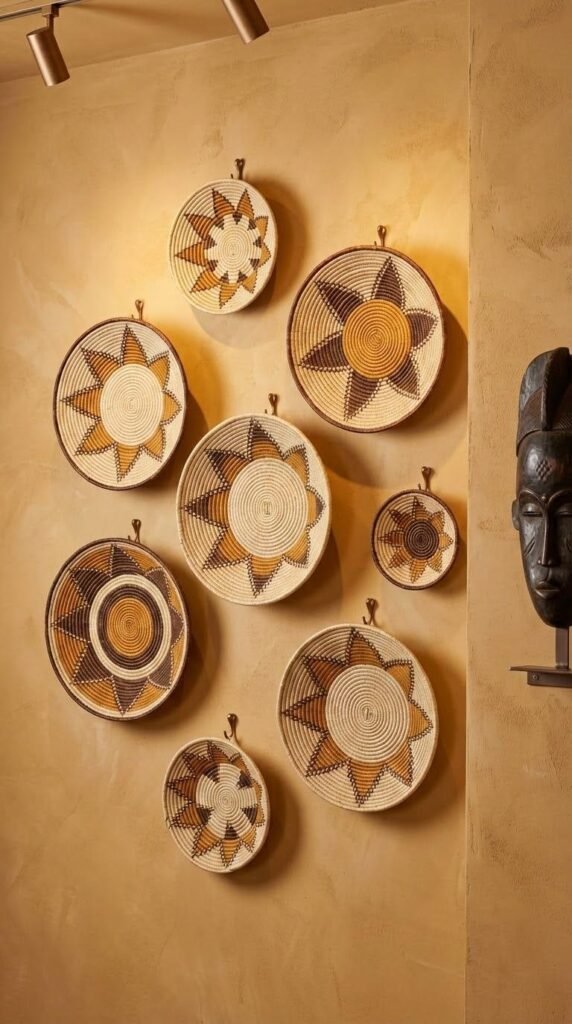
A Tonga or Binga basket gallery is the wall’s most texturally rich single element — and it’s one of the most culturally specific statements available in Afro Bohemian decor.
Groups of woven baskets — seven or more in graduated sizes arranged asymmetrically — create a focal point that no flat art piece can replicate.
The radial geometric patterns of Tonga baskets reference the same design tradition as the mud cloth on the sofa below at a different material scale — tightly coiled grass carrying the geometric vocabulary in three-dimensional woven form rather than woven cotton.
Arrange them asymmetrically — not in a grid, not in a straight line.
One large anchor basket. Two or three mid-size. Two or three small at the outer positions. The size variation creates visual movement across the wall. The asymmetric arrangement creates a composition the eye explores rather than reads at a single glance.
This is the wall element that most immediately communicates the Afro Bohemian aesthetic to anyone entering the room — before any other element has been processed.
6. Mount a Carved Mask as a Sculptural Wall Piece
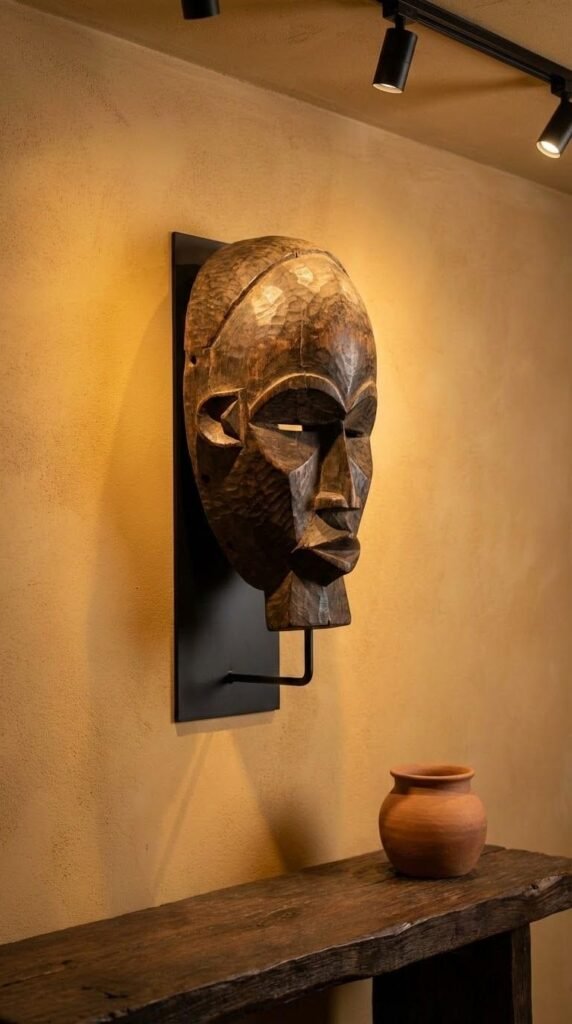
A hand-carved wooden or brass mask mounted on a museum-style wall bracket adds the three-dimensional sculptural object layer to the wall gallery.
One mask. Not a collection.
A single mask used sparingly reads as a high-impact sculptural piece — a cultural artifact given the wall position it deserves. Multiple masks clustered together reduce each individual piece to a decorative pattern rather than a distinct cultural statement.
The museum-style bracket mount — rather than a conventional picture hook — signals intentionality. It treats the mask as an artifact worthy of the same presentation logic a museum would apply, which is exactly the curatorial approach the Afro Bohemian decor system operates on.
The carved relief surface catches warm track light in deep highlight and shadow that flat framed pieces can’t produce — the three-dimensional quality of the carving reading from across the room before the specific motif detail is legible up close.
7. Introduce Yoruba Beaded Art as a Texture Layer
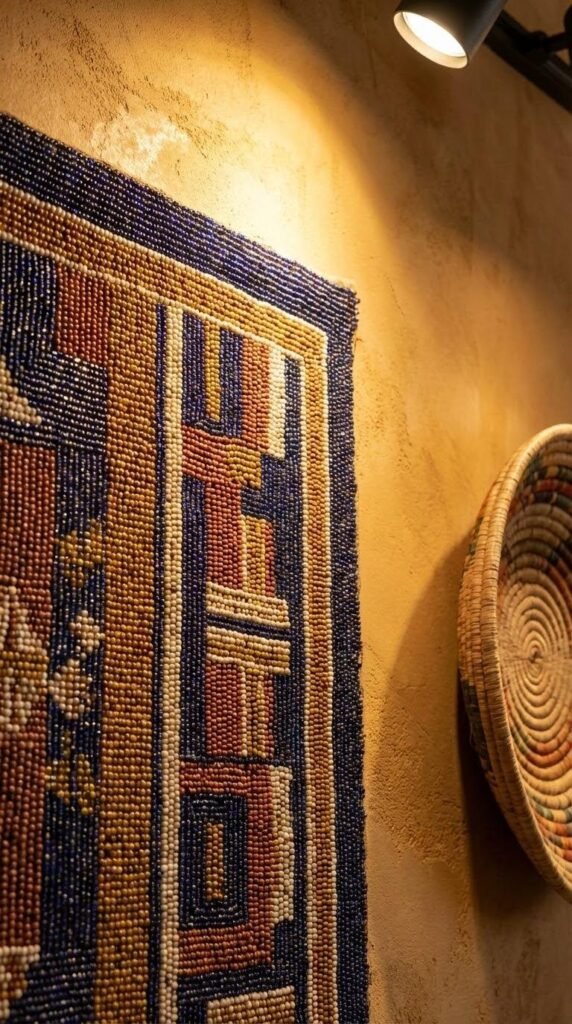
Yoruba beaded art — beaded chairs repurposed as wall hangings, beaded panels, or large-format beaded textile pieces — introduces a surface register that no other wall element in the Afro Bohemian system provides.
The dense bead surface catches light differently from every angle — thousands of small light-catch points shifting as the viewing angle changes. It’s a living surface quality that woven baskets, carved masks, and flat photography can’t replicate.
The color palette of Yoruba beadwork — deep indigo, terracotta, cream, and mustard yellow — sits directly across all three Afro Bohemian palette categories simultaneously: the Foundation Earth Tones in the terracotta and mustard, the High Contrast Neutrals in the cream, the Lush Accents in the deep indigo.
Position the beaded piece beside the basket gallery rather than on the same wall as the carved mask — each wall element occupies a distinct zone within the room’s gallery system rather than competing for the same wall space.
8. Use Macro Photography as the Contemporary Gallery Layer
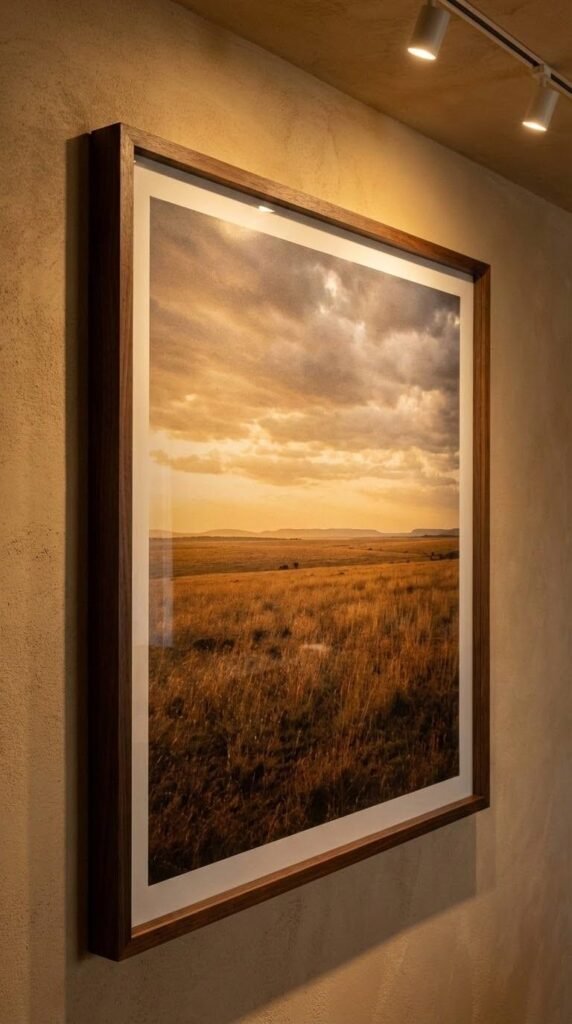
Large-scale macro photography adds the contemporary visual language layer to the Afro Bohemian wall gallery — the medium that puts the traditional craft objects in direct conversation with a modern art practice.
A 60x90cm grainy film photograph of an African landscape, wildlife close-up, or portraiture silhouette in a dark wood frame reads as both sophisticated and culturally specific simultaneously.
The photograph’s smooth glass-fronted surface provides the one flat reflective element in an otherwise entirely textural wall composition — the contrast between the photographic print and the woven baskets, carved mask, and beaded piece around it makes each element more legible by material opposition.
Grainy film texture is the correct photographic aesthetic for the Afro Bohemian system — the grain gives the photograph a material presence that sharp digital photography eliminates. The grain reads as texture rather than surface. It belongs in the same material conversation as the raffia weave and the clay tool marks.
One large print. Not a series of smaller prints. Scale is what makes the photograph read as a gallery anchor rather than a decorative wall piece.
9. Place Dried Botanicals in Heavy Ceramic Vases
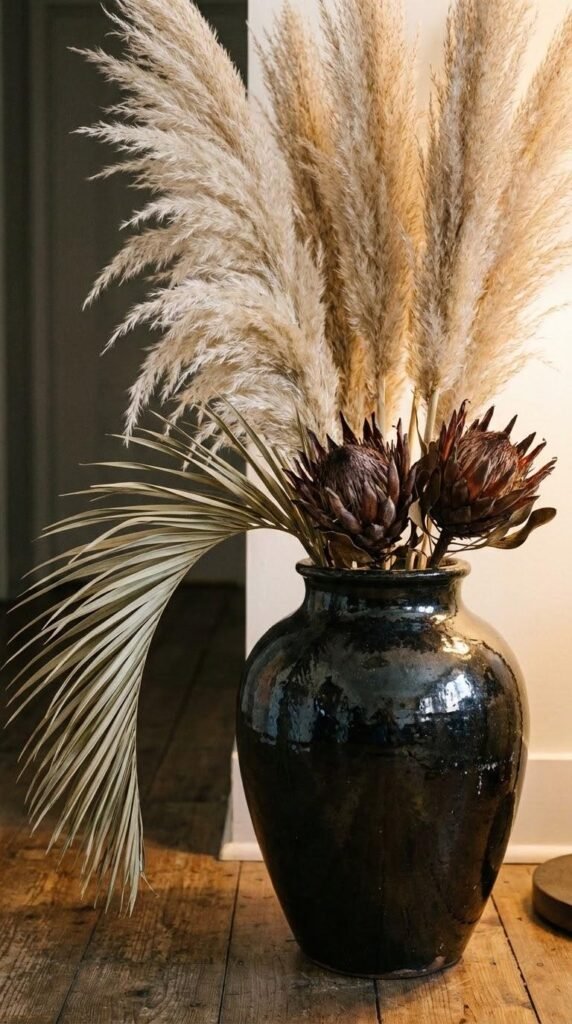
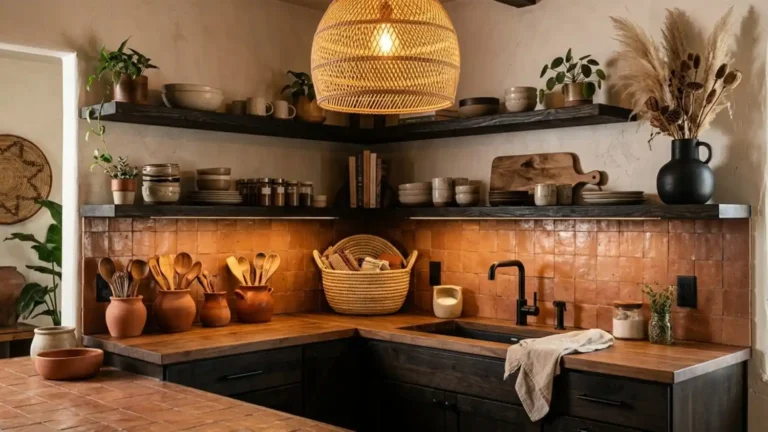
Dried botanicals in heavy ceramic vases are the Afro Bohemian decor system’s earth element — the organic material layer that provides structural form and muted tonal depth at the floor and console positions.
Dried pampas grass, protea seed heads, and preserved palm fronds each bring a distinct structural character: the soft pale plumes of pampas, the rough textured seed cases of protea, the dramatic curved arc of a dried palm frond. Combined in a single heavy ceramic floor vase they create a dried botanical composition with three distinct forms at three distinct heights.
The heavy ceramic or large terracotta floor vase is as important as the botanical content.
A heavy dark glazed ceramic floor vase reads as architecturally grounded — its weight and mass creating a visual anchor at the floor position that a lightweight vessel can’t produce. The dark glaze surface catches warm floor lamp light and deepens the composition’s shadow zone, making the pale pampas plumes read more dramatically above it.
Position dried botanical arrangements at the console position and the floor vase position — distinct from the living plant positions at the corner and high shelf zones. Two distinct botanical registers. Two distinct spatial positions. One complete botanical layer.
10. Fill the Jungle Layer With Living Tropical Plants
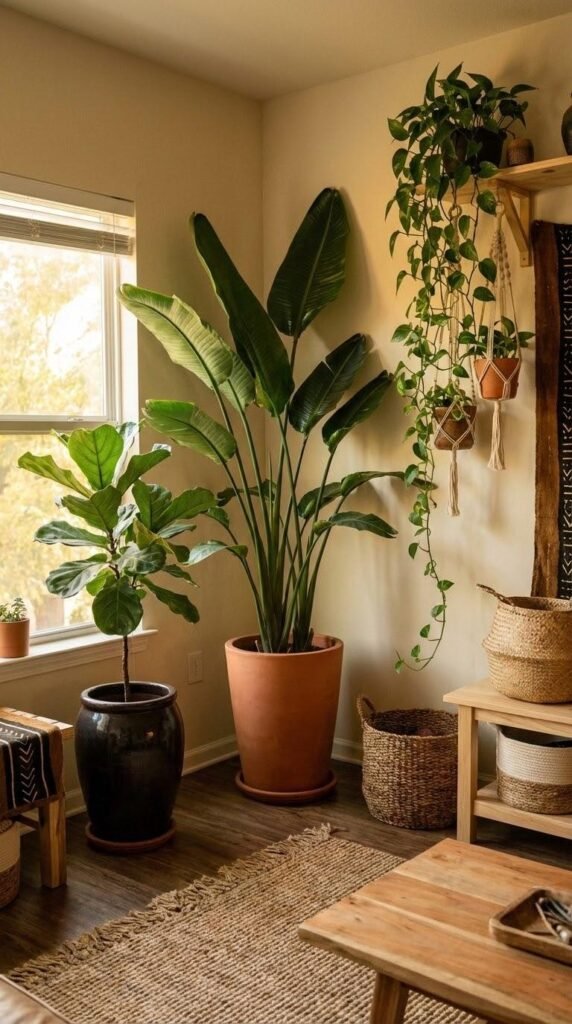
Living tropical plants provide the jungle layer that dried botanicals can’t — the color, the organic movement, and the floor-to-ceiling vertical presence that makes a room feel inhabited by nature rather than decorated with natural objects.
Three positions. Three plants. Three distinct spatial contributions.
A Bird of Paradise in a terracotta floor pot at the room’s most open corner fills the floor-to-ceiling zone with broad tropical leaf drama. Its large-scale leaf silhouette reads as a design element from across the room — a foreground presence the eye engages with rather than background vegetation.
A Fiddle Leaf Fig in a dark ceramic pot beside the window provides a second vertical structure at the natural light source — its structured upright form filtering afternoon light through broad leaves and creating a botanical threshold at the room’s light entry point.
A trailing Pothos or Snake Plant at the high shelf position fills the upper wall zone — the dead zone above shelving where wall meets ceiling — with organic movement or strong vertical lines at the room’s highest visual position.
All three in terracotta or dark ceramic pots. The container material participates in the palette. Plastic nursery pots break the organic material logic the moment they’re visible.
11. Use a Grain Mortar or Carved Object as a Repurposed Functional Piece
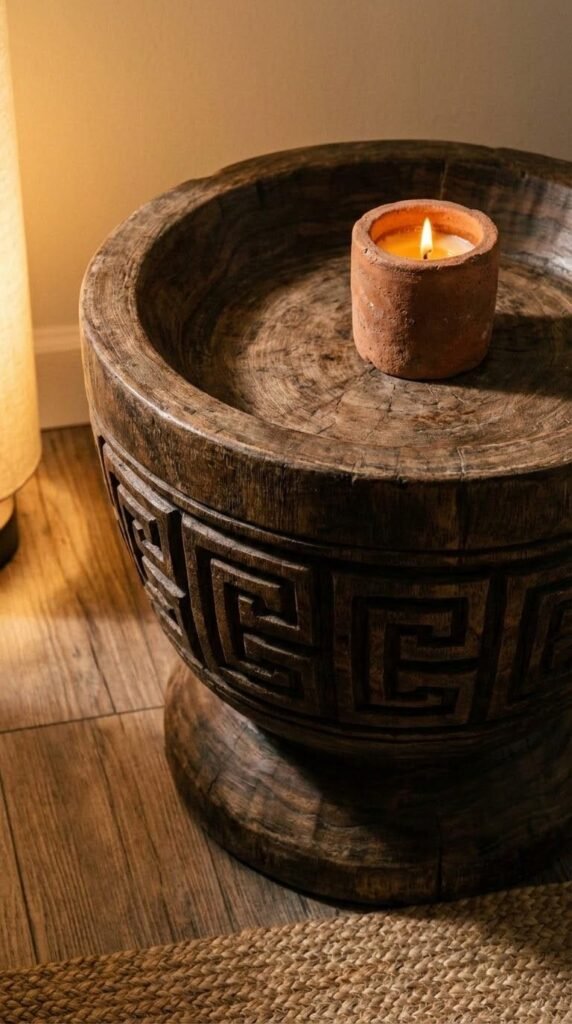
A hand-carved grain mortar repurposed as a decorative object or side surface is the purest expression of the High-Low Mix in Afro Bohemian decor.
The grain mortar — a traditional food preparation tool used across West and Central Africa — brought into the contemporary room as a side table or console object crosses the functional-to-decorative boundary in a way that purpose-built decorative objects can’t replicate.
It was made to be used. The carved geometric relief on its outer surface, the hollowed center worn smooth by use, the dark-stained wood that deepens with handling — all of these qualities read as authentically functional rather than decoratively applied.
Repurposed objects with genuine functional origins carry a material honesty that distinguishes Afro Bohemian decor from aesthetics that apply surface-level cultural references through mass-produced accessories.
A single terracotta candle holder placed in the mortar’s hollowed center — the contemporary flame inside the ancestral vessel — is the High-Low Mix reduced to its most essential expression.
That contrast, at the smallest object scale in the room, is the aesthetic’s governing principle made physically literal.
Auditing Your Home Before Adding Anything New
Before introducing any new element walk through the space and answer these questions:
- Is the High-Low Mix operating at the furniture scale — is there a modern functional silhouette beside a raw ancestral artifact at the primary seating or table position? If not identify which register is missing and address it before adding any further layers.
- Which of the four textile traditions — mud cloth, Kuba cloth, indigo batik, Kente-inspired print — is currently absent from the room? The absent tradition is the next textile purchase — not another piece from a tradition already represented.
- Is the wall gallery operating at four distinct scales — basket cluster, carved mask, macro photography, and beaded or textile art piece? Identify which scale layer is missing and address it before adding more pieces at the layers already present.
- Are both greenery registers present — living tropical plants at the corner and shelf positions, dried botanicals in heavy ceramic vases at the console and floor positions? If only one register exists the botanical layer reads as incomplete.
- Is there at least one repurposed ancestral object — a grain mortar, a carved stool, a ceremonial vessel — being used in a contemporary functional role? If every object in the room was purchased as a decorative piece the High-Low Mix is operating only at the aesthetic level rather than at the functional level where it reads most powerfully.
- Walk to the room’s entry point and identify the first element the eye lands on. Is it the mud cloth anchor, the basket gallery, or the carved mask? If the eye lands on a contemporary element first the ancestral layer needs to increase its visual weight at the room’s primary focal positions.
Afro Bohemian decor works not because of any individual piece but because of how the pieces relate to each other.
The mud cloth beside the linen. The carved stool beside the contemporary sofa. The Tonga basket beside the macro photography. The dried pampas beside the living Bird of Paradise. The Yoruba beaded piece beside the framed Kuba cloth.
Every pairing is a High-Low conversation. And every room where those conversations are happening simultaneously — at the furniture scale, the object scale, the wall art scale, and the botanical scale — reads as the Afro Bohemian aesthetic at its fullest.
Not decorated. Not curated. Inhabited — by someone who knows exactly where everything comes from and exactly why it belongs.
What to Read Next:
- Afro Bohemian Decor: The Complete Style Guide — Understand the full High-Low Mix logic and the four textile traditions that explain why every pairing decision in an Afro Bohemian room works as a unified cultural and material system.
- How to Style Afro Bohemian Decor in Any Room — Follow the full ten-step styling sequence — from lighting setup to sensory finishing layer — in the exact order that makes the system work at any room scale.
- Afro Bohemian Decor for Beginners: What to Buy First — If the High-Low logic and four-layer wall gallery feel abstract, start here with the ten anchor pieces and the exact buying sequence that makes both principles concrete from the first purchase.