Afro Bohemian Bathroom Decor Must-Haves for Beginners
The bathroom is the easiest room in the house to transform — and the most unforgiving room to get wrong.
Easy to transform because it’s small. Nine correctly chosen pieces across five positions can deliver the full Afro Bohemian aesthetic in a space that a living room arrangement would take forty pieces to fill.
Unforgiving because that same small scale makes every wrong decision immediately visible from every position in the room simultaneously.
The sequence matters here more than in any other room. Start with hardware before textiles. Secure your mirror before the wallpaper. Finalize the shower curtain before choosing a bath mat to ensure a cohesive design.
Each purchase sets up the next one — and reversing the order means making decisions without the reference points that make them correct.
Quick Takeaway:
- Hardware replacement comes first — wrong fixtures undermine every correct textile and object placed around them regardless of how good the individual pieces are.
- The mud cloth shower curtain is the bathroom’s highest-impact single textile purchase — it delivers the High Contrast palette component at the room’s largest textile surface simultaneously.
- The 60-30-10 palette audit happens before any purchase — it tells you exactly what the room needs before you spend anything on it.
The Palette Framework: 60-30-10 Before Any Purchase
Before buying anything run the 60-30-10 audit on the existing bathroom.
Walk through and estimate what percentage of visible surface area currently falls in each category.
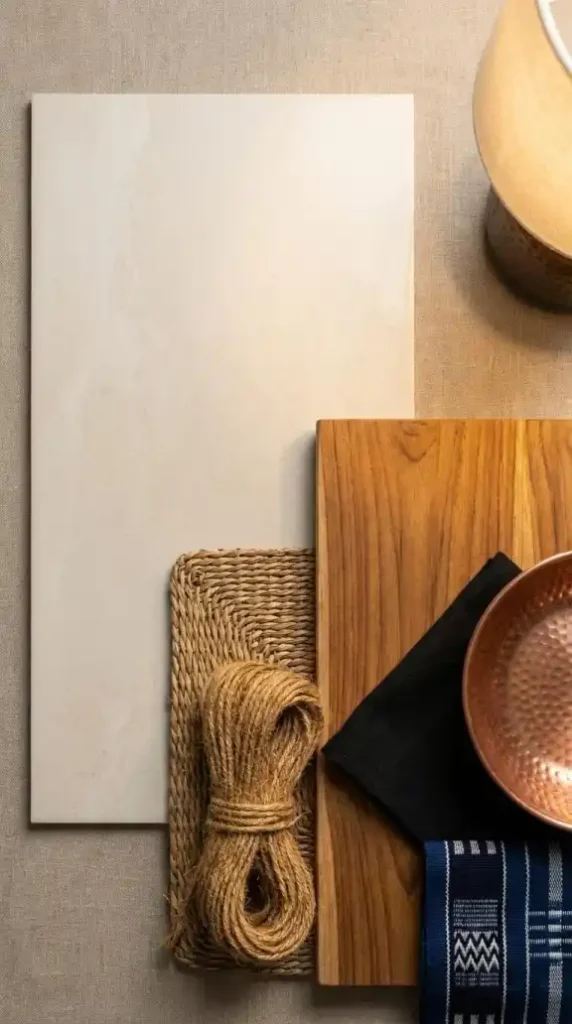
60% Neutral Base — creamy whites, charcoal, deep ebony in large format tiles and smooth wall surfaces. The visual breathing room that makes the texture and accent layers legible rather than overwhelming.
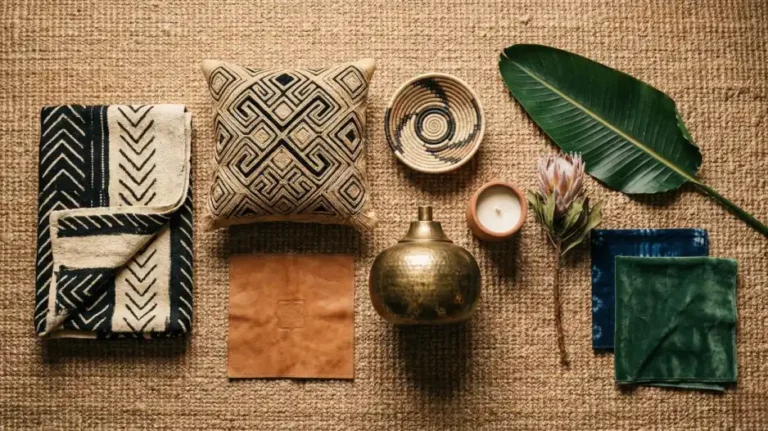
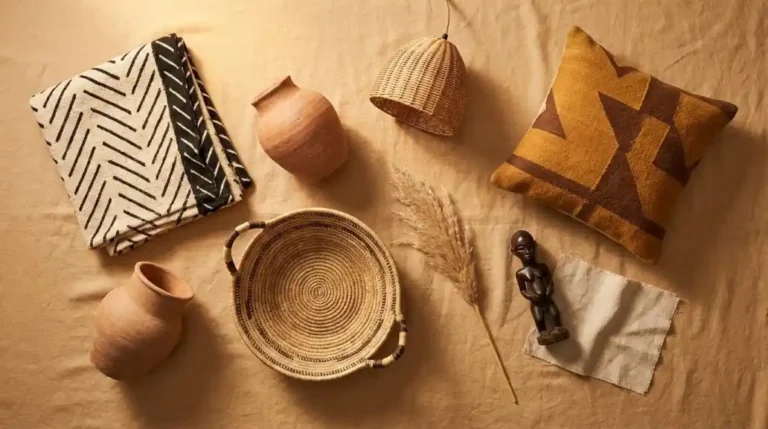
30% Afro Bohemian Texture — reclaimed wood, seagrass, mud cloth, jute, rattan, Turkish cotton. The natural material vocabulary at the functional object positions.
10% High Contrast Accent — bold art, hammered copper hardware, matte black fixtures, vibrant plant life. The punctuation marks that signal the aesthetic’s cultural confidence.
Most existing bathrooms run at 80–90% neutral base with almost zero texture or accent layer.
That tells you the first five purchases should all target the 30% texture category before the 10% accent is addressed.
The audit is the shopping plan. Run it before opening a single browser tab.
First Purchase: Hammered Copper or Brass Hardware Set
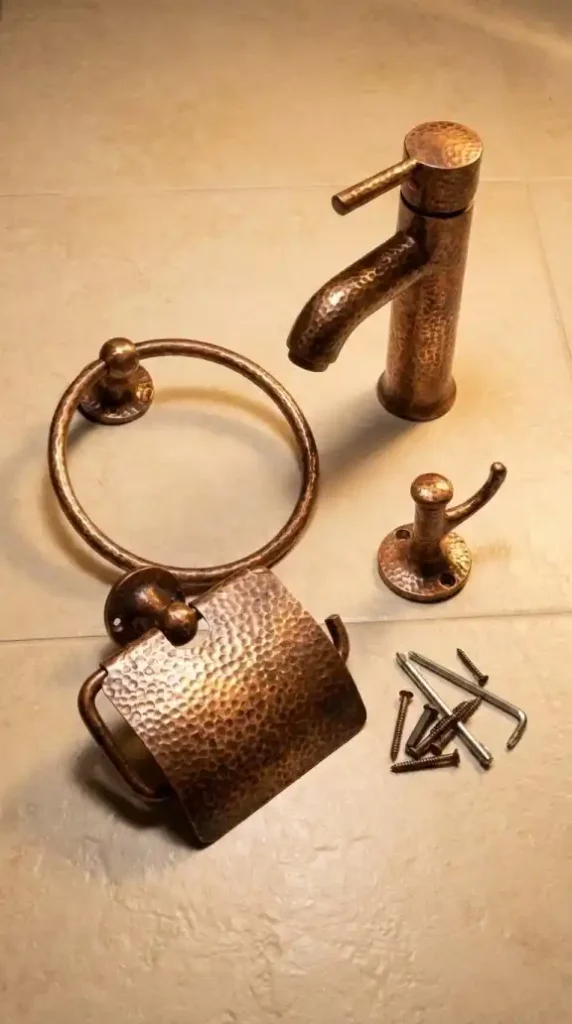
Hardware replacement is the first purchase — before the shower curtain, before the mirror, before any textile.
This is the sequence rule that most beginners reverse. They buy the mud cloth curtain first because it’s more exciting, then notice the chrome faucet undermining it from the vanity position.
Chrome and polished nickel hardware reads as clinical and cool. It signals a different material logic from the hammered copper and natural fiber vocabulary the aesthetic runs on.
One chrome fixture visible in an otherwise correctly assembled Afro Bohemian bathroom pulls the room’s material coherence toward contemporary rather than artisanal — and in a small space that single incongruent finish is visible from every position simultaneously.
Buy a complete hammered copper or antique brass hardware set — faucet, towel ring, toilet paper holder, and robe hook — in the same finish before anything else enters the room.
Consistent finish across every metal position is what creates the “collected over time” quality the aesthetic depends on.
The hammered surface catching 2700K warm light in multiple shifting highlight points is the material equivalent of the hammered brass floor lamp in the living room — a living metallic quality that smooth hardware finishes eliminate entirely.
Second Purchase: 2700K Warm Bulbs and Sconce Fixtures
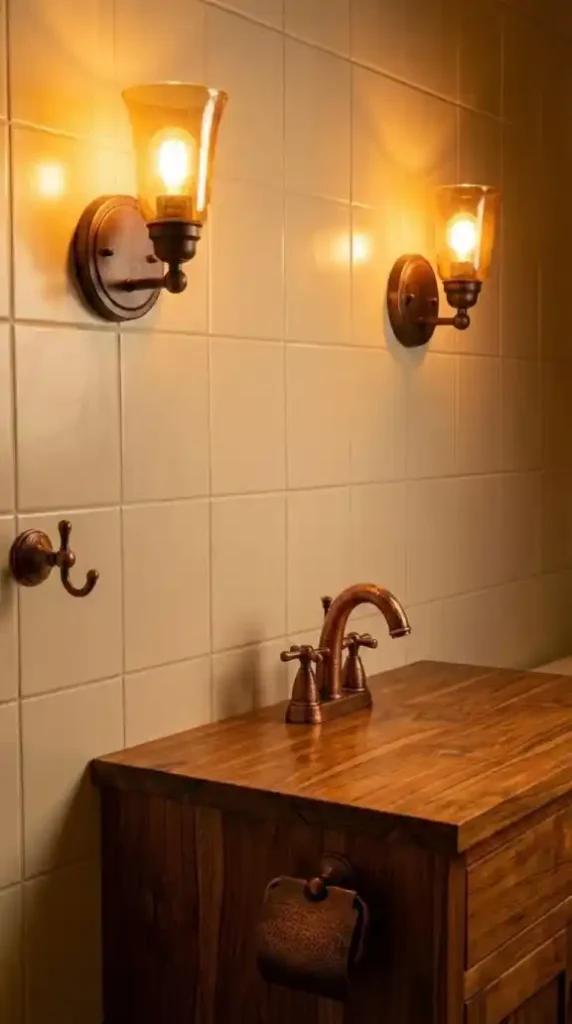
The lighting purchase comes second — before any textile or object is evaluated under its actual conditions.
Cool-white bathroom lighting shifts terracotta toward grey-brown, flattens the teak vanity grain, and makes the mud cloth’s cream tones read cold.
The hammered copper hardware you just installed will look correct under 2700K warm sconce light — the warm amber light activates the copper’s living metallic quality and deepens the hammered surface’s highlight and shadow variation.
Under cool white the same hardware reads as dull brown metal rather than warm artisanal copper.
Replace every bathroom bulb with 2700K warm LED before evaluating any other element.
Wall-mounted sconces on either side of the mirror position — rather than a single overhead downlight — provide the most materially accurate bilateral warm light for the bathroom’s vanity surfaces.
Two sconces at face height eliminate the harsh overhead shadow that single downlights produce and give every surface in the room its most accurate color temperature reading.
Third Purchase: A Mud Cloth Shower Curtain
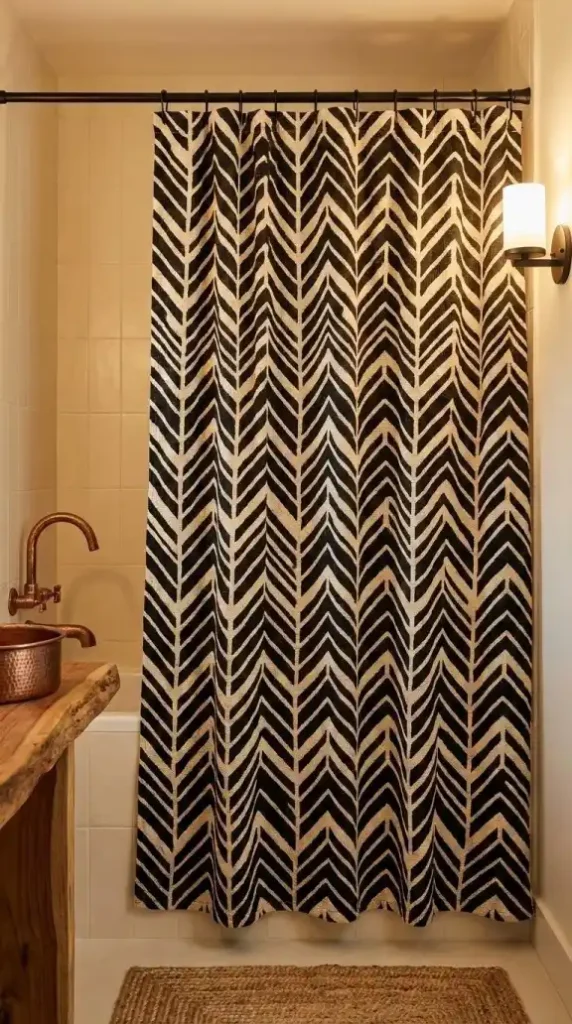
The mud cloth shower curtain is the bathroom’s highest-impact single textile purchase.
At curtain scale Bògòlanfini delivers the High Contrast palette component across the bathroom’s largest textile surface — the most visually dominant vertical position in the room.
The raised cotton weave catches warm 2700K sconce light the same way mud cloth performs in other rooms — creating surface depth that flat printed fabric curtains can’t replicate.
This is the 10% High Contrast accent layer working at its maximum surface area within the bathroom’s constrained dimensions.
Hang it from a matte black rod — not chrome, not polished brass.
The matte black rod connects the curtain to the broader hardware finish logic of the room — creating a visual thread between the curtain position and the hammered copper towel rings and faucet at the vanity.
Buy the curtain before the bath mat and before the wallpaper.
The curtain’s black and cream colorway is the palette reference that every subsequent pattern and color decision responds to — just as the mud cloth throw anchors the living room’s textile hierarchy, the mud cloth curtain anchors the bathroom’s.
Fourth Purchase: A Circular Rattan-Framed Mirror
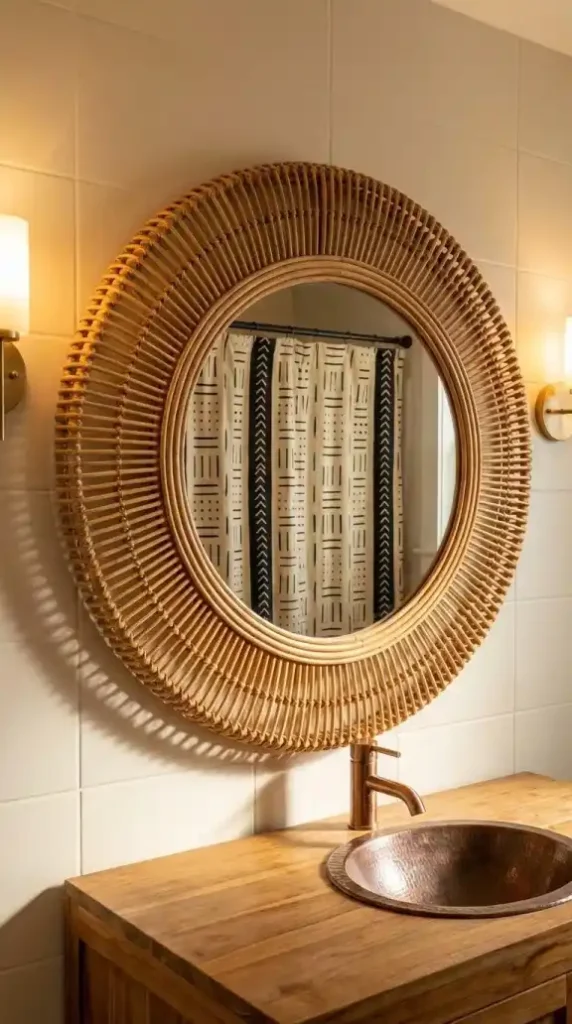
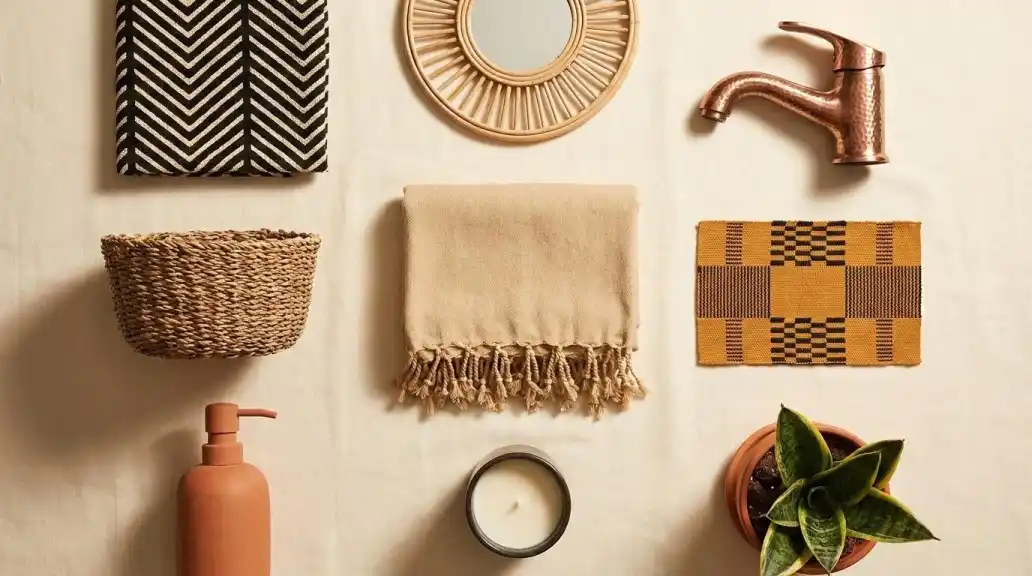
The circular rattan mirror goes up after the mud cloth curtain is in place — because the mirror’s reflective surface picks up the curtain’s geometric pattern and projects it back into the room from the vanity position.
That reflection doubles the mud cloth’s visual presence without adding another textile surface.
A 60–80cm diameter circular rattan-framed mirror reads as a design element. Smaller reads as an accessory.
The circular form breaks the rectangular geometry of the tile walls and vanity with the same organic logic that a Juju hat breaks a living room wall — introducing the organic circular shape that the room’s angular architecture can’t produce on its own.
The open rattan weave frame introduces the natural fiber vocabulary at the bathroom’s primary vertical surface — connecting the mirror to the seagrass baskets that will go on the shelf and the jute bath mat that will go on the floor.
Once the rattan mirror is mounted the room’s natural fiber thread is established. Every subsequent natural material object added to the space reads as part of the same material logic rather than an isolated decorative choice.
Fifth Purchase: Reclaimed Wood Shelving or a Teak Vanity
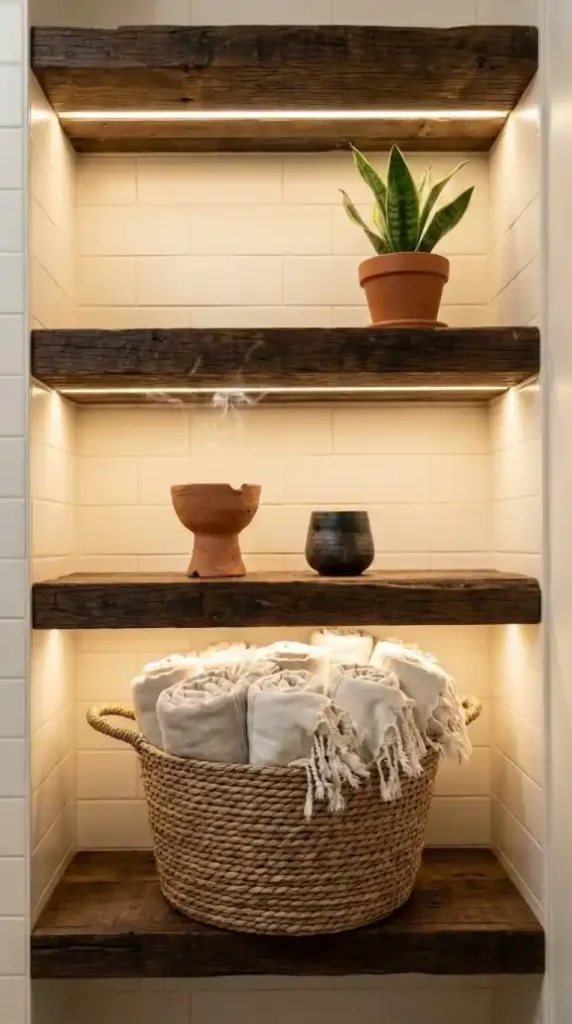
Reclaimed wood shelving or a teak vanity is the bathroom’s grounding furniture decision — the dark wood value anchor that prevents the neutral base from reading as undifferentiated cream and tile.
If a full vanity replacement is feasible: a teak vanity with deep grain variation and natural oil resistance is the ideal. Teak develops patina with moisture exposure — darkening and deepening over time in the same way that hammered copper and leather develop character with use.
If a full vanity replacement isn’t feasible: one section of open reclaimed wood shelving installed above or beside the existing vanity is the most impactful single structural change available in an existing bathroom.
Dark-stained or naturally aged reclaimed wood against cream tile creates the value contrast that the bathroom’s neutral base needs to read as a deliberate palette choice rather than a default.
The open shelving also solves the Afro Bohemian texture layer’s most fundamental bathroom problem — it gives the seagrass baskets, terracotta objects, and dried botanicals a surface to land on rather than being confined to the vanity top.
Buy the shelving before the seagrass baskets. The shelf depth and width determines the basket sizes that fit correctly — and baskets chosen before the shelf exists are almost always the wrong size for the position they need to fill.
Sixth Purchase: Seagrass Baskets in Three Sizes
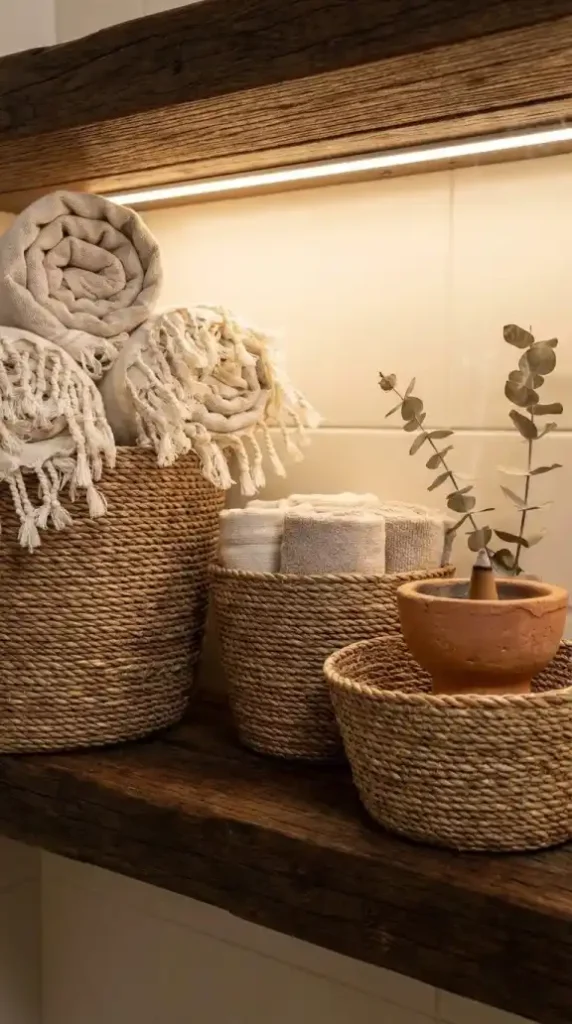
Seagrass baskets are the bathroom’s highest-value addition to the 30% Afro Bohemian texture layer — they solve the storage problem and contribute to the material vocabulary simultaneously.
Three baskets in graduated sizes. Each holding a distinct functional category.
Large: rolled Turkish cotton fringe towels with fringe visible at the top edge.
Mid: smaller hand towels and washcloths.
Small: the terracotta incense burner and dried botanical stems — the sensory and decorative objects that don’t need a dedicated shelf position of their own.
The graduated sizes create the odd-number height variation that makes the shelf arrangement read as curated rather than organized.
Natural seagrass tone sits within the Grounded Neutral palette category — warm honey fiber reading as cohesive with the jute bath mat below and the rattan mirror frame above.
One additional large floor basket beside the vanity or toilet holds extra towels or bathroom supplies and extends the seagrass vocabulary to the floor level — adding natural fiber presence at the room’s lowest visual zone without consuming shelf space.
Seventh Purchase: Turkish Cotton Fringe Towels
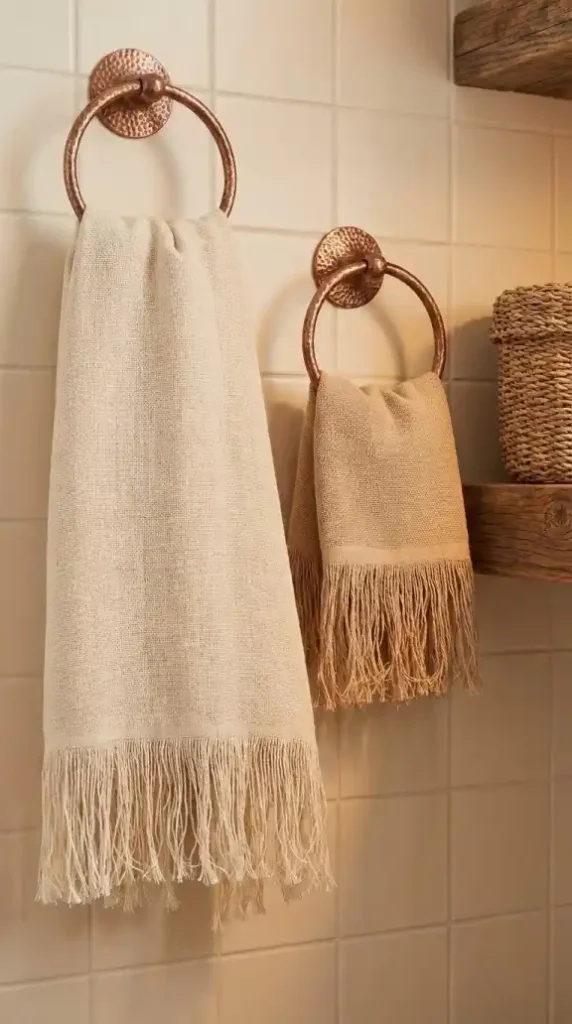
Turkish cotton towels with fringe are the bathroom’s functional textile — and in the Afro Bohemian aesthetic they’re a design element simultaneously.
The fringe detail adds bohemian softness at the functional textile position that plain terry toweling eliminates. The natural fiber construction keeps the towel within the same organic material vocabulary as the seagrass baskets and jute bath mat.
Natural undyed cotton and warm sand tones sit within the Grounded Neutral palette category — the 60% base layer at the towel position.
Buy one bath towel and one hand towel for the display position on the hammered copper towel rings.
Two towels maximum at the display position. The large seagrass basket on the shelf handles the stored towel supply — the displayed towels are a design layer, not a linen inventory.
The fringe should hang freely from the towel ring — not tucked or folded away.
The loose natural fiber fringe catching warm sconce light at the functional textile position is the detail that connects the towels to the broader bohemian material logic of the room without requiring any additional decorative object.
Eighth Purchase: A Kente-Inspired Hand-Woven Bath Mat
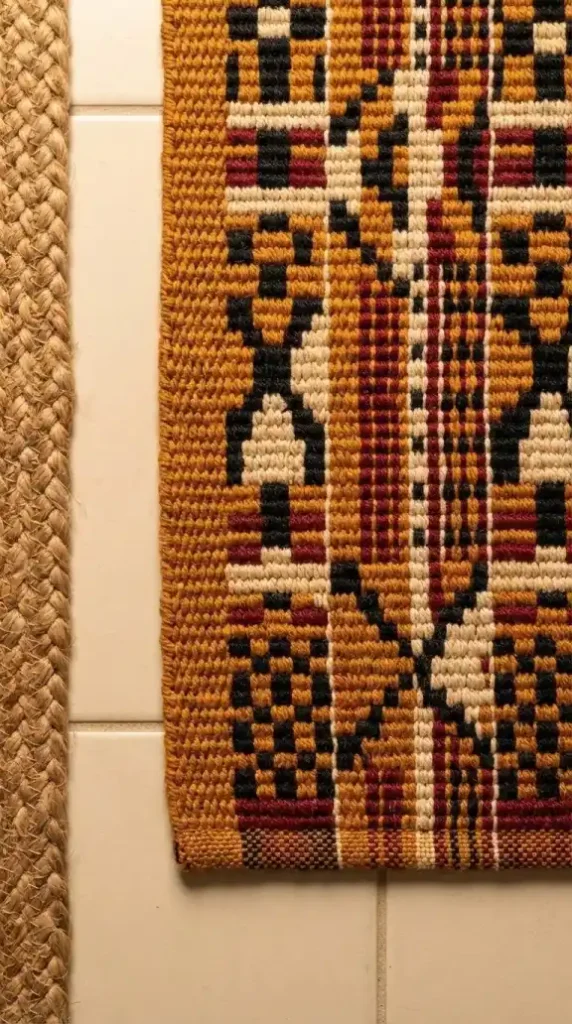
The kente-inspired hand-woven bath mat is the floor’s Heritage Accent pattern layer — and it goes at the shower exit position, not in front of the vanity.
The vanity position belongs to the jute bath mat — neutral, rough, organic. The shower exit position belongs to the kente mat — patterned, dense, Heritage Accent color in ochre, black, and cream geometric weave.
Two positions. Two mats. Two distinct material and palette characters.
The kente-inspired geometric pattern at the shower exit introduces the Heritage Accent layer at the floor’s most intimate position — the point of first foot contact when stepping out of the shower.
The dense hand-woven surface is also the most tactilely distinct floor texture in the bathroom at that position — rough jute at the vanity, dense woven geometric at the shower. The functional logic and the aesthetic logic are the same decision.
Buy the jute mat before the kente mat.
The jute base establishes the floor’s neutral fiber foundation. The kente accent mat is chosen in response to the jute’s honey tone — its ochre and black colorway complementing rather than competing with the natural fiber base beside it.
Ninth Purchase: Terracotta Vanity Objects and Incense
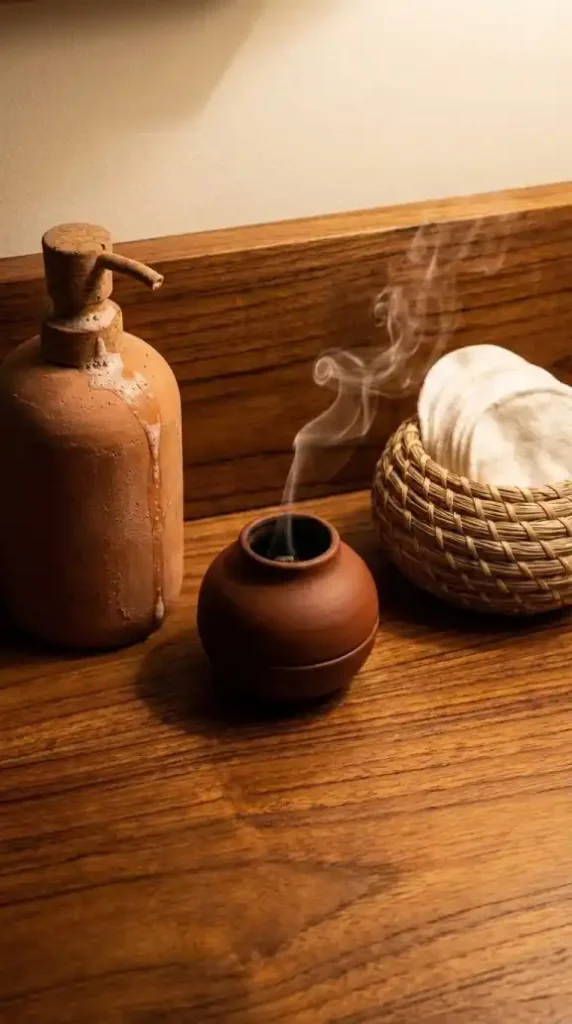
The terracotta vanity objects are bought and styled last — because the vanity vignette’s three pieces need to respond to everything already assembled in the room rather than being chosen in isolation.
Three objects. Odd number. Deliberate negative space on both outer sides.
A terracotta clay soap dispenser with a natural cork or dark wood pump. The rough unglazed clay surface reading as materially cohesive with the terracotta pots holding the bathroom plants. Functional object with full material identity — the highest standard for any Afro Bohemian bathroom piece.
A small terracotta or dark ceramic incense burner — sandalwood or frankincense. Adding the sensory layer at the most intimate bathroom surface.
Sandalwood and frankincense reference the same warm earthy material origin as the aesthetic’s visual palette through scent association. The thin smoke wisp adds movement to the static vignette. The scent crosses the room before the eye has resolved any surface detail — making the bathroom immersive rather than merely visual.
A small seagrass basket holding cotton rounds or daily-use objects. Functional. Materially correct. Completing the three-object arrangement with a natural fiber element at the smallest vignette scale.
Deliberate negative space on both outer sides.
The empty teak surface beside the grouping is the visual breathing room that the bathroom’s small scale requires most urgently. Place the three objects. Step back. Leave the remaining surface empty.
Tenth Purchase: Humidity-Tolerant Starter Greenery
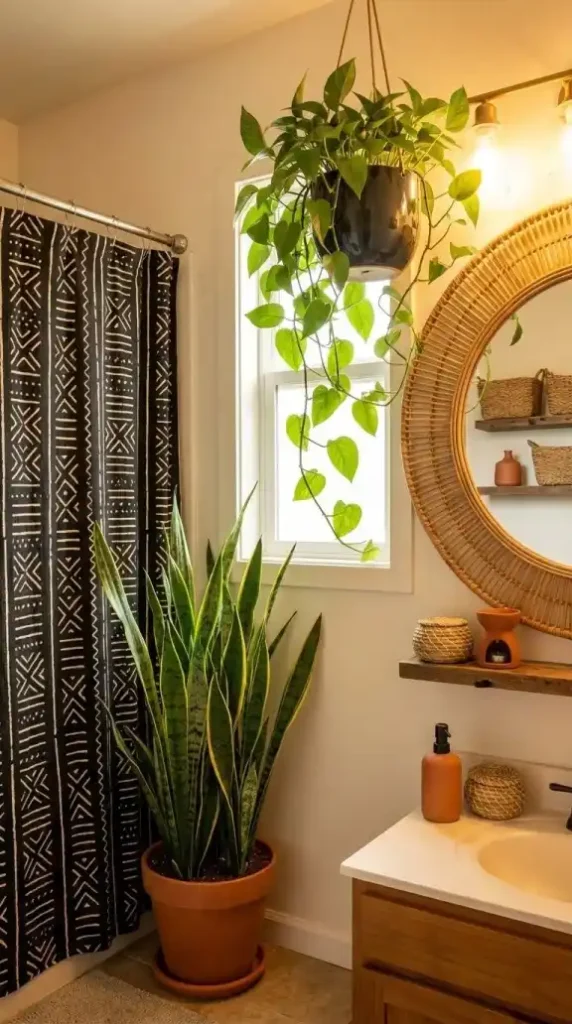
Humidity-tolerant greenery is the bathroom’s final structural layer — not a decorative afterthought made once everything else is complete.
Two starter plants cover the bathroom’s two primary spatial zones.
A Snake Plant — Sansevieria — in a terracotta pot in the corner beside the shower. Upright, stiff, architectural. Native to West Africa. Among the most humidity-tolerant plants available. Low-maintenance in the conditions a bathroom naturally provides. Its strong vertical leaf form provides structural counterpoint to the softer organic elements throughout the room at the floor spatial zone.
A trailing Pothos in a dark ceramic hanging planter above the window or at the highest wall position. The cascading vines fill the upper bathroom zone with organic movement — the jungle layer at the room’s highest visual position. Pothos thrives in low light and high humidity making it the most reliable starter plant for bathrooms with limited natural light.
Both in terracotta or dark ceramic containers.
No plastic nursery pots visible in an assembled Afro Bohemian bathroom. Repot both plants before they enter the space — the container material participates in the palette and a plastic nursery pot is the single most common material break in an otherwise correctly assembled room.
A small Bird of Paradise on the reclaimed wood shelf is the third greenery position — added once the Snake Plant and Pothos are established and the shelf weight tolerance is confirmed.
What to Buy Last — Not First
Two categories that bathroom beginners consistently buy too early:
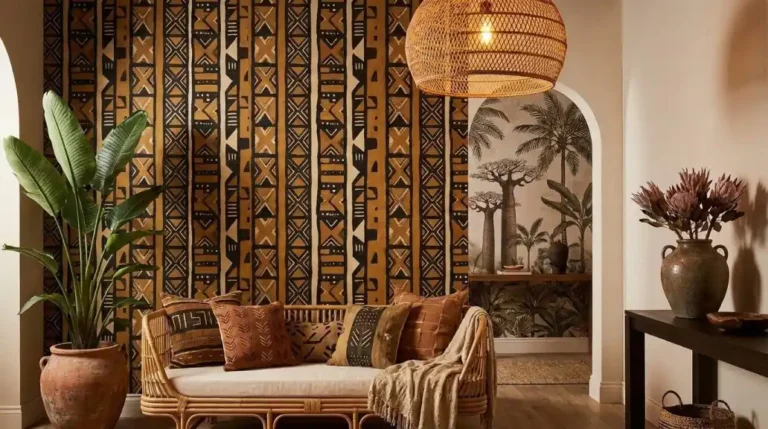
Bold botanical or mud cloth accent wall wallpaper.
The wallpaper goes on after the mirror is mounted — because the mirror position determines which wall becomes the accent wall and the rattan frame needs to be visible against the wallpaper before the pattern choice is confirmed as correct. Bought before the mirror exists the wallpaper has no compositional anchor to respond to.
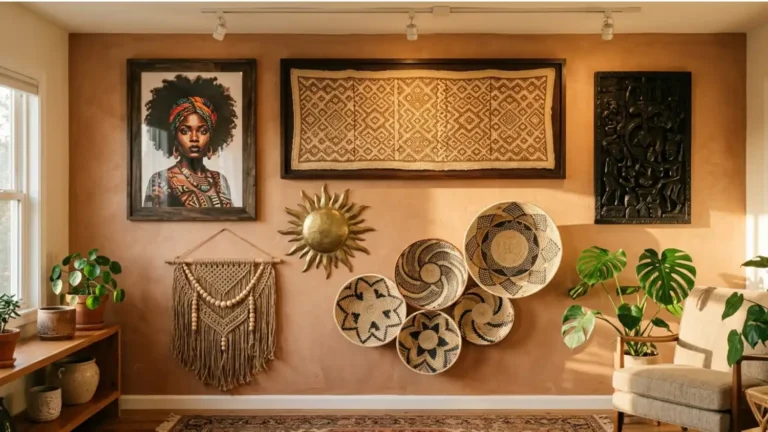
Framed African silhouette art and carved masks.
Both belong in the 10% High Contrast accent layer — but both are secondary wall elements that respond to the mud cloth curtain and rattan mirror already in position. Bought before those anchor pieces exist they read as isolated wall objects rather than components of a composed bathroom gallery. Wait until the primary textile and mirror positions are resolved before introducing wall art.
The Beginner Buying Sequence at a Glance
Before making any purchase answer these questions:
- What is the current hardware finish throughout the bathroom? Identify every metal position — faucet, towel rings, toilet paper holder, robe hooks. If any are chrome or polished nickel that’s the first replacement regardless of how many there are. Consistent hammered copper or brass across all positions before any other purchase.
- What color temperature are the current bathroom bulbs? Replace before evaluating the teak vanity grain, the mud cloth curtain color, or the terracotta soap dispenser tone. All three read incorrectly under cool white light.
- Is there a shower curtain position? If yes that’s the bathroom’s largest textile surface and first textile purchase. The mud cloth curtain at that position delivers more aesthetic impact per square meter than any other single piece in the room.
- Is there open shelving? If all storage is behind closed cabinet doors the Afro Bohemian texture layer has no surface to land on. One section of open reclaimed wood shelving is the most structurally significant change available — buy it before the seagrass baskets that will sit on it.
- What does the current mirror look like? Frameless or chrome-framed mirrors replaced with a circular rattan frame change the bathroom’s material reading at the most prominent vertical surface in the room. Measure the wall space above the vanity before buying the mirror — the diameter needs to sit within the wall width with clearance on both sides.
- Is there a corner beside the shower with enough floor space for a Snake Plant pot — approximately 30cm square? Identify it before buying the plant. Position determines long-term health and therefore the greenery’s structural contribution to the room.
Ten pieces. One palette framework. The full beginner bathroom.
The hammered copper hardware sets the artisanal material register at every metal position. The 2700K sconces reveal it correctly after dark. The mud cloth curtain delivers the High Contrast pattern at the largest textile surface.
The circular rattan mirror introduces the natural fiber vocabulary at the primary vertical position and doubles the curtain’s visual presence through reflection. The reclaimed wood shelving grounds the material layer with dark wood value anchor. The seagrass baskets carry functional storage as texture contribution. The Turkish cotton fringe towels complete the natural fiber textile layer at the display position.
The kente-inspired bath mat adds Heritage Accent pattern at the shower floor zone. The terracotta vignette completes the vanity surface with the sensory and material finishing layer. The Snake Plant and Pothos fill the two primary spatial zones with humidity-thriving organic life.
Each piece earns its place by doing something no other piece on the list is already doing.
Small scale. High precision. Maximum coherence.
That’s the Afro Bohemian bathroom — and it’s the room that proves the aesthetic doesn’t need square footage to perform at its fullest.
Stay in the Room:
- Afro Bohemian Bathroom: The Complete Style Guide — Understand the full material logic behind every bathroom decision — from the 60-30-10 palette distribution to the hammered copper hardware thread — as a unified system applied at small scale.
- 11 Afro Bohemian Bathroom Ideas for a Warm and Layered Space — See each of the five bathroom positions — shower, vanity, mirror, floor, and shelf — addressed as specific moves with a specific reason behind each one.
- How to Style an Afro Bohemian Bathroom — Follow the full ten-step styling sequence in the exact order that makes each decision easier than the last — from the 60-30-10 audit to the sandalwood incense finishing layer.