Afro Bohemian Bathroom: The Complete Style Guide
The bathroom is the most constrained room in the house — and constraint, handled correctly, produces the most cohesive results.
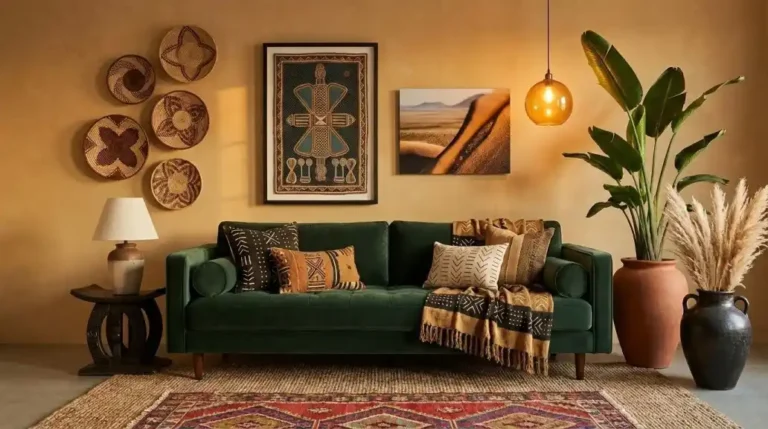
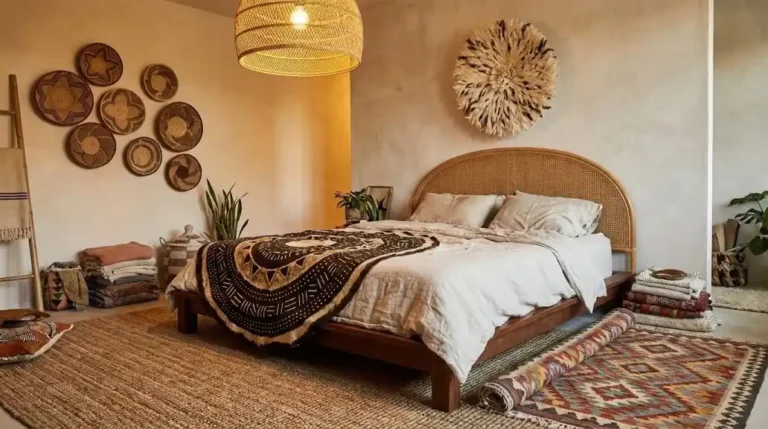
Every other room in the house has spatial generosity. The living room has a full wall gallery, a sofa arrangement, a rug stack, and a corner for a Bird of Paradise. The bedroom has a bed canvas, a headboard statement, and a floor-to-ceiling plant. The bathroom has a vanity, a mirror, a shower, and a floor.
That’s the brief. And within that brief, the Afro Bohemian aesthetic performs with surprising power — because the style’s core logic is built on material contrast, pattern specificity, and artisanal hardware. All three operate at small scale just as effectively as at large scale.
The bathroom doesn’t need square footage to deliver the full aesthetic. It needs the right surface materials, the right hardware, the right textiles at the functional positions, and the 60-30-10 palette logic applied with more precision than any other room in the house.
Quick Takeaway:
- The bathroom delivers the Afro Bohemian aesthetic at small scale — mud cloth shower curtain, teak vanity, hammered copper hardware, and terracotta objects do the work that a full living room textile layer does elsewhere.
- The 60-30-10 rule applies with more precision here than anywhere else — 60% neutral base tiles and walls, 30% Afro Boho textures in wood and basket and textile, 10% high-contrast accents in bold art, black hardware, and vibrant plants.
- Humidity-tolerant greenery is structural in this space — Snake Plants, Pothos, and Bird of Paradise thrive in bathroom conditions and provide the jungle layer the aesthetic requires.
Why the Bathroom Requires the 60-30-10 Rule More Than Any Other Room
The bathroom’s small surface area makes palette imbalance immediately visible.
In a living room, an over-activated surface can be compensated for by the visual rest of an adjacent wall or empty floor zone. In a bathroom, every surface is within the viewer’s field of vision simultaneously — there is nowhere for the eye to rest that isn’t also part of the room’s composition.
This means the 60-30-10 distribution has to be deliberate and precise.
60% neutral base — creamy whites, charcoal, or deep ebony in large-format tiles and smooth wall surfaces. These are the visual breathing room that makes the 30% and 10% layers legible rather than overwhelming.
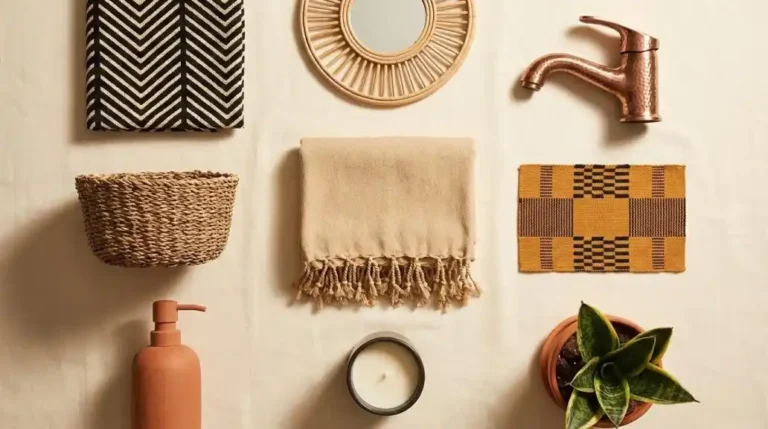
30% Afro Bohemian texture — reclaimed wood shelving, seagrass baskets, mud cloth shower curtain, jute bath mat, rattan mirror frame, Turkish cotton towels. The material vocabulary of the aesthetic applied at the functional object level.
10% high-contrast accent — bold framed African silhouette art, hammered copper or brass hardware, matte black fixtures, vibrant plant life. The punctuation marks that sharpen the room and signal the aesthetic’s cultural confidence.
Apply this distribution before buying a single piece. Identify what percentage of your current bathroom surface area is in each category. The number that’s over-represented tells you where to stop buying. The number that’s under-represented tells you where to start.
The Shower Curtain: The Bathroom’s Primary Textile Statement
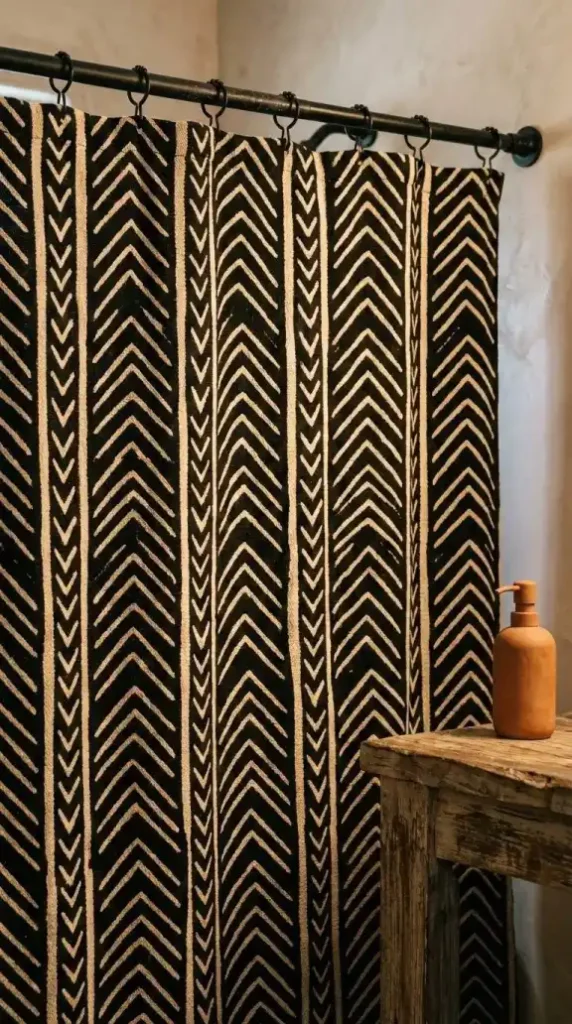
The shower curtain is the bathroom’s largest single textile surface — and in Afro Bohemian design it carries the primary pattern statement that the mud cloth throw carries in the living room.
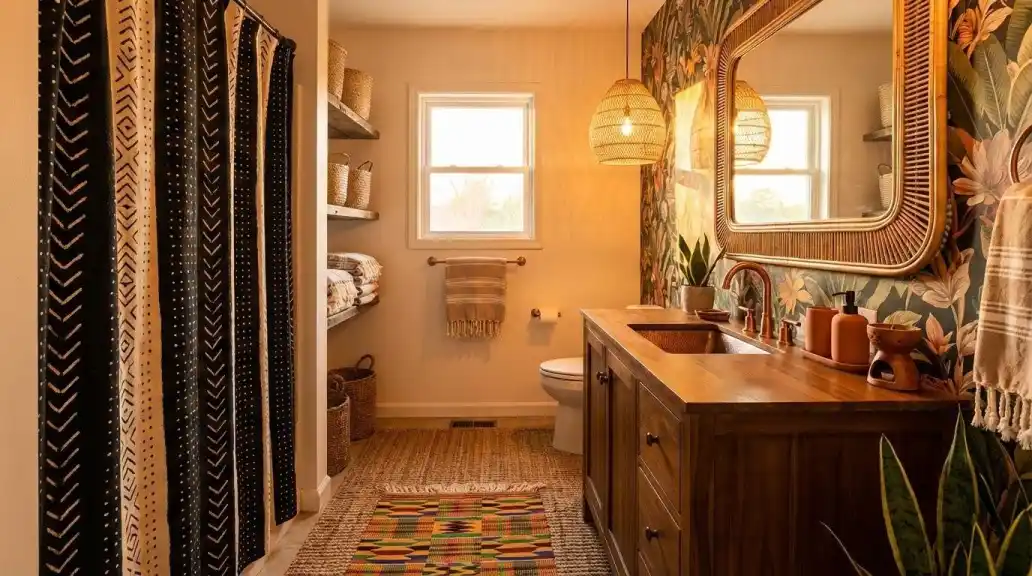
A mud cloth shower curtain in black and cream geometric chevron introduces the High Contrast palette component at the bathroom’s most visually dominant vertical surface. The raised cotton weave catches warm bathroom lighting the same way it does in other rooms — creating surface depth that flat printed fabric curtains can’t replicate.
This is the 10% high-contrast accent working at its maximum surface area in the bathroom context.
Hung from a matte black curtain rod — not chrome, not polished nickel — the mud cloth curtain reads as a composed textile statement rather than a functional barrier.
A Turkish cotton bath sheet in natural undyed or warm sand hung beside the shower on a dark wood or hammered brass hook extends the textile layer at the adjacent wall position without competing with the mud cloth’s pattern.
The fringe detail of Turkish cotton towels adds a bohemian softness that plain terry toweling doesn’t — and the natural fiber construction keeps both textiles within the same organic material vocabulary.
The Vanity: Teak Wood as the Room’s Grounding Surface
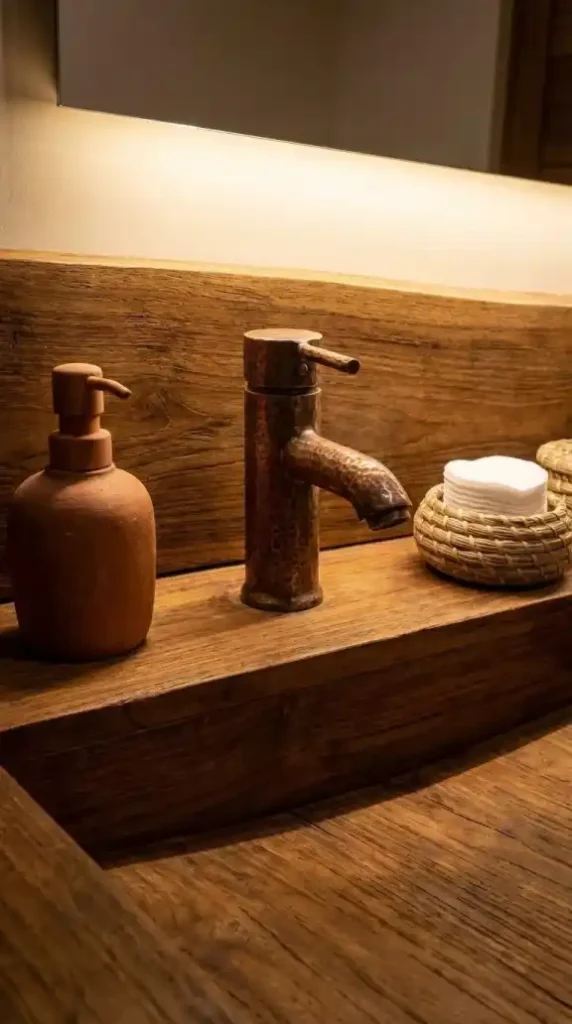
The teak vanity is the bathroom’s grounding furniture piece — the equivalent of the live-edge coffee table in the living room or the dark wood bed frame in the bedroom.
Teak’s deep grain, natural oil resistance, and warm undertone make it the most materially appropriate wood for a high-humidity environment. It also deepens and darkens slightly with moisture exposure — developing the kind of lived-in patina that the Afro Bohemian aesthetic values over the uniformity of sealed or lacquered wood.
The vanity surface is the bathroom’s primary vignette position.
Three objects maximum on the vanity top: a terracotta clay soap dispenser, a small seagrass basket holding functional objects, and one candle or incense burner in a dark ceramic or terracotta holder.
Deliberate negative space on either side of the grouping. The empty vanity surface on both sides of the three-object arrangement provides the visual breathing room that the bathroom’s small scale requires more urgently than any other room.
Hardware: Hammered Copper and Brass as Artisanal Accent
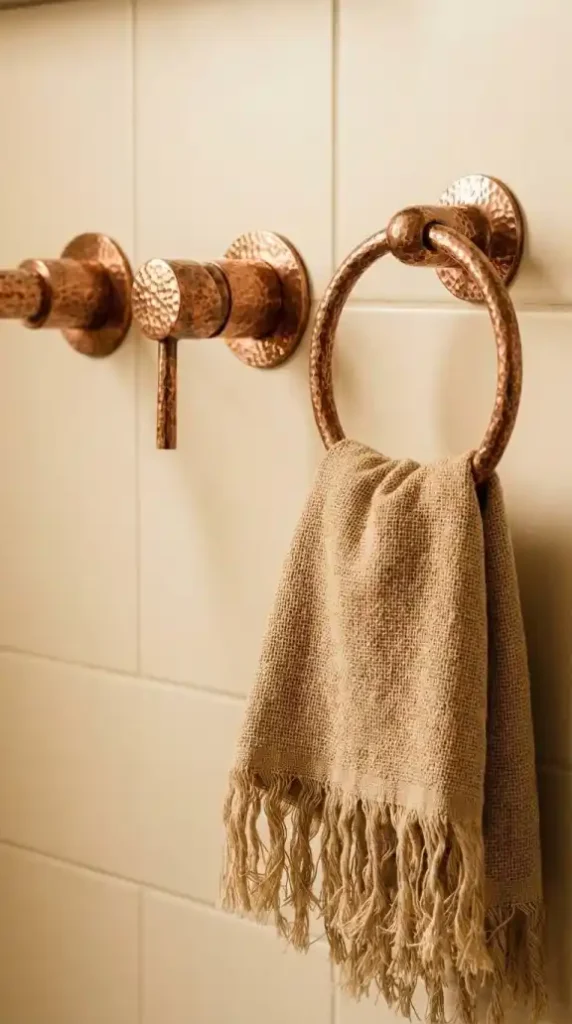
Hammered copper and brass bathroom hardware is the most impactful single intervention available in an existing bathroom — and it sits firmly in the 10% high-contrast accent category.
Standard chrome hardware reads as clinical and cool — it sits outside the Afro Bohemian material vocabulary regardless of how correct the surrounding elements are. Hammered copper and brass hardware reads as hand-worked metal — a craft object that references African metalwork traditions in a functional bathroom position.
The hammered surface creates multiple small light-catch points that shift with viewing angle — the same living surface quality that makes hammered brass floor lamps and bedside lamps perform so effectively in other rooms.
Replace the faucet first — it’s the most visible hardware piece in the bathroom and the one that most immediately changes the room’s material reading.
Then replace towel rings, toilet paper holders, and robe hooks in the same hammered finish.
Consistency of hardware finish across all metal positions in the bathroom creates a material thread that ties every functional object into the same artisanal register — the “collected over time” quality that mass-produced matching bathroom sets can never produce.
The Mirror: Rattan Frame as Functional Textile Element
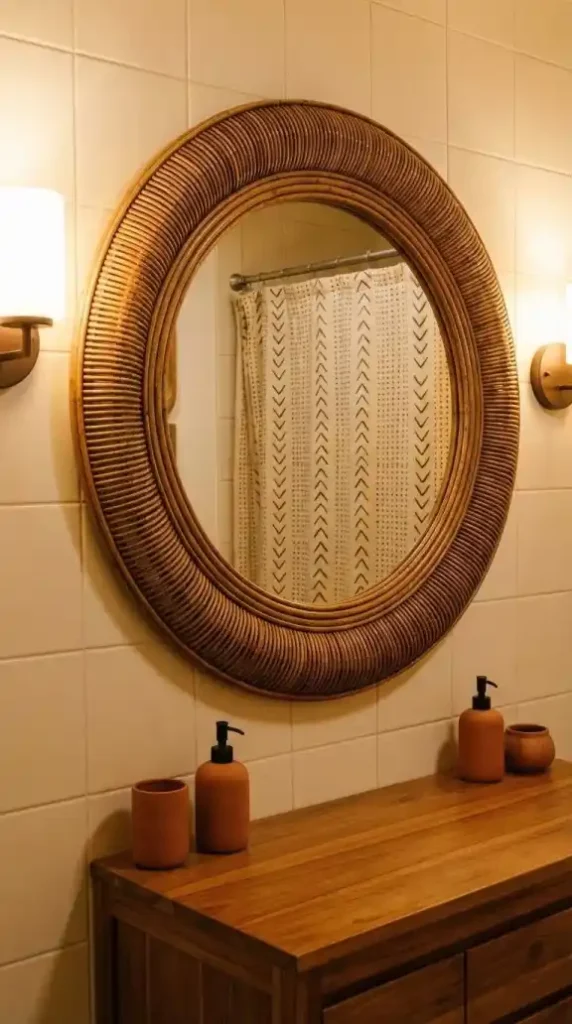
A rattan-framed mirror above the vanity introduces the natural fiber vocabulary into the bathroom’s primary vertical surface position — the one surface every bathroom has regardless of size.
The rattan frame functions simultaneously as a reflective tool and a textural wall element — the open weave reads as part of the same material family as the seagrass baskets on the shelf and the jute bath mat on the floor.
Circular rattan mirrors are the most effective form for the Afro Bohemian bathroom because the circular shape breaks the rectangular geometry of tile walls, vanity, and door frames with the same organic logic that a Juju hat breaks the rectangular geometry of a living room wall.
A circular rattan mirror also reflects the mud cloth shower curtain’s geometric pattern back into the room from the vanity position — doubling the visual presence of the bathroom’s primary textile statement.
Size it generously: a 60–80cm diameter circular rattan mirror reads as a design element. A smaller rattan mirror reads as an accessory.
Floor and Bath Mat: Layered Natural Fiber Logic
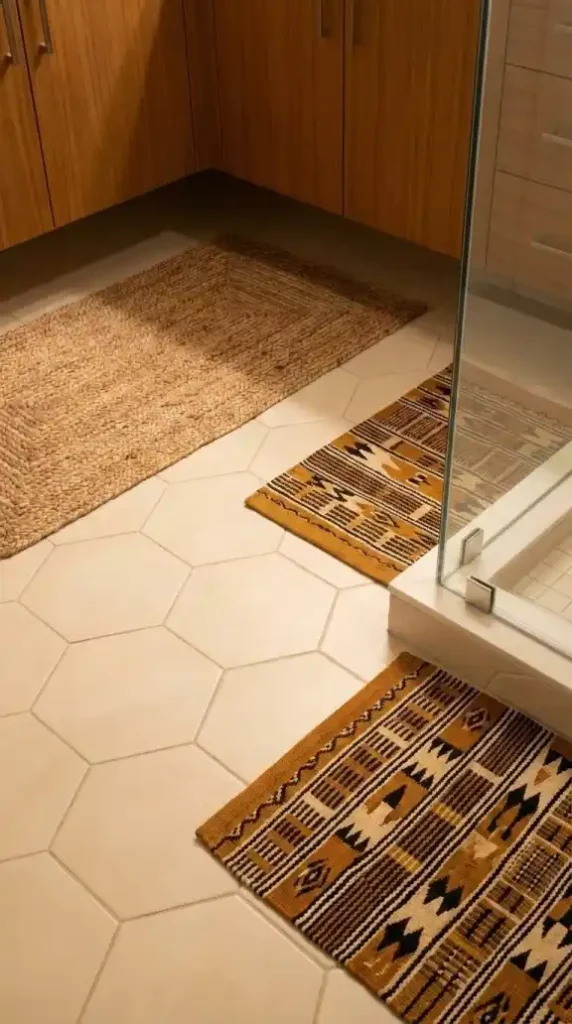
The bathroom floor layer applies the same two-rug logic as the bedroom and living room — at a significantly smaller scale.
Large-format tiles in creamy white, warm sand, or deep charcoal form the 60% neutral base at the floor level. These are the visual breathing room that the textile layers above read against.
A natural jute bath mat in front of the vanity adds the organic texture layer at the most-used floor position — the natural fiber weave reads as grounding and warm underfoot while staying within the Grounded Neutral palette category.
A hand-woven kente-inspired bath mat in ochre, black, and cream geometric pattern beside the shower exit position adds the Heritage Accent pattern at a secondary floor position.
Two mats. Two positions. Two material characters. The jute handles the neutral texture layer. The kente-inspired mat handles the pattern accent layer. The bathroom floor reads as composed depth rather than single-material flatness.
Walls: Botanical Wallpaper as the Accent Surface
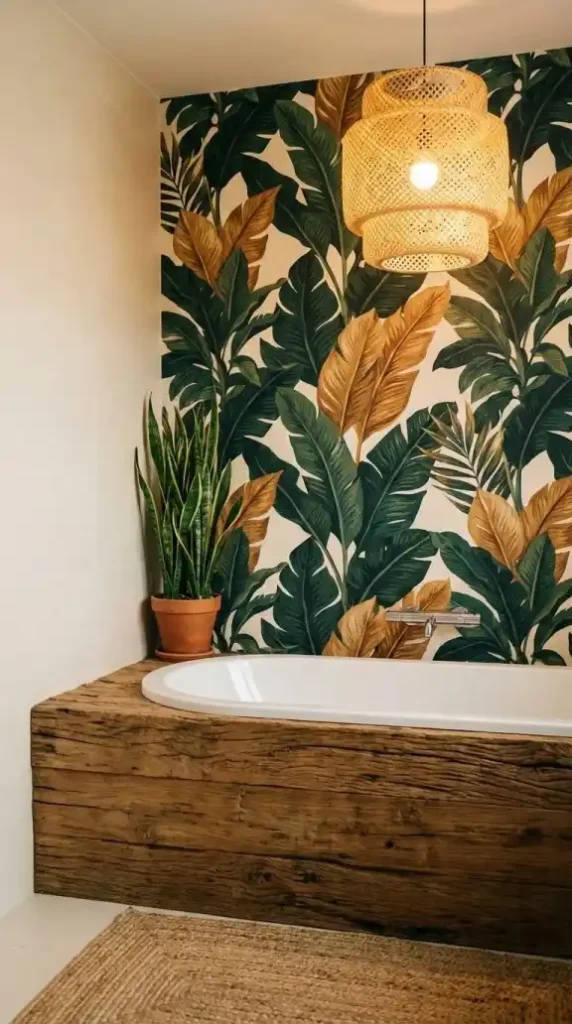
The bathroom accent wall is the one surface position where bold pattern can be applied at architectural scale without overwhelming the room’s small dimensions.
Bold botanical wallpaper — oversized tropical leaves in deep forest green and warm ochre, or abstract mud cloth patterns in black and cream — on a single accent wall delivers the jungle or pattern layer at maximum visual impact while leaving the remaining walls in the 60% neutral base.
One wall. Maximum pattern commitment. Every other wall remains smooth tile or plaster in the neutral base palette.
This is the 60-30-10 rule applied at the wall level: one wall at full pattern commitment represents approximately 25% of the room’s wall surface area — which, combined with the wood shelving and textile layer, stays within the 30% Afro Boho texture allocation.
Mud cloth abstract patterned wallpaper in black and cream delivers the High Contrast palette component at wall scale. Botanical tropical leaf wallpaper delivers the Life tone green in the forest green leaf color. Choose based on which palette category is currently underrepresented in the bathroom’s assembled composition.
Storage: Seagrass Baskets as Functional Decor
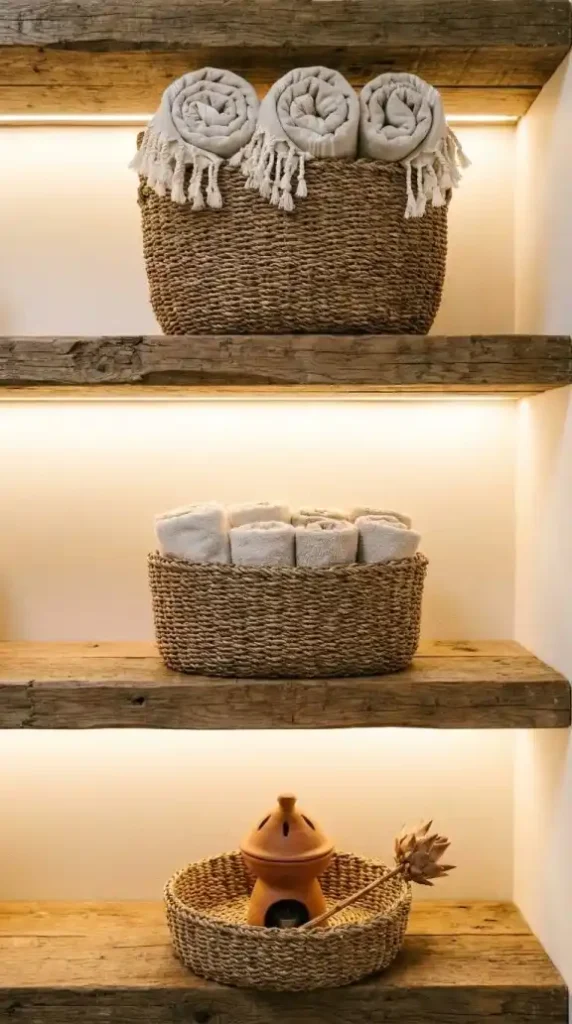
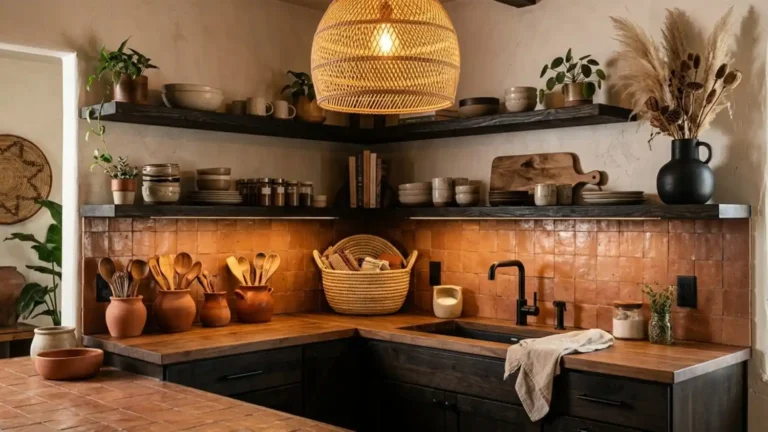
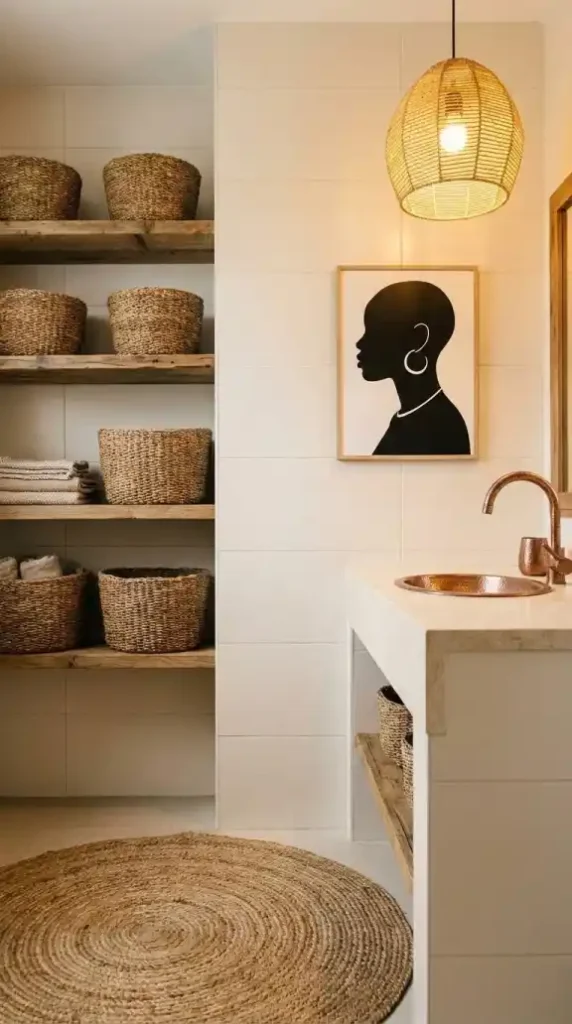
Seagrass baskets on reclaimed wood shelving solve the bathroom’s storage problem while simultaneously contributing to the 30% Afro Bohemian texture layer.
Three baskets in graduated sizes — each holding a distinct functional category: large for rolled Turkish cotton towels, mid for hand towels and washcloths, small for incense and botanical objects.
The graduated sizes create the odd-number height variation that makes the shelf arrangement read as curated rather than organized.
Reclaimed wood shelving in a dark-stained or naturally aged finish provides the same grounding value anchor as the teak vanity — the dark wood against cream tile walls creates the contrast that prevents the neutral base from reading as flat.
Every object on the shelf should be functional and carry material identity. No plastic containers. No synthetic fiber products visible at the front of baskets. The storage layer is an aesthetic layer simultaneously in an Afro Bohemian bathroom — the two functions are the same decision.
Art and Pattern: The 10% High-Contrast Accent Layer
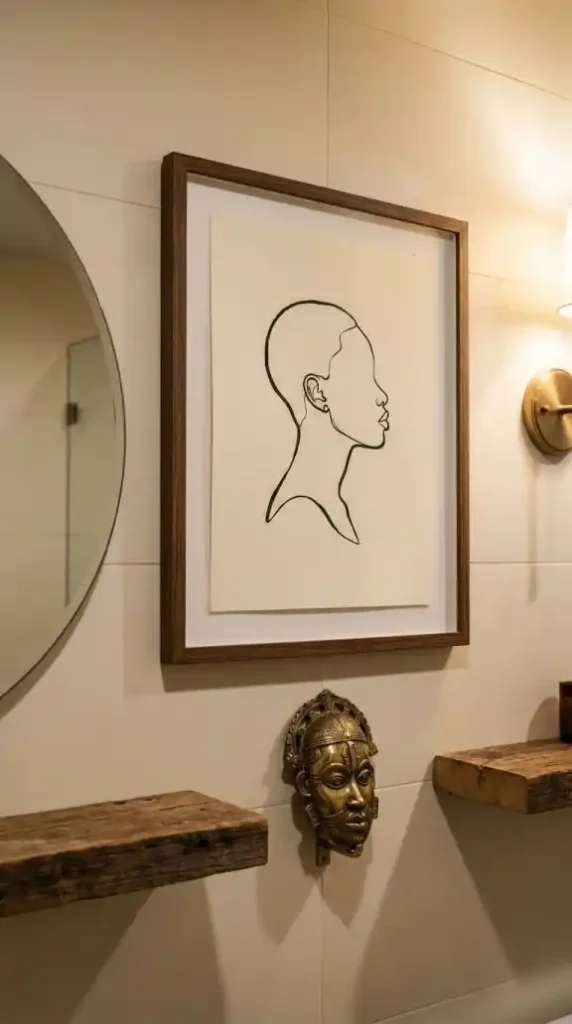
The bathroom’s 10% high-contrast accent layer operates across three positions — wall art, hardware, and plant life — and each position should carry a distinct material register.
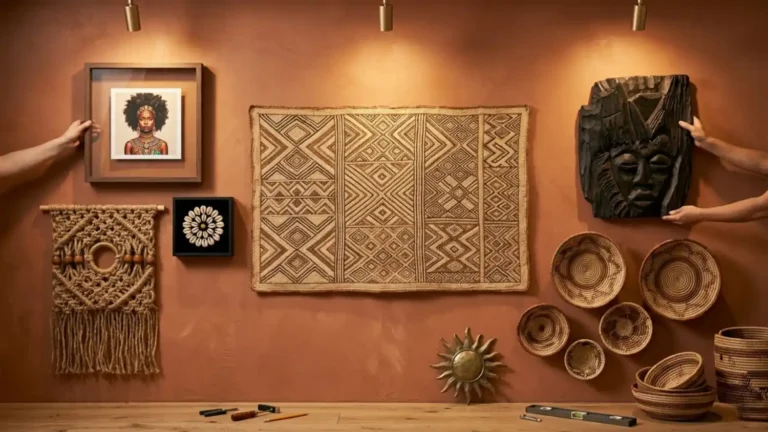
Framed portraits, line drawings of African silhouettes, or traditional masks in wood or brass at the wall art position. One large piece or two small pieces — never a gallery wall arrangement in a bathroom where the small scale makes a multi-piece gallery read as cluttered rather than curated.
Hammered copper and brass hardware at all metal positions — faucet, towel rings, hooks, toilet paper holder. Consistency of finish across all hardware is the detail that signals intentional curation rather than mixed purchasing.
A carved wooden or brass mask at the wall position below the art piece — mounted on a museum bracket, treated as a sculptural object rather than a decorative accessory. One mask. Small scale. High surface detail. The ancestral and ceremonial register introduced at the bathroom scale where a full living room mask arrangement isn’t possible.
Greenery: The Jungle Layer in a Humid Environment
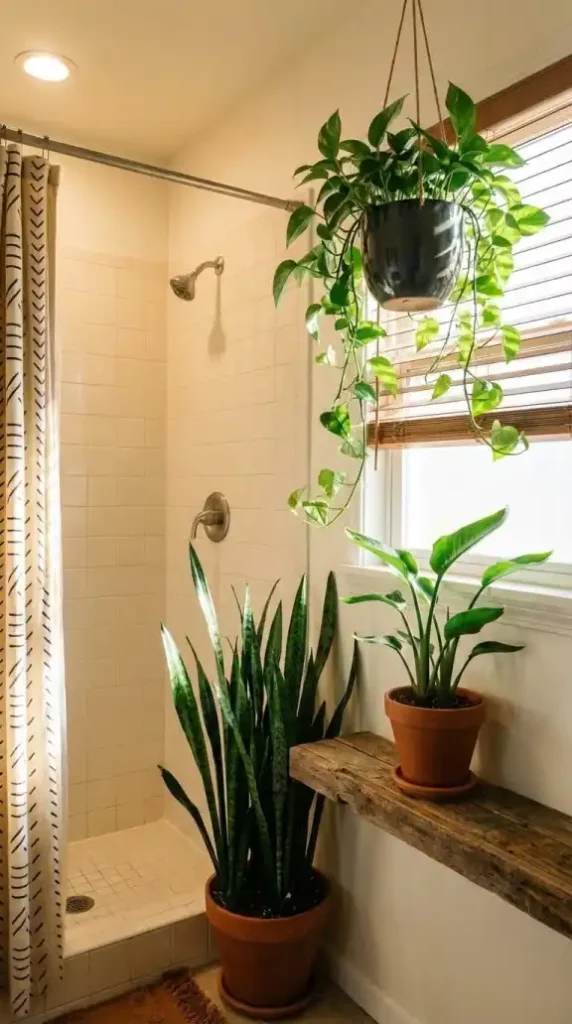
The bathroom’s high humidity makes it the one room in the house where greenery thrives without effort — and in the Afro Bohemian aesthetic that’s a structural advantage, not a coincidence.
Three plants. Three spatial zones. Three distinct growth habits.
A Snake Plant — Sansevieria — in a terracotta pot in the corner beside the shower. Upright, stiff, architectural. Native to West Africa, low-maintenance, and one of the most humidity-tolerant plants available. Its strong vertical leaf form provides the structural counterpoint to the softer organic elements around it.
A trailing Pothos in a dark ceramic hanging planter above the window or shower area. The cascading vines fill the upper wall zone with organic movement — the jungle layer at the bathroom’s highest visual position. Pothos thrives in low to medium light and high humidity, making it the most reliable plant choice for windowless or low-light bathroom positions.
A small Bird of Paradise on the reclaimed wood shelf at mid-height — if the shelf can support its pot weight. The broad tropical leaf provides the dramatic silhouette at close range that the bathroom’s small scale allows to be read more intimately than in a larger room.
All three in terracotta or dark ceramic pots. No plastic nursery containers visible in an assembled Afro Bohemian bathroom.
Auditing Your Bathroom Before You Change Anything
Walk through the space and answer these questions first:
- What percentage of the current bathroom surface area falls in each of the three palette categories? Estimate the neutral base percentage, the Afro Boho texture percentage, and the high-contrast accent percentage. The category furthest from its correct allocation tells you where the first purchase should be directed.
- What is the current hardware finish? Chrome and polished nickel are the first things to replace — hammered copper or brass faucet and towel hardware replacement is low-cost and high-impact relative to any other bathroom intervention.
- Is there a shower curtain position? If yes that’s the bathroom’s largest textile surface and its primary pattern opportunity — a mud cloth curtain at that position delivers more aesthetic impact per square meter than any other single purchase in the room.
- Is there reclaimed wood or teak shelving? If all storage is behind closed cabinet doors the Afro Bohemian texture layer has nowhere to land. One section of open reclaimed wood shelving installed above or beside the vanity is the most structurally significant change available in an existing bathroom.
- What is the current mirror frame material? A chrome or frameless mirror replaced with a circular rattan-framed mirror changes the bathroom’s material reading at the most prominent vertical surface position in the room.
- Is there a wall surface — behind the toilet, beside the vanity, or the shower-facing wall — that could hold botanical or mud cloth pattern wallpaper without requiring a full bathroom renovation? One accent wall of bold wallpaper is a renter-friendly intervention in many cases and delivers the pattern layer at architectural scale.
The Afro Bohemian bathroom works because it accepts the constraint of the room’s small scale and works within it rather than against it.
The mud cloth shower curtain carries the pattern statement. The teak vanity carries the wood grounding. The hammered copper hardware carries the artisanal metalwork reference. The seagrass baskets carry the natural fiber vocabulary. The botanical wallpaper carries the jungle layer at architectural scale. The Snake Plant and Pothos carry it at the organic level.
Each element is doing the maximum work its position allows.
That’s not a compromise version of the aesthetic — it’s the aesthetic applied with more precision than the larger rooms require. And precision, in a small space, produces the most cohesive results in the house.
Keep Building:
- 11 Afro Bohemian Bathroom Ideas for a Warm and Layered Space — See each of the five bathroom positions — shower, vanity, mirror, floor, and shelf — addressed as specific moves with a specific reason behind each one.
- How to Style an Afro Bohemian Bathroom — Follow the full ten-step styling sequence in the exact order that makes each decision easier than the last — from the 60-30-10 audit to the sandalwood incense finishing layer.
- Afro Bohemian Bathroom Decor Must-Haves for Beginners — If the palette framework and material sequencing feel abstract, start here with the ten physical anchor pieces that make both principles concrete from the first purchase.