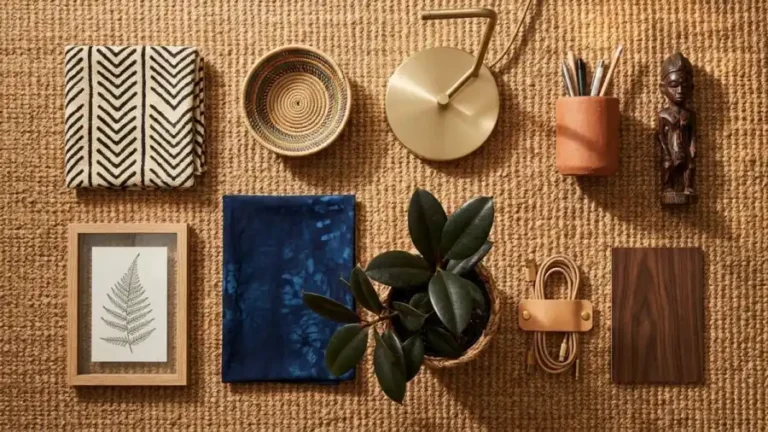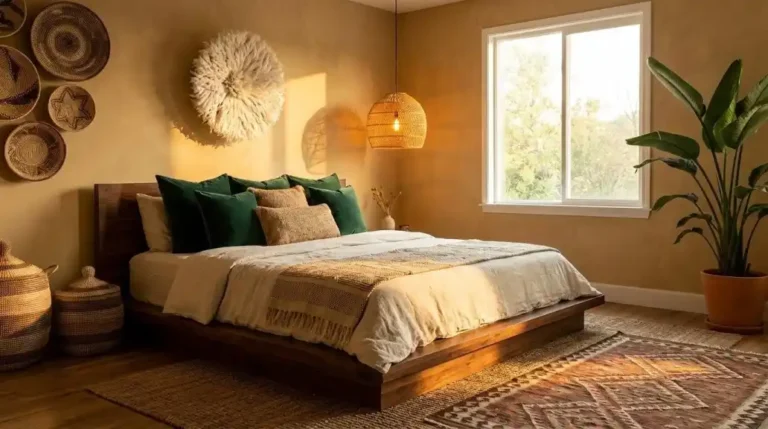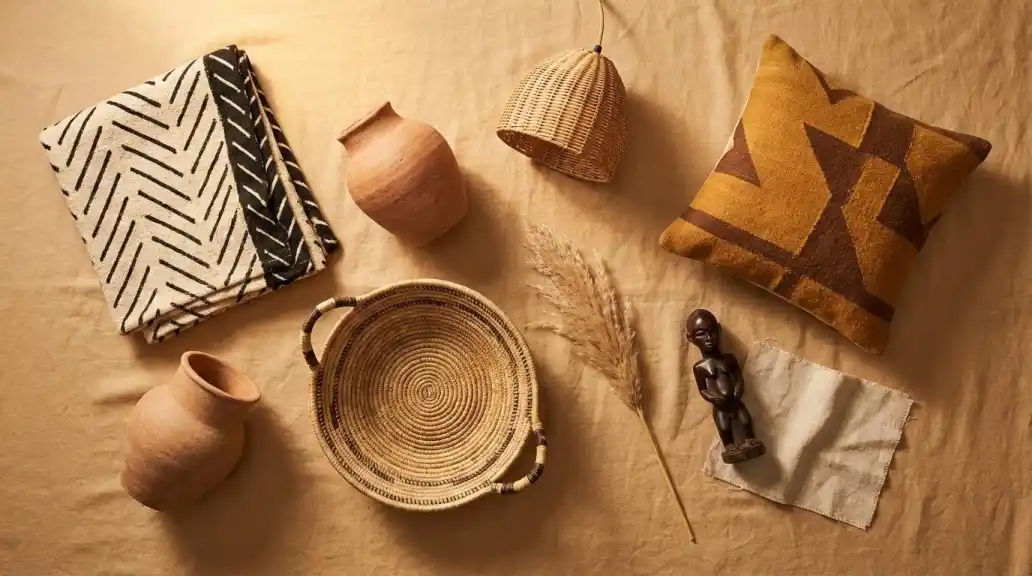
Afro Bohemian Decor Must-Haves for Beginners
Most beginner buying guides give you a list and let you figure out the order.
That works for aesthetics where any element can anchor the room. Afro Bohemian design isn’t one of them.
Buy the wrong piece first and every subsequent choice gets made without a reference point. Buy the right piece first and the rest of the room’s decisions become straightforward responses to what you’ve already established.
This guide gives you both — the specific pieces and the sequence to buy them in, with the reason behind each one so you understand the logic rather than just following a list.
Quick Takeaway:
- The mud cloth textile comes first — it sets the palette, the pattern scale, and the material standard that every other purchase responds to.
- Lighting temperature is the second purchase, not the last — wrong bulbs will make every correct piece look wrong.
- Build the object layer last — vessels, baskets, and figurines placed before the textile and lighting foundation are chosen without context and almost always need replacing.
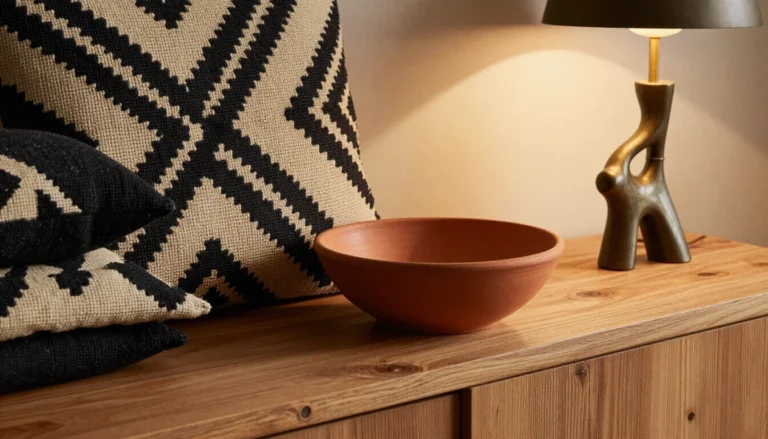
First Purchase: A Mud Cloth Throw or Cushion Set
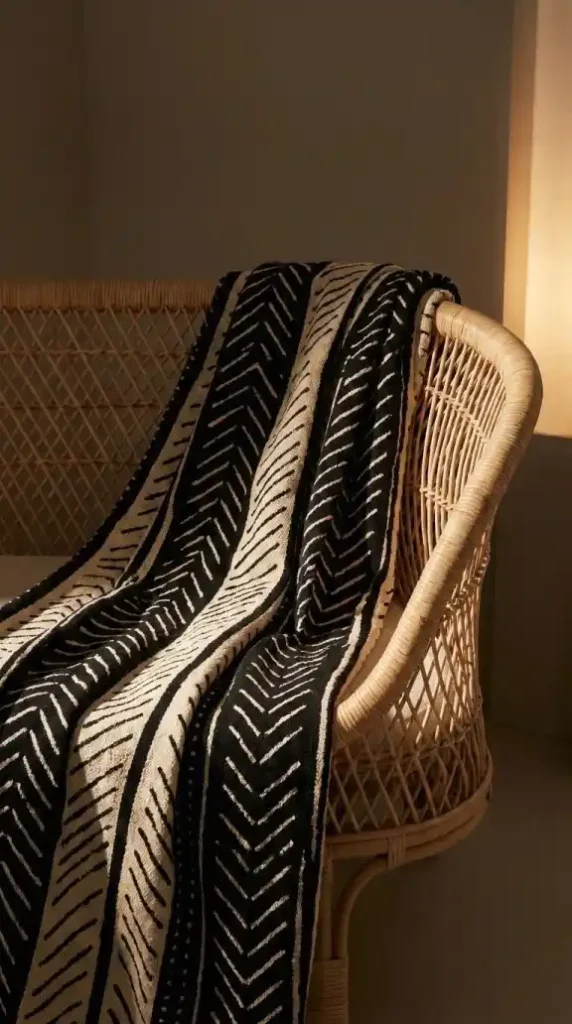
The mud cloth piece is the room’s foundation.
Its black and cream colorway gives you your dominant tone, your neutral, and your pattern scale reference in a single object.
Every other color decision — wall tone, rug, cushions, vessels — gets made by standing over the mud cloth and asking whether it belongs in the same material world.
Buy a throw rather than a cushion set if budget allows only one.
A throw has more surface area and therefore more visual weight — it anchors the room more powerfully than cushions and gives you a clearer palette reference to work from.
Authentic handwoven bogolan from Mali is the ideal. If that’s outside the starting budget, hand-loomed cotton with a genuine geometric pattern in warm black and cream is a functional substitute — as long as the surface has raised weave texture, not a printed flat finish.
Second Purchase: 2700K Warm Bulbs for Every Light Source
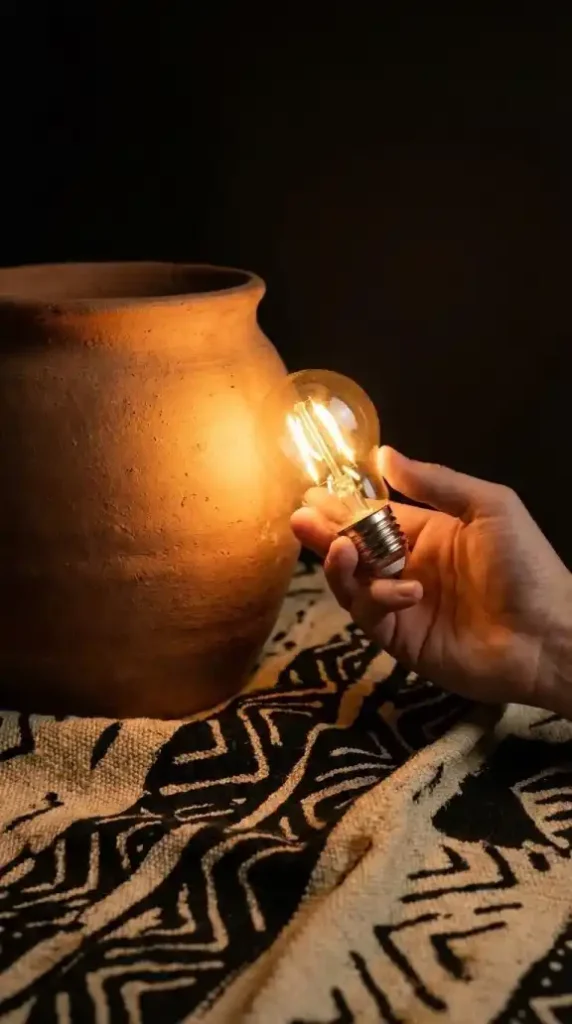
This is the purchase most beginners delay — and the delay makes every other correct decision look wrong.
Cool-white bulbs shift ochre toward green and terracotta toward grey.
The mud cloth you just bought will look flat and cold under fluorescent or 4000K lighting. Under 2700K warm light, the cream reads as ivory, the black deepens, and the earth tones around it activate.
Replace every bulb in the room before evaluating any other piece.
This is the lowest-cost, highest-impact single intervention available in any space. A full room of correct bulbs costs less than one decorative object — and it changes how every object in the room reads.
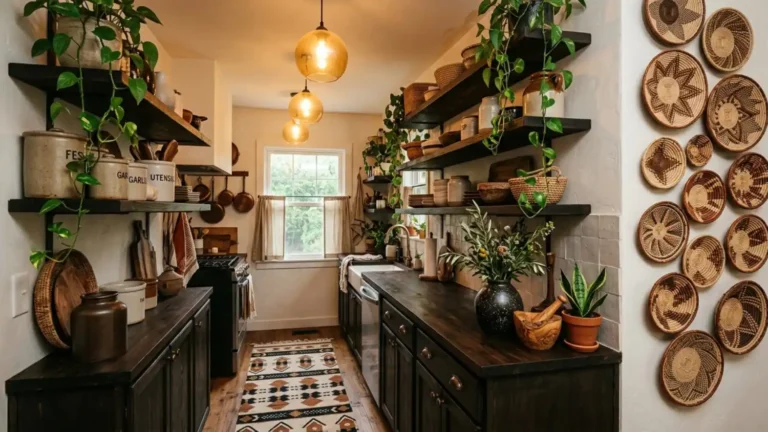
Third Purchase: A Rattan or Woven Fiber Pendant Light
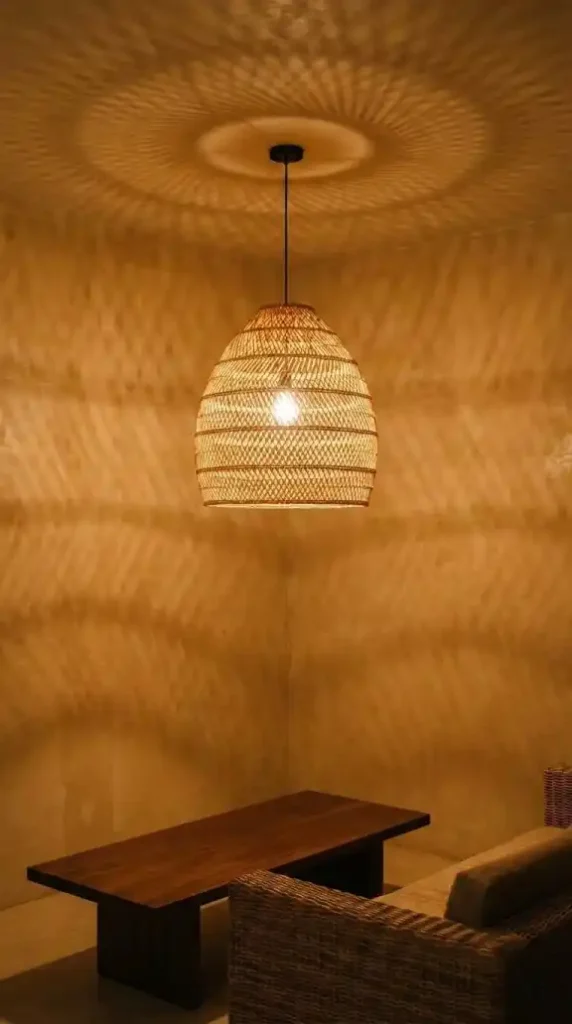
A rattan pendant does two things no solid shade can replicate.
It provides directional 2700K warm light — and after dark, the open weave casts geometric shadow patterns onto surrounding walls and ceiling that shift as the bulb warms up.
That light-and-shadow effect adds a visual layer to the room that costs nothing beyond the fixture itself.
It also functions as a textural room element during the day — the weave reads as part of the natural fiber vocabulary alongside the mud cloth and any baskets in the space.
Buy one that’s sized for the room: a 40–50cm diameter pendant for a standard bedroom or living room corner, 60cm or larger for a primary living space.
Fourth Purchase: A Hand-Knotted Geometric Rug
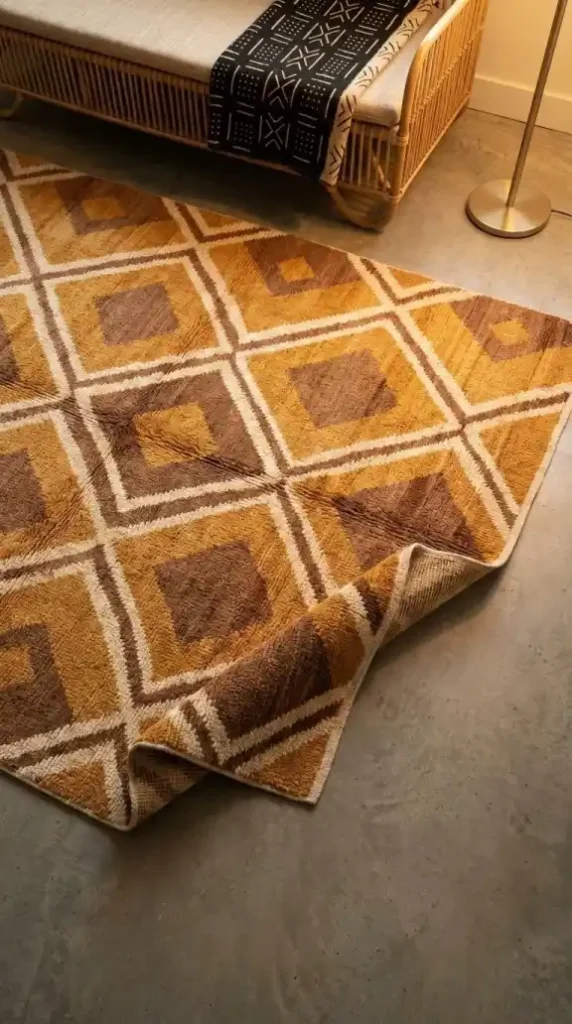
The rug is the room’s floor anchor and its mid-scale pattern layer.
It should be large — extending under the front legs of all major seating — and geometric in pattern. Diamond repeat, chevron, or interlocking square in earth tones drawn from the mud cloth palette.
The rug shouldn’t introduce new colors. Its job is to extend and deepen the palette already established by the mud cloth — picking up the ochre, the warm brown, or the cream that bridges the mud cloth’s black and cream.
Budget note: a hand-knotted wool rug is one of the higher-cost items on this list — but it’s also the one that most directly determines whether the room’s floor layer reads as authentic or generic.
A machine-made printed rug in the correct colors is significantly less effective than a hand-knotted rug in a simpler pattern. The pile depth and slight color variation of hand-knotted wool catches light in a way that flat-woven or printed alternatives don’t. If budget is a constraint, buy a smaller hand-knotted piece and size up later rather than filling the floor with a machine-made substitute.
Fifth Purchase: A Hand-Thrown Terracotta Vessel
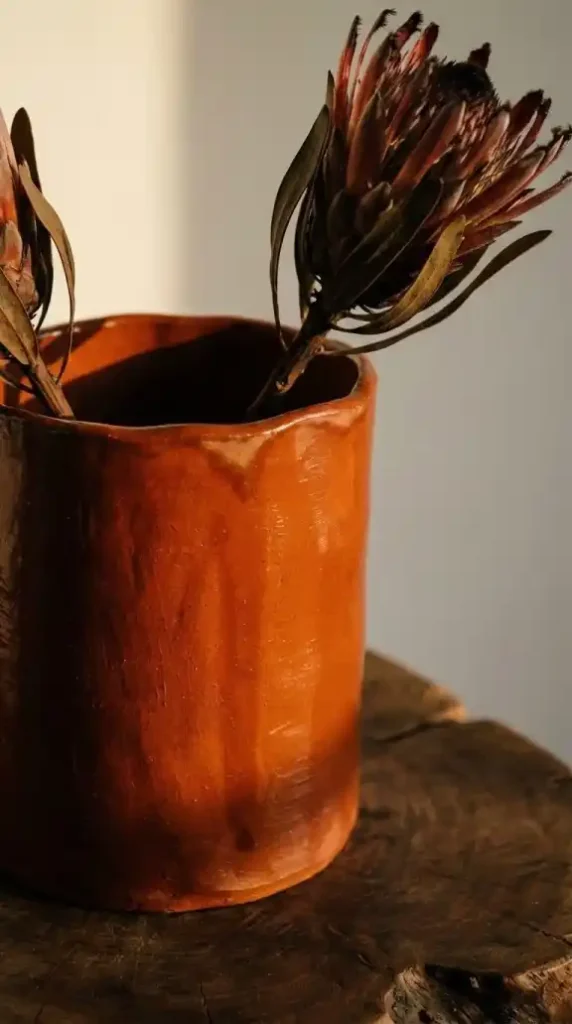
Terracotta is the object that ties the earth pigment palette to its material origin.
The fired clay color is the physical source of the terracotta tone in the palette — not a color chosen to match it, but the actual material the color is named for.
A hand-thrown vessel — slightly irregular, with visible tool marks and glaze variation — carries that material honesty in a way that machine-made ceramics don’t.
Buy one large vessel rather than a set of matching small ones.
A single tall terracotta vessel with dried pampas stems reads as an intentional focal point. Three matching small terracotta pots read as a product collection.
The irregularity of a single hand-thrown piece creates more visual interest than the uniformity of a matched set.
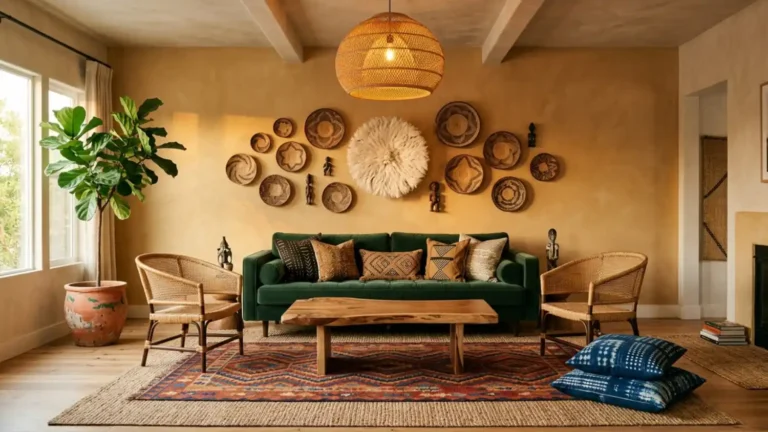
Sixth Purchase: A Large Woven Fiber Wall Tapestry
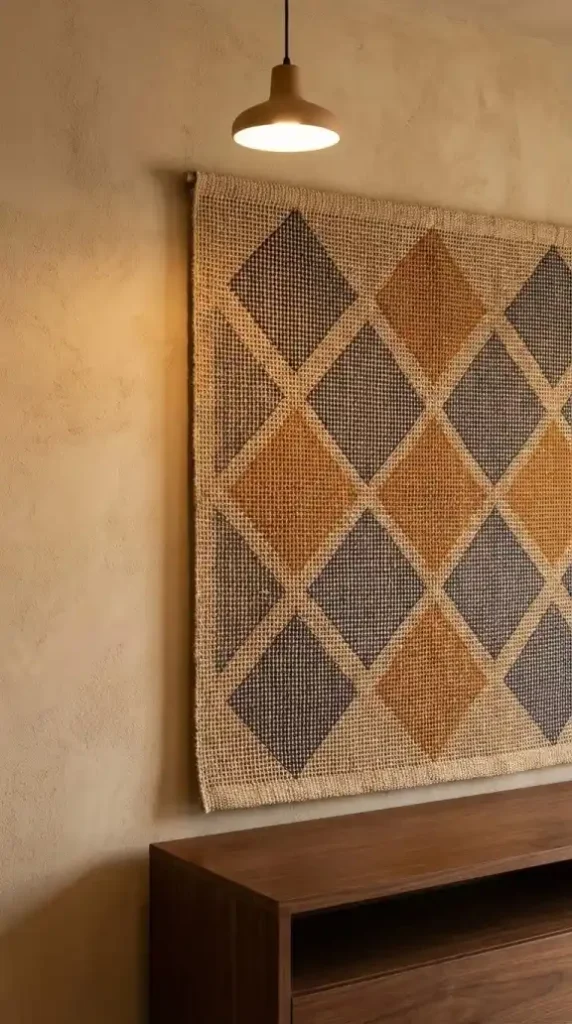
The wall tapestry is the room’s primary vertical element — and in Afro Bohemian design, it does more architectural work than any framed art piece.
Buy large: minimum 120cm wide for a standard room wall. A tapestry smaller than this reads as an accessory rather than a structural element.
Choose geometric pattern in the earth palette — ochre and indigo, black and cream, warm brown and natural fiber undyed — and natural fiber construction: wool, cotton, or jute warp.
Hang it lower than standard picture-hanging height. The bottom edge should sit close to whatever console or furniture piece is beneath it, creating a unified vertical composition from furniture surface to mid-wall.
This is the piece that makes the room look finished at the wall layer. Without it, the wall reads as decoration-in-progress regardless of how correct everything else is.
Seventh Purchase: A Coiled Grass Basket
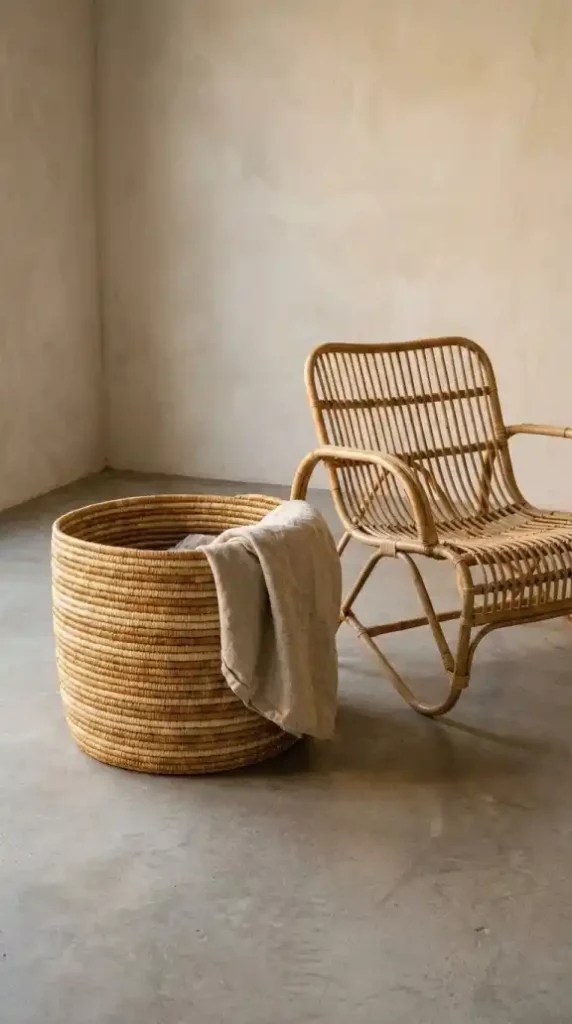
A coiled grass basket from Southern or East African craft traditions carries the same handmade logic as the mud cloth and the terracotta vessel — visible process, natural material, geometric structure.
It functions simultaneously as storage and as a textural room element.
A large floor basket beside the sofa holds throws, magazines, or blankets while reading as a deliberate design piece from across the room.
The tight coil pattern adds another layer of geometric language to the room without requiring wall space or surface area.
Buy one large floor basket rather than several small decorative ones.
One large basket has the visual weight to read as a room element. Multiple small ones read as accessories and contribute to object density without adding structural value.
Eighth Purchase: Dried Botanicals
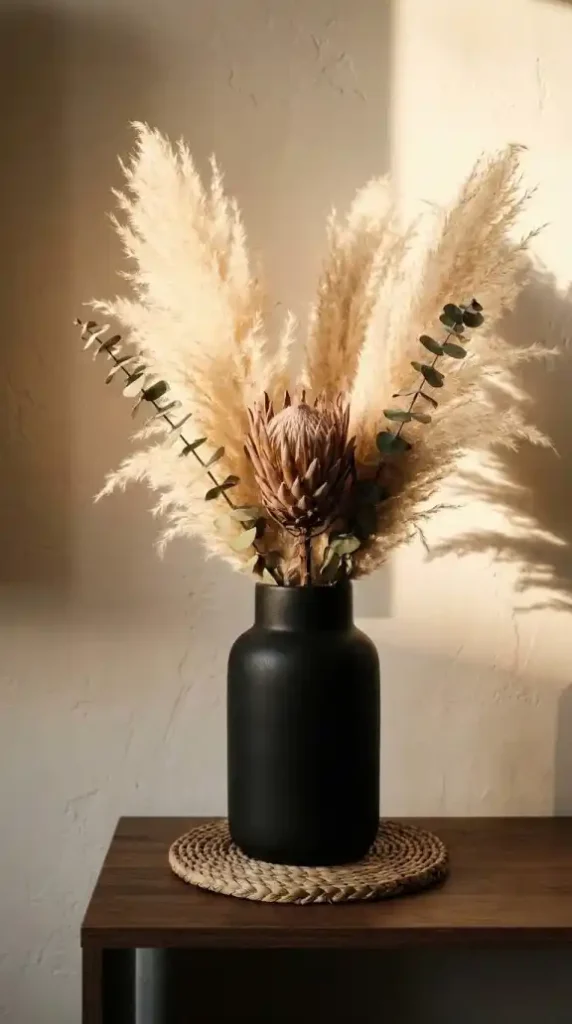
Dried botanicals extend the natural material vocabulary into the object layer without adding color complexity.
Dried pampas grass, protea seed heads, preserved eucalyptus, and dried seed pods all sit within the earth palette naturally — the faded, muted tones of dried plant matter read as an extension of the textile and ceramic layers rather than a contrast to them.
They also function as texture at a different scale — the delicate structure of dried grass plumes against the dense weave of mud cloth creates material contrast within a single vignette.
Three stems maximum in a vessel. More reads as a florist arrangement rather than a considered object.
They’re also indefinitely durable — the botanical layer doesn’t need replacing or maintaining once it’s in place.
Ninth Purchase: A Dark Wood Object With Visible Handcraft
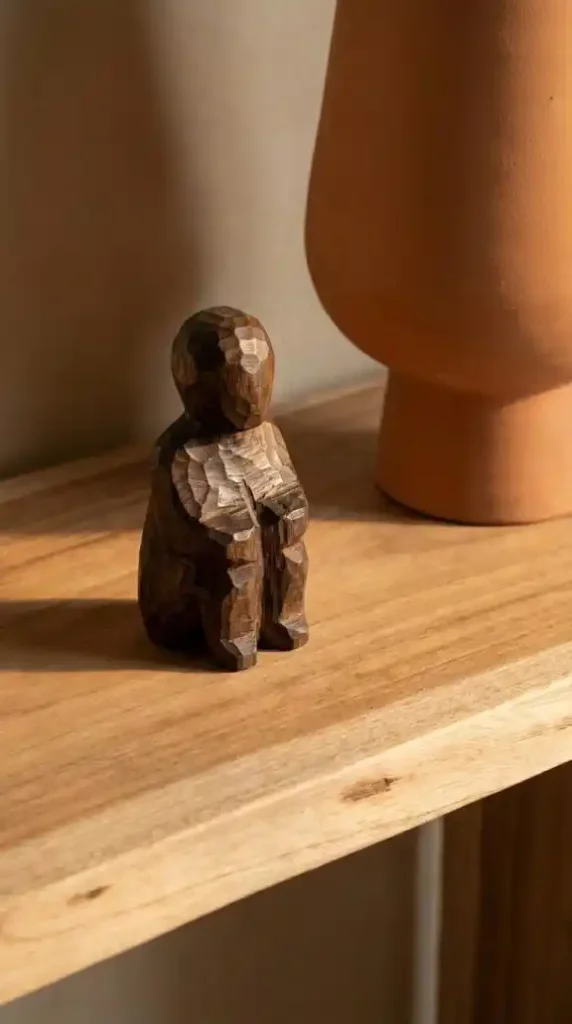
Dark wood — hand-carved, with visible tool marks and grain variation — plays the same structural role in the object layer that warm black plays in the textile layer.
It anchors the earth palette at the object scale and creates contrast against the lighter ochre and terracotta tones around it.
A small carved figurine, a hand-turned wooden bowl, or a dark wood abstract form placed in a vignette adds the dark value anchor that prevents the object layer from reading as undifferentiated warmth.
The handcraft evidence matters — chisel marks, slight surface irregularity, visible grain direction.
Machine-finished dark wood objects have a surface uniformity that doesn’t carry the material weight this piece needs to provide. The light response of hand-carved surface variation is what makes this object earn its place in the composition.
What to Buy Last — Not First
Before closing this list, two categories that beginners commonly buy first but should always buy last:
Wall art in frames. Framed prints and gallery wall pieces should come after the tapestry, after the furniture, and after the textile layer is resolved. They’re a secondary wall layer — support elements, not anchors. Buying them before the primary wall element means they end up anchoring by default, which is a job they’re not scaled to do.
Accent objects in trend colors. Anything chosen because it looks interesting in isolation — a bright ceramic, a patterned vase in a non-earth tone, a metallic accent that isn’t bronze or brass — should wait until the foundational layer is complete and you can evaluate it against the actual room rather than a mood board.
The room will tell you what it needs once the first eight purchases are in place.
Most beginners find they need less than they thought — because the foundational pieces are doing more work than they expected.
Checking Your Starting Point Before You Buy Anything
Answer these five questions before making your first purchase:
- What lighting is currently in the room? If it’s cool-white or fluorescent, buy the 2700K bulbs before anything else — not second. The bulbs have to be in place before you can evaluate any other piece in its actual conditions.
- What is the largest undecorated wall surface in the room? That’s where the tapestry goes. Measure it before buying — the tapestry needs to be scaled to that wall, not chosen first and fitted later.
- What is the floor covering situation? If there’s existing carpet or tile that conflicts with the earth palette, the rug purchase needs to be large enough to cover the majority of it. Account for that in your size selection.
- What furniture is already in the room? Identify anything with a high-gloss finish, a cool-toned upholstery, or a strongly elevated leg profile. Those are the existing pieces most likely to create visual tension with the Afro Bohemian layer — and knowing about them in advance lets you compensate through textile and object choices rather than being surprised by the conflict after you’ve bought everything else.
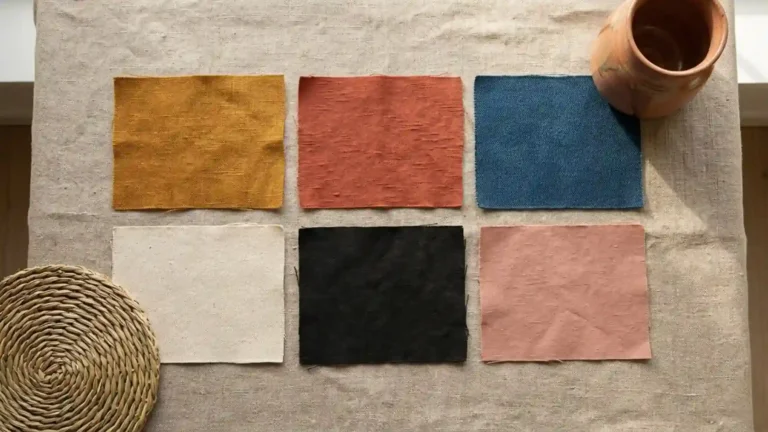
- What is the dominant light source during the day? North-facing rooms with limited natural light need the Fulani Gold or Midnight Savanna palette rather than the lighter sand and linen palettes that depend on daylight to activate them. Establish your light conditions before committing to a wall tone.
Nine pieces. One sequence. That’s the full beginner foundation.
The mud cloth sets the palette. The bulbs reveal it correctly. The pendant reinforces it after dark. The rug grounds it at floor level. The terracotta vessel ties it to its material origin. The tapestry anchors it at the wall. The basket extends the natural fiber vocabulary to the floor object layer. The botanicals complete the organic material logic. The carved wood anchors the dark value at object scale.
Each piece earns its place by doing something no other piece on the list is already doing.
That’s the difference between a shopping list and a room-building sequence — and it’s the reason this order matters as much as the pieces themselves.
Keep Going
- Afro Bohemian Interior Design: The Complete Style Guide — Before working through this buying sequence, read the full cultural and material framework that explains why these nine pieces work together as a system.
- 15 Afro Bohemian Interior Design Ideas for a Warm and Layered Home — See each purchase on this list in context — how the mud cloth, tapestry, rug, and terracotta vessel actually look assembled in a finished room.
- 11 Afro Bohemian Color Palettes That Actually Work — Once your mud cloth anchor is in place, use these palettes to lock in the wall tone and rug colorway before making your next purchase.
- 9 Common Afro Bohemian Decorating Mistakes to Avoid — The most costly beginner mistakes happen at purchases three through six — read this before the rug and tapestry decisions to avoid the errors that are hardest to undo.
- How to Create an Afro Bohemian Interior Design Style at Home — This nine-piece sequence is the shopping layer — this room-building guide covers the full installation and layering process once the pieces are in hand.
- How to Mix Soulful Earth Tones in Afro Bohemian Decor — Once the foundation is in place, this guide shows how to layer earth tones, surface contrast, and pattern scale without the room losing coherence.
- How to Decorate in Afro Bohemian Style Without Making It Look Busy — The most common beginner mistake after completing this list is adding more — this guide defines exactly where the layering limit is and how to stay on the right side of it.