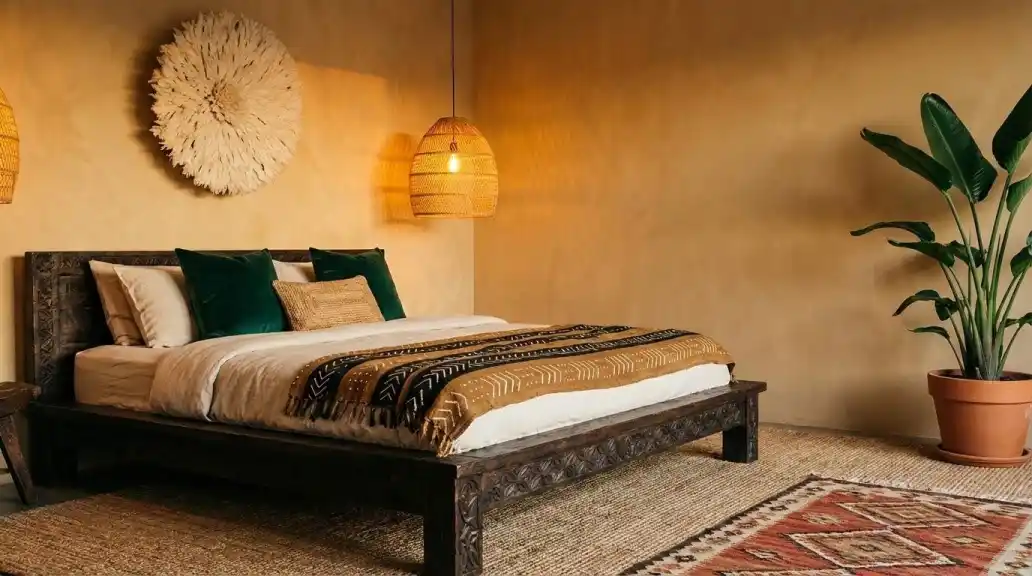
Afro Bohemian Bedroom: The Complete Style Guide
The bedroom is where the Afro Bohemian aesthetic performs at its highest level.
Every other room in the house has to negotiate with function — the kitchen can’t run on textiles, the office can’t sacrifice cognitive clarity, the bathroom has scale constraints. The bedroom has none of these limitations.
It’s a room built entirely for rest, sensory comfort, and personal expression. Which makes it the natural home of a style that thrives on layered textiles, curated artifacts, warm ambient light, and materials that carry history.
The bed is the canvas. The wall above it is the statement. The floor beneath it is the foundation. And the light that holds it all together runs warm enough to make every surface in the room feel like it’s being seen at the right time of day.
This guide covers the full system — textiles, furniture, walls, lighting, color, and the modern accents that stop the room from reading as a museum.
Quick Takeaway:
- The bed is layered in sequence — linen base, mud cloth or Kuba cloth throw, velvet and jute cushion contrast — each layer adding a distinct material character the previous one doesn’t have.
- The Juju hat above the bed is the room’s primary wall statement — it replaces conventional headboard art with a Cameroonian feathered headdress that brings texture, scale, and cultural depth simultaneously.
- Lighting runs on warm metallics at the bedside and woven pendants overhead — never harsh overhead fixtures — to maintain the golden hour glow the palette needs to read correctly.
The Bed as Canvas: Layering in Sequence
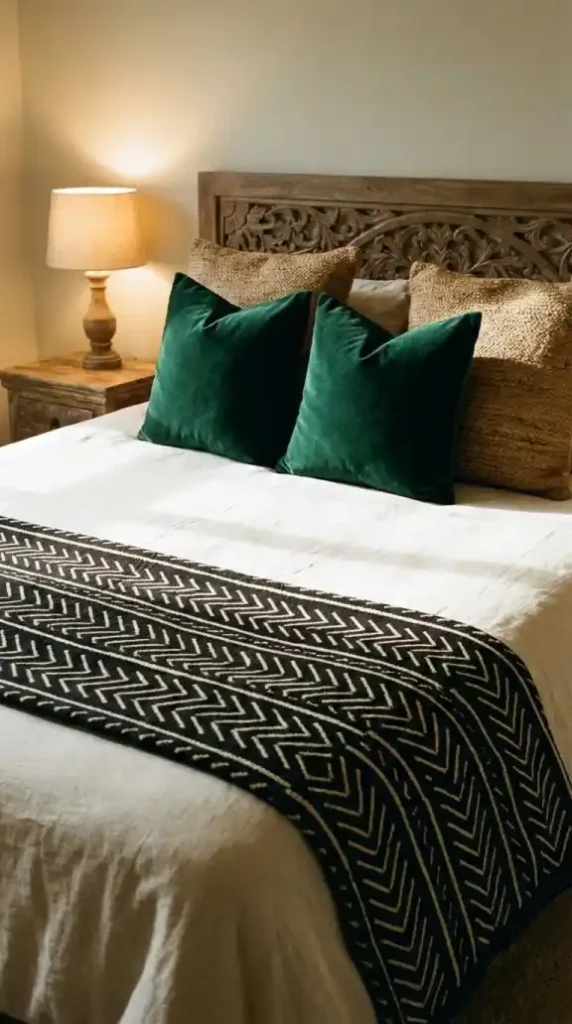
The bed is not styled — it’s layered. And the layering follows a sequence that each step in the process depends on.
Start with the foundation: linen or cotton sheets in bone, sand, or charcoal. These neutral base tones provide the breathable, visually quiet ground that every expressive layer above reads against. This is not the place for pattern — the foundation’s job is to be a neutral canvas, not a design statement.
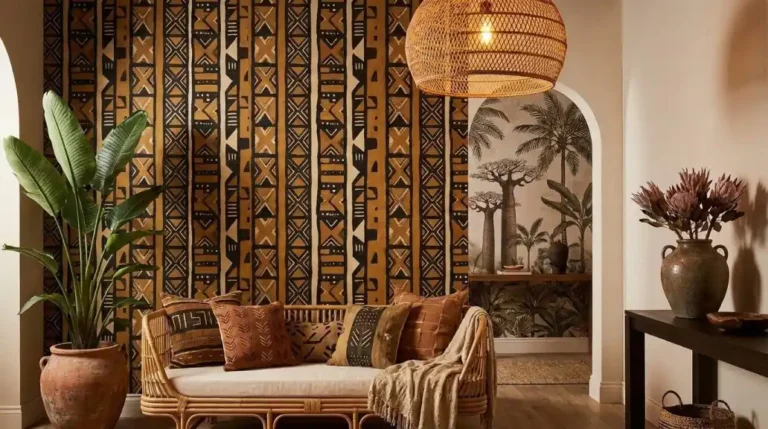
The soul layers come next. A Malian mud cloth throw — Bògòlanfini — folded or draped at the foot of the bed introduces the primary pattern element. Its black and cream geometric repeat carries enough visual weight to anchor the entire bed composition. A Kuba cloth throw is the alternative — its raffia-inspired interlocking geometric patterns add a maximalist density that mud cloth’s cleaner geometry doesn’t.
The texture contrast layer is the final step. Deep velvet pillows in jewel tones — emerald, deep plum, or sapphire — against the rougher organic surface of jute or raffia cushions create the material opposition that makes both surfaces more legible.
The velvet’s plush softness reads more luxurious next to rough jute. The jute reads more tactilely interesting next to smooth velvet. Neither works as well alone.
The Headboard: Rattan Airiness Versus Dark Wood Regality
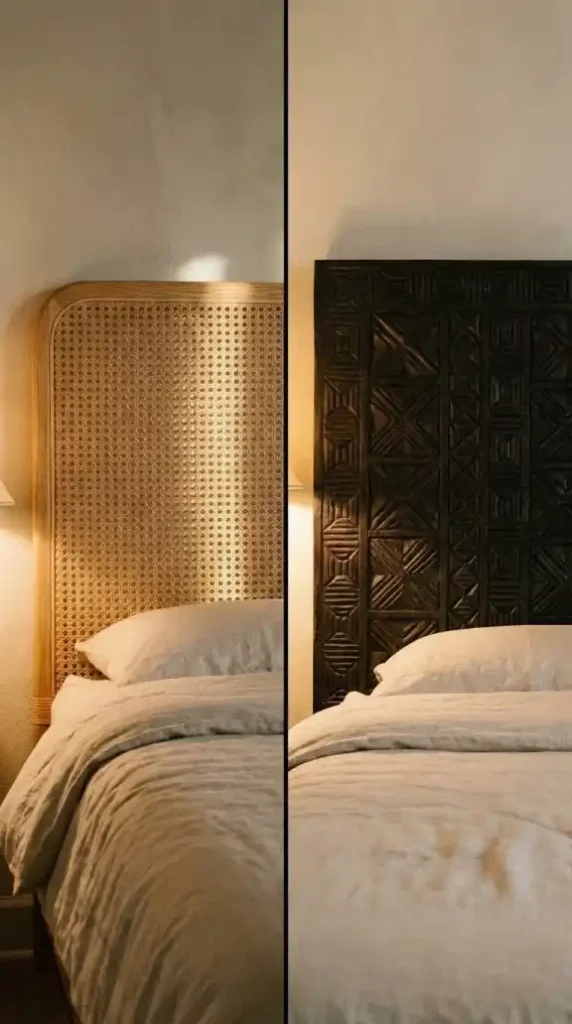
The headboard is the bedroom’s primary furniture statement — and in Afro Bohemian design it makes a foundational choice between two distinct expressions of the aesthetic.
A woven rattan or cane headboard brings the natural fiber vocabulary to the bed’s most prominent furniture surface. The open weave keeps the room feeling airy and tropical — it reads as lightweight even at significant scale, and the see-through quality prevents the headboard from visually dominating the wall behind it.
A heavy hand-carved dark wood headboard — particularly one with geometric motifs referencing the Ashanti stool or other West African carved traditions — delivers a completely different register: regal, grounded, dense with material presence. The carved relief catches warm lamp light in ways that create shadow depth across the headboard surface, making it function as wall art and furniture simultaneously.
Neither is more correct than the other. Rattan suits rooms that need airiness — smaller spaces, lower ceilings, rooms with limited natural light. Dark carved wood suits rooms that can hold significant visual weight at the bed position — larger spaces, higher ceilings, rooms where the bed wall is the primary architectural statement.
The headboard choice determines the room’s visual register. Make that decision before anything else at the furniture level.
Low-Profile Seating: The Foot of the Bed
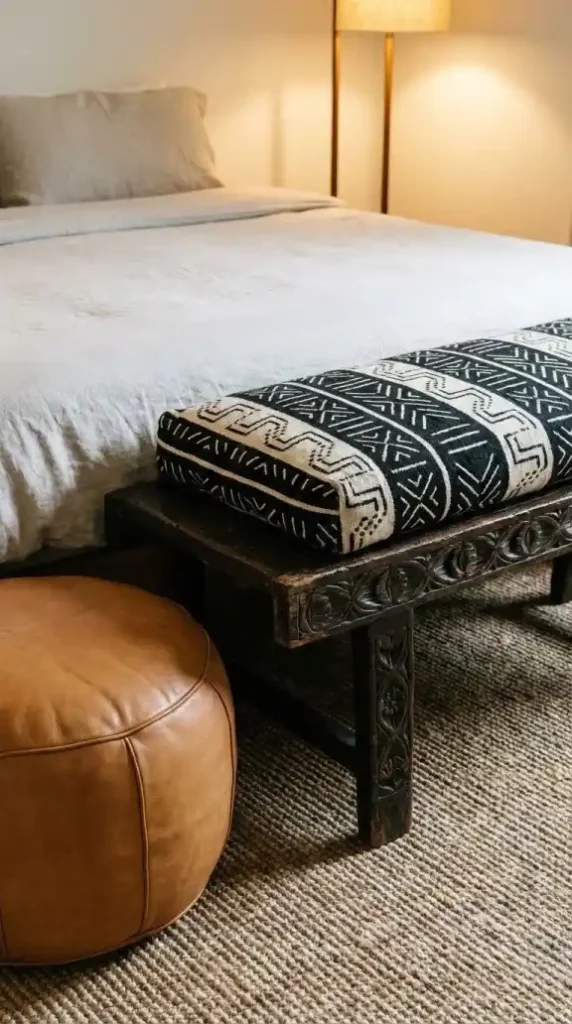
The foot of the bed is the bedroom’s secondary furniture zone — and it has two functions in Afro Bohemian design: practical seating and visual grounding.
A leather African pouf in warm tan or deep brown at the bedside serves both. It’s low enough to stay below the sightline of the bed composition, soft enough to be functionally useful, and materially cohesive with the broader handmade object vocabulary.
A vintage dark wood bench along the foot of the bed serves as both seating and the surface on which the mud cloth throw drapes when the bed is fully made.
Choose woods with rich grain and warm undertone: acacia, teak, and mango wood all offer the surface character that shows under 2700K lamp light. Avoid light-toned or cool-grey woods — they reference a different aesthetic tradition and create material disconnection with the darker, warmer tones the bedroom runs on.
The Wall Above the Bed: Juju Hat as Primary Statement

The Juju hat — Bamiléké feathered headdress from Cameroon — is the bedroom’s highest-impact single wall piece.
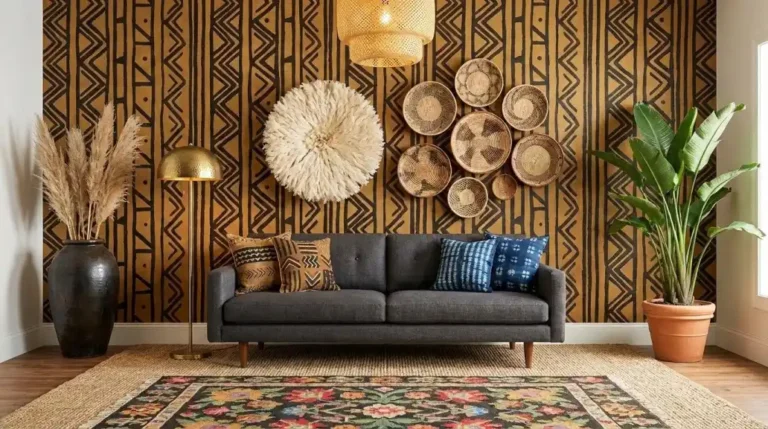
Mounted above the bed, it does three things simultaneously that conventional wall art cannot: it brings extraordinary surface texture through the layered feather construction, it introduces a circular form that breaks the rectangular geometry of the bed and wall composition, and it carries genuine cultural depth as a ceremonial object from the Bamiléké people.
A large Juju hat — 60cm diameter minimum — reads at the scale of architectural element rather than decorative accessory. It functions as the focal point that the room’s eye movement centers on, the piece the rest of the wall composition responds to.
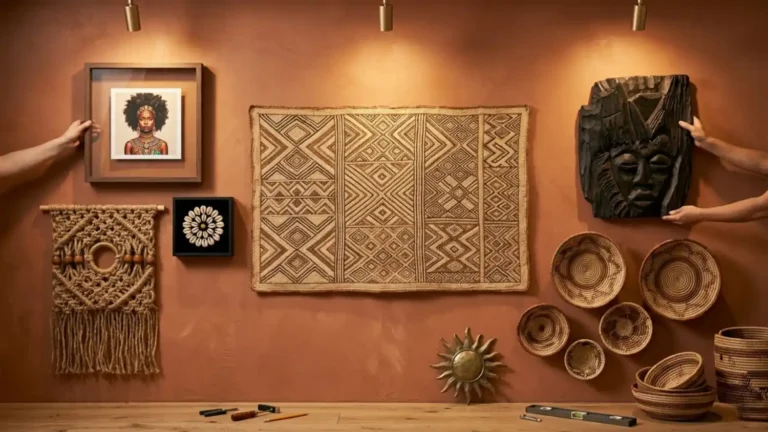
Below or beside it, a Binga or Tonga basket gallery cluster extends the wall statement into the geometric pattern vocabulary. Large-scale film photography — grainy portraits, African landscape silhouettes — adds a soulful, vintage dimension at a third scale within the same wall composition.
The three elements together — circular feather texture, geometric basket pattern, and photographic portrait — create a wall that holds depth across multiple viewing distances.
The Floor Layer: Sisal Foundation and Kilim Accent
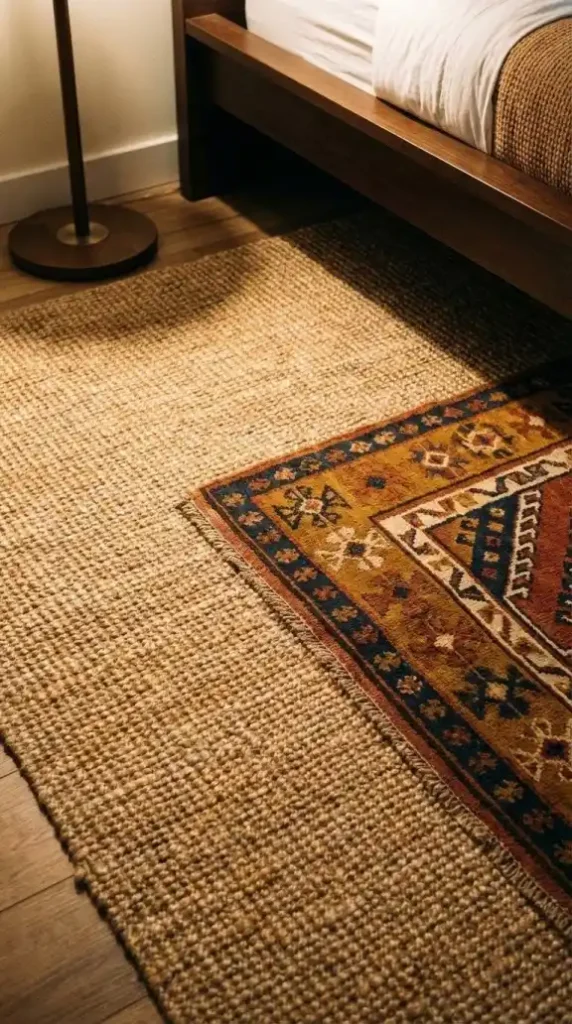
The bedroom floor layer runs on two rugs — not one.
A large sisal or seagrass rug as the base creates the natural fiber foundation that the room’s organic material vocabulary requires. Sisal handles the bedroom’s primary floor area, extending under and around the bed to create a unified ground plane.
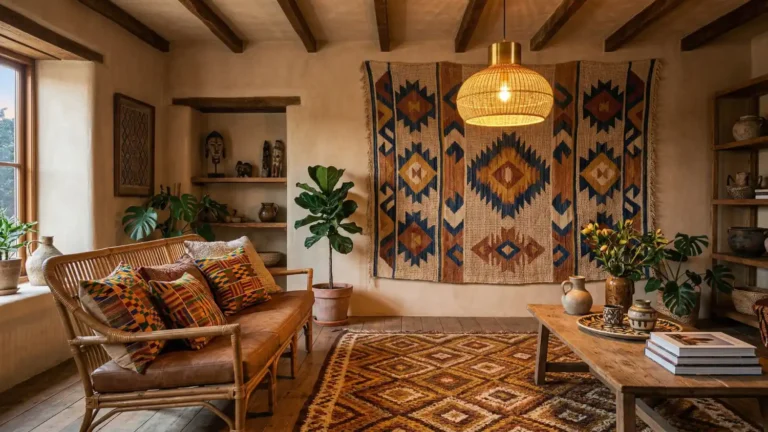
A smaller kilim or Moroccan-style rug layered on top at the bedside adds the color and pattern accent that sisal’s neutral fiber tone can’t provide. The kilim’s geometric pattern in earth tones — ochre, terracotta, indigo — introduces the pattern layer at floor level without competing with the mud cloth throw and cushion patterns above it.
The layered rug composition also creates a tactile transition: the rough sisal underfoot beyond the bed, the denser kilim pile underfoot at the point of first contact when getting out of bed. The functional logic and the aesthetic logic are the same decision.
Lighting: Golden Hour From Every Direction
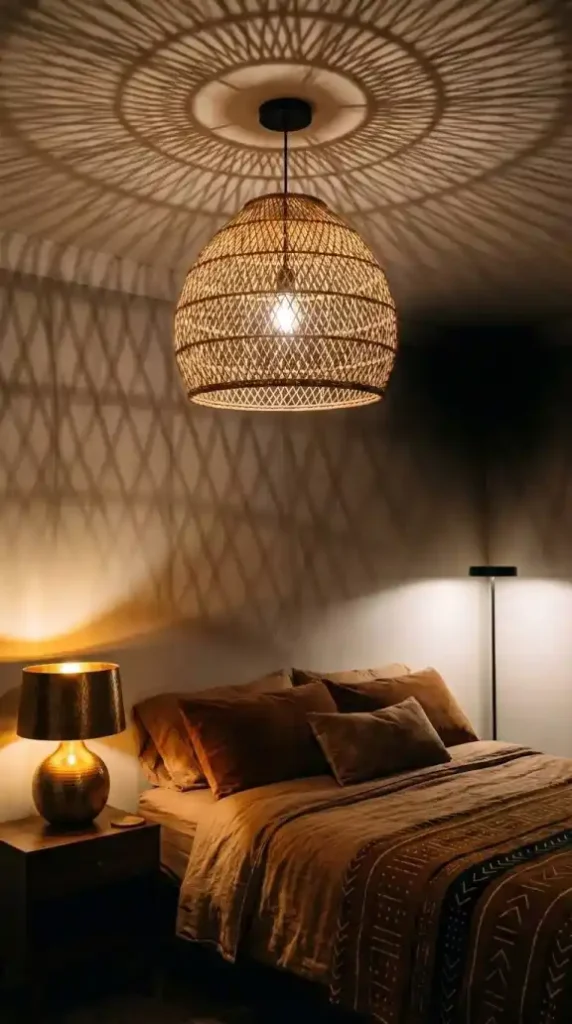
Harsh overhead lighting is the single fastest way to destroy an Afro Bohemian bedroom.
The golden hour glow the aesthetic depends on requires three light sources at three heights — none of them a ceiling downlight.
A large bamboo or rattan pendant overhead casts intricate shadow patterns across the ceiling and upper wall after dark. The open weave does the work — the geometric shadows shift as the bulb warms up, adding a visual layer the room doesn’t have during the day.
Hammered brass or copper bedside lamps at the nightstand level create the warm mid-height glow that makes the bed textile layers visible in their best conditions — warm, directional, close to the surface.
A matte black slim floor lamp in one corner provides the third light source at ground level, creating the depth separation between lit and shadow zones that makes the room feel atmospheric rather than merely illuminated.
All three sources run at 2700K. Sandalwood, myrrh, or amber candles on the nightstand or dresser add the fourth sensory light source — not for illumination but for the warm flicker that no electric bulb can replicate.
The Color Palette: Three Categories, One System
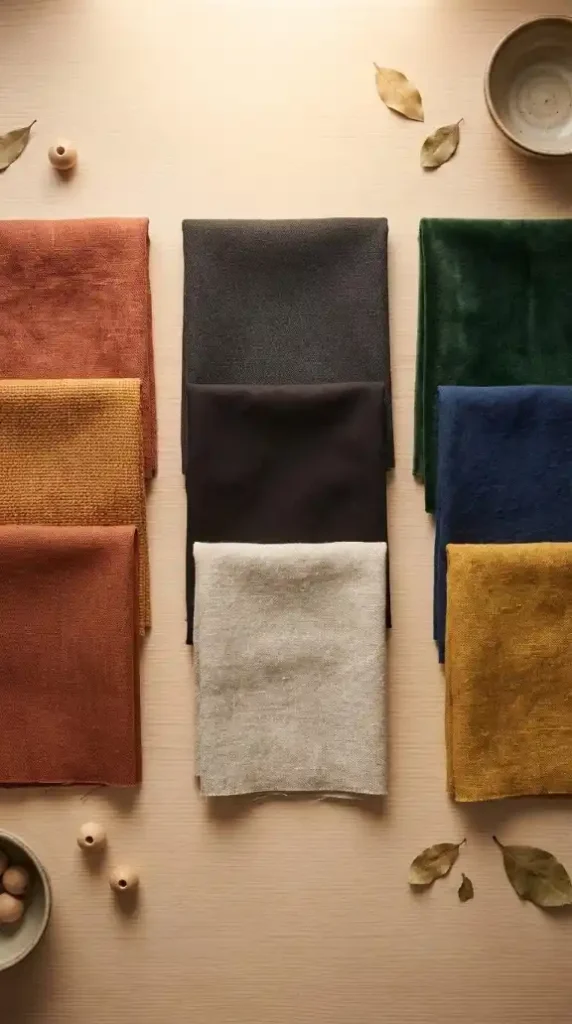
The Afro Bohemian bedroom palette operates in three categories — and understanding the role of each prevents the room from reading as randomly colorful.
The Earth tones — terracotta, ochre, burnt sienna — provide warmth and grounding. These are the dominant wall tone, the primary rug color, the base textile layer. They do the structural palette work that holds the room together.
The High Contrast tones — charcoal, ebony, bone — create the geometric legibility that the mud cloth and Kuba cloth patterns depend on. Without dark and light contrast, the geometric patterns flatten into texture rather than reading as deliberate pattern systems.
The Life tones — forest green, deep indigo, mustard — prevent the room from reading as flat or monochromatic. These are the jewel-tone velvet pillows, the indigo batik accent panel, the mustard throw chair. Used sparingly — as the 10% accent layer — they add the vibrancy that keeps the earth palette from feeling heavy.
The three categories work together only when each is kept in its correct proportion. Life tones at 10% add energy. Life tones at 40% overwhelm the earth palette and lose their accent function entirely.
The Modern Minimalist Accent: Stopping the Room From Becoming a Museum
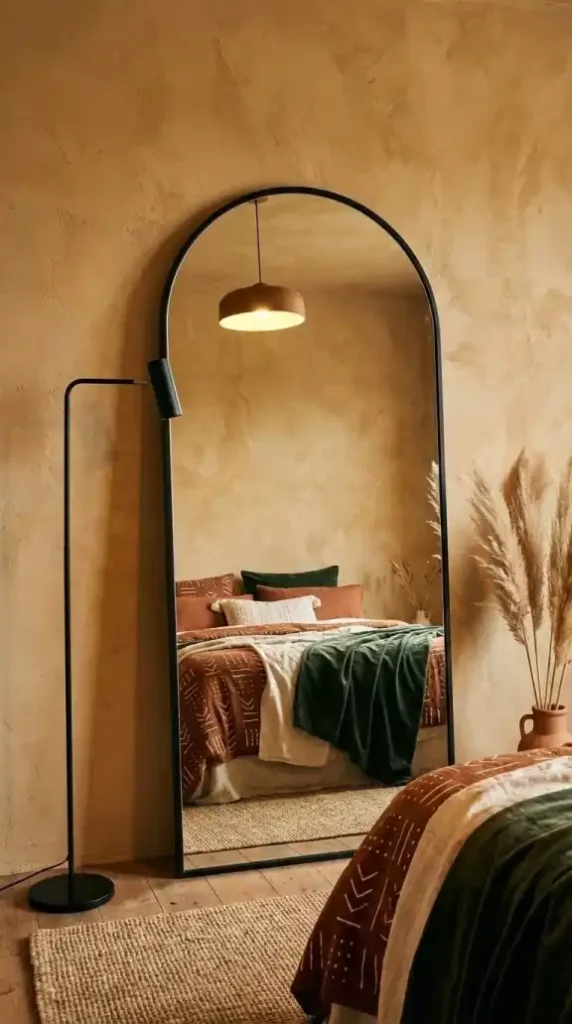
The wildcard element in an Afro Bohemian bedroom is the modern minimalist accent — the piece that stops the room from reading as a heritage collection rather than a lived space.
A large arched floor mirror with a thin matte black metal frame does this better than any other single piece. It’s contemporary in form, minimal in visual weight, and functionally essential — but it also reflects the layered textiles, the warm pendant glow, and the Juju hat wall composition back into the room, doubling the visual depth of everything around it.
A slim matte black floor lamp does the same at the lighting level — its contemporary silhouette creates a sharp, clean line that frames the organic boho elements around it rather than competing with them.
These two modern accents aren’t compromises. They’re the contrast that makes the handmade and heritage objects read as intentional curation rather than accumulated collection.
Greenery: Structural Placement, Not Decoration
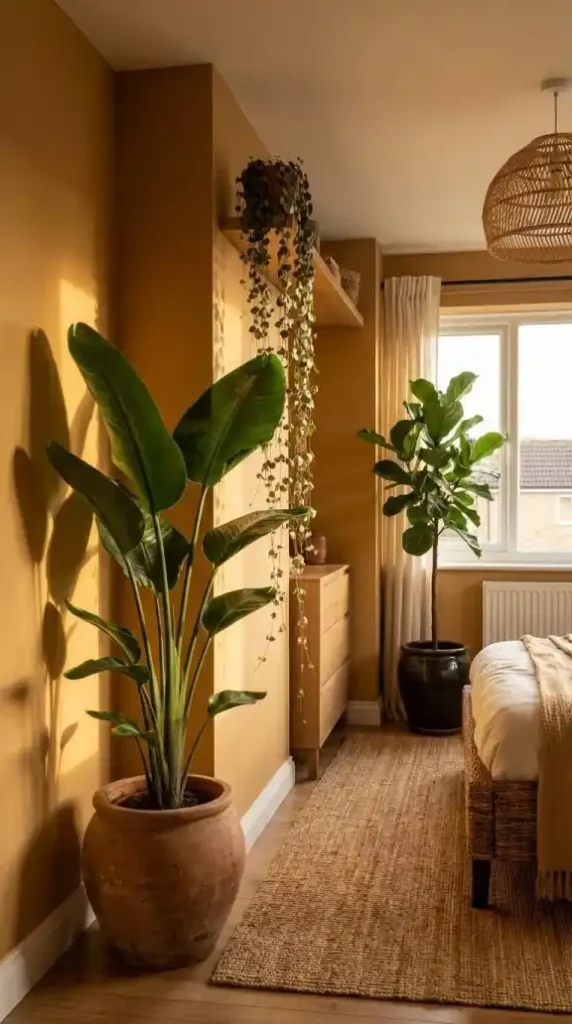
Greenery in the Afro Bohemian bedroom is structural — each plant occupies a specific spatial zone and fills a specific visual gap that no object can address.
A Fiddle Leaf Fig or Bird of Paradise at the bedroom corner creates height and botanical drama at the room’s largest unactivated vertical zone. The broad tropical leaf silhouette of the Bird of Paradise reads as a design element from across the room — it’s not background greenery, it’s a focal element that happens to be alive.
A String of Hearts or Pothos on a high shelf softens the upper corner of the room — the zone where wall meets ceiling — with trailing organic growth that reduces the hard architectural line without requiring any styling intervention.
The plants sit in terracotta pots where possible — keeping the greenery layer materially connected to the earth palette rather than introducing plastic or synthetic container materials that break the organic logic the room is built on.
Auditing Your Bedroom Before You Change Anything
Walk through the space and answer these questions first:
- What is the current headboard material and form? Rattan or dark carved wood are the two correct directions — does the existing headboard sit within either register or does it need replacing as the first furniture decision?
- Is there a wall above the bed that could hold a Juju hat at scale? Measure the wall width between the headboard top and the ceiling. A Juju hat needs at minimum 30cm clearance above the headboard to read as a wall element rather than resting on the headboard.
- What are the current bed textiles — sheet, duvet, pillows? Identify which layer is missing: the neutral linen base, the mud cloth soul layer, or the velvet and jute texture contrast layer. Start with whichever layer is absent.
- What light sources are currently in the room? Count them and their heights. If the only source is an overhead ceiling fixture, the lighting architecture needs to be built from scratch — pendant, bedside lamp, floor lamp — before the room’s textile and object layers can be evaluated correctly.
- Is there floor space in at least one corner for a large plant? A Bird of Paradise or Fiddle Leaf Fig needs approximately 60cm square of floor space and access to indirect natural light. Identify the position before buying the plant.
- Is there a large wall section — beside the bed, opposite the window — that could hold a floor mirror? The arched mirror works best leaning rather than wall-mounted, which means it needs floor clearance of at least 150cm height and 60cm width.
The Afro Bohemian bedroom works because it resolves a tension that most decorated rooms can’t: it feels deeply personal and immediately legible as a coherent aesthetic simultaneously.
The layered textiles carry comfort. The carved wood and leather carry grounding. The Juju hat and basket gallery carry cultural depth. The hammered brass and arched mirror carry the contemporary frame that stops the room from closing in on its own heritage references.
Soul and system. That’s the balance the style is built on — and the bedroom is where both operate at full strength.
Dig Deeper:
- 11 Afro Bohemian Bedroom Ideas for a Warm and Layered Sleep Space — See the layering logic and material contrast principles applied across 11 specific bedroom moves, each one with a reason behind the sequence.
- How to Style an Afro Bohemian Bedroom — Follow the full ten-step styling process in the exact order that makes each decision easier than the last — from lighting setup to the sensory finishing layer.
- Afro Bohemian Bedroom Decor Must-Haves for Beginners — If the layering system feels abstract, start here with the nine physical anchor pieces that make the palette logic and material sequence concrete from the first purchase.