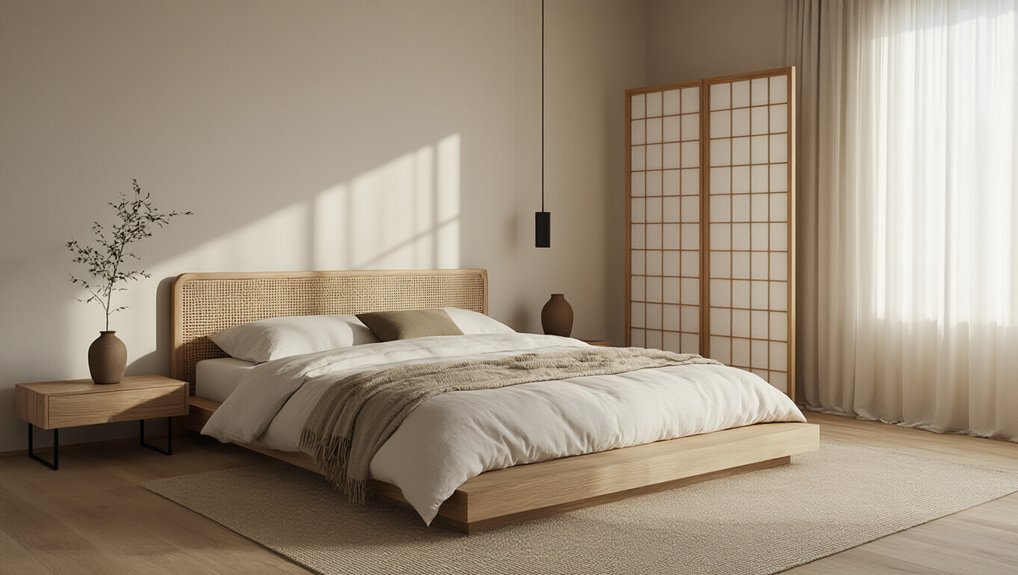
10 Japandi Bedroom Styling Tips for a Balanced Aesthetic
Define Japandi: What Japanese Minimalism Meets Scandinavian Warmth
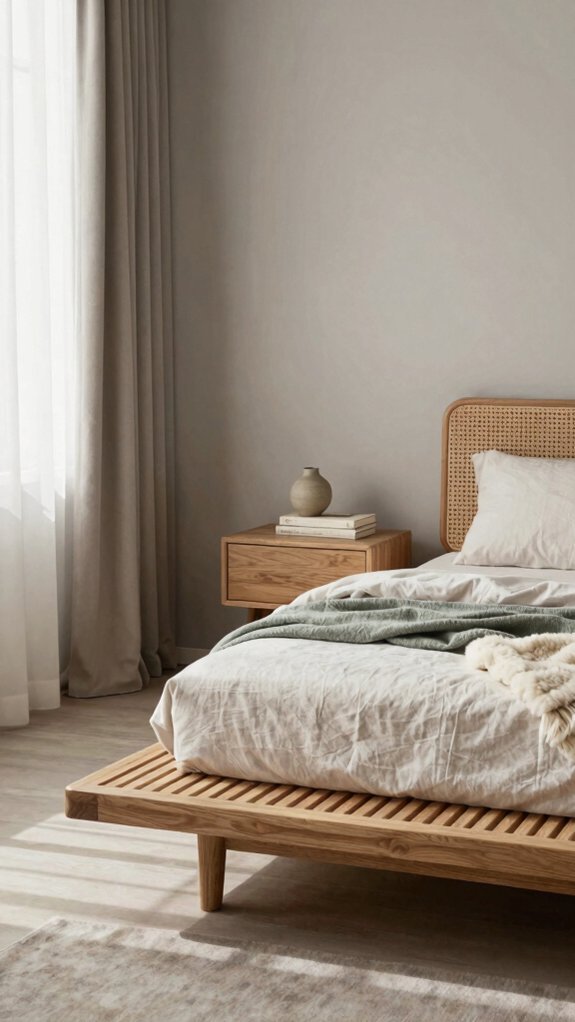
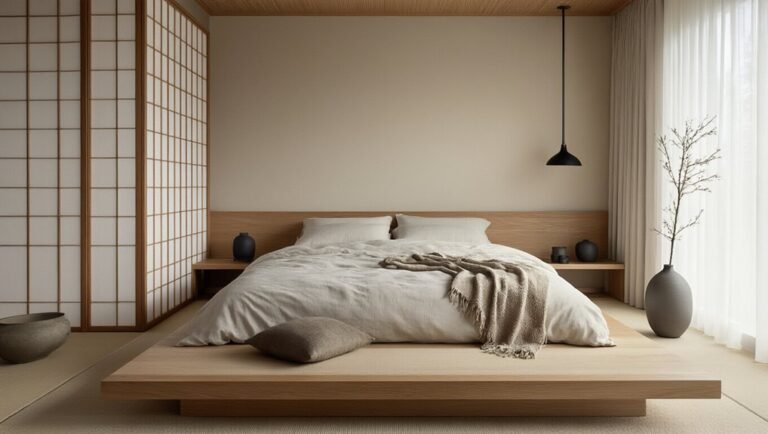
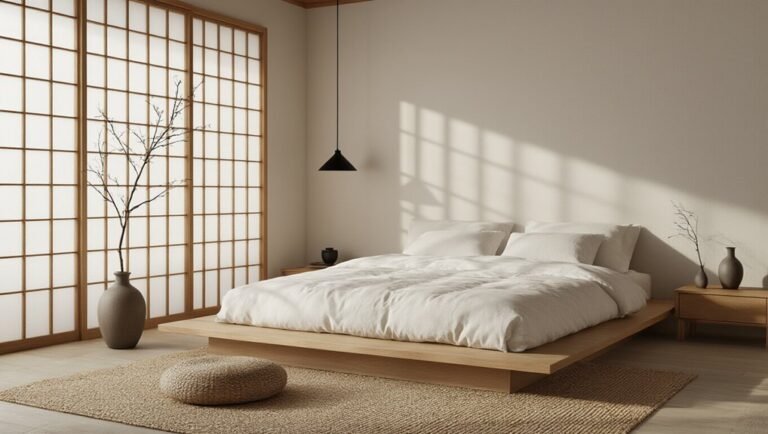
Japandi blends Japanese minimalism with Scandinavian coziness to create a design philosophy that’s both restful and inviting.
You’ll appreciate how this aesthetic marries Japan’s zen principles—clean lines, natural materials, and purposeful simplicity—with Scandinavia’s emphasis on comfort and warmth.
The result balances stark elegance with lived-in coziness, eliminating clutter while embracing textures and ambient lighting.
You’re not sacrificing functionality for beauty or vice versa.
Instead, you’re crafting a bedroom that feels serene yet welcoming, where every element serves a purpose and contributes to an overall sense of calm harmony and belonging.
Start With a Neutral Color Palette
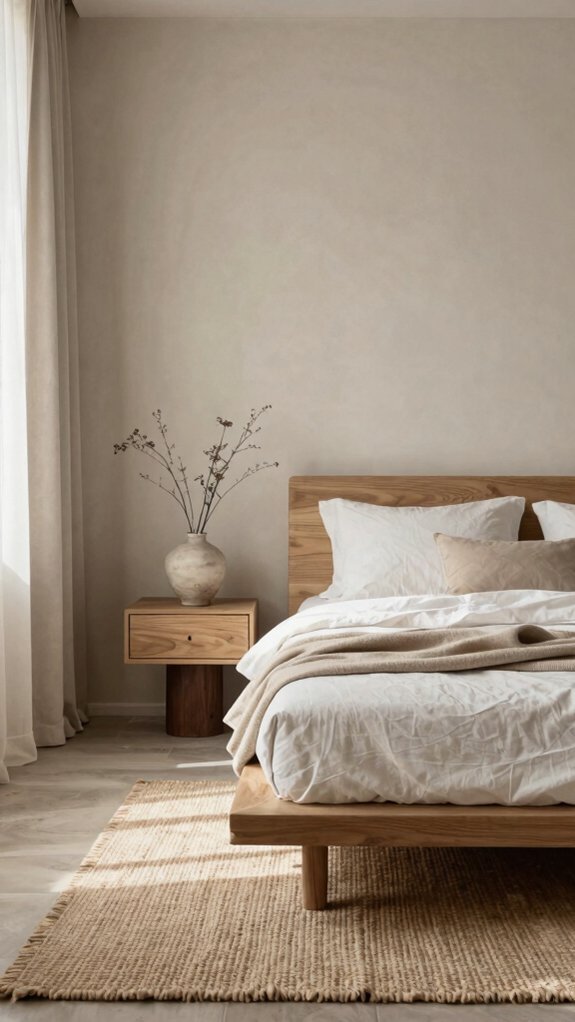
Since the foundation of any restful bedroom relies on color choices that won’t overstimulate your senses, you’ll want to anchor your Japandi space with neutral tones like soft whites, warm grays, beiges, and muted blacks. These calming hues create visual harmony while allowing natural light to flow freely throughout your room. You’re building a serene backdrop that supports relaxation and mental clarity.
Layer these neutrals thoughtfully—pair lighter walls with deeper furnishings or vice versa. This approach respects both Japanese simplicity and Scandinavian coziness, giving you a cohesive foundation where you’ll add purposeful accents later.
Embrace Natural Materials and Textures
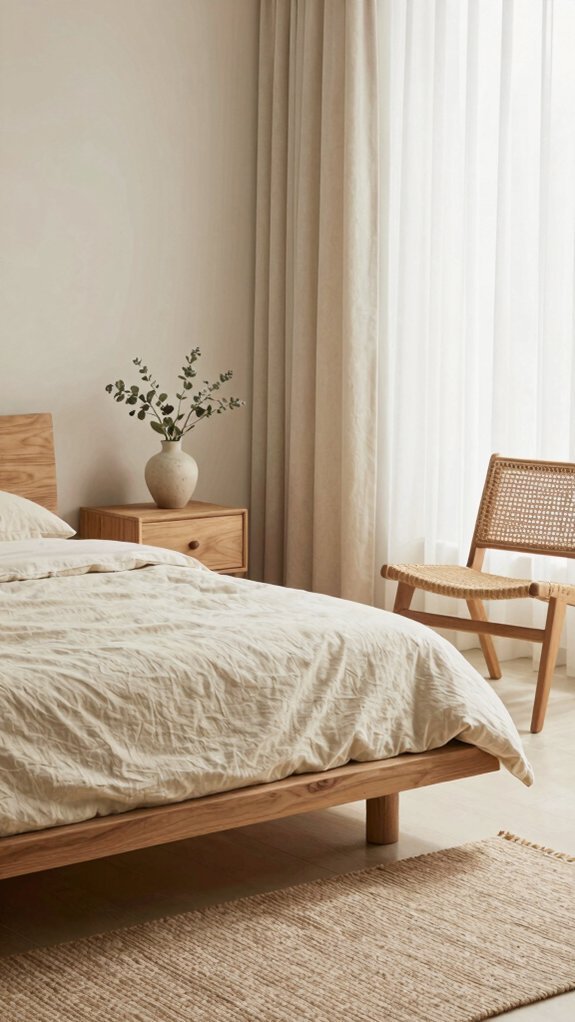
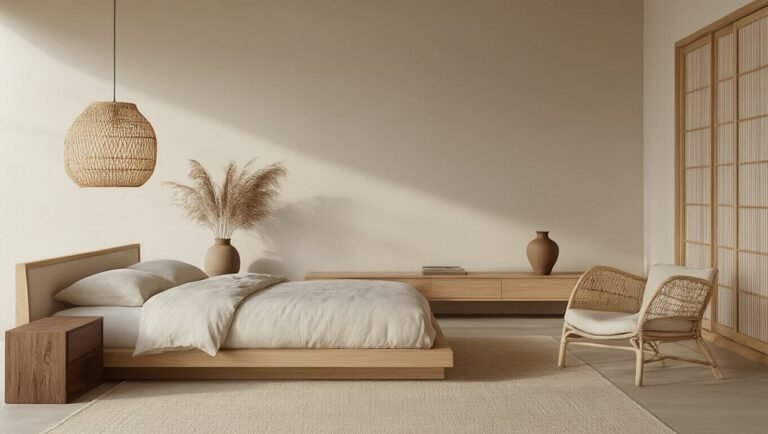
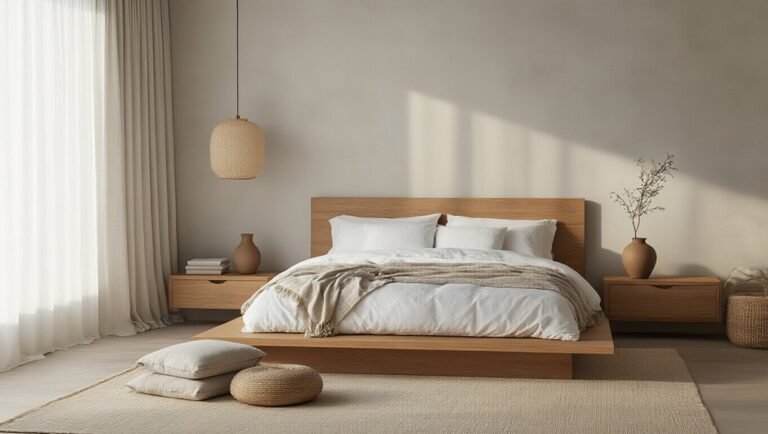
What better way to ground your serene bedroom than through authentic, tactile elements? You’ll want to incorporate natural materials like wood, linen, cotton, and wool throughout your space. Choose a solid wood bed frame or nightstands that showcase the grain’s beauty. Layer soft linen sheets and cotton blankets for comfort and breathability. Add a chunky knit throw or jute rug to introduce texture. Consider bamboo accents or a wooden headboard to reinforce the natural aesthetic. These materials age gracefully, developing character over time while maintaining the Japandi design’s essence of simplicity and authenticity.
Stick to Japandi Minimalism: Furniture That Serves Purpose
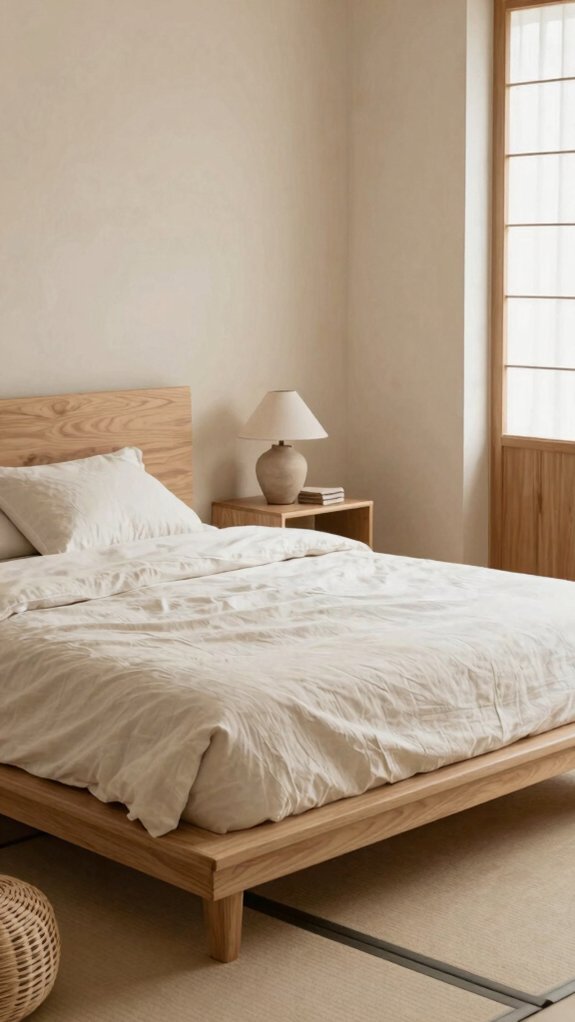
As you’ve layered in natural textures, you’ll now want to curate your furnishings with intention—selecting only pieces that serve a genuine function in your bedroom. Skip decorative items that clutter your space. Choose a low-profile bed frame, a simple nightstand, and perhaps a minimalist dresser. Each furniture piece should earn its place through utility and clean lines. This restraint creates breathing room and calms your mind. You’re not decorating for show; you’re designing for living. When every object has purpose, your bedroom becomes a sanctuary of clarity and peace.
Choose Low-Profile Bedroom Furniture
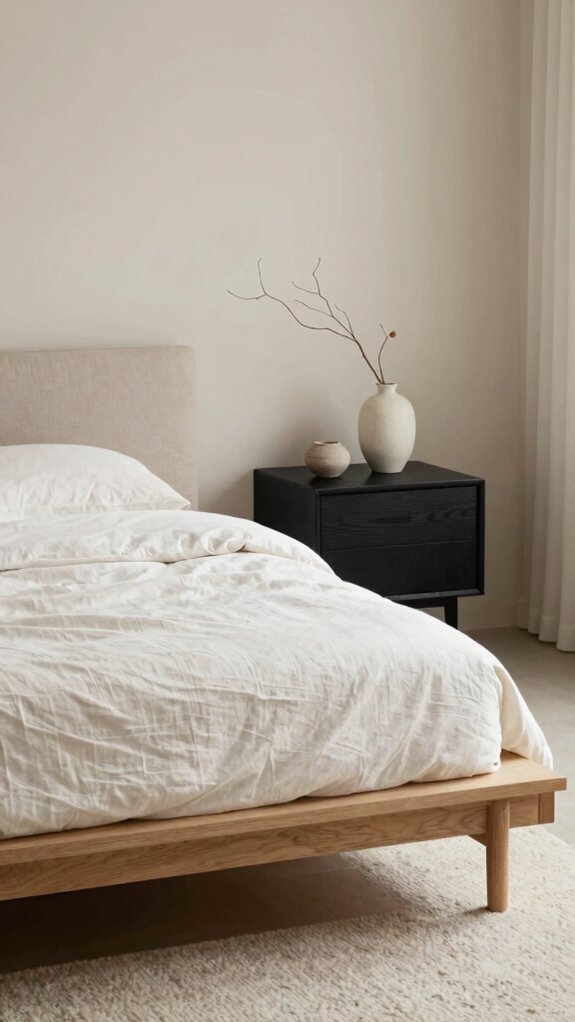
Why does height matter in bedroom design? Low-profile furniture grounds your space, creating visual calm and enhancing flow. You’ll want pieces that sit closer to the floor—platform beds, low dressers, and minimal nightstands—because they reduce visual clutter and make rooms feel more spacious.
This approach aligns with Japanese design principles that prioritize simplicity and functionality. You’re not just choosing aesthetics; you’re improving how your bedroom functions. Lower furniture encourages relaxation by lowering your eye line, promoting a sense of peace. When you eliminate towering dressers and high bed frames, you establish better proportions that support the Japandi philosophy of balanced, intentional living.
Layer Soft, Muted Lighting
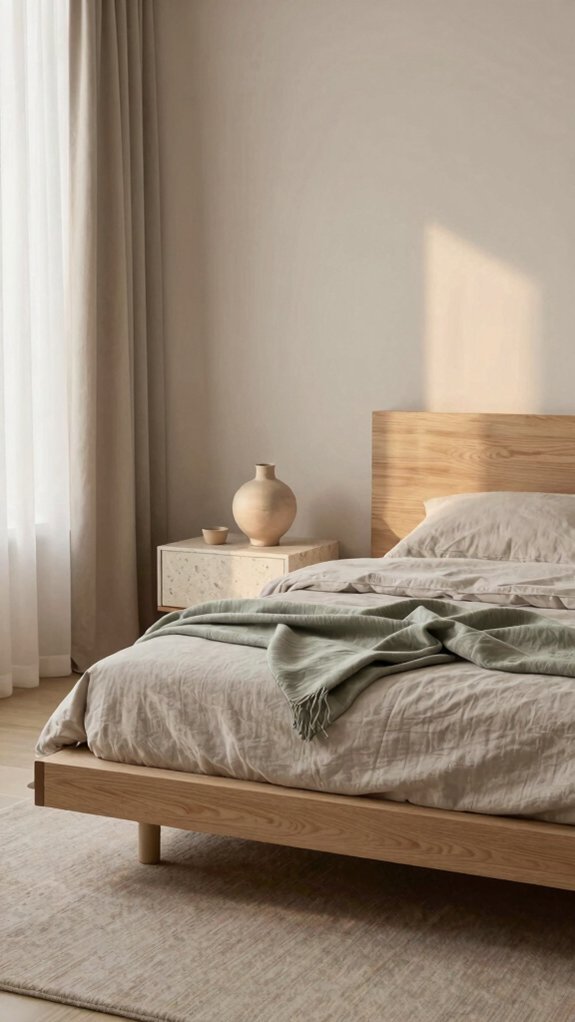
How you light your bedroom shapes the entire atmosphere—it’s the difference between a restful sanctuary and an overstimulating space. You’ll want to layer multiple light sources at varying intensities. Install dimmer switches on overhead fixtures, then add warm-toned table lamps and wall sconces at eye level. Choose fixtures with natural materials like wood or paper shades that diffuse light softly. Avoid harsh, cool-white bulbs; instead, opt for warm whites around 2700K. Position lighting to eliminate shadows while maintaining gentle illumination. This approach lets you adjust ambiance throughout the day, supporting both relaxation and functionality within your Japandi bedroom.
Incorporate Natural Wood Elements
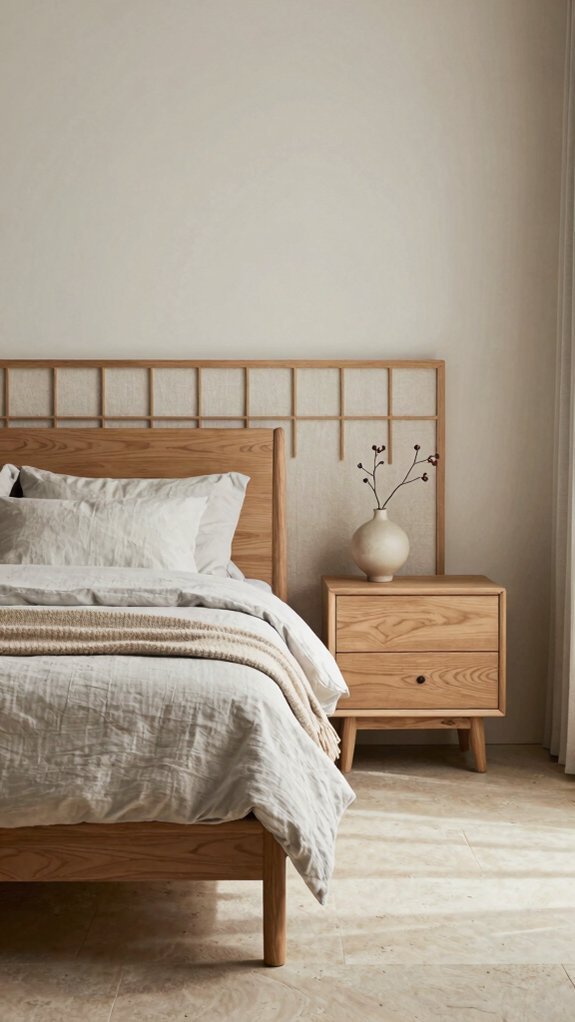
While thoughtful lighting creates the perfect ambiance, the materials you choose ground that atmosphere in authenticity. You’ll want to incorporate natural wood elements throughout your bedroom to establish Japandi’s core aesthetic. Select furniture pieces with visible wood grain and warm tones—think platform beds, nightstands, or shelving units. You can also add wooden flooring or area rugs with wood accents. The key is choosing unfinished or minimally treated wood that showcases its natural character. These elements connect your space to nature while maintaining the clean, uncluttered lines that define Japandi design. Wood’s warmth balances the style’s minimalist approach beautifully.
Design Hidden Storage That Keeps Clutter Invisible
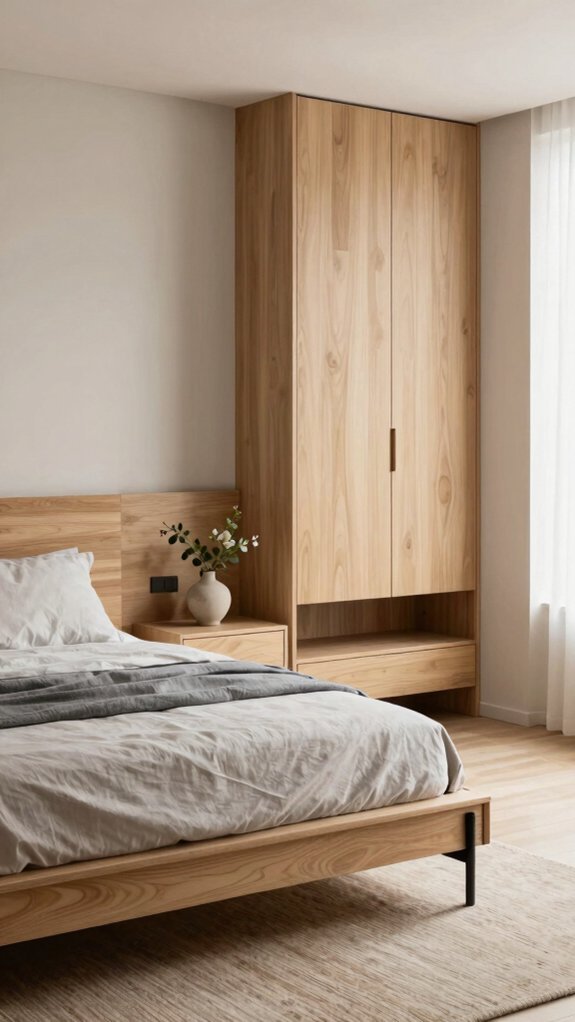
Where do you hide the essentials that don’t fit Japandi’s minimalist aesthetic? Built-in closets and under-bed drawers work beautifully. You’ll want floating nightstands with concealed compartments for personal items. Consider installing wall-mounted cabinets behind sliding shoji-inspired doors to maintain clean lines. Woven baskets tucked into shelving units blend function with style. You can also integrate storage benches at the foot of your bed. The key is designing spaces where everything has a designated spot, so clutter never accumulates visibly. This approach keeps your bedroom serene while maintaining practicality.
Let Negative Space Breathe: Then Add Warmth
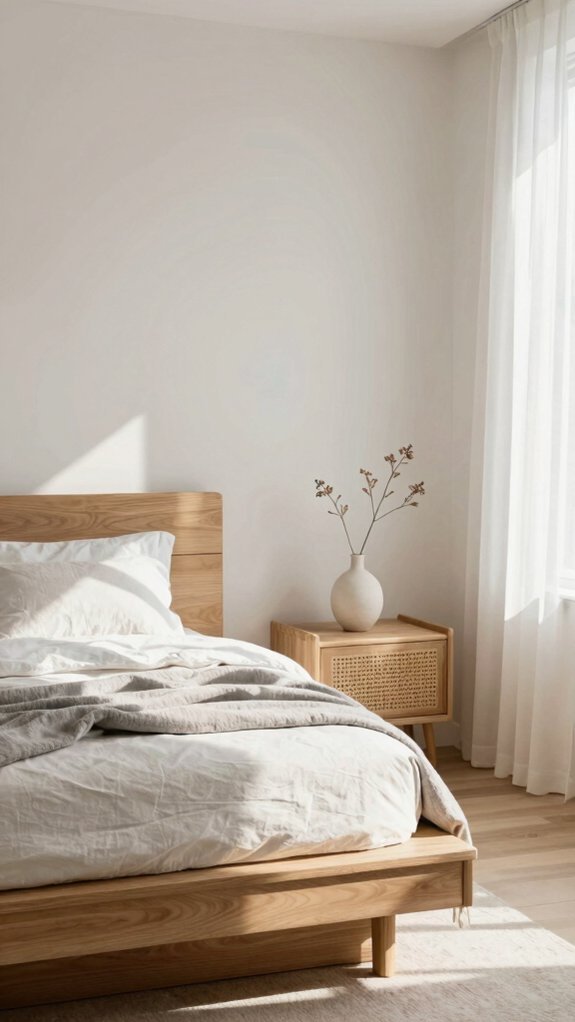
Why does empty space matter in Japandi design? It prevents visual overwhelm and creates calm. You’ll resist filling every corner, allowing your room to breathe naturally. This restraint forms the foundation of authentic Japandi style.
Once you’ve established negative space, you’ll layer in warmth strategically. Add soft textures like linen bedding, wool throws, or a natural fiber rug. Incorporate warm wood tones through nightstands or a bed frame. Place a single piece of meaningful artwork on bare walls. Include ambient lighting with warm-toned bulbs. These thoughtful additions transform minimalist emptiness into an inviting sanctuary without compromising the design’s essential tranquility.
Display Meaningful Objects Sparingly
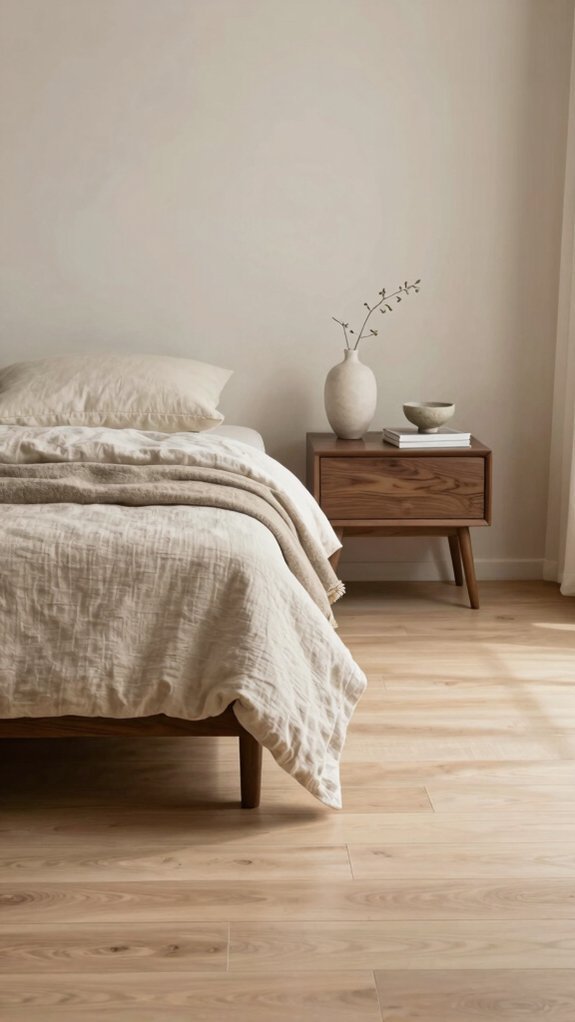
Rather than scattering decorative items throughout your bedroom, you’ll curate a few pieces that genuinely resonate with you. This selective approach embodies Japandi philosophy, where each object holds purpose and meaning. Display a cherished photograph, a handcrafted ceramic vase, or a treasured book on floating shelves or a simple nightstand. Space between items matters as much as the objects themselves, allowing each piece to command attention without overwhelming the room. By limiting your displays, you’ll create visual calm while celebrating what truly matters to you personally.