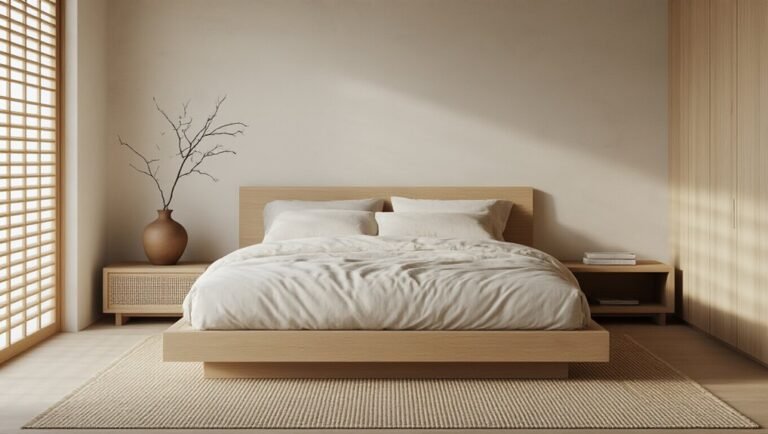
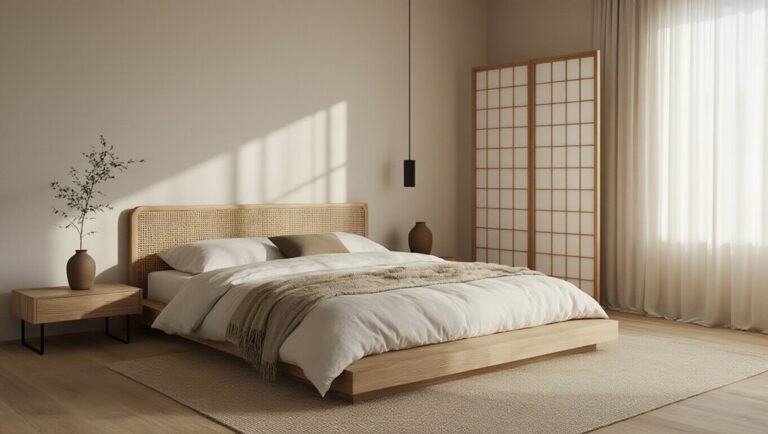
7 Best Japandi Throw Pillows for a Calm, Minimal Living Room
This post contains affiliate links. I may earn a small commission at no extra cost to you. I bought these with my own money — no gifted products, no brand relationships, just what actually made it into my cart.
Japandi is the design style I turned to when I realized my Austin house needed to feel less like something and more like nothing in particular — in the best possible way. Not empty. Not sparse for the sake of it. Just genuinely quiet. A room where you walk in and something in your shoulders drops.
The pillows were the last piece I figured out. I kept reaching for texture-heavy Scandinavian knits or bold Afro Bohemian patterns — both of which I love in their own contexts — but Japandi calls for something different. Restraint in both texture and color. Muted sage, warm greige, soft charcoal, undyed linen. Materials that feel considered without demanding attention.
My cat, who normally has strong opinions about pillow placement, has settled into the Japandi sofa arrangement without complaint. I take this as the highest possible endorsement. Here are the 7 that earned their place.
What to look for before you buy
- Color restraint is the first filter. Japandi pillows live in a narrow palette: warm greige, muted sage, soft charcoal, warm white, clay, dusty terracotta. Anything saturated or bright breaks the mood immediately.
- Texture yes, pattern no — or minimal pattern only. Subtle weave texture, linen grain, fine ribbing. Avoid large-scale prints, bold geometric patterns, and anything that competes for attention.
- Natural materials over synthetic. Linen, undyed cotton, wool in muted tones. The Japandi aesthetic is rooted in material honesty — the fabric should feel as good as it looks.
- Size: 20×20 for most sofas. Japandi tends toward fewer, larger pillows rather than many small ones. Two well-chosen pillows beat five mediocre ones in this aesthetic.
- Negative space is part of the sofa composition. Don’t over-pillow. Leave the sofa surface to breathe — the empty cushion is as intentional as the filled one.
1. Undyed Linen Pillow Cover — Natural
Best overall
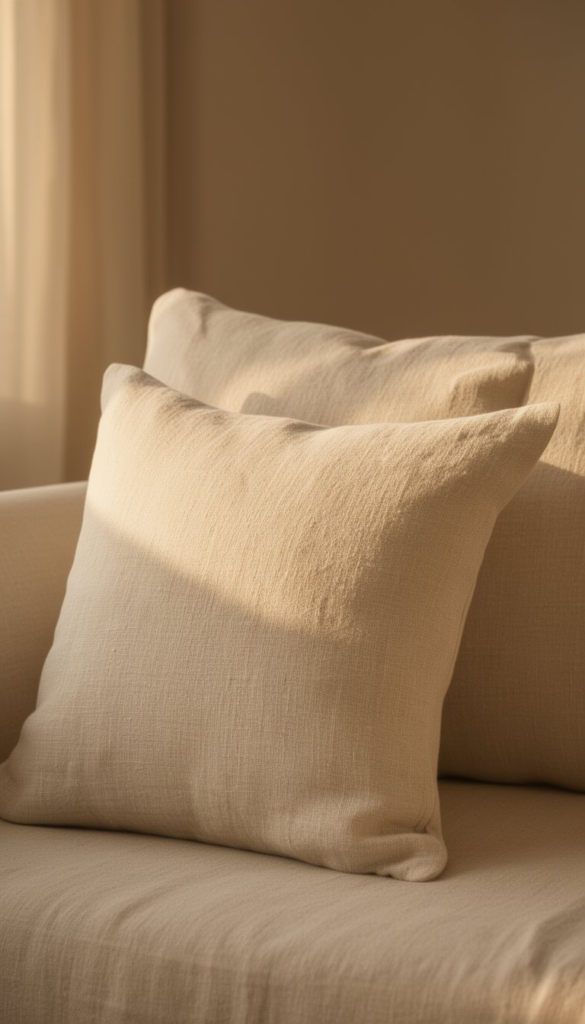
Undyed natural linen is the most honest Japandi pillow material — the color comes entirely from the plant fiber rather than any dye process, which gives it an organic variation that synthetic neutrals can’t replicate. The slight slub texture of the weave adds visual interest without adding pattern. In Austin’s warm afternoon light it picks up a warm straw tone that feels genuinely alive.
Color note: Natural linen’s warm straw-cream sits at the exact center of the Japandi palette — warm enough to prevent the room from reading as cold minimalism, neutral enough to allow every other color choice in the room to breathe around it.
→ Check price on Amazon
2. Muted Sage Linen Pillow Cover
Best color accent
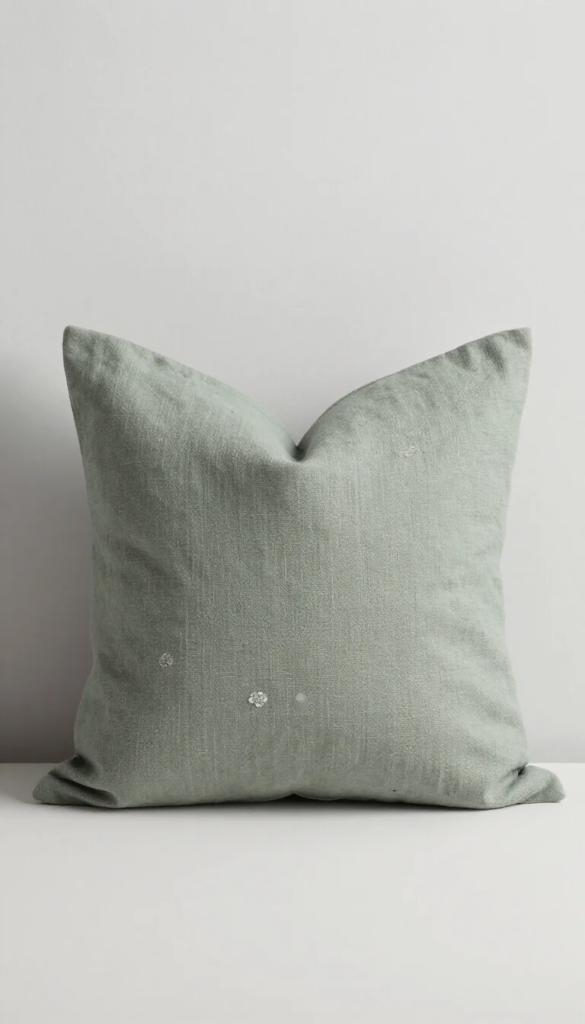
Muted sage is the most distinctly Japandi color in existence — it references both the Japanese wabi-sabi tradition of natural organic hues and the Scandinavian love of bringing nature’s palette indoors. Not the bright sage of trend cycles — this is the grey-green of lichen on stone, the color of a plant that has been growing in low light for a long time.
Color note: Muted sage introduces the cool-green anchor of the Japandi palette — it shifts the room away from the purely warm-neutral zone and adds the living, organic quality that prevents Japandi from reading as simply beige minimalism.
→ Check price on Amazon
3. Warm Greige Velvet Pillow — Low Sheen
Best texture contrast
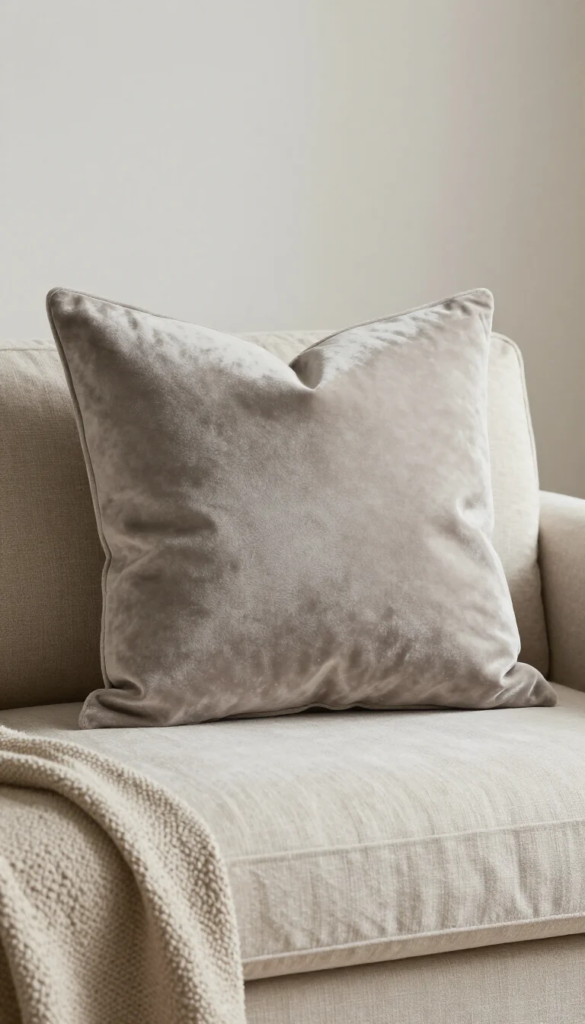
A low-sheen velvet in warm greige adds the one moment of subtle luxury that Japandi allows — the slightly reflective surface catches light differently than the linen and undyed cotton around it, creating a texture contrast that reads as considered rather than decorative. Low-sheen rather than high-sheen is essential; anything that glitters breaks the mood.
Color note: Warm greige velvet reflects warm light at low intensity — it adds a gentle glow to the palette that flat-weave fabrics don’t provide, warming the room’s tone without introducing any identifiable color outside the Japandi neutral family.
→ Check price on Amazon
4. Charcoal Textured Weave Pillow Cover
Best grounding element
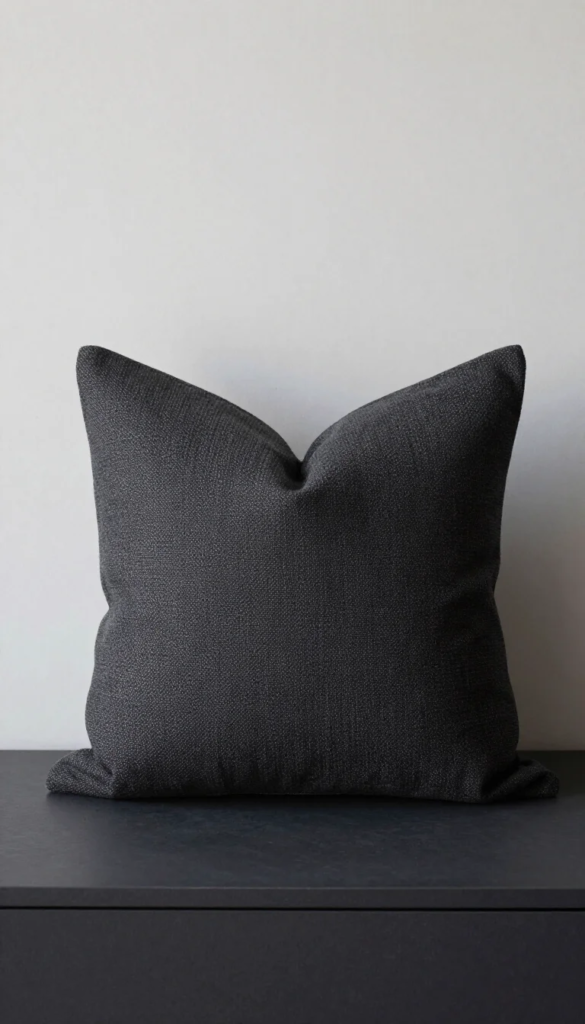
Every Japandi room needs one darker anchor to prevent the palette from reading as entirely washed-out. A soft charcoal pillow in a textured weave — not jet black, not true grey, the warm dark tone that sits between the two — provides that grounding without the starkness of black. The texture keeps it from reading as corporate.
Color note: Warm charcoal in a Japandi palette functions as the room’s deepest neutral anchor — it gives the eye a place to rest and prevents the pale greige and sage tones around it from floating without direction, which is the Japandi equivalent of the mud cloth black-and-white in an Afro Bohemian room.
→ Check price on Amazon
5. Undyed Cotton Canvas Pillow — Natural Stitching Detail
Best for wabi-sabi character
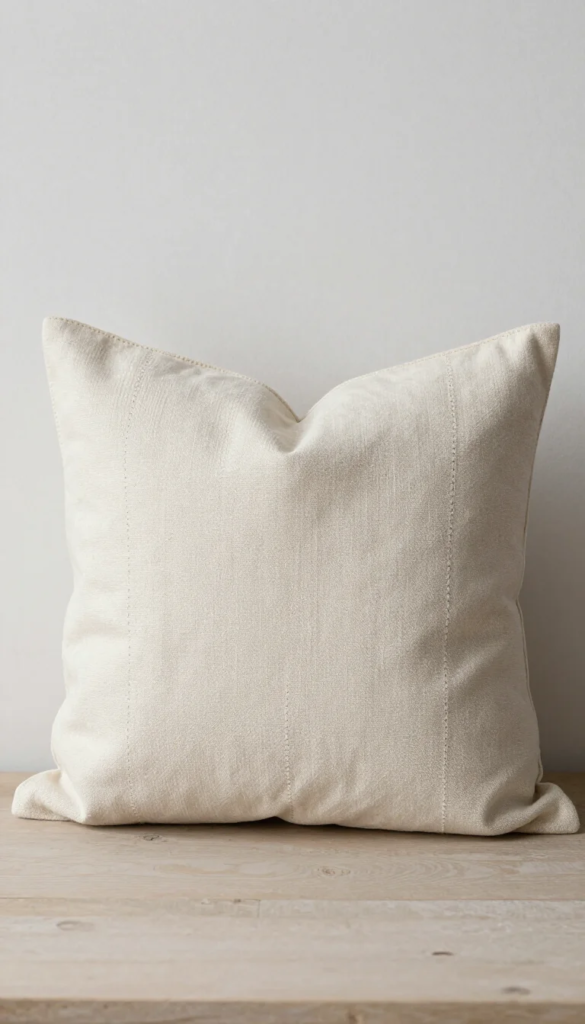
Wabi-sabi — the Japanese aesthetic of finding beauty in imperfection — manifests in home decor through objects that show their making. A simple canvas pillow with visible hand-stitching or intentional texture variation is more Japandi than a perfectly finished pillow of the same color. The imperfection is the design.
Color note: Natural undyed cotton in a hand-stitched format carries subtle color variation from the stitching thread — the slightly different tone of the thread against the canvas creates a micro-pattern that adds depth to what is nominally a single neutral color.
→ Check price on Amazon
6. Dusty Clay Linen Pillow Cover
Best warm accent
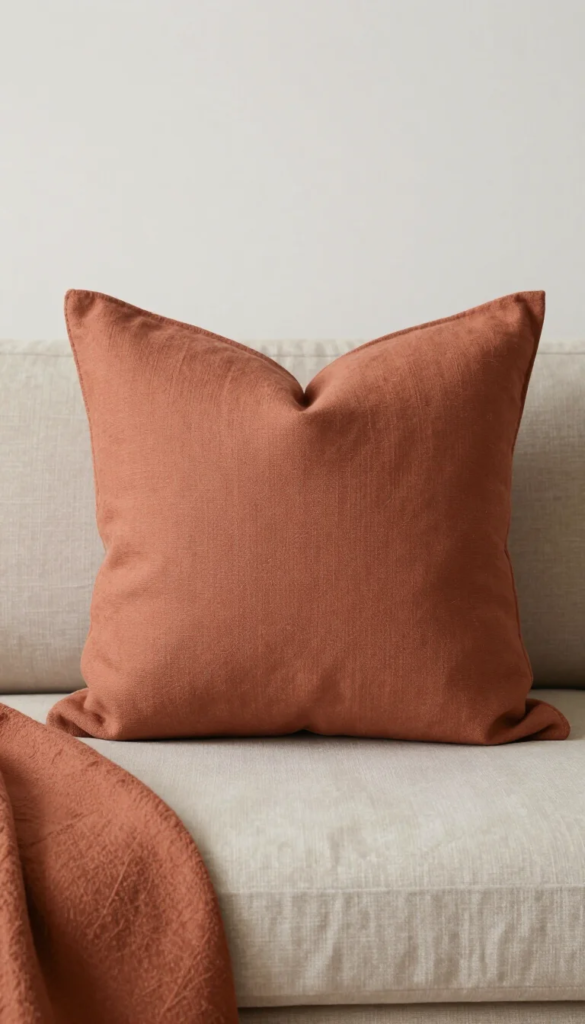
Dusty clay — a muted, desaturated terracotta — is the warm accent color the Japandi palette uses sparingly and deliberately. Where Afro Bohemian uses full-saturation terracotta freely, Japandi uses the same color family at half the volume: quieter, drier, more restrained. One dusty clay pillow warms the whole arrangement without asserting itself.
Color note: Dusty clay sits at the intersection of warm terracotta and warm greige — it introduces warmth into the palette without the visual energy of full terracotta, which keeps the room in the calm zone that Japandi requires while still preventing the palette from reading as cool or detached.→ Check price on Amazon
7. Bouclé Pillow Cover — Warm Off-White
Best under $35
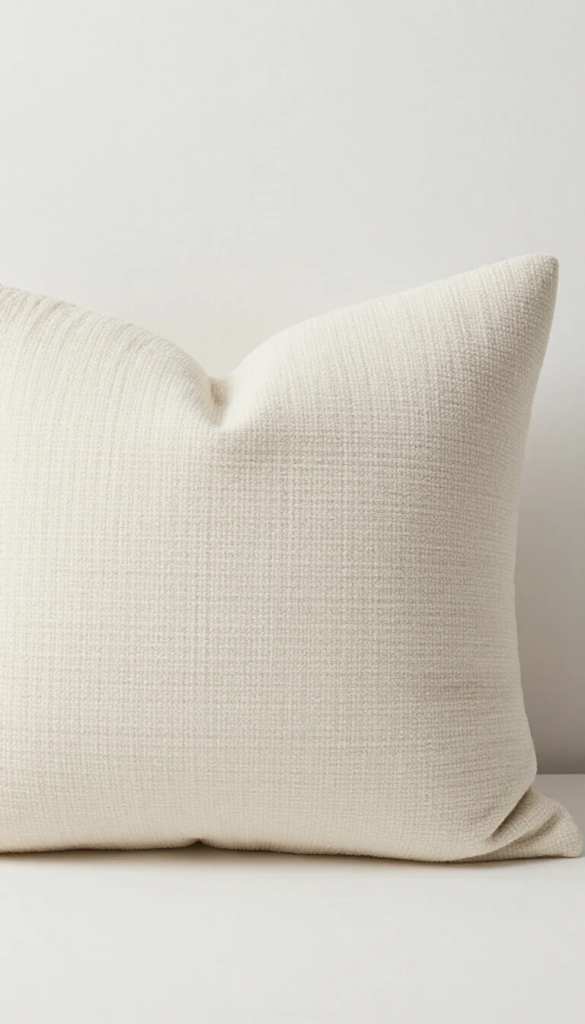
Bouclé in warm off-white is the softest possible Japandi pillow choice — the looped texture adds warmth through material rather than color, and the off-white tone sits between cream and white in a way that works with both the warm and cool elements of the Japandi palette. My cat has conducted extensive softness testing on this one and has approved it for daily use.
Color note: Bouclé’s looped surface creates the illusion of color temperature variation within a single neutral — it reads as warm cream from some angles and cool white from others, which gives the palette a subtle dynamism that flat-weave neutrals lack.
→ Check price on Amazon
My pick for most rooms
Undyed natural linen as the base, muted sage as the accent, warm charcoal as the anchor. Three pillows, three tones from the Japandi palette, the sofa arrangement reads as complete rather than in progress. Under $80 total. The room finally has the quality of visual quiet that Japandi promises — everything present is necessary, nothing is decorating for decoration’s sake.