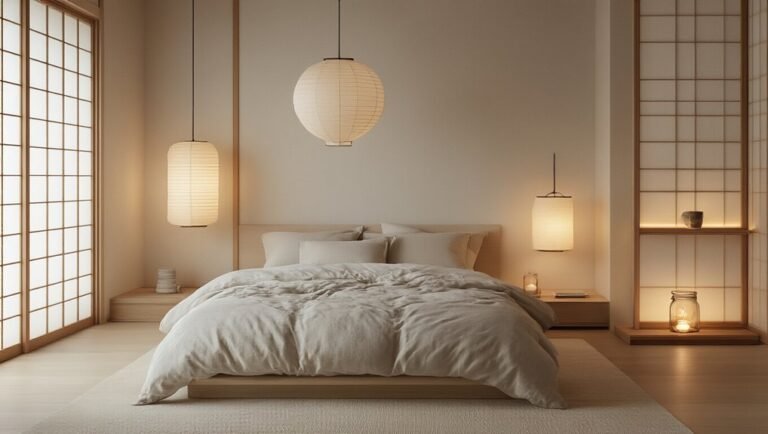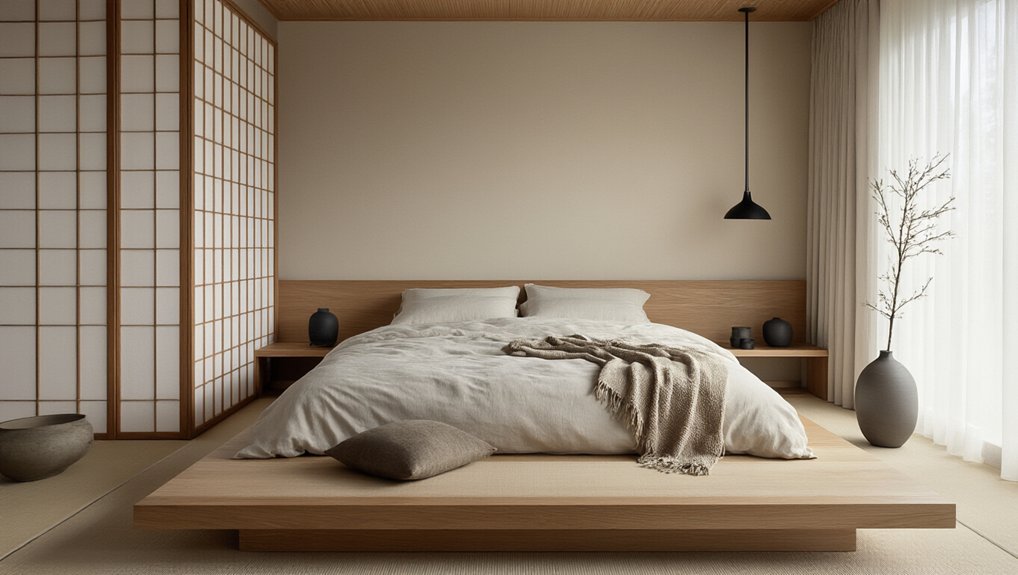
10 Japandi Bedroom Styling Rules Designers Swear By
Understand the Japandi Balance: Minimalism Meets Warmth
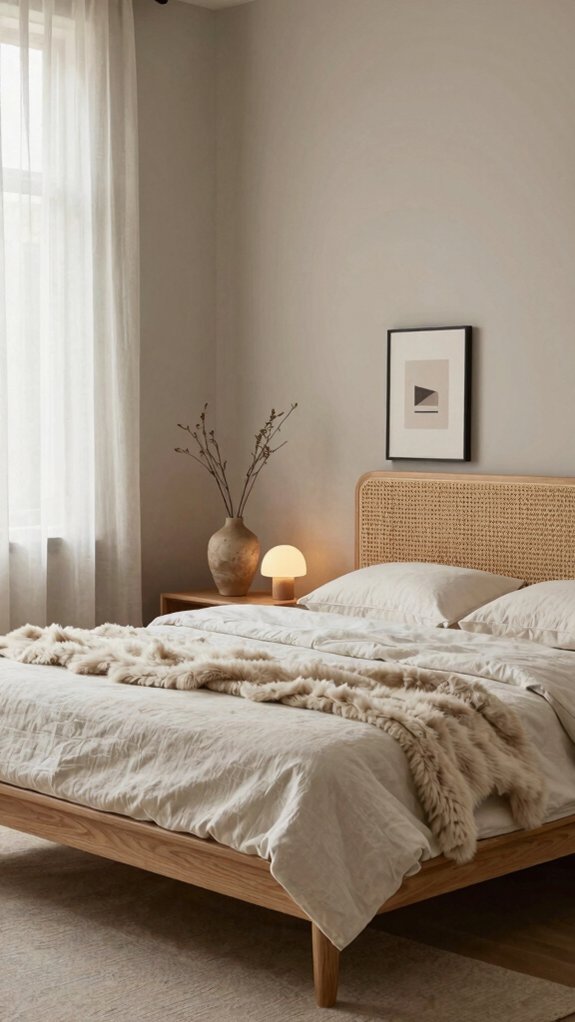
How do you create a bedroom that feels both serene and inviting?
You’ll embrace Japandi‘s core philosophy: merging Japanese minimalism with Scandinavian warmth. Strip away unnecessary clutter, keeping only essentials that serve a purpose or bring joy.
Then layer in natural textures—linen, wood, wool—that soften the sparse aesthetic. You’re not creating a cold, empty room; instead, you’re building a sanctuary where every element breathes intentionalityality
The balance comes from restraint paired with tactile comfort. Think clean lines alongside cozy textures, neutral palettes enhanced by warm lighting. This duality transforms your bedroom into a peaceful retreat that doesn’t feel austere.
Use Empty Space to Define the Room’s Calm
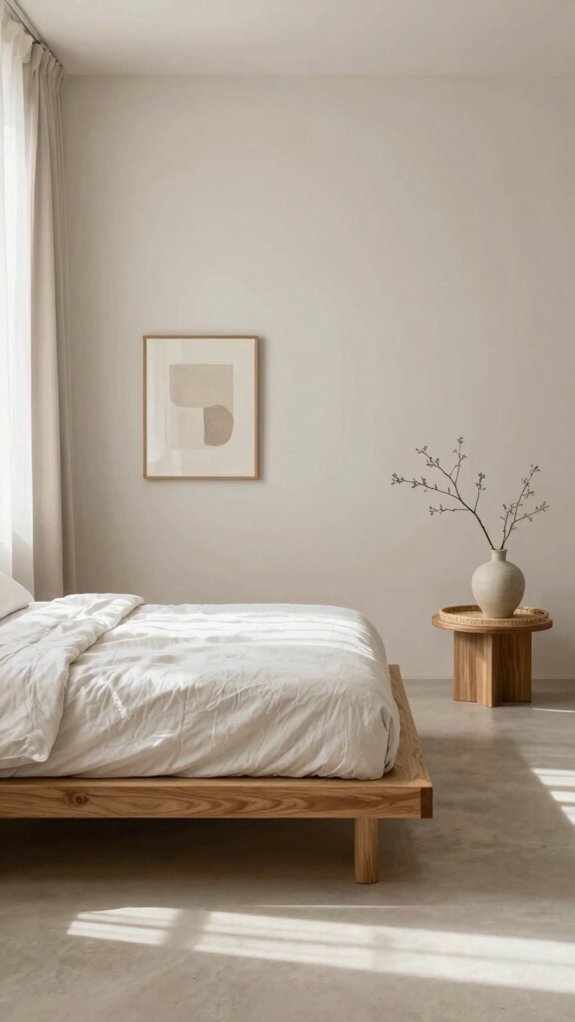
Why do minimalist spaces feel so restful?
Empty space isn’t absence—it’s intentional breathing room. You’re creating visual calm by resisting the urge to fill every corner. Leave walls bare, keep nightstands uncluttered, and position furniture deliberately with generous gaps between pieces.
This negative space allows your eyes to rest and your mind to decompress. You’re not designing emptiness; you’re designing purpose.
Each item earns its place. By embracing what’s not there, you’re defining the room’s tranquility. Japandi thrives on this restraint—letting silence speak louder than decoration.
Build Your Palette Around Neutrals and Naturals
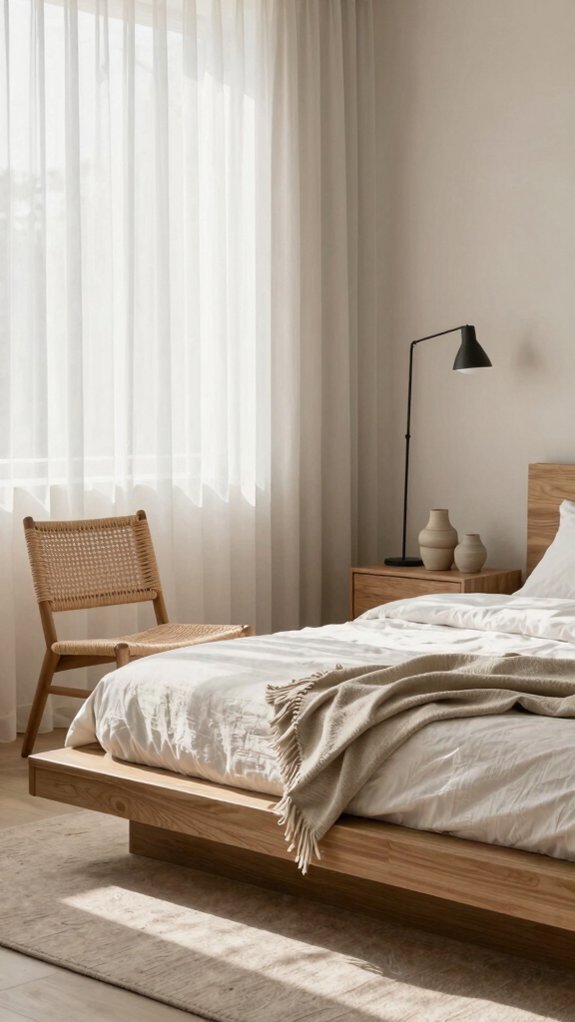
When’s the best time to commit to a color scheme?
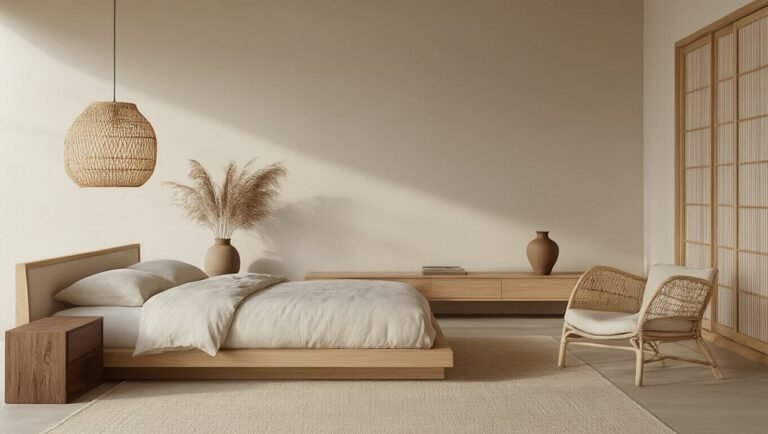
Right at the start. You’ll want to build your palette around neutrals and naturals—think warm whites, soft grays, beiges, and taupe. These foundational tones create visual calm while allowing natural materials to shine. Layer in muted blacks or charcoal for subtle contrast. Incorporate wood tones that echo your furniture pieces.
Avoid bright hues; instead, let texture and material variation add depth. This restrained approach aligns perfectly with Japandi philosophy, where understated elegance trumps bold statements. Your bedroom becomes a serene sanctuary rather than a visually chaotic space.
Choose Low-Profile Furniture That Does Double Duty
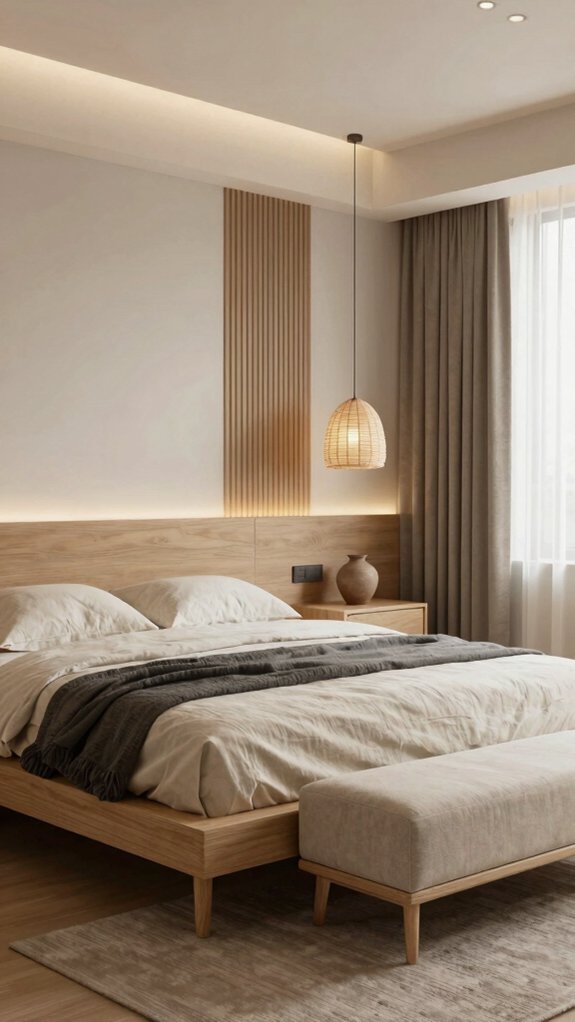
What makes low-profile furniture essential to Japandi design?
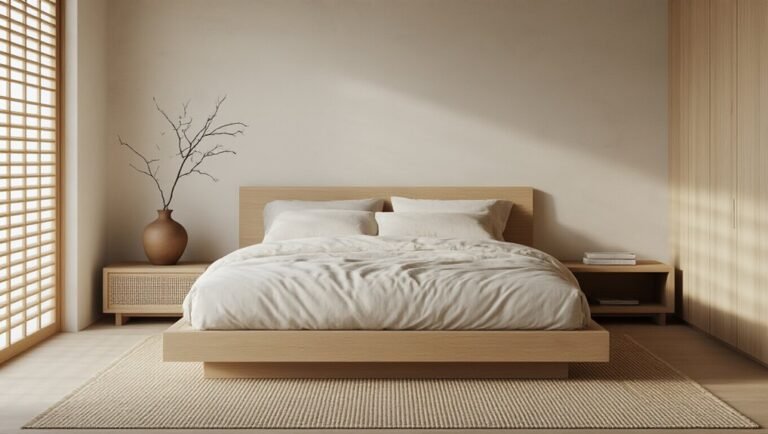
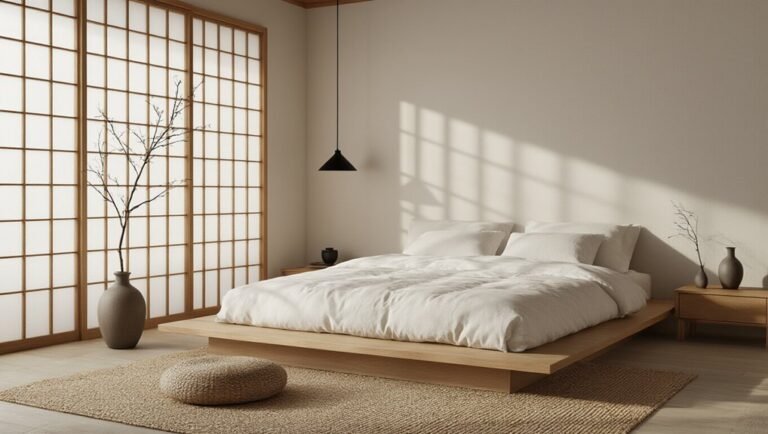
It creates visual calm and maximizes floor space, two core principles of this aesthetic. You’ll want to invest in platform beds without frames, low dressers, and compact nightstands that serve multiple purposes. A bench at your bed’s foot offers seating and storage. Floating shelves eliminate bulky cabinets while providing display space. Multi-functional pieces like storage ottomans reduce clutter while offering practicality. This approach keeps your bedroom feeling open and uncluttered, allowing you to breathe.
Low furniture grounds the space, creating an intentional, serene environment that embodies Japandi philosophy.
Select Natural Materials That Invite Touch
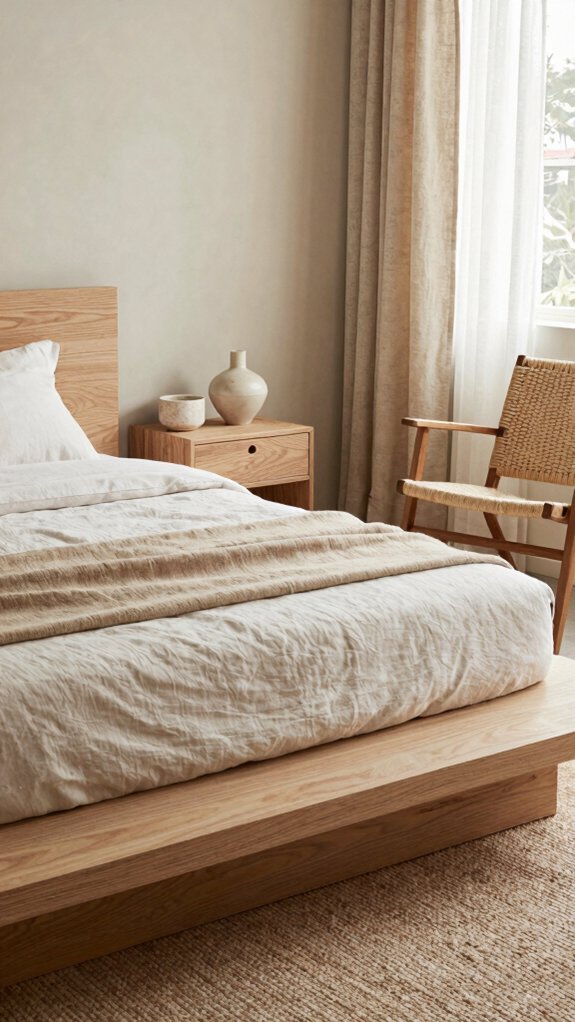
How you choose materials fundamentally shapes your Japandi bedroom’s sensory experience. Prioritize natural textures like wood, linen, cotton, and wool that invite tactile engagement. These materials age beautifully, developing character over time while maintaining their warmth and authenticity.
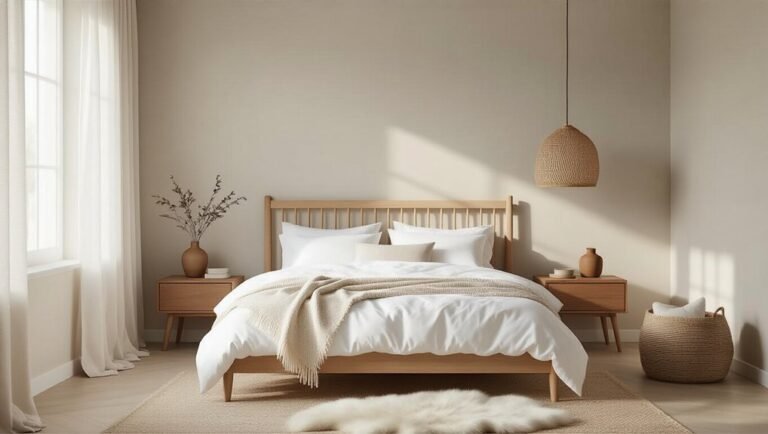
Incorporate a wooden bed frame with visible grain patterns, linen bedding in neutral tones, and wool area rugs underfoot. Natural materials breathe, regulate temperature, and create an organic atmosphere that synthetic alternatives can’t replicate. This tactile richness grounds your space in authenticity, encouraging you to slow down and appreciate your bedroom’s calming sanctuary.
Display Only Decor That Serves a Purpose
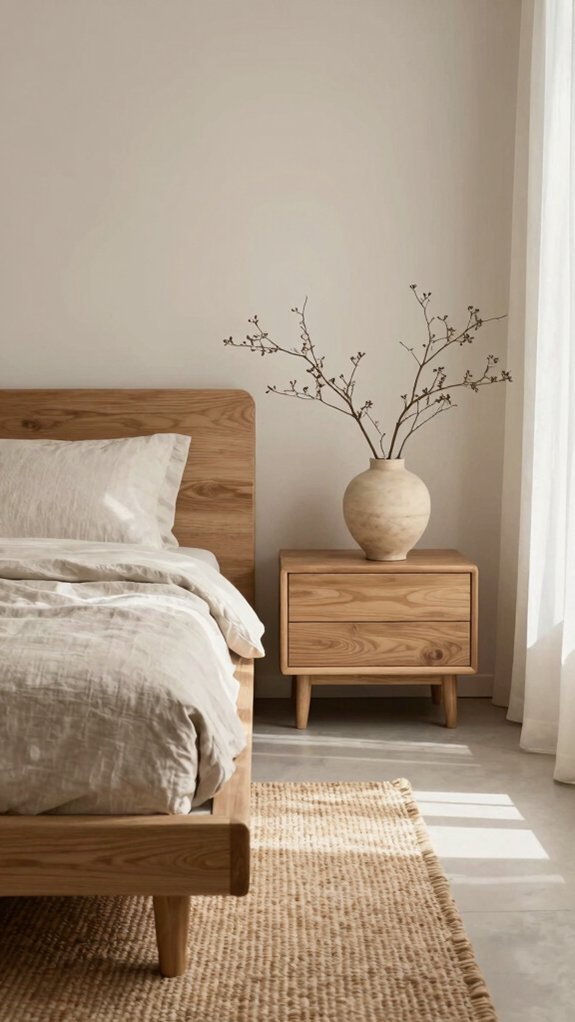
Japandi’s philosophy demands that every object in your bedroom earn its place through function or meaningful beauty—never decoration for decoration’s sake. You’ll curate items that either serve practical purposes or carry genuine significance. A wooden nightstand stores essentials. A framed photograph honors cherished memories.
Minimal artwork reflects personal values. You’ll eliminate decorative clutter that demands attention without rewarding it. This intentional approach creates visual calm and mental clarity. By displaying only what matters, you transform your bedroom into a purposeful sanctuary. Each element contributes to both aesthetics and lifestyle, embodying Japandi’s core principle of mindful living.
Use Multiple Light Sources to Avoid Harsh Shadows
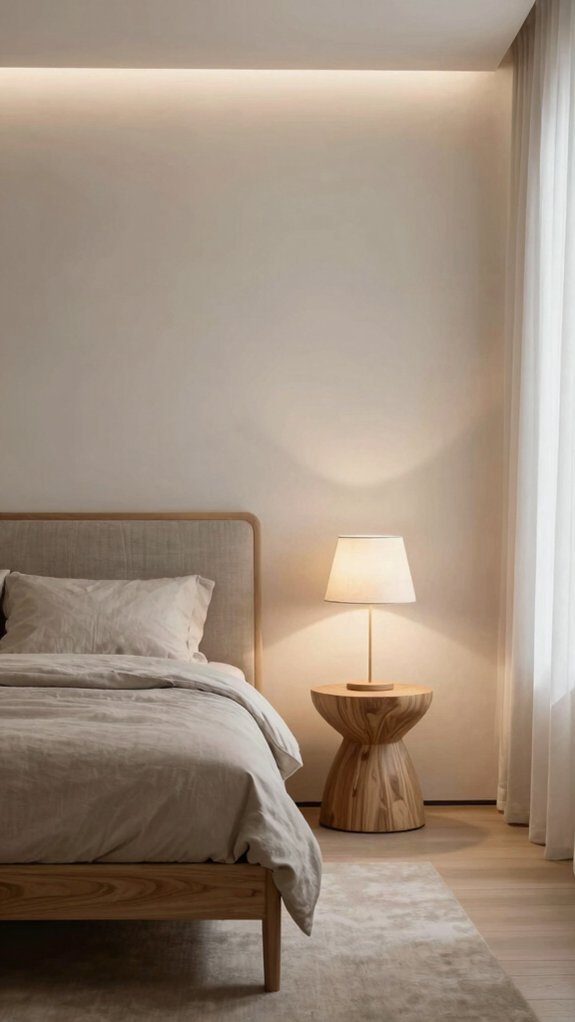
While you’ve carefully selected each item in your bedroom for purpose and meaning, you’ll want to ensure that purposeful décor doesn’t cast unflattering shadows across your space. Layer your lighting strategically by combining overhead fixtures, bedside lamps, and ambient sources like wall sconces or floor lamps. This approach creates depth and eliminates harsh shadows that can make your minimalist Japandi room feel cramped or unwelcoming.
Warm-toned bulbs enhance the aesthetic’s natural, calming quality. Position lights at varying heights to distribute illumination evenly, allowing your thoughtfully curated pieces to shine without creating dark, uncomfortable zones throughout your sanctuary.
Arrange Furniture to Maximize Open Floor Space
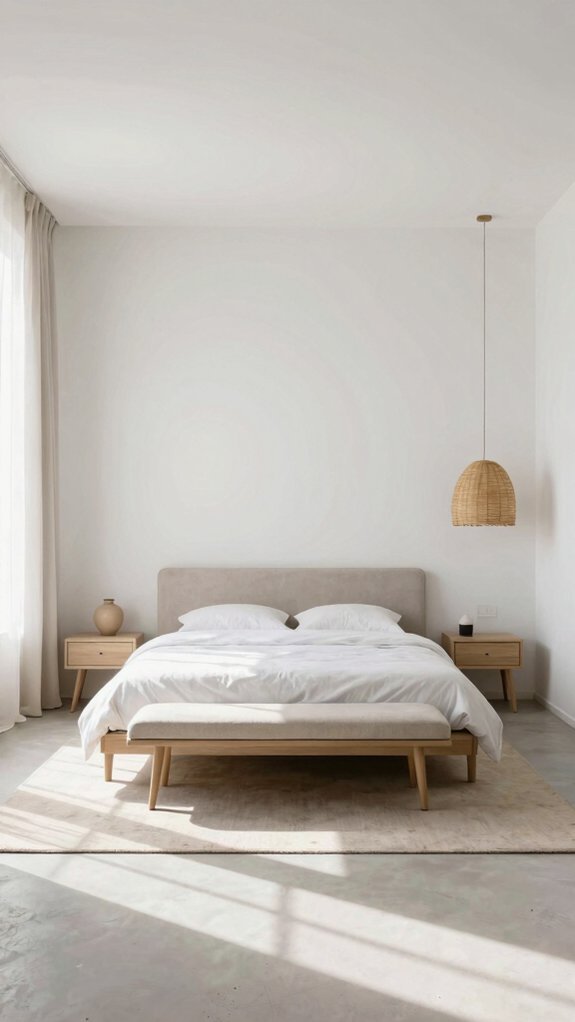
The foundation of Japandi design rests on negative space, so you’ll want to resist the urge to fill every corner of your bedroom. Instead, position your bed as the focal point and keep pathways clear for easy movement. Float furniture away from walls to create visual breathing room and enhance the sense of openness.
Choose low-profile pieces that don’t obstruct sightlines, and leave substantial floor space visible. This minimalist approach promotes tranquility and allows natural light to flow freely throughout the room, reinforcing the calm, uncluttered aesthetic that defines Japandi style.
Hide Storage Inside Furniture Pieces
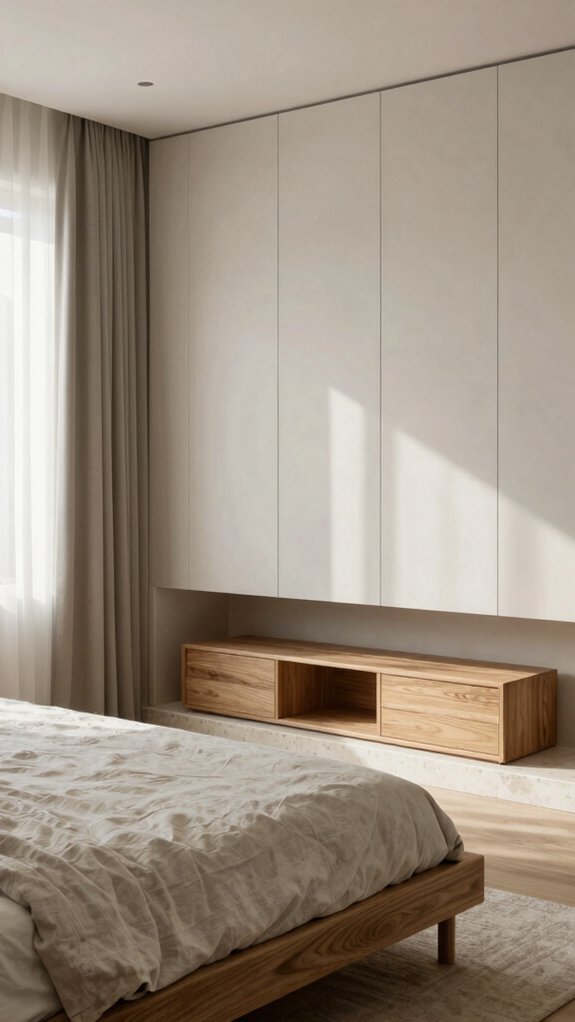
Maintaining that open floor space you’ve created requires smart storage solutions that won’t clutter your visual landscape. You’ll want to invest in multi-functional furniture pieces that conceal belongings behind clean lines. Consider bed frames with built-in drawers underneath, ottomans with hidden compartments, or nightstands featuring concealed shelving.
Floating shelves with cabinet doors work beautifully too. By choosing furniture that doubles as storage, you’re maintaining the minimalist aesthetic Japandi demands while keeping your essentials organized and accessible.
This approach eliminates visual chaos, allowing your bedroom to maintain its serene, uncluttered atmosphere that makes the style so appealing.
Invest in Fewer, Better-Made Pieces
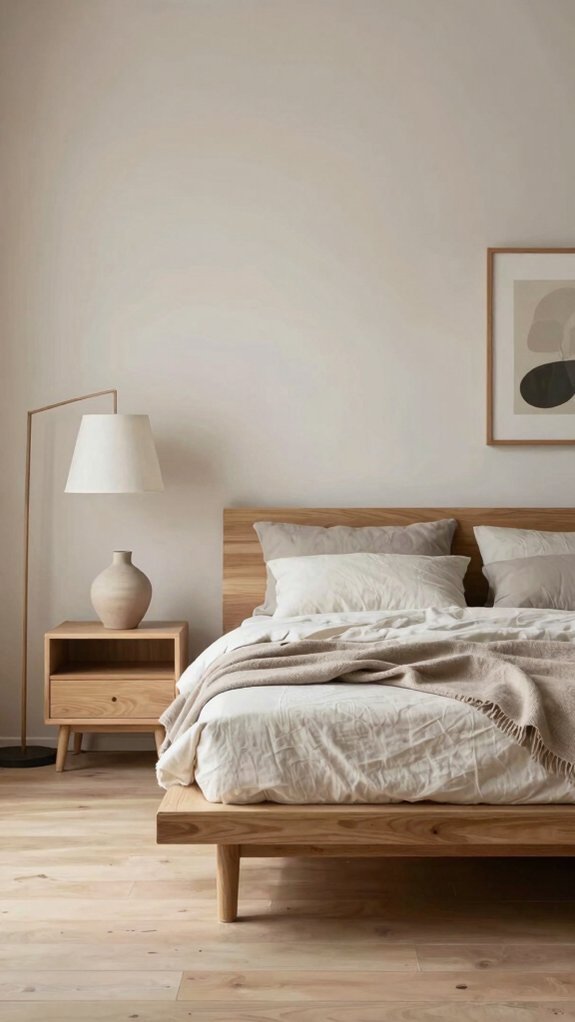
Quality trumps quantity in Japandi design, and you’ll notice this principle immediately when you compare a bedroom filled with cheap furniture to one featuring thoughtfully selected, well-crafted pieces. You’re investing in durability and timeless aesthetics rather than trends that’ll fade. Choose solid wood bed frames, quality bedding, and minimal nightstands that’ll serve you for decades. When you buy fewer items, you’re committing to intentionality.
Each piece deserves attention and purpose. You’ll find your bedroom becomes more serene because clutter disappears, and what remains reflects genuine craftsmanship and your personal values.