7 Ways to Use Forest Green Without Making Rooms Feel Small
You’ve been eyeing that deep, moody forest green paint swatch for weeks, haven’t you? But then that little voice creeps in: *”Won’t it make my living room feel like a cave?”*
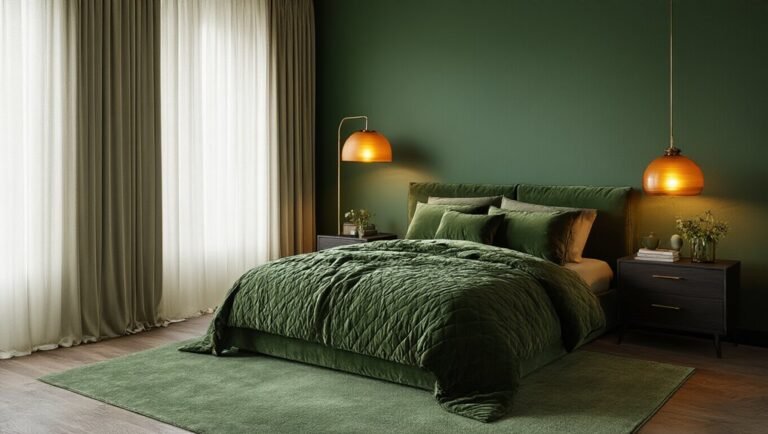
I get it. Bold colors can feel risky, especially when you’re working with limited square footage or less-than-ideal natural light. Here’s the thing, though—forest green isn’t the space-shrinking villain it’s made out to be. Used strategically, it actually *expands* a room by creating depth and visual interest where bland beige just falls flat.
The secret? Placement and pairing. Get those right, and this rich hue becomes your room’s best asset—not its limitation.
After helping dozens of clients take the forest green plunge, I’ve collected the approaches that consistently work. These aren’t abstract theories. They’re practical moves you can make this weekend, whether you’re renting or ready to renovate.
Ready to stop playing it safe and start loving where you live? Let’s dig in.
Test Your Light Levels Before Choosing Forest Green
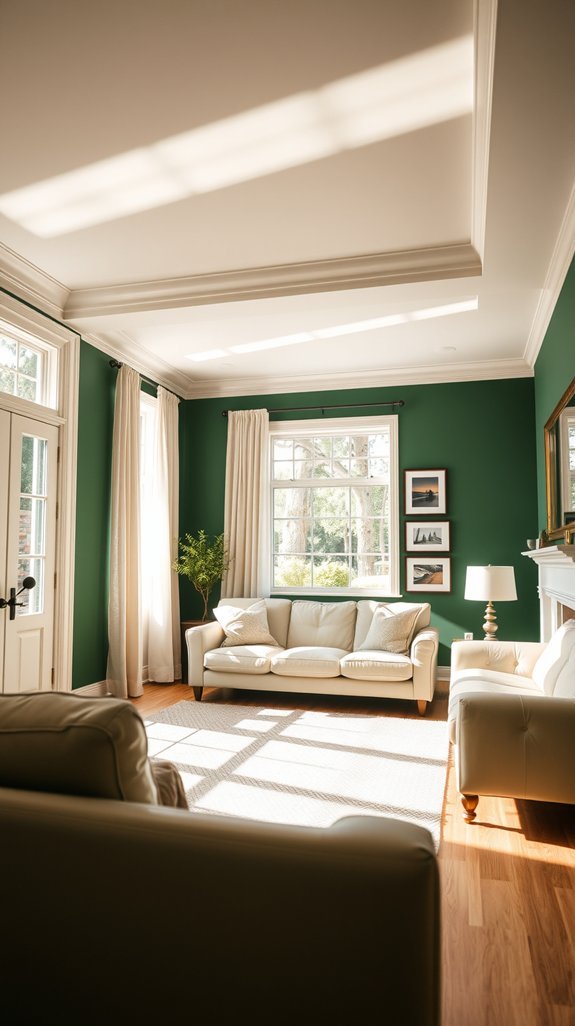
Where does sunlight actually enter your room? You’ll need to test light levels throughout the day before committing to forest green walls. Grab your phone or a light meter and measure different corners—morning, noon, evening. You’re chasing that forest green mood, not a cave-like gloom. Low light means you’ll go darker, heavier; abundant sun lets you push deeper into saturated tones.
Paint the Ceiling Forest Green, Not the Walls
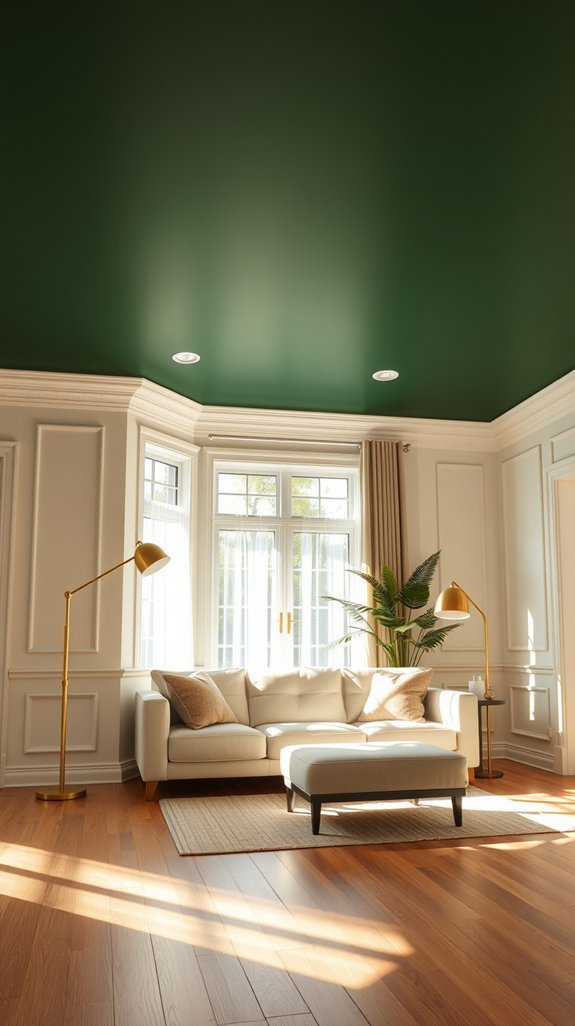
Why limit forest green to walls when your ceiling’s the real opportunity? Draw eyes upward and you create ceiling drama without enclosing your space. Keep walls airy and neutral, then paint that overhead surface deep green. You’ll add sophistication while maintaining openness. Ground the look with green accents throughout—throw pillows, ceramics, or stems—so the color feels intentional, not isolated above you.
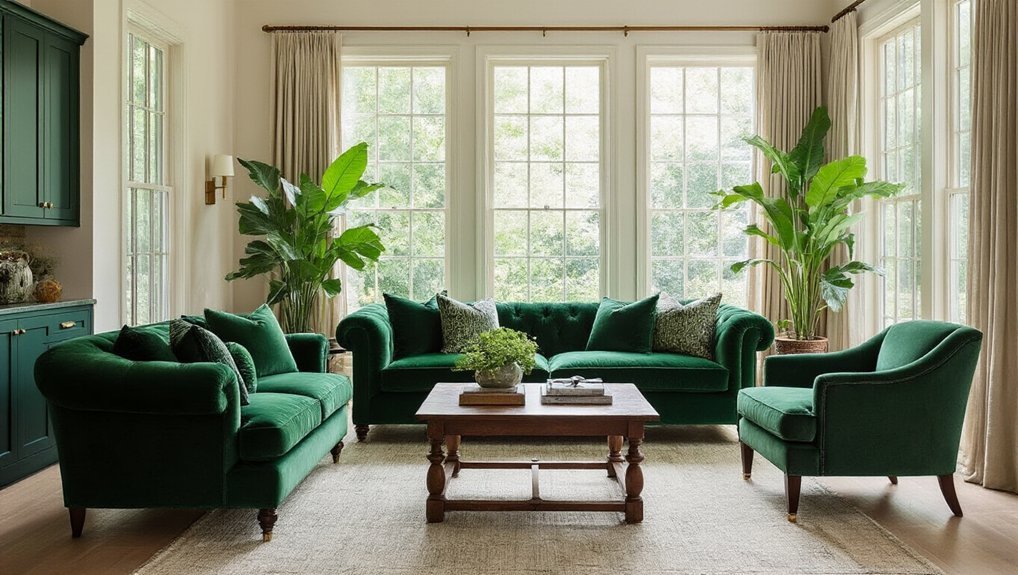
Surround Dark Furniture With Pale Walls and Floors
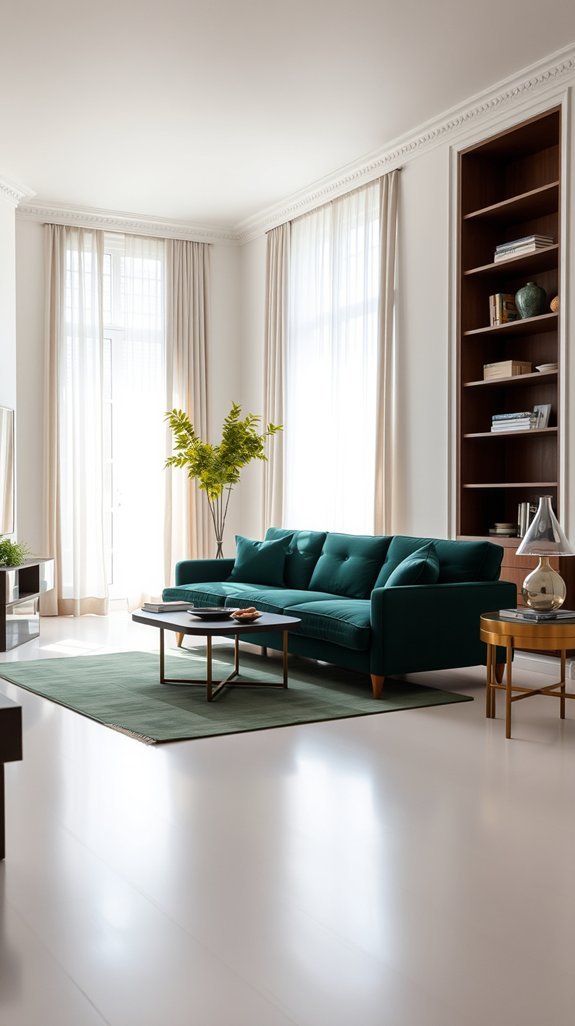
How do you keep forest green furniture from swallowing your space? You surround that dark furniture with pale walls and floors.
You let the light colors recede visually while your forest green pieces anchor the room.
You balance weight with airiness. You create breathing room that prevents heaviness from dominating.
You keep proportions generous and contrasts sharp.
The Best Metals to Pair With Forest Green
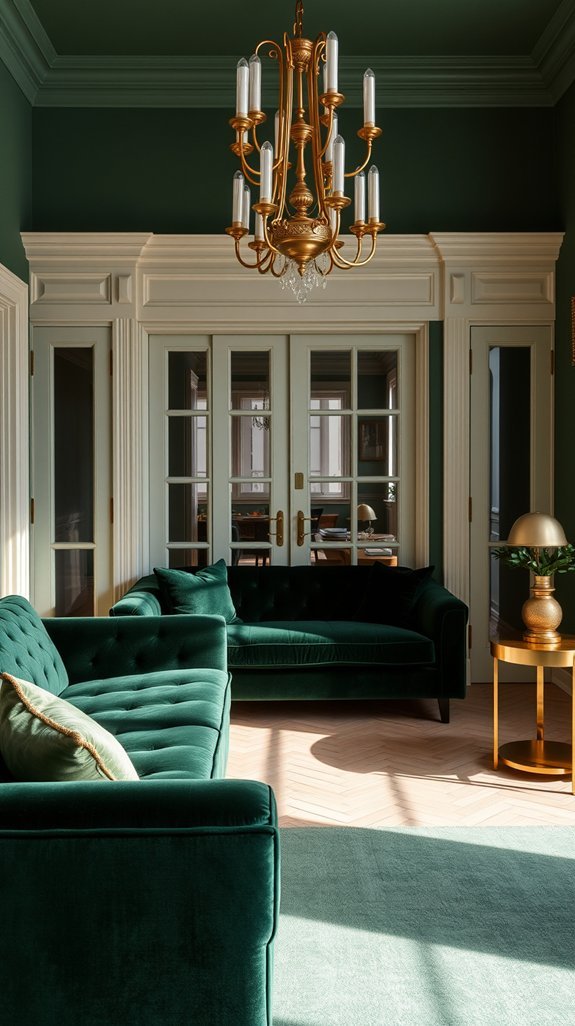
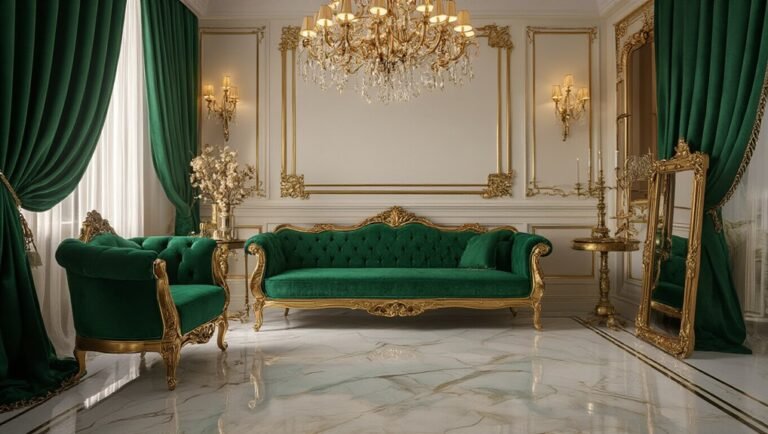
What metals bring out the best in forest green? You should reach for brass and matte black to elevate your forest green pairings. These metallic accents add instant sophistication without overwhelming your space. Brushed gold softens the intensity, while copper introduces warmth. You’ll find that chrome feels too cold against this rich hue. Mix finishes strategically throughout your room.
Try Forest Green on Built-Ins, Trim, and Alcoves
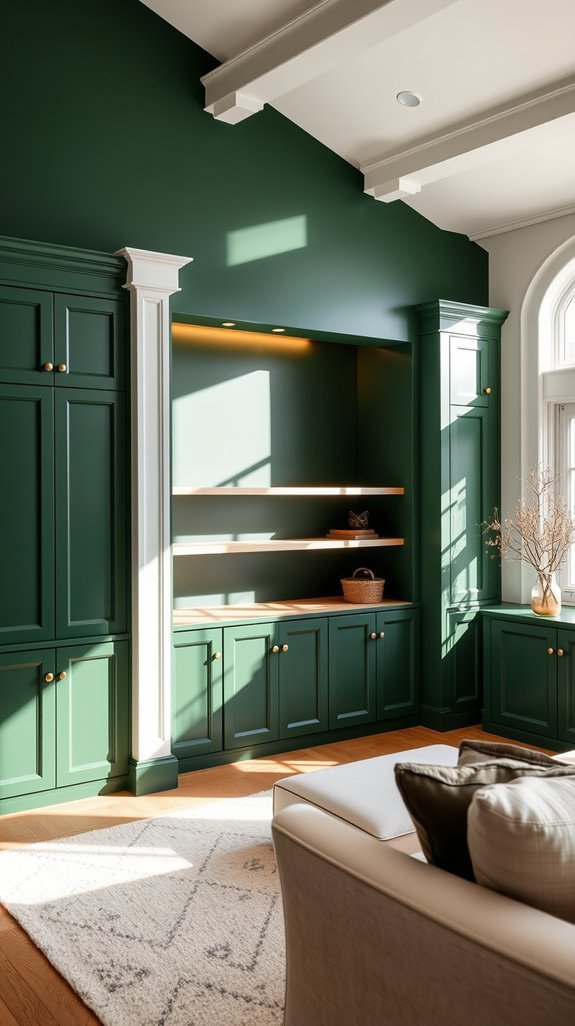
Once you’ve selected your metallic accents, consider where forest green will make its most strategic impact. Paint forest green on built-ins to anchor shelving without overwhelming walls.
Apply forest green on trim to frame doors and windows with subtle sophistication.
Tuck the shade into alcoves and recesses, creating visual depth that draws the eye forward rather than closing the space in.
Layer Texture and Pattern to Soften Solid Green
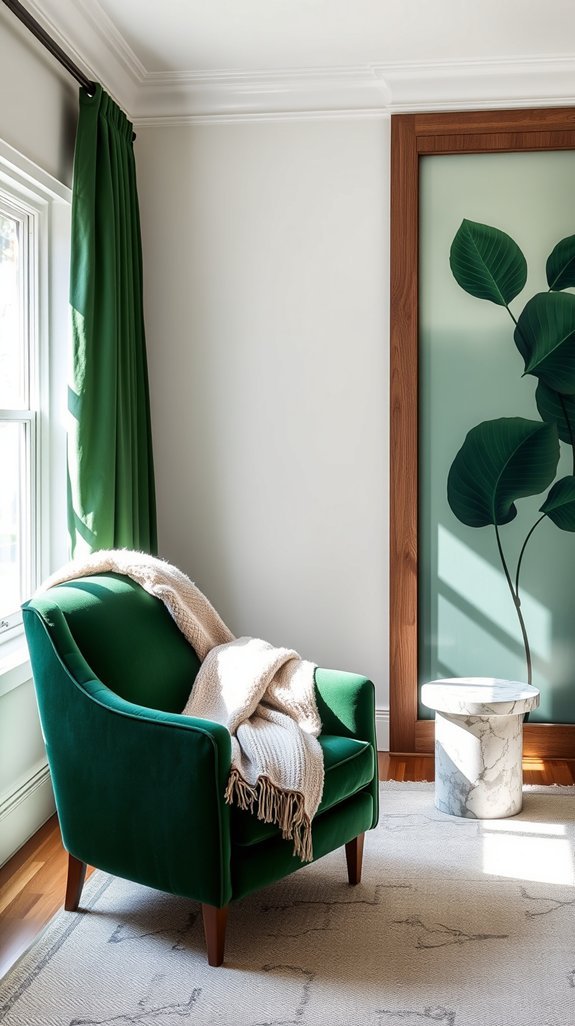
Although solid forest green can feel imposing on its own, you’ll find it transforms completely when you weave in varied textures and patterns.
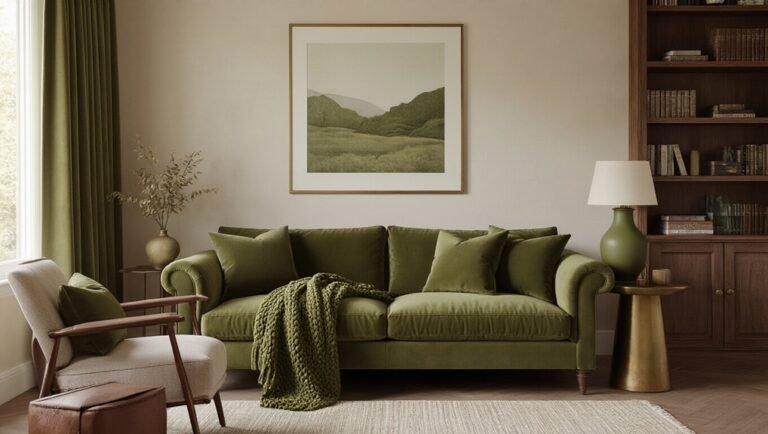
You’ll layer texture through velvet cushions, woven throws, and natural linen to add depth that catches light differently across surfaces.
You’ll soften pattern with botanical prints or geometric rugs, then balance sheen between matte walls and glossy ceramics for dimensional harmony.
See How Real Small Rooms Make Forest Green Work
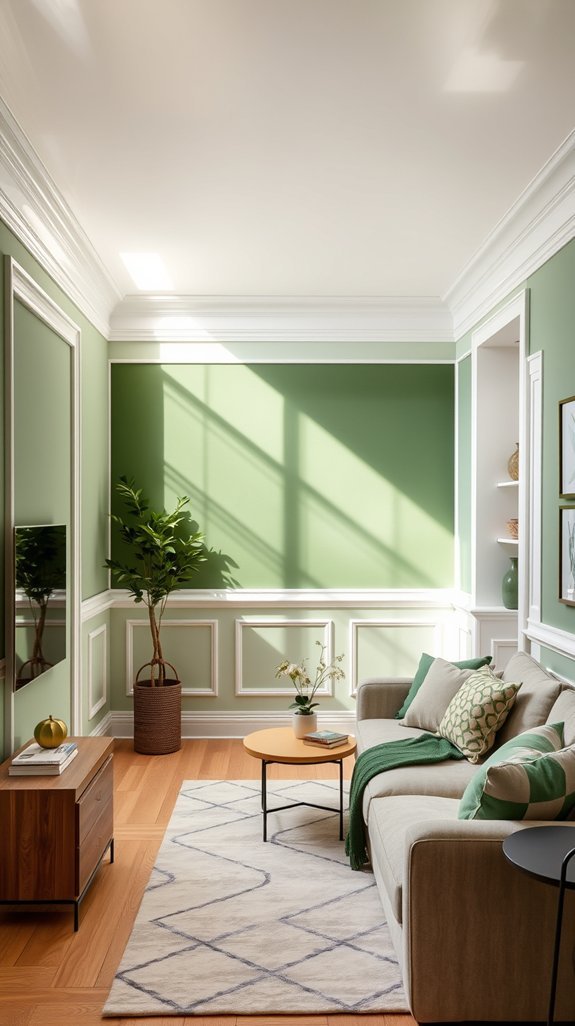
The layered textures you’ve explored become even more compelling when you witness how actual compact spaces handle this saturated hue without surrendering to heaviness.
You’ll notice designers leverage color psychology, letting forest green recede visually to expand perceived boundaries.
They’ll demonstrate small room zoning through strategic placement—painting alcoves or shelving niches—creating intentional pockets that feel cozy rather than cramped, proving darker tones needn’t shrink your square footage.
Conclusion
You’ve got all the tools you need to make forest green work in any space. Test your light, choose your application wisely, and balance that deep tone with pale surroundings and warm metals. Whether you’re painting a ceiling, highlighting built-ins, or layering textures, you’ll create depth without claustrophobia. Now go ahead—embrace that rich, moody color. Your room won’t shrink; it’ll simply glow with sophisticated, grounded energy.