Scandinavian Kitchen Decor Must-Haves for a Warm and Functional Space
Light Woods and Natural Materials
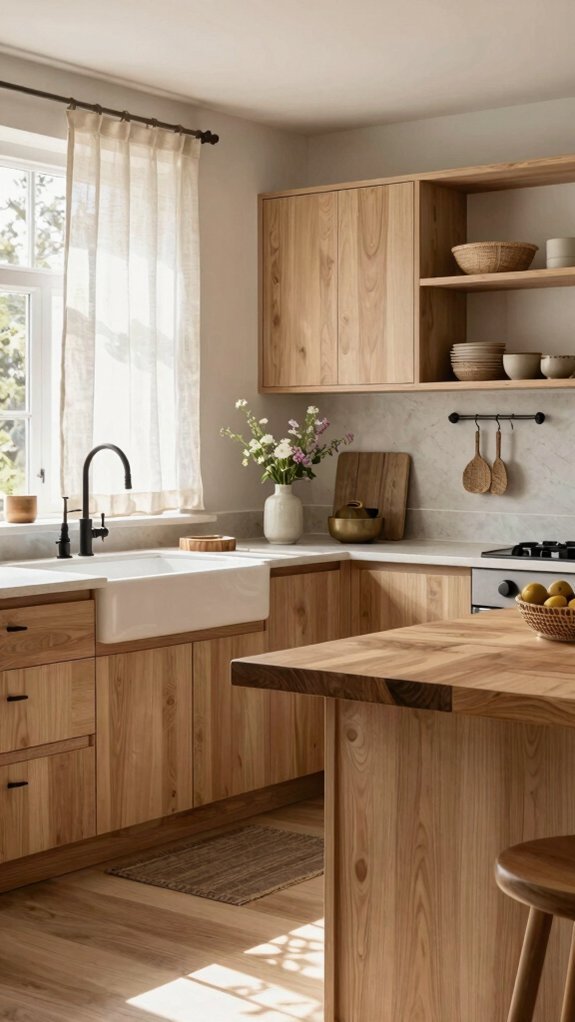
Why do Scandinavian interiors feel so inviting? Light woods and natural materials form the foundation of this design philosophy. Light oak and smoked ash dominate Scandinavian kitchens, offering warmth while maintaining visual airiness. These materials showcase authentic grain patterns, creating organic visual interest without ornamentation.
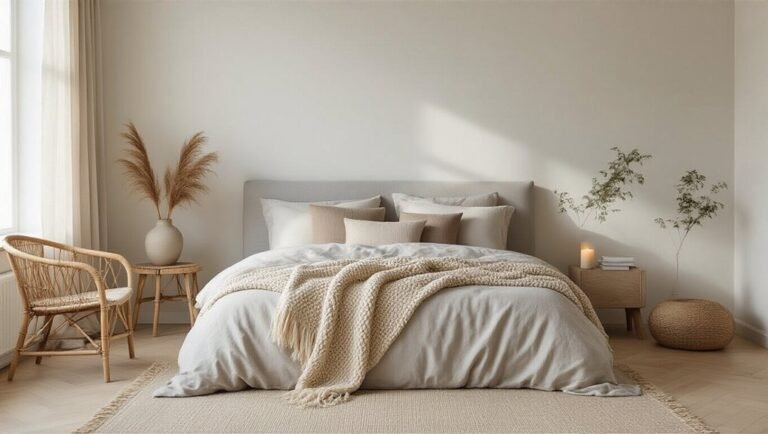
Natural textures from stone countertops, linen textiles, and untreated wood surfaces establish tactile appeal. The emphasis on raw, unpretentious materials reflects Scandinavian values of simplicity and functionality. This palette allows kitchens to feel simultaneously modern and grounded, promoting both aesthetic harmony and practical durability.
Natural finishes age gracefully, developing character over time while maintaining their fundamental appeal.
Neutral Color Palettes: Building the Scandinavian Foundation
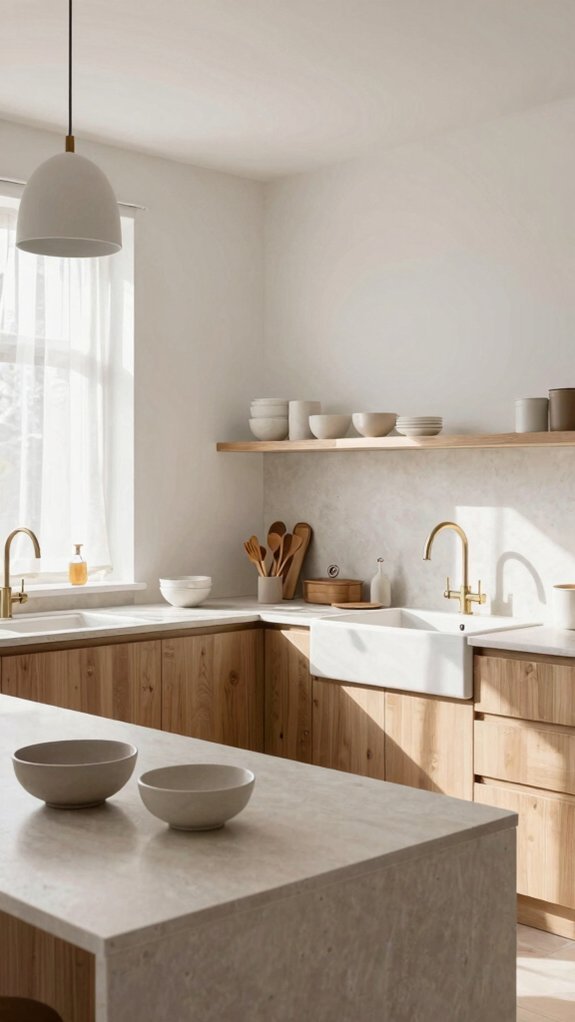
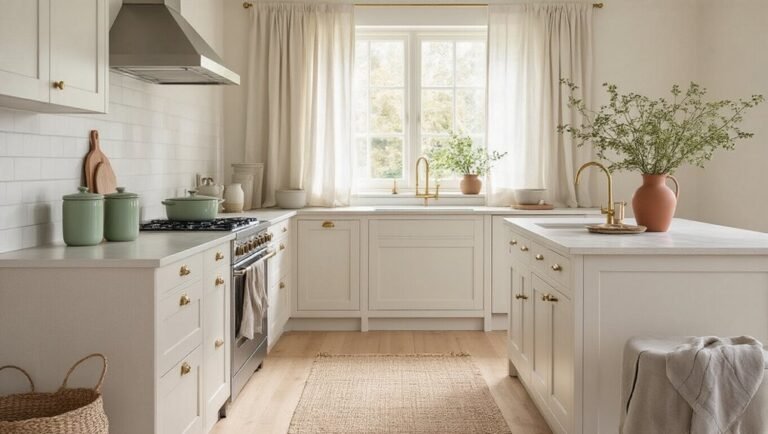
The Scandinavian color palette operates on a deliberately restrained spectrum of whites, grays, blacks, and soft beiges that form the visual backbone of the kitchen design. This foundational approach creates a calming environment while maximizing light reflection throughout the space. Accent colors remain minimal, with sage and muted olive tones occasionally introduced to add subtle depth without disrupting the serene atmosphere. These understated hues complement natural materials seamlessly, allowing wood textures and craftsmanship to remain focal points. The neutral foundation proves versatile, enabling homeowners to shift seasonal décor or incorporate personal touches through accessories while maintaining the clean, uncluttered aesthetic central to Scandinavian design philosophy.
Smart Storage: Minimalism in Practice
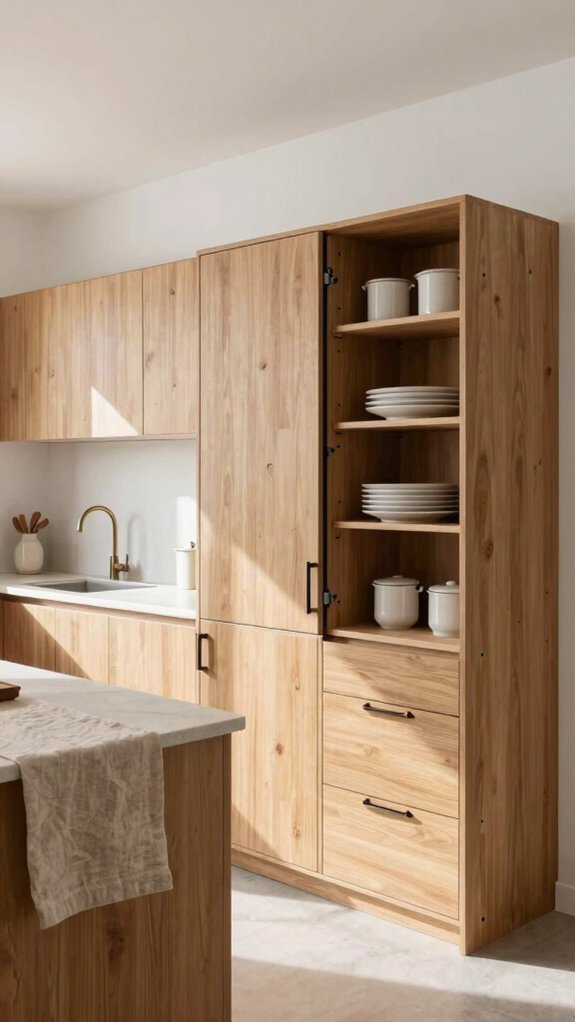
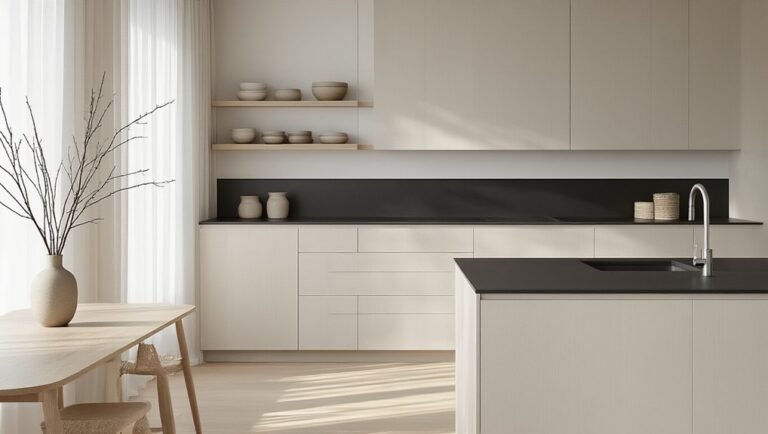
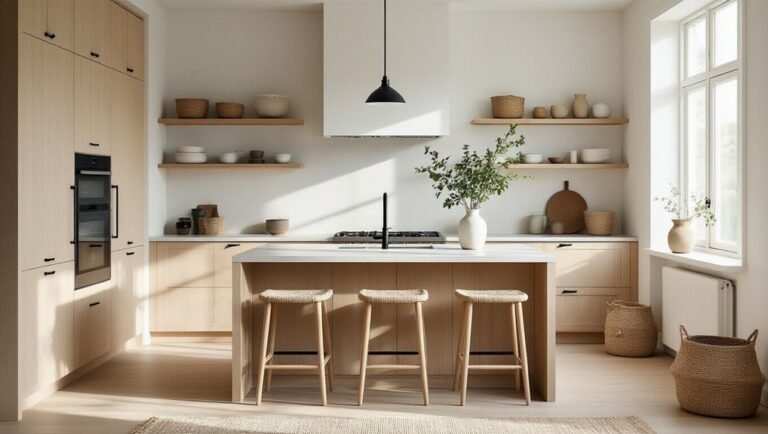
While a neutral color palette establishes visual calm, intelligent storage solutions transform that serenity into lived reality. Scandinavian kitchens prioritize functionality through strategic organization, eliminating visual clutter and unnecessary items. Matte lacquer cabinetry offers sleek surfaces that conceal contents while maintaining aesthetic minimalism. Drawer dividers, pull-out shelves, and vertical storage maximize usable space without overwhelming the environment. Every item earns its place through purposeful design rather than decorative excess.
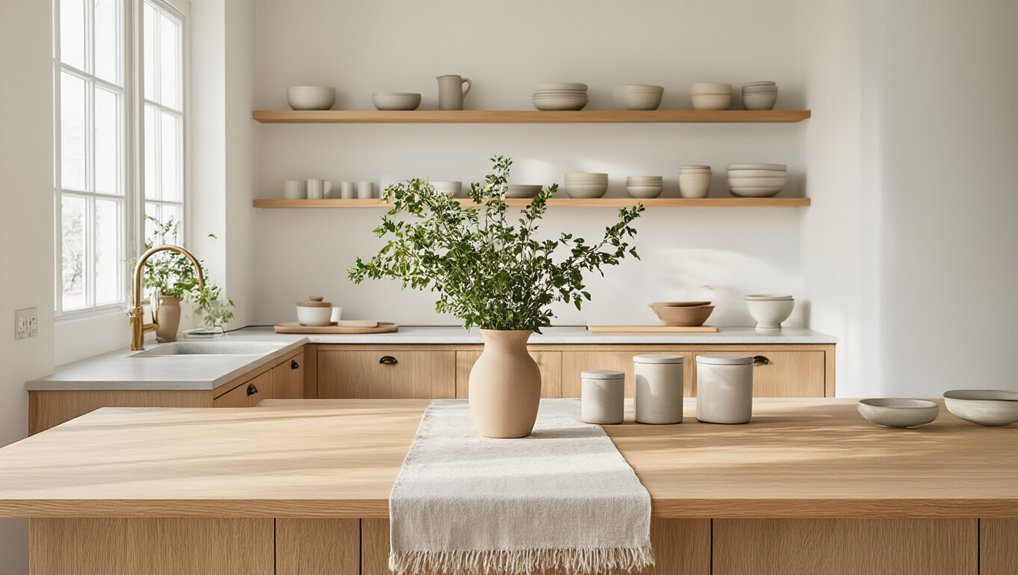
Open shelving displays only essentials—quality cookware or handcrafted ceramics—creating breathing room. This philosophy proves that minimalism isn’t sparse emptiness but rather curated intentionality, where each storage element serves both practical and visual purposes simultaneously.
Task Lighting: Making Function Beautiful
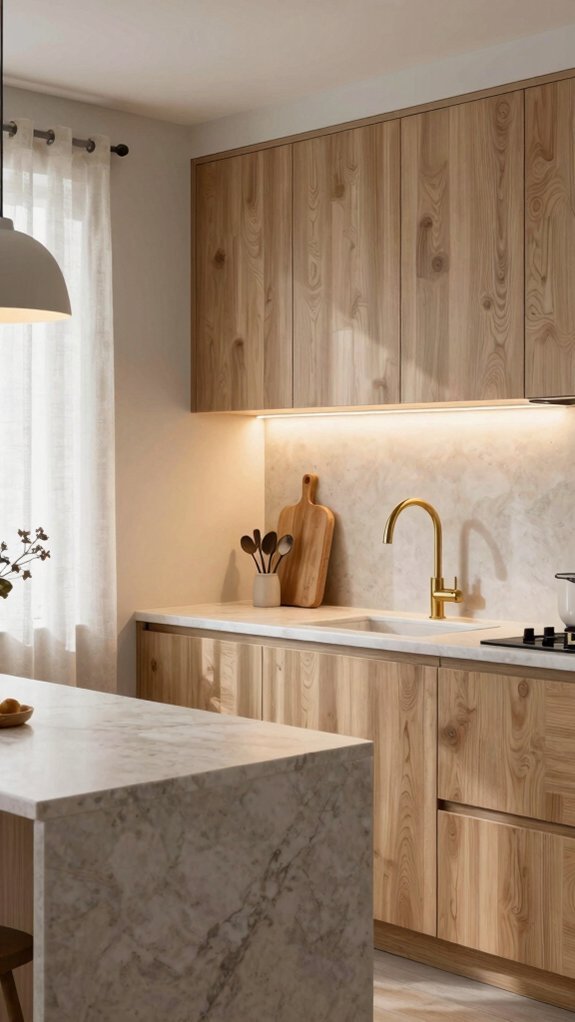
How does light transform both workspace and atmosphere in Scandinavian design? Task lighting serves as both functional necessity and aesthetic element in Nordic kitchens. Pendant lights suspended above countertops and islands provide focused illumination for meal preparation while creating visual interest. Layered circadian lighting systems accommodate natural daylight variations throughout seasons, supporting both productivity and well-being. Minimalist fixtures in brushed metal or matte black complement clean design principles. Under-cabinet lighting eliminates shadows during food prep, enhancing safety. These deliberate lighting choices demonstrate how Scandinavian design integrates practical requirements with refined aesthetics, ensuring kitchens remain both beautiful and supremely functional.
Essential Pieces Over Passing Trends
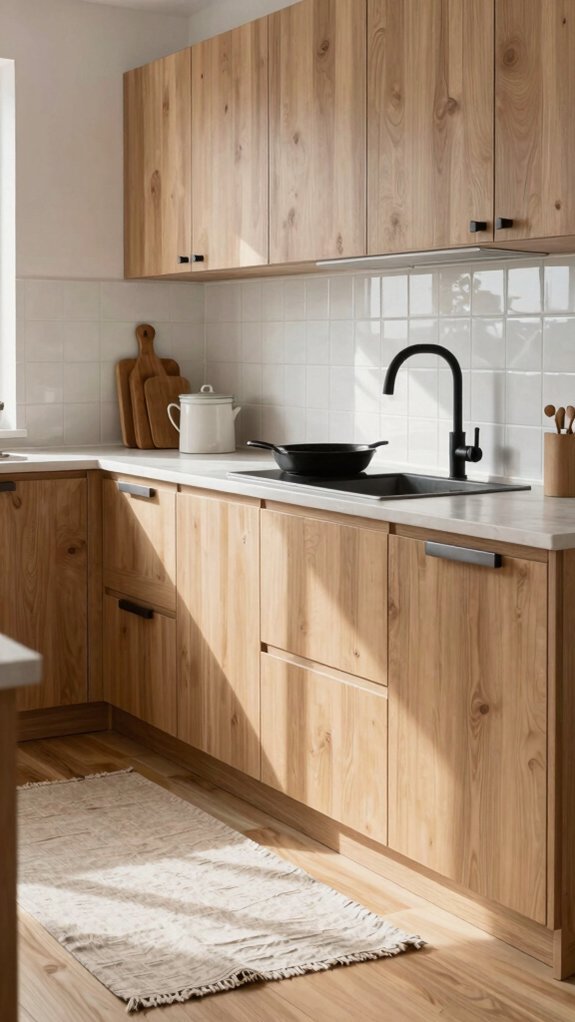
Scandinavian design philosophy extends beyond selecting individual pieces to prioritizing timeless investments that withstand both aesthetic and functional scrutiny. Rather than chasing fleeting trends, this approach emphasizes durable essentials like antique stainless steel cookware and solid wood cabinetry that appreciate with age.
Classic white ceramics, minimalist utensil holders, and quality knives form the foundation of a functional kitchen. These foundational elements transcend seasonal shifts, providing reliable performance and understated elegance.
Strategic Open Shelving
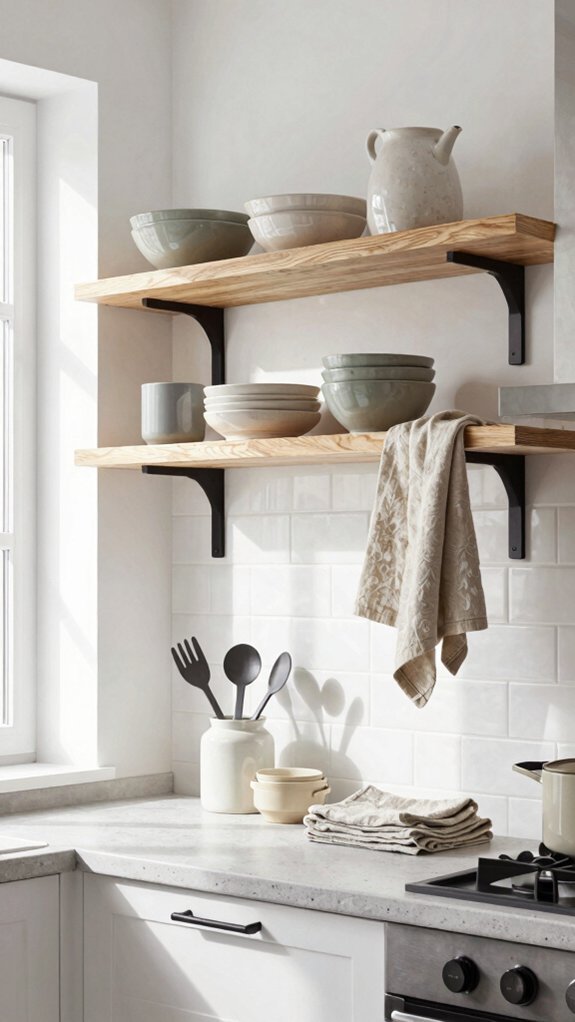
Open shelving transforms kitchen storage from purely functional to intentionally curated display space. In Scandinavian design, these surfaces function as curated vitrines showcasing everyday items elevated through thoughtful arrangement. Designers select pieces with clean lines and neutral tones—ceramic bowls, wooden utensils, glass jars—creating visual harmony while maintaining accessibility. Strategic placement prioritizes frequently used items at eye level, with decorative elements interspersed thoughtfully. This approach eliminates visual clutter by limiting displayed objects to essential, beautiful pieces. Open shelving encourages mindful consumption and simplified living, fundamental to Nordic aesthetics. The result balances form and function, transforming utilitarian storage into architectural focal points that define the kitchen’s character.
Warmth Through Textiles and Coziness
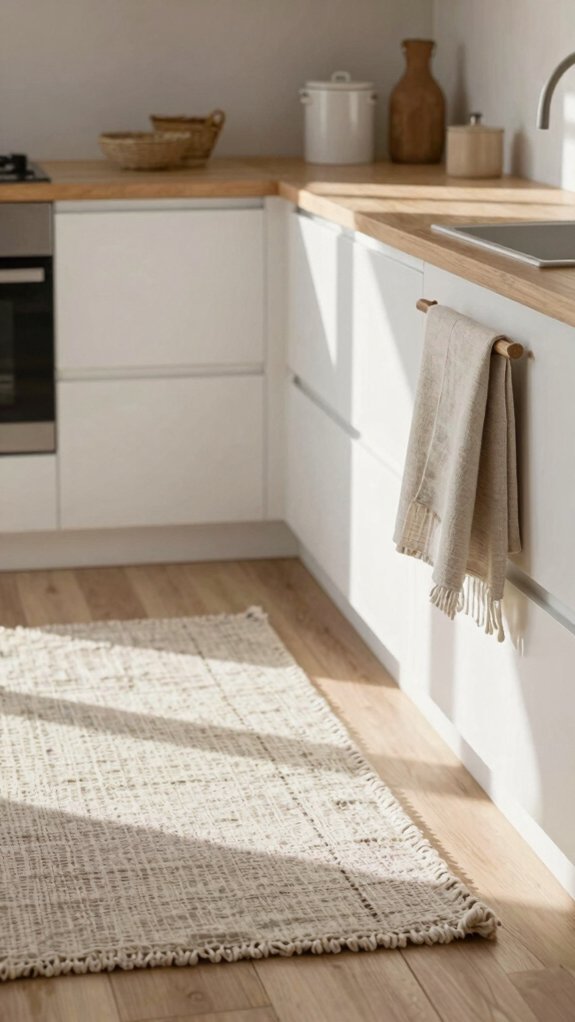
While open shelving establishes visual order and architectural interest, the kitchen requires additional layers to feel genuinely inviting. Scandinavian design incorporates natural textiles—linen runners, wool throws, and cotton dish towels—that introduce softness and tactile warmth. These elements ground the space emotionally while serving practical purposes. Hand-glazed zellige tile accents on backsplashes or flooring add both visual interest and a handcrafted quality that distinguishes the kitchen.
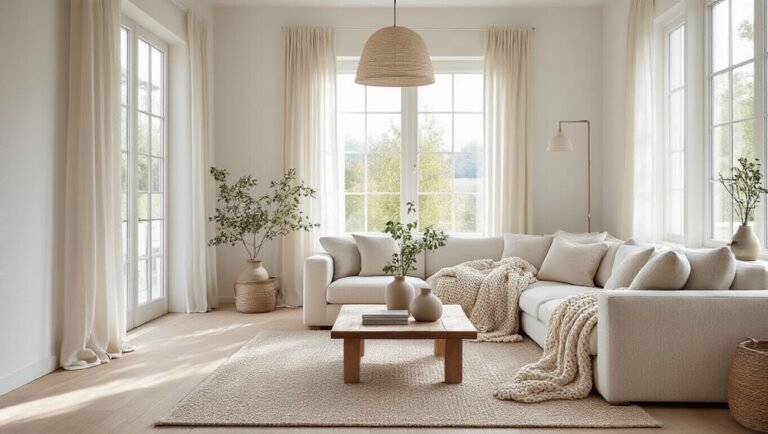
Layering neutral textures with subtle geometric patterns creates depth without visual clutter. Strategically placed wool rugs and soft furnishings complete the aesthetic, transforming the kitchen into a sanctuary that balances functionality with genuine comfort and hospitality.
Layering Hygge Into Your Daily Kitchen Life
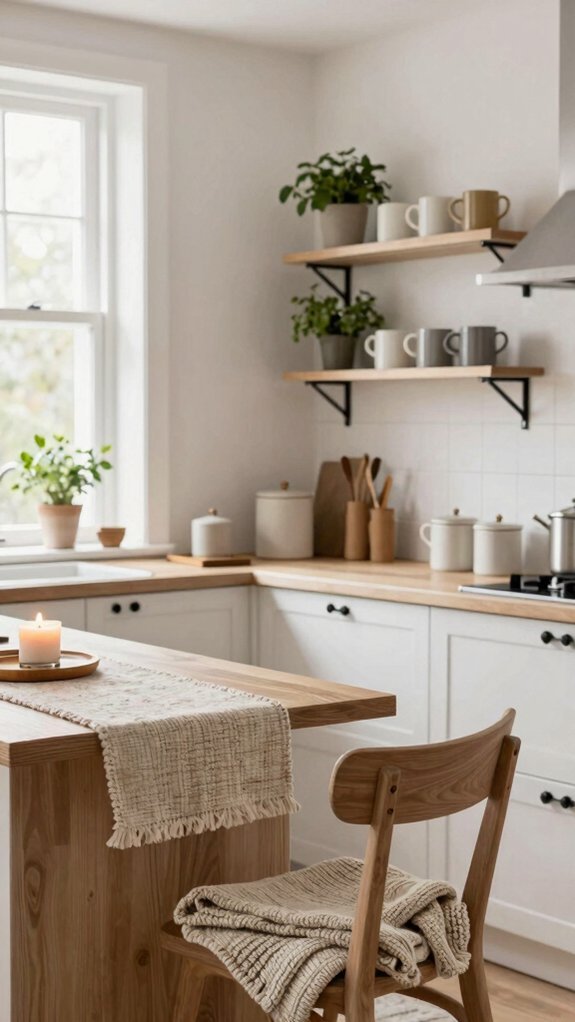
How does one transform routine kitchen tasks into moments of genuine comfort and connection? By intentionally layering hygge into daily rituals, inhabitants create warmth through deliberate choices. Patinated brass fixtures and hardware develop character over time, becoming visual reminders of cherished memories. Soft lighting from vintage pendant lamps softens harsh shadows during meal preparation. Ceramic vessels hold both practical utensils and decorative appeal. Simple wooden cutting boards become gathering points for conversation. Linen tea towels invite tactile engagement. Natural elements like potted herbs connect inhabitants to seasonal rhythms. These cumulative choices transform mundane activities into nourishing experiences, elevating the kitchen from functional space into sanctuary.
Durable Materials That Last
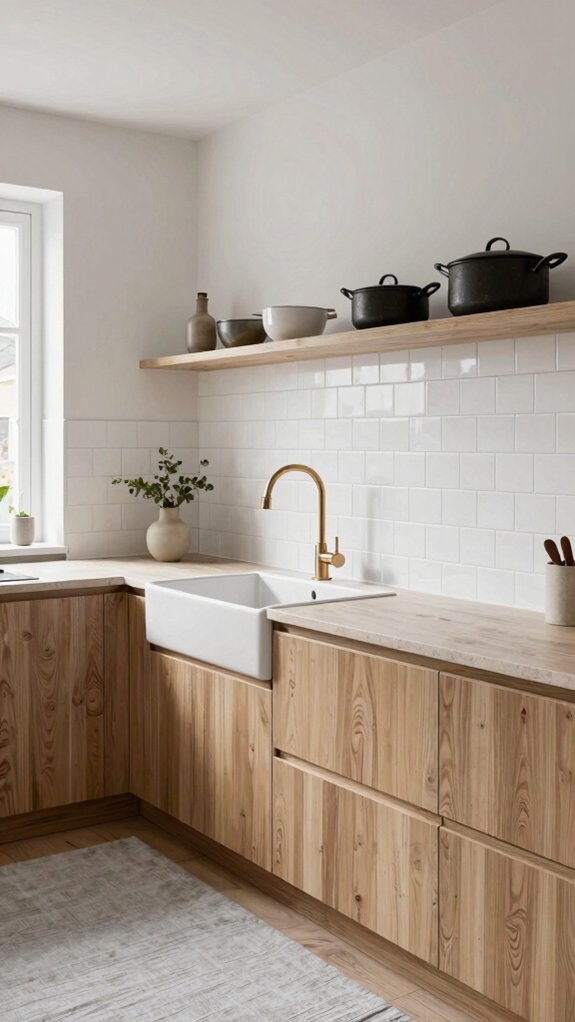
What transforms a kitchen from temporary to timeless? Scandinavian design prioritizes durability through material selection. Honed limestone and travertine serve as excellent countertop choices, offering natural beauty while withstanding daily wear. Stainless steel appliances resist corrosion and fingerprints, maintaining their appearance for decades. Solid wood cabinetry, properly finished, develops character rather than deteriorating with age. Ceramic tiles provide practical flooring that endures heavy foot traffic without sacrificing aesthetic appeal. These investments reflect Scandinavian philosophy: choosing quality over quantity. Materials that age gracefully become integral to a kitchen’s evolving story, eliminating costly replacements and supporting sustainable living practices.