How to Style a Scandinavian Home That Feels Minimal but Still Lived In
Build Your Scandinavian Home on Functional Pieces
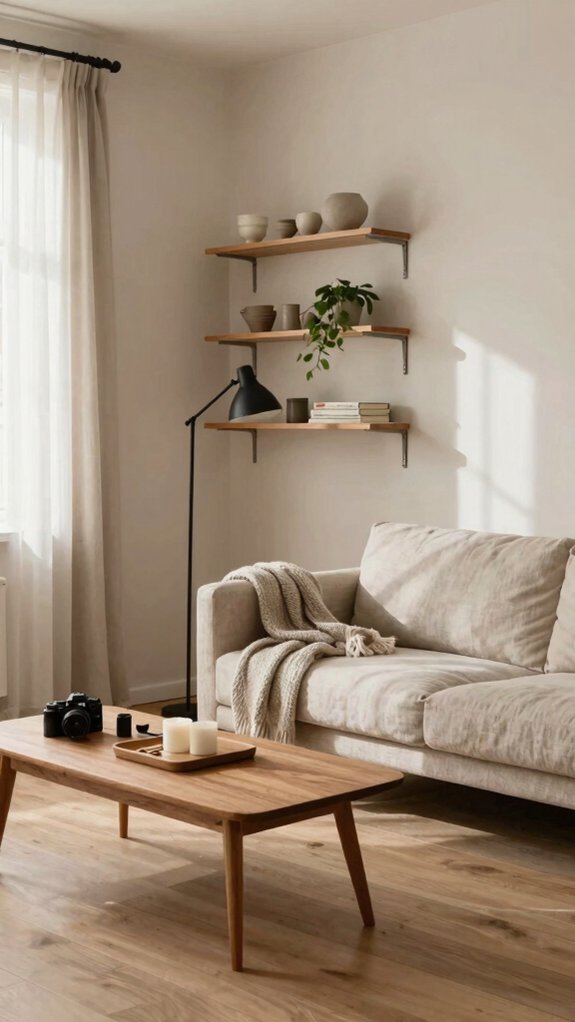
The foundation of Scandinavian design rests on the principle that every piece must earn its place through utility. This approach embraces smart minimalism by prioritizing furniture that serves multiple purposes. A storage bench provides seating while concealing clutter. Nesting tables adapt to varying spatial needs. Shelving units display essentials while maintaining organization. By selecting pieces that combine aesthetic appeal with practical function, homeowners avoid unnecessary accumulation. This deliberate curation creates spaces that feel curated rather than sparse. The result is an environment where form follows function, establishing a foundation that supports both minimalist principles and genuine livability without compromise.
Pick Scandinavian Colors: Neutral With Depth
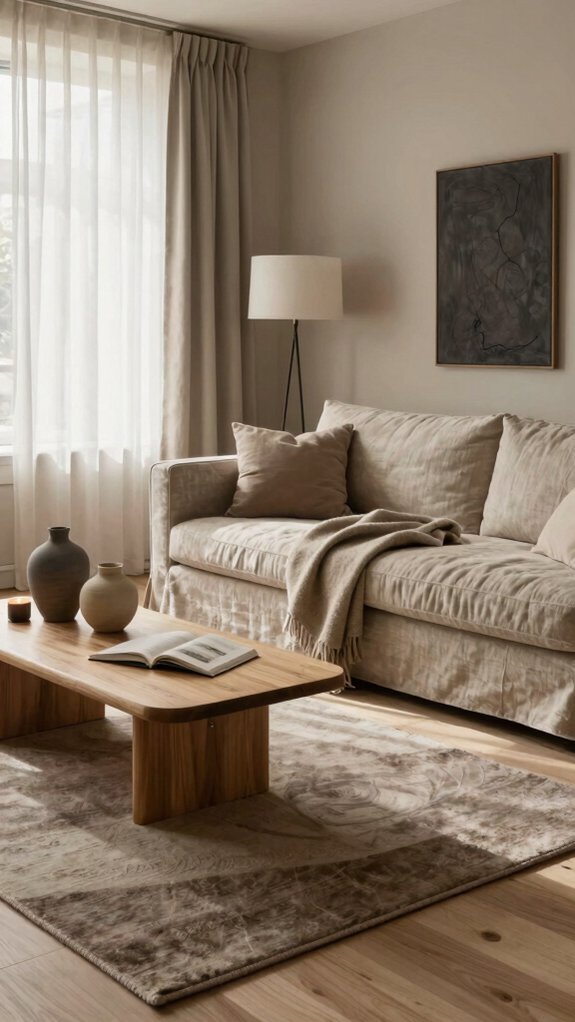
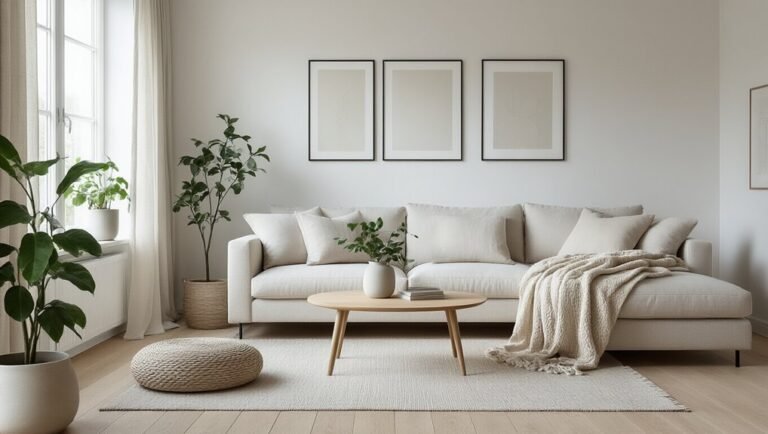
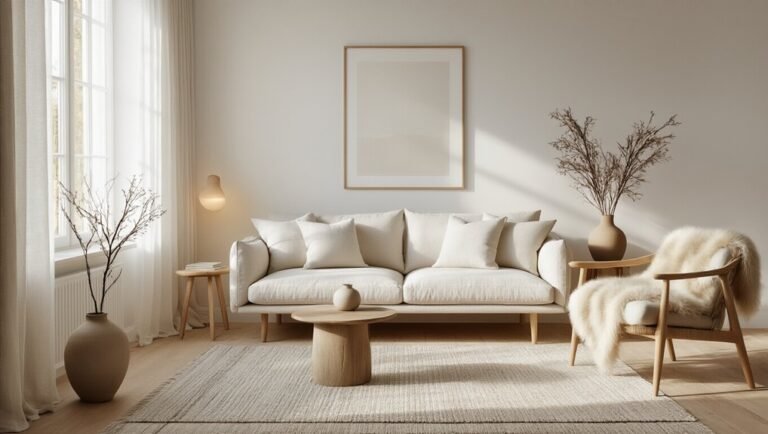
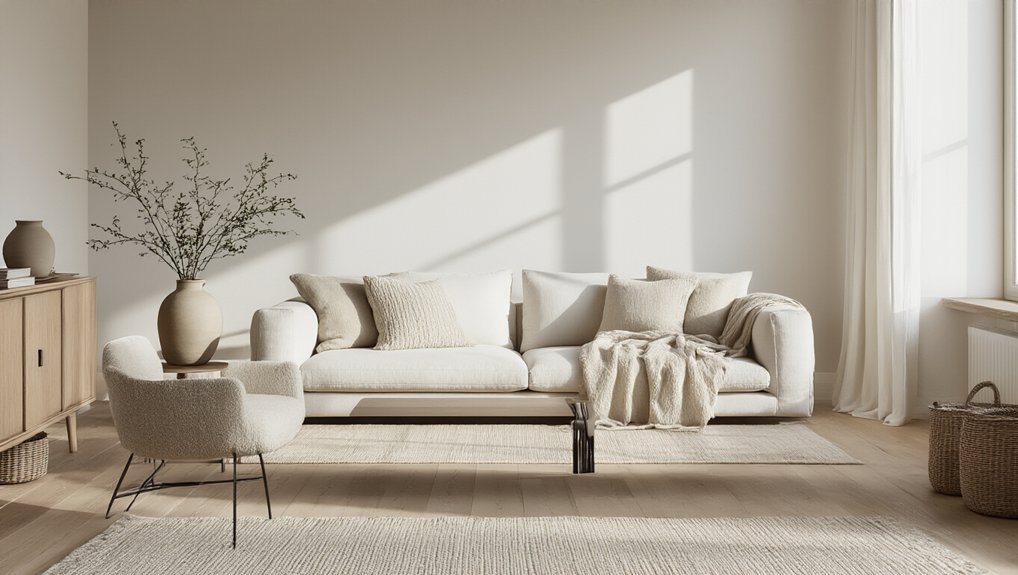
Why do Scandinavian interiors feel both calming and inviting despite their restrained palettes? The answer lies in layering neutrals with intentional depth. Rather than relying on stark whites alone, designers embrace warm grays, soft blacks, and creamy beiges that create visual interest without chaos. This approach embodies *lagom*—the Swedish principle of “just right”—avoiding both sterile minimalism and overwhelming color. Textural variation through materials like wool, linen, and wood naturally introduces complexity to neutral schemes. Strategic accent colors, typically muted blues or dusty greens, provide subtle focal points. This nuanced color strategy transforms minimal spaces into environments that feel sophisticated, grounded, and genuinely livable.
Layer Textures to Add Warmth Without Clutter
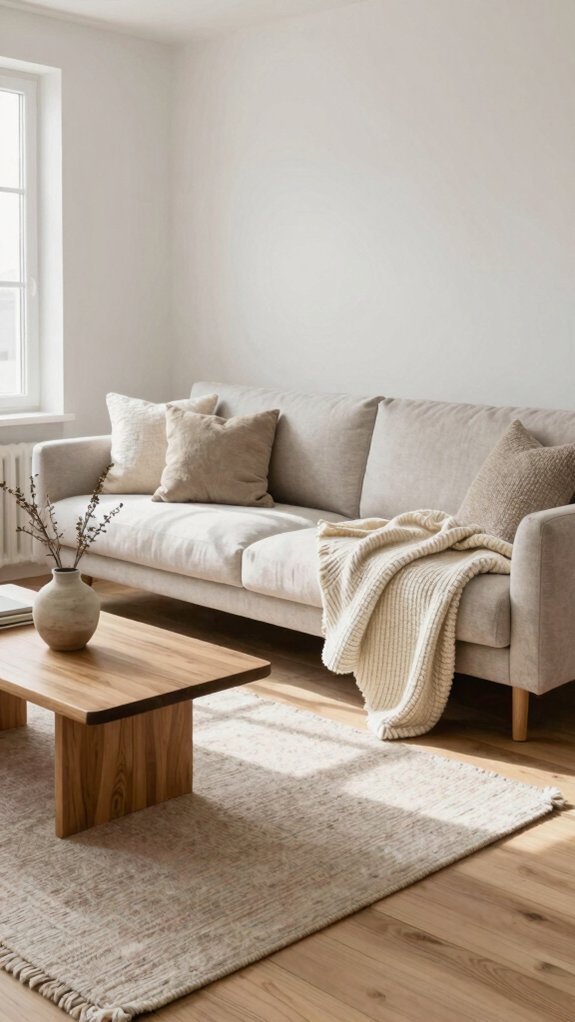
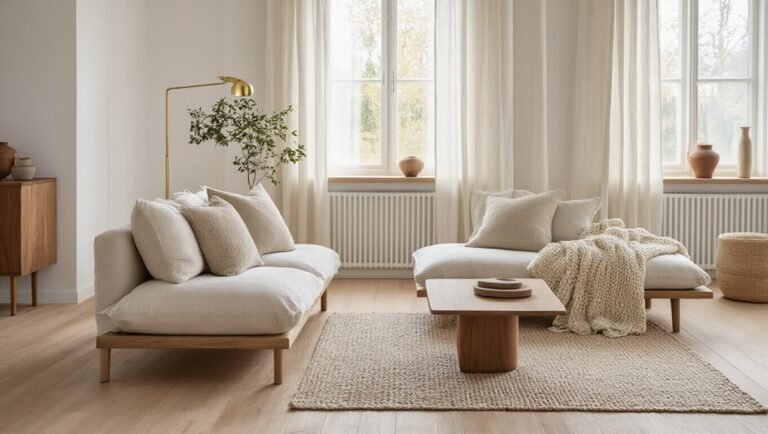
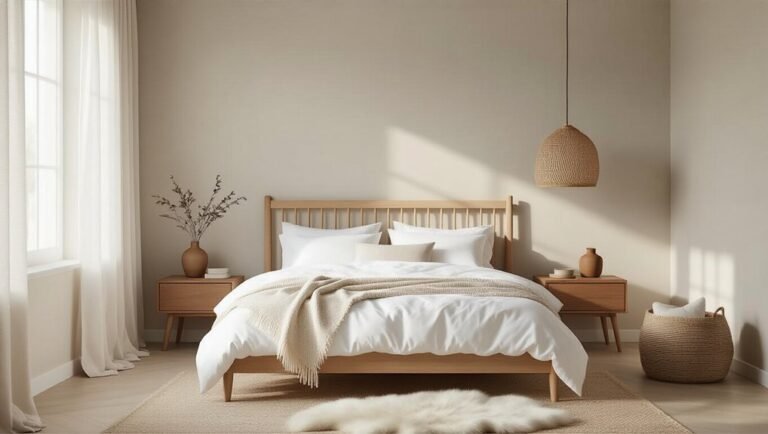
How do Scandinavian interiors maintain warmth in spaces dominated by neutral tones? Through strategic texture layering. Raw earthy materials—wool, linen, leather, and unfinished wood—create visual interest and tactile richness without introducing color clutter. Designers combine chunky knit throws with sleek furniture, pairing smooth concrete surfaces against rough-hewn timber. Woven baskets, shaggy rugs, and natural fiber wall hangings add depth while maintaining minimalist principles. These textural contrasts prevent sterile environments, fostering spaces that feel inhabited rather than staged. By focusing on material variation rather than decorative accessories, Scandinavian design achieves the balance between restraint and comfort, creating homes that breathe authenticity.
Use Soft, Layered Lighting to Create Coziness
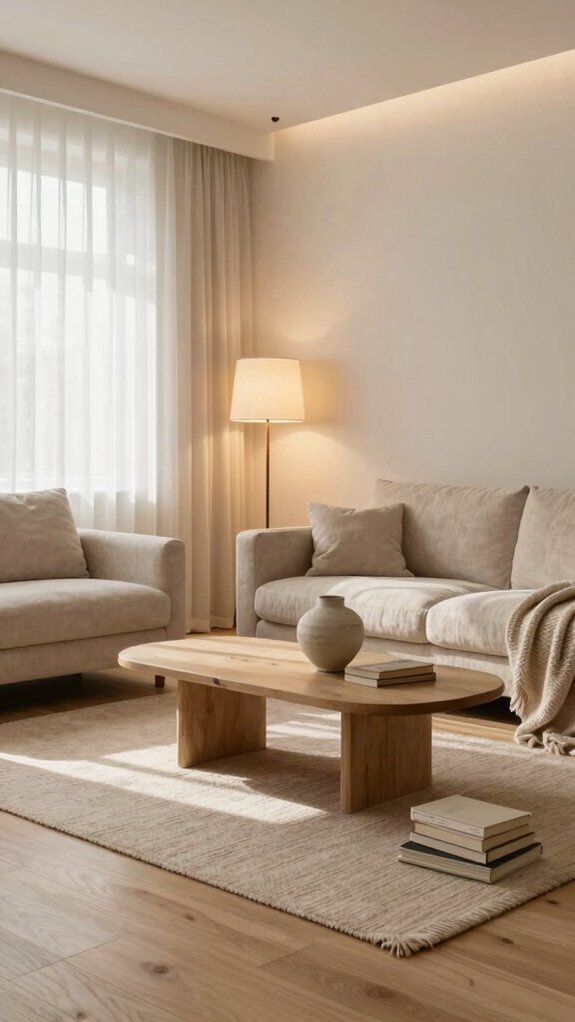
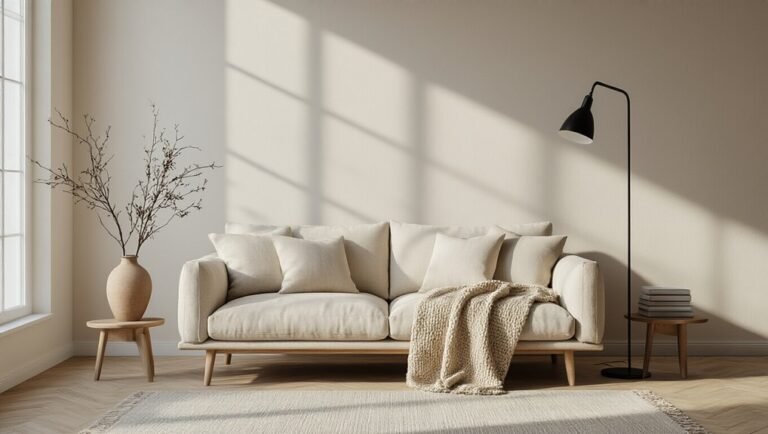
Scandinavian interiors recognize that lighting profoundly shapes spatial perception and emotional response. Strategic layering combines ambient, task, and accent lighting to balance minimalism with warmth. Matte metal dome lighting fixtures provide understated elegance while diffusing light softly throughout spaces. Floor lamps positioned near seating areas create intimate zones without visual clutter. Dimmer switches allow occupants to adjust brightness according to time and mood. Candles supplement artificial sources, introducing gentle flicker and authenticity. This multifaceted approach prevents the sterile quality sometimes associated with minimal design, ensuring rooms feel inviting and genuinely inhabited rather than austere or cold.
Embrace Patina: The Lived-In Scandinavian Look

One of the most distinctive features of Scandinavian design is its embrace of imperfection and wear—the visual evidence that a space belongs to real people living real lives. Rather than replacing worn furniture, Scandinavian interiors celebrate patina as authentic character. Scratched wood surfaces, faded textiles, and weathered finishes tell stories of time and use. This philosophy aligns with circular design principles, encouraging longevity over disposability. Vintage pieces mixed with newer items create depth and narrative. By accepting natural aging and visible wear, homeowners achieve the paradox Scandinavian design perfects: spaces that feel simultaneously minimalist and genuinely inhabited, balancing aesthetic restraint with lived-in warmth.
Use Negative Space Intentionally
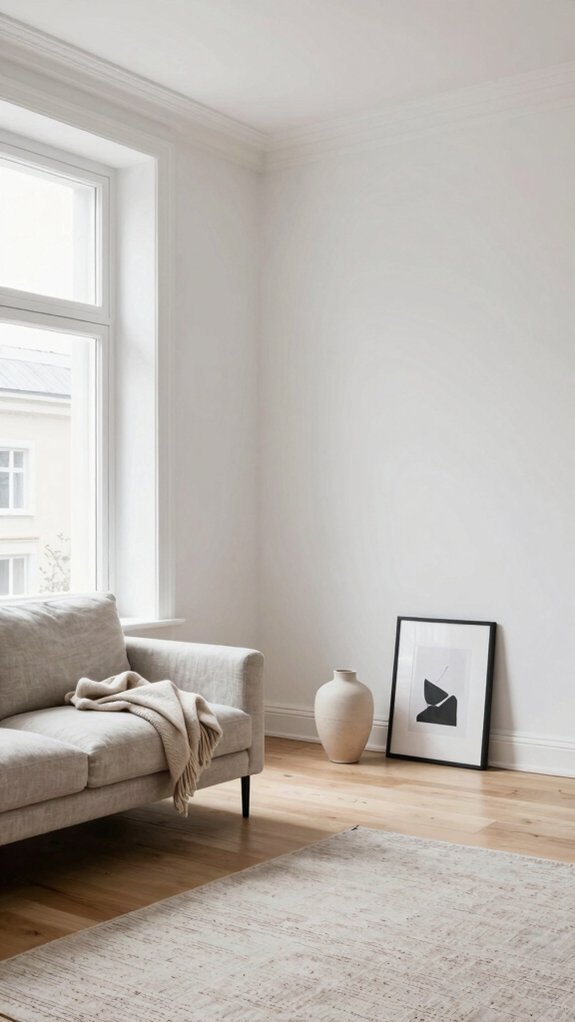
Why does emptiness feel so powerful in Scandinavian interiors? Negative space serves as deliberate breathing room that prevents spaces from feeling cluttered or overwhelming.
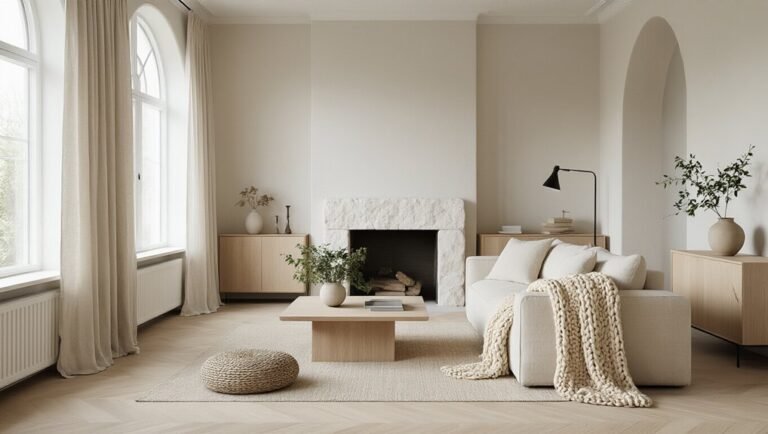
Rather than filling every corner, biophilic scandi design embraces voids that allow the eye to rest and natural light to flow freely.
Strategic placement of furniture creates intentional gaps that highlight key pieces and architectural features.
These purposeful empty areas don’t suggest neglect; instead, they demonstrate restraint and thoughtful curation.
Display Personal Items Sparingly but Meaningfully
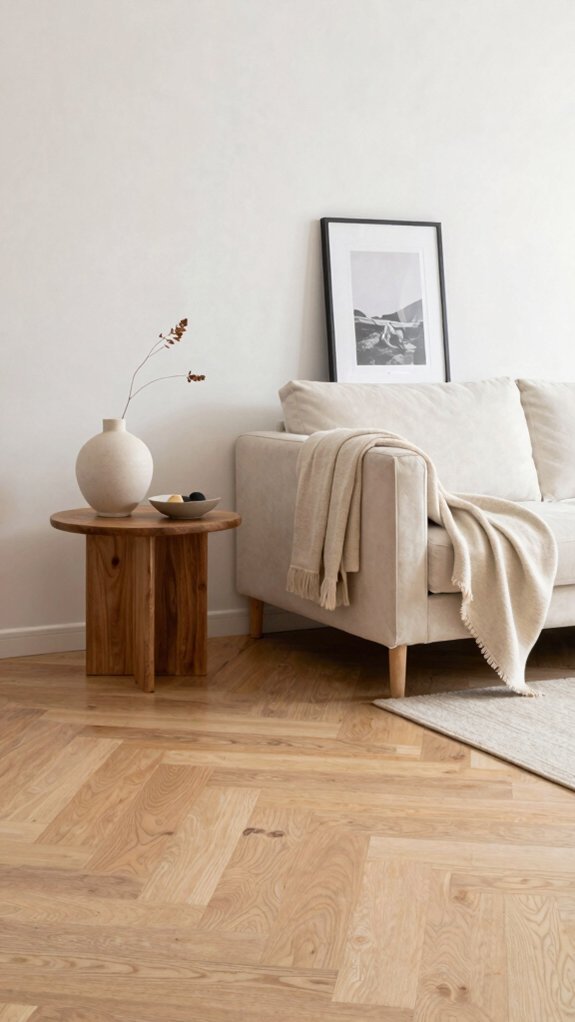
While negative space provides the foundation for a serene home, the objects that occupy that space carry equal weight. Each item displayed should tell a story or serve a purpose, transforming the home into a genuine reflection of its inhabitants. A single framed photograph, a cherished book, or a potted eucalyptus plant positioned thoughtfully on a shelf creates visual interest without clutter.
The Scandinavian approach favors quality over quantity, allowing meaningful possessions to breathe and command attention. This curation prevents the space from feeling sterile while maintaining the minimalist aesthetic that defines the design philosophy.
Allow Daily Life to Show
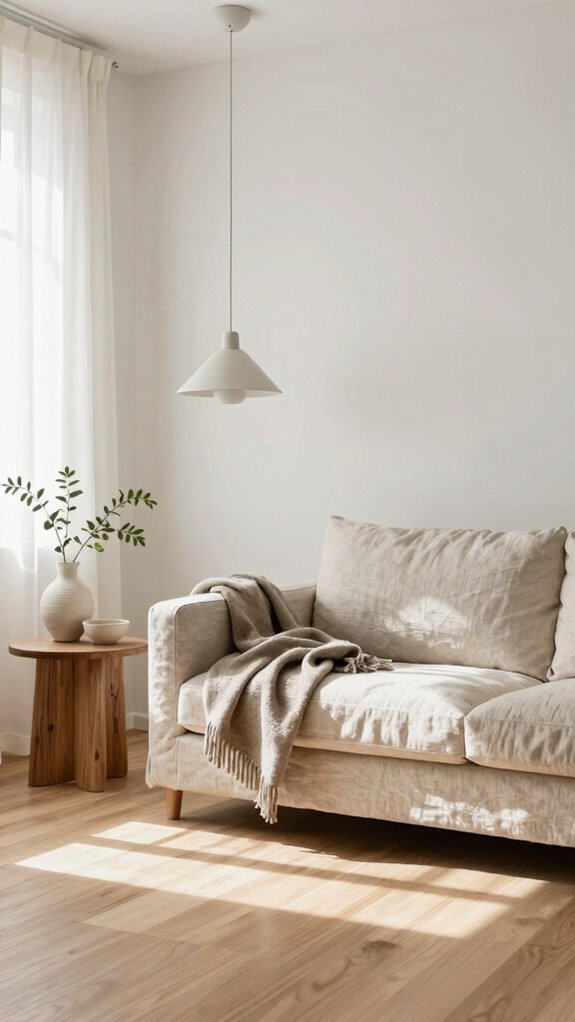
The distinction between a lived-in home and a showroom lies in embracing the visible traces of daily existence. In Scandinavian design, this means leaving books stacked on tables, allowing muddy boots by the entrance, and displaying hiking gear—reflecting the cultural value of friluftsliv, or freedom of open-air life.
Coffee cups rest on surfaces; blankets drape casually over chairs. The key is intentional imperfection: clutter should serve a purpose rather than accumulate randomly. This approach honors both minimalism’s clean aesthetic and the reality of inhabiting a space.
A Scandinavian home breathes with authentic living, balancing restraint with genuine human presence.