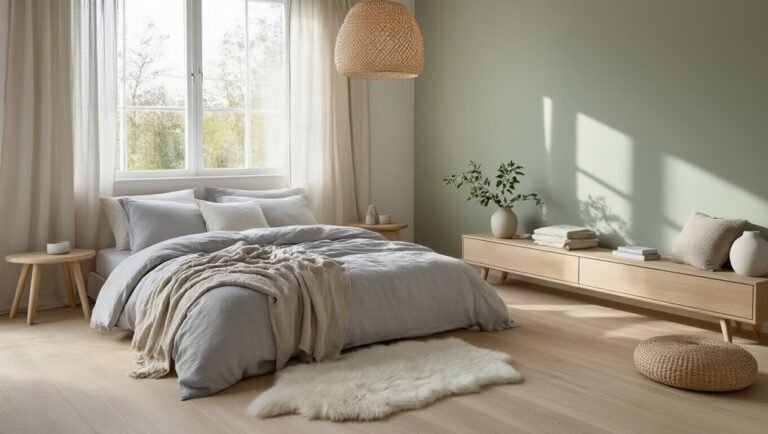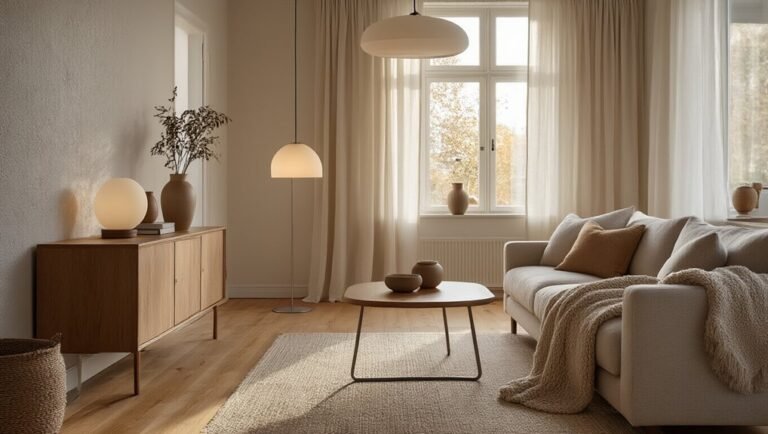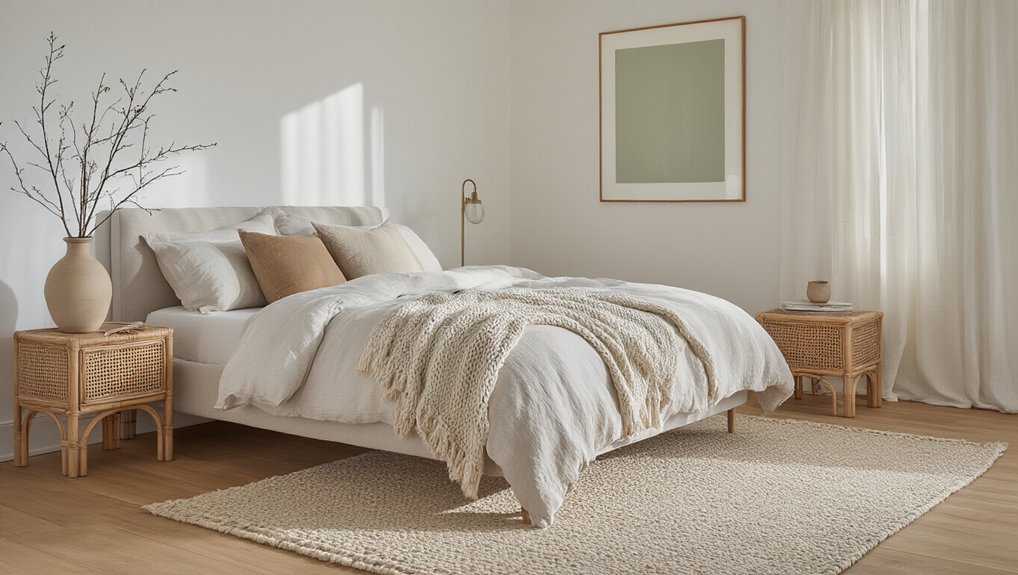
How to Style a Scandinavian Bedroom Without Making It Feel Empty
Choose a Warm Neutral Palette as Your Foundation
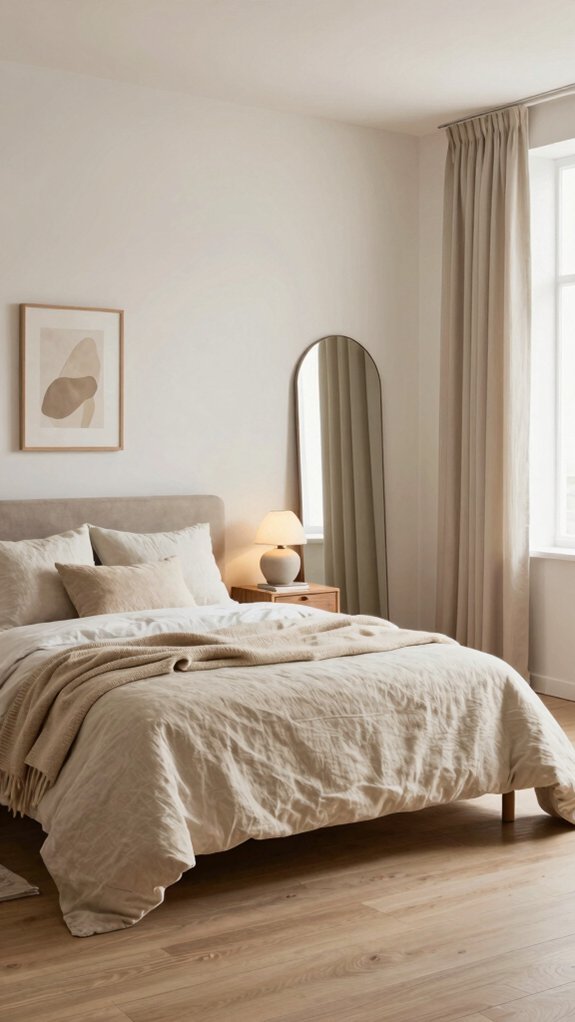
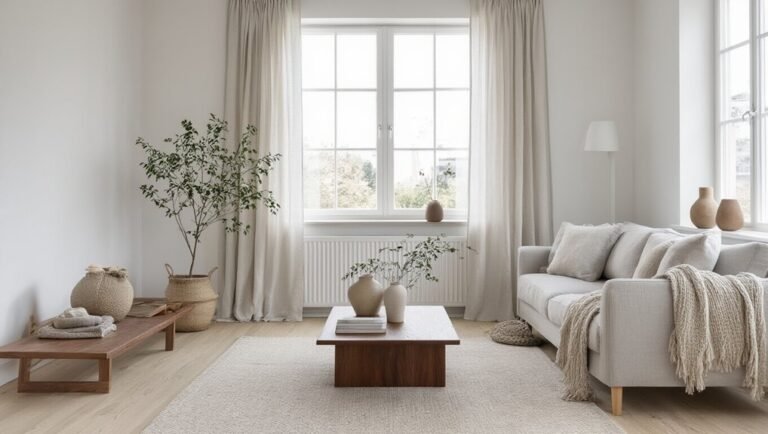
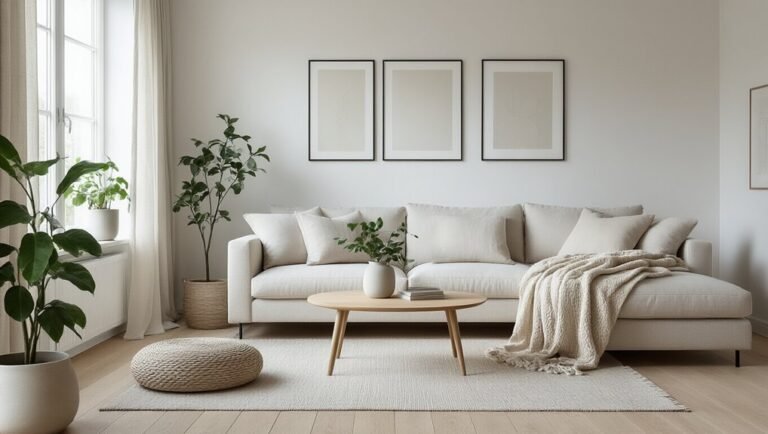
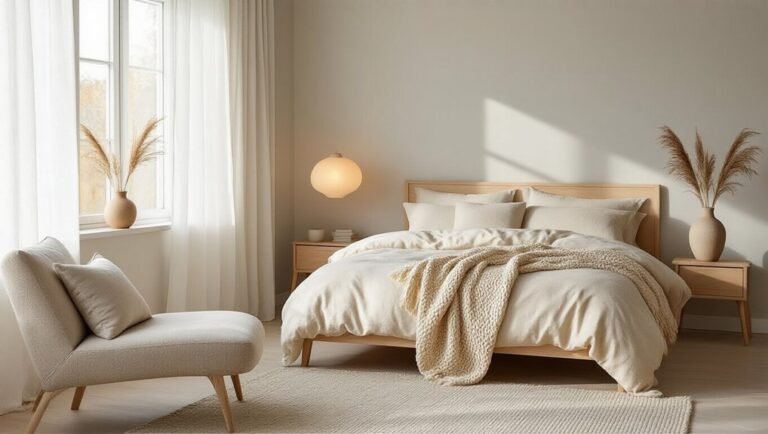
The foundation of a welcoming Scandinavian bedroom begins with selecting warm neutrals rather than cool grays or stark whites. Soft beiges, creams, and warm taupes create an inviting base that prevents sterility.
Warm neutrals like beiges, creams, and taupes create an inviting Scandinavian bedroom foundation that feels welcoming rather than sterile.
Incorporating accent colors like dusty terracotta adds subtle warmth and visual interest without overwhelming the space.
Deeper tones such as charcoal or midnight can be introduced through textiles, artwork, or a feature wall, providing sophisticated contrast. This balanced approach maintains Scandinavian minimalism’s clean aesthetic while infusing the room with coziness.
The result is a serene environment that feels both spacious and comfortably lived-in, avoiding the cold emptiness often associated with Scandinavian design.
Layer Textures to Add Depth Without Clutter
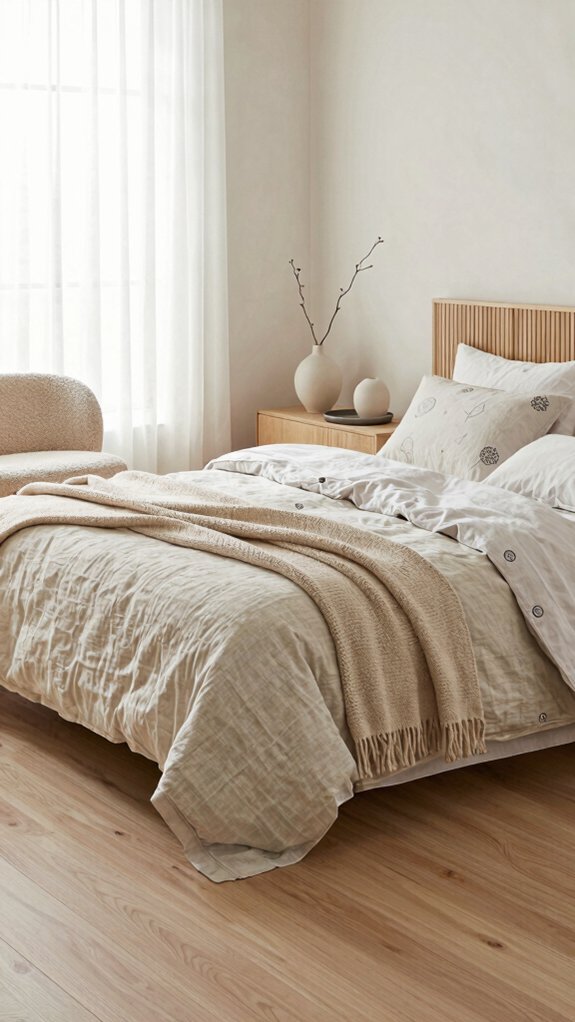
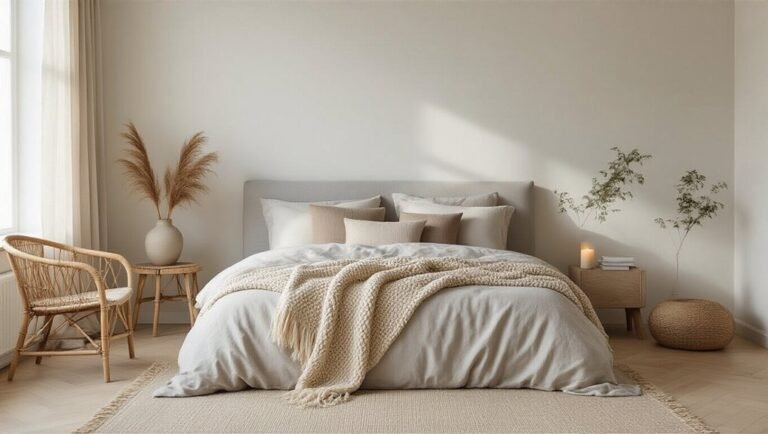
While a warm color palette establishes the visual foundation, texture transforms a flat room into one with genuine depth and personality. Introducing varied materials strategically prevents sterility while maintaining minimalist principles. Layering waffle weave cotton blankets on the bed creates tactile interest, while linen curtains diffuse light softly. Dried wheat stalks in a simple vase introduce organic texture without visual noise. Pairing a wool area rug with smooth wooden furniture establishes contrast. A woven throw across a chair and textured wall hangings further enrich the space. These elements work harmoniously, adding dimension and warmth without overwhelming the room’s clean aesthetic.
Incorporate Natural Materials That Invite Touch
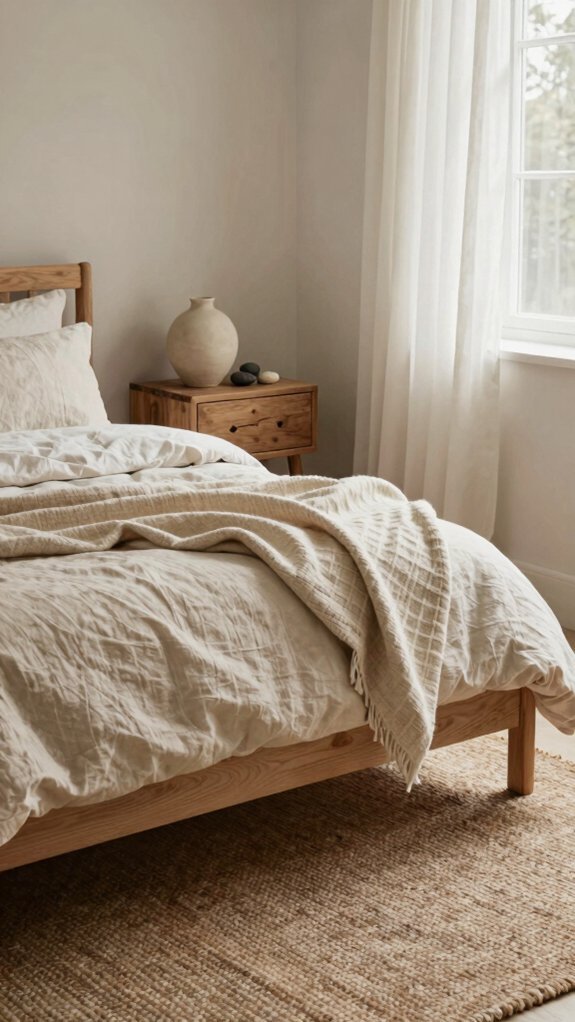
How does one distinguish a truly inviting Scandinavian bedroom from one that merely appears sparse? Natural materials provide the answer. Incorporating reclaimed pine furniture, linen bedding, and wool accents creates soft minimalism that feels substantial rather than bare. Tactile elements like chunky knit throws, jute rugs, and untreated wood surfaces invite touch and sensory engagement. These materials warm sterile spaces through their organic imperfections and weathered character. Raw wood grain, natural fiber textures, and honest material choices ground minimalist design in authenticity. This approach transforms sparse aesthetics into genuinely comfortable retreats where restraint enhances rather than diminishes livability and warmth.
Keep Empty Space Without Losing Coziness
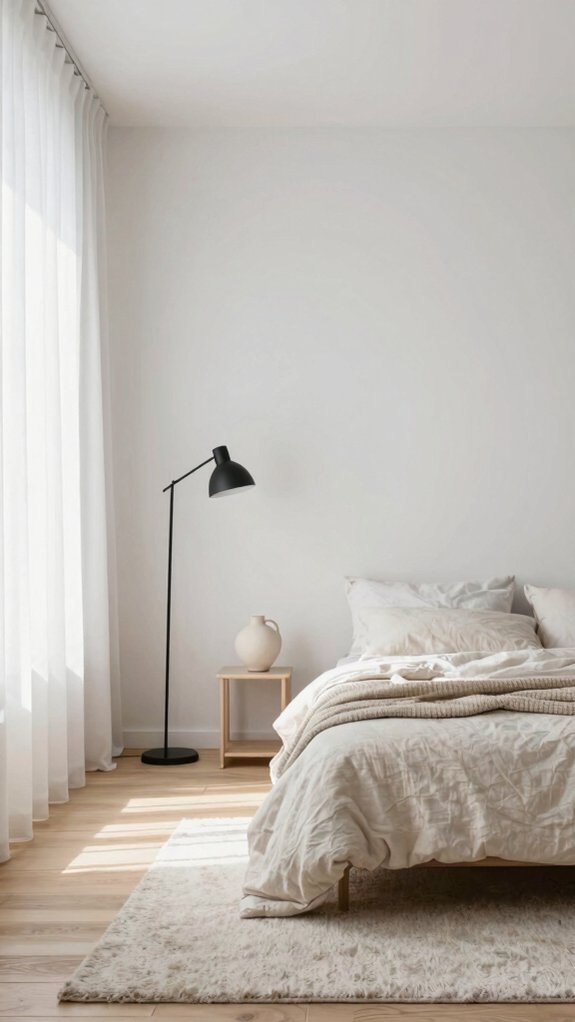
Scandinavian design succeeds precisely because it honors negative space as actively as it populates rooms with objects. This philosophy prevents sterile environments by balancing restraint with warmth. Integrated lighting serves dual purposes—functional illumination and visual softness that prevents sparse rooms from feeling cold. Strategically placed accent pieces, layered textures through bedding, and a single statement artwork maintain visual interest without clutter. The key lies in curating deliberately rather than filling deliberately. Open walls and unadorned surfaces create breathing room, while carefully selected elements—a textured rug, soft furnishings, warm lighting—infuse coziness. Visual lightness emerges when every item earns its place, transforming emptiness into intentional elegance.
Select Meaningful Accents That Tell Your Story
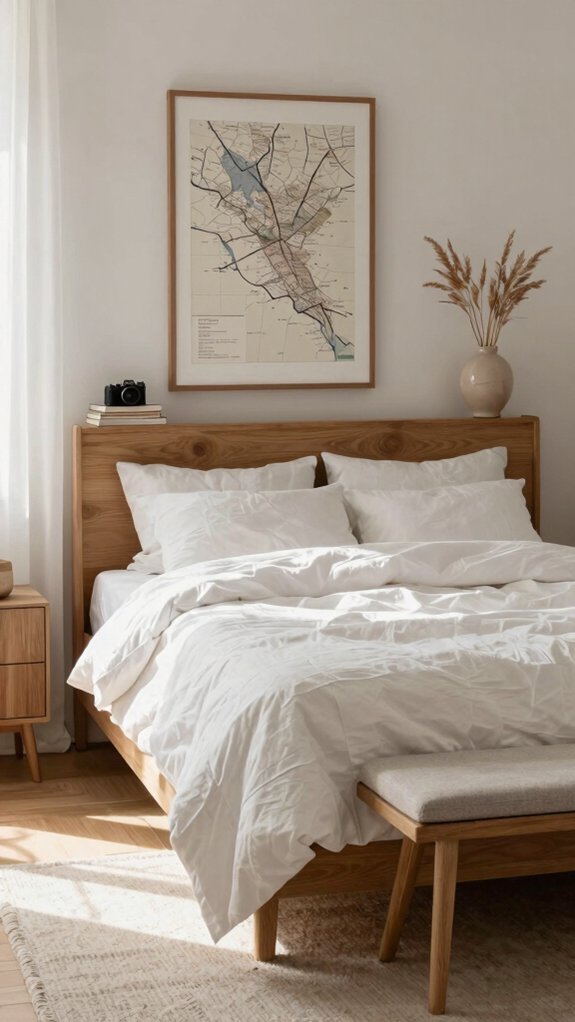
What separates a curated Scandinavian bedroom from a generic one is the intentional selection of personal elements that reflect the inhabitant’s values and experiences. Incorporating meaningful accents—vintage photographs, inherited textiles, or handcrafted objects—transforms minimal spaces into intimate sanctuaries. A japandi-inspired spindle headboard paired with a cherished family heirloom creates visual interest while maintaining simplicity.
Similarly, displaying books, artwork, or travel souvenirs on sparse shelving adds narrative depth. These purposeful choices prevent sterility while honoring Scandinavian design principles. The key lies in selecting pieces that genuinely resonate, ensuring every accent serves both aesthetic and emotional purposes.