How to Layer Textures in a Dark Bedroom (Velvet, Linen, Leather)
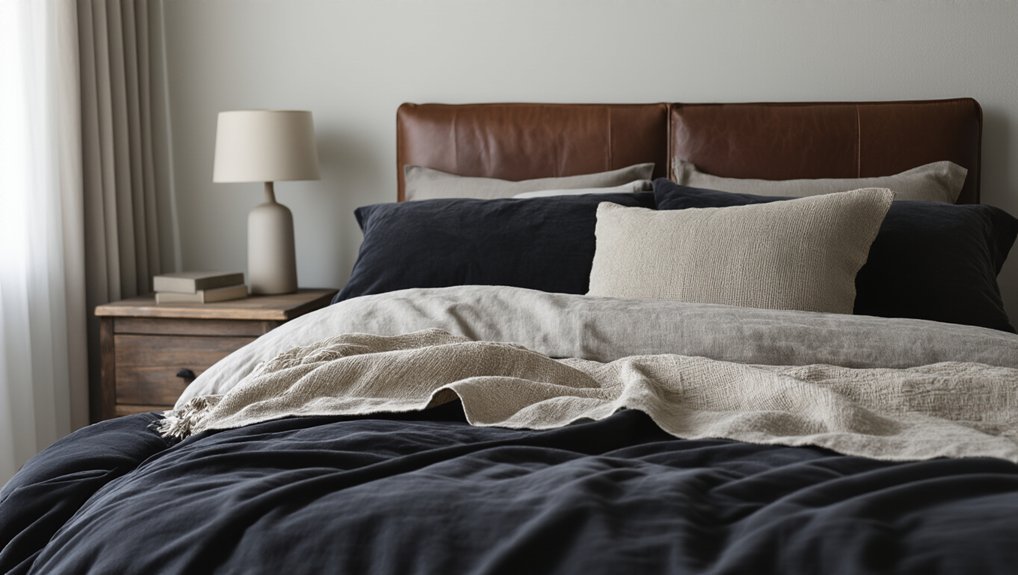
You’ve got the matte black or deep charcoal walls down, absorbing light like a midnight pool. Now comes the real challenge—making it feel cozy instead of like a cave. Texture’s your secret weapon here. Velvet, with its light-catching pile, transforms even a shadowed corner into something inviting. Linen, all slubbed and imperfect, breathes where the room feels heavy. Leather, whether it’s a caramel accent chair or a camelback headboard, grounds everything with age-worn patina. Each one does something totally different to your space. Mix ’em wrong? Flat and boring. Get it right? Pure luxury vibes that’ll actually make you want to stay in bed longer, scrolling until 2 AM. Here’s how to nail it.
Why Texture Matters in Dark Bedrooms (More Than Color Ever Will)
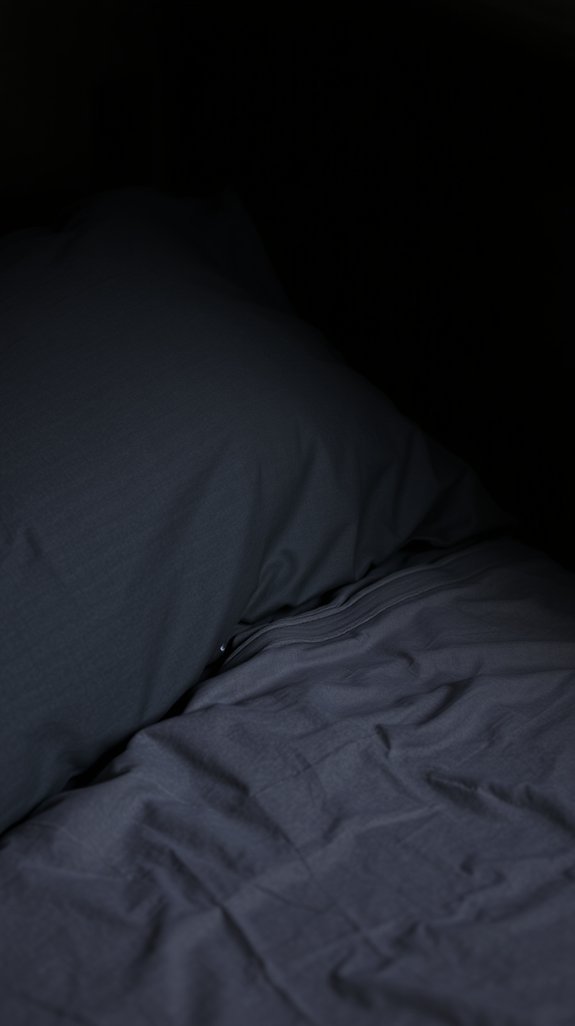
Here’s the thing—midnight blue or charcoal walls can look super moody and sophisticated. But texture psychology keeps them from feeling depressing. Crushed velvet. Belgian linen. Full-grain leather. Each adds visual interest and tactile richness. The same high contrast principles that make bold color combinations work can guide how you balance heavy and light textures in dimly lit spaces.
Maintenance tips? Brush velvet gently with a soft bristle brush. Spot-clean leather with a damp cloth. Wash linen regularly in cold water. Your dark room just became an actual vibe.
Velvet, Linen, and Leather: Properties and Placement
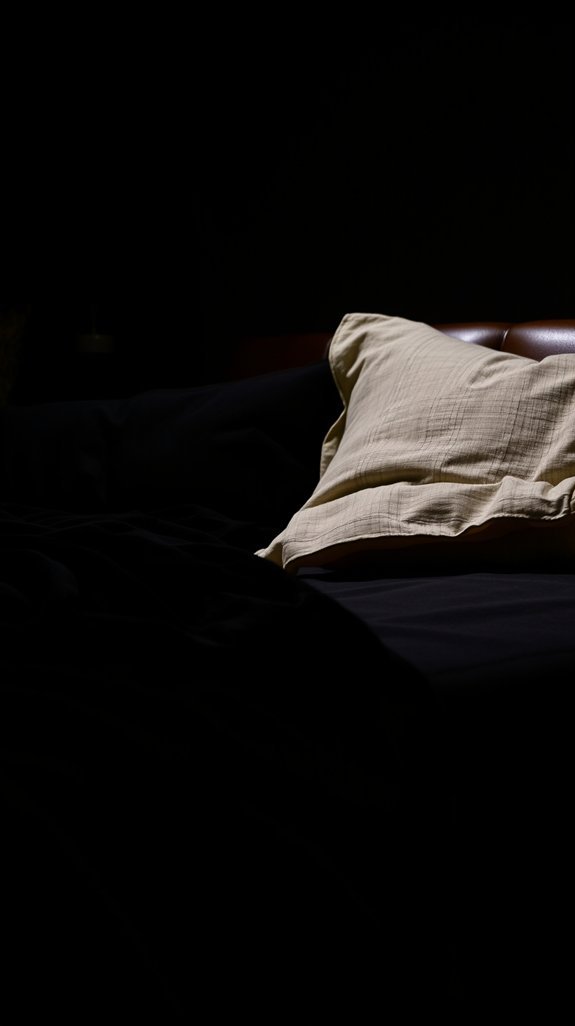
Each texture’s got its own vibe and job in your dark bedroom.
Velvet on statement pieces ✨
Drape it on headboards or accent chairs—think channel-tufted designs or jewel-toned wingbacks. Velvet care? Brush gently with a soft-bristled clothes brush. Avoid direct sunlight to prevent fading and fiber breakdown.
Linen on basics 🛏
Sheets and pillowcases work perfectly, especially in charcoal or deep moss shades. Linen maintenance is chill—just wash cool water, skip the fabric softener, and embrace the natural wrinkling.
Leather as accents 🖤
Throw pillows or ottoman touches add edge. Distressed full-grain and matte black finishes layer beautifully with velvet’s nap and linen’s slubbed weave. These three together? Chef’s kiss energy. For dramatic pairing inspiration, consider how deep oxblood shades can amplify velvet’s luxurious depth in shadowy bedroom corners.
Start With Linen or Linen-Blend Bedding as Your Foundation
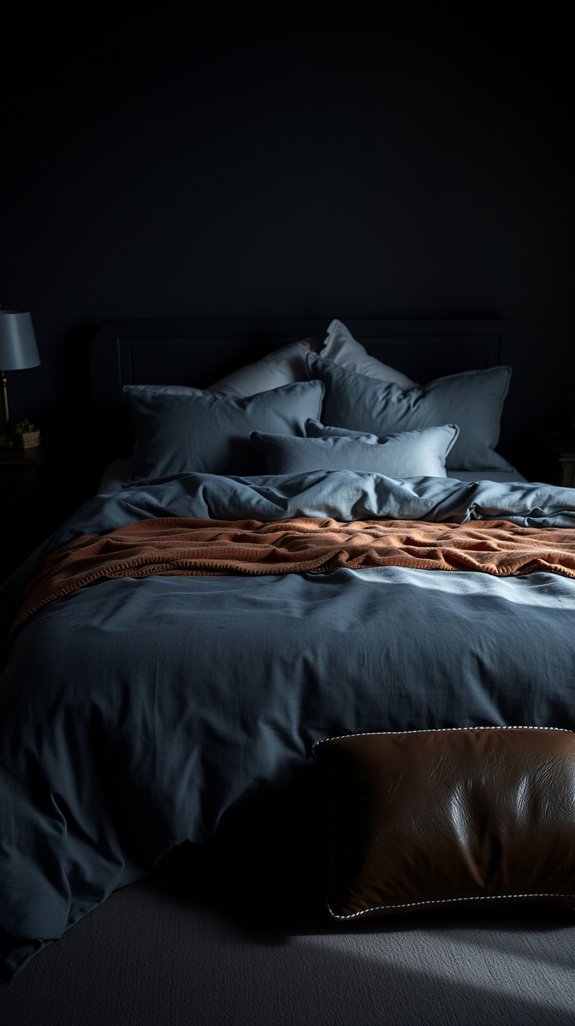
Your bedding foundation matters way more than you’d think. 🛏 100% French flax linen and Belgian linen blends are literally the MVP here. They’re thermoregulating, moisture-wicking, and create that chill base layer. Linen layering with waffle weaves and stone-washed finishes is where texture psychology kicks in—soft underneath means your brain relaxes instantly. Start with a fitted sheet or sheet set. Build everything else on top. If you want to add a bold color hit without touching walls or furniture, consider swap-out drawer hardware in a vibrant shade. You’ve got this!
Introduce Velvet for Dramatic Impact: Headboards, Throws, and Pillows
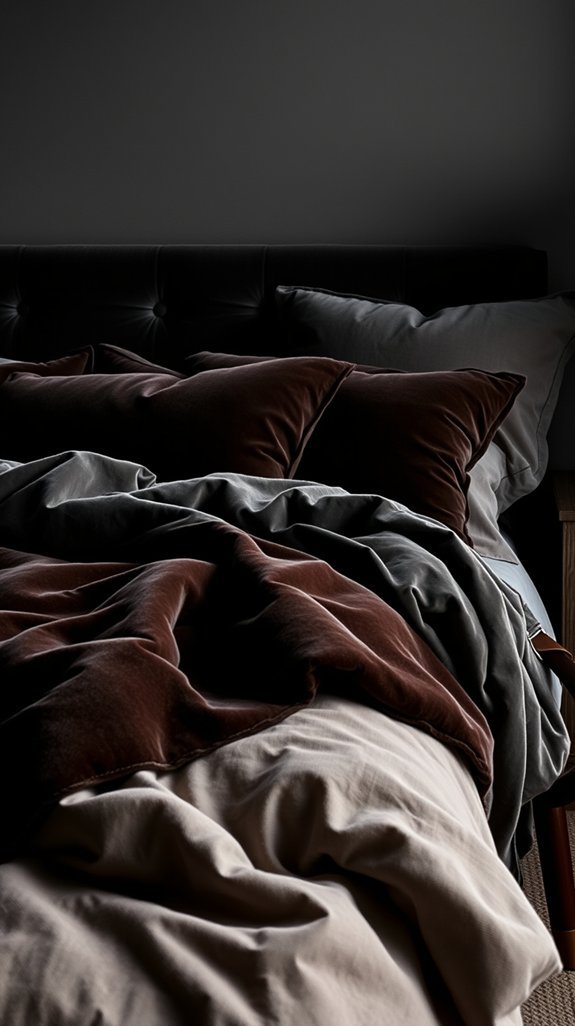
Add in terracotta or rust velvet pieces to echo that warm, earthy red tone found in unified boho palettes, bridging the gap between moody darkness and organic warmth.
Ground Your Room With Leather Furniture and Accents
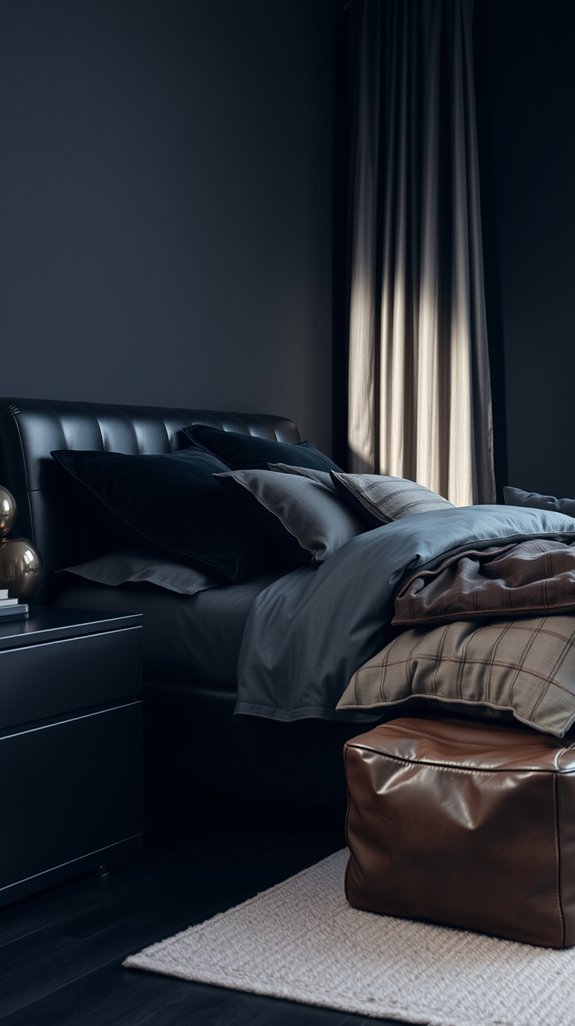
How do you keep all those plush textures from feeling too soft and precious? Enter leather furniture and accents! 🎯 A sleek leather chair or ottoman grounds your vibe instantly. Leather accents like desk organizers, vintage luggage, or wall hangings add serious edge. This combo keeps things balanced. Your room stays cozy but not basic. Two word discussion ideas? Structured elegance. Moody chic. ✨ Oxblood walls pair beautifully with leather to create that rich, intentional feel without overwhelming a smaller space.
The 60-30-10 Texture Rule: How to Layer Without Overwhelming
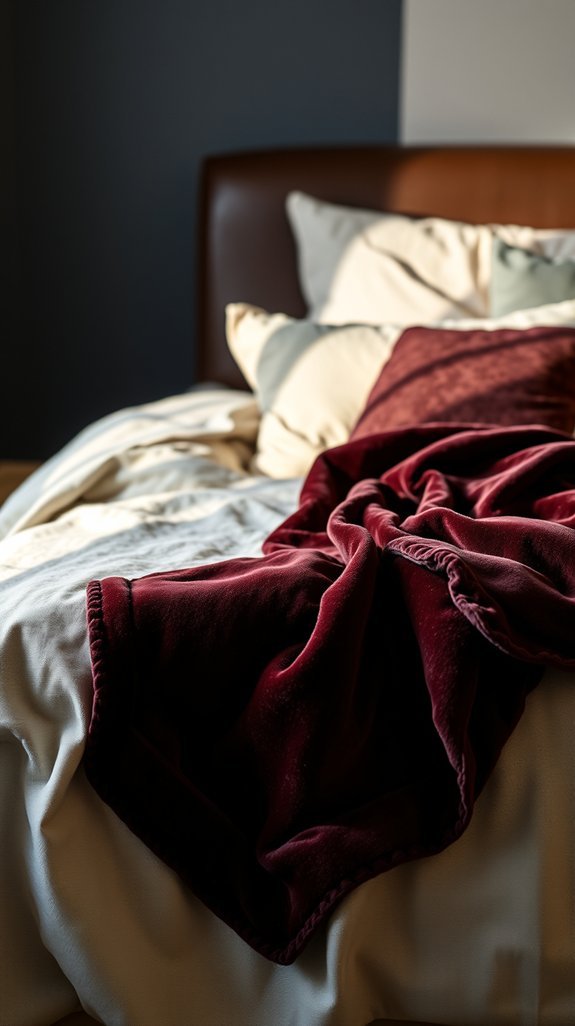
When you’re layering textures in a dark room, here’s the thing: too many competing fabrics can turn cozy into chaotic real quick. 😅 That’s where the 60-30-10 rule saves you.
Pick Your Dominant Texture 🎯
Make one material your main vibe. Full-grain leather or Italian leather works great here—as seen in Restoration Hardware’s Chesterfield sofas or West Elm’s leather sectionals. It anchors everything and brings material durability too. The natural grain patina develops character over time, and your texture ratios stay balanced and chill when you’ve got that foundation locked down against velvet accent pillows or chunky wool throws. For inspiration on balancing bold materials, look to curated contemporary designs that use high-contrast palettes to create graphic, intentional spaces.
Combine Textures by Scale: Making Statement Pieces and Small Accents Work Together
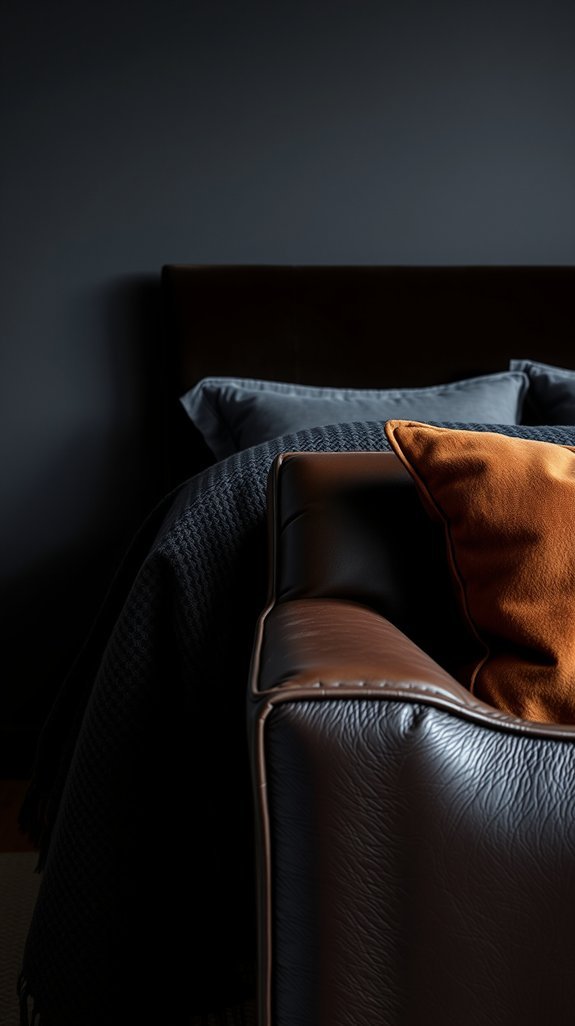
When you position and scale your largest textural elements strategically and surround them with quieter supporting textures, the room achieves that same commanding yet harmonious energy found in professionally designed spaces.
Balance Sheen and Matte to Prevent a Flat, One-Dimensional Look
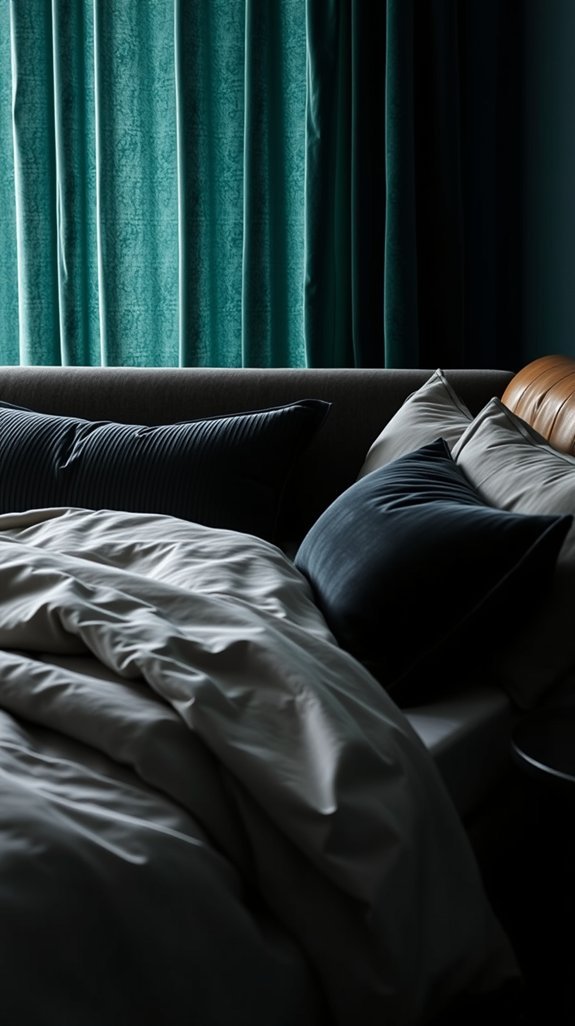
Velvet + Linen = Balance 🎯
Velvet’s glossy durability pairs perfectly with linen’s relaxed matte finish. This combo prevents that flat, one-note look by mixing sheen levels. You can also introduce vibrant red accents through small textile pieces like throw pillows to add unexpected warmth against dark walls.
Go Sustainable Too 🌿
Choose FSC-certified velvet and organic linen. Your dark space deserves ethical texture layering that actually feels good!
Lighting That Makes Layered Textures Shine
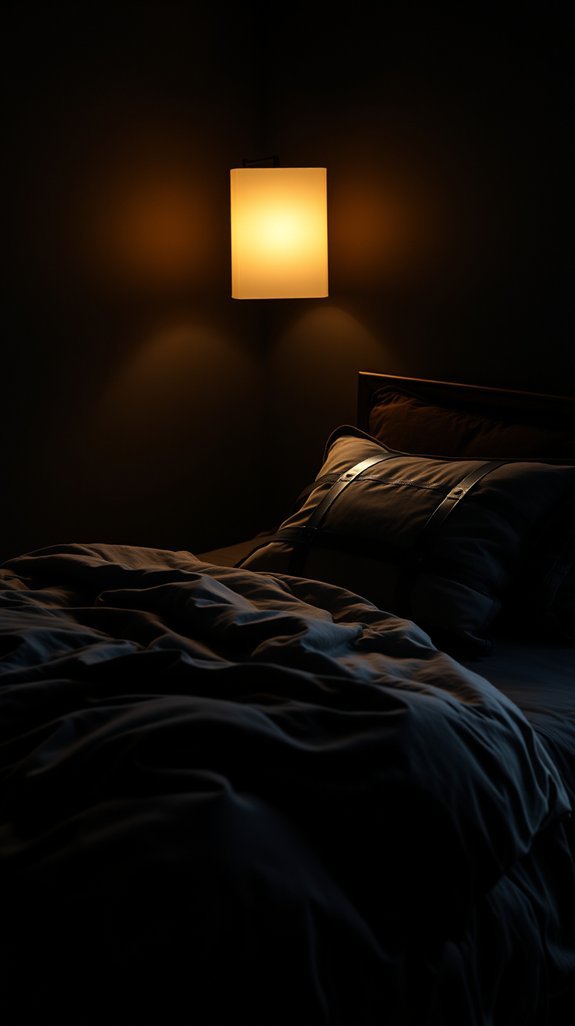
How’s all that gorgeous texture looking in pitch darkness? 🌙 Yeah, not great, right?
Lighting Integration is Everything ✨
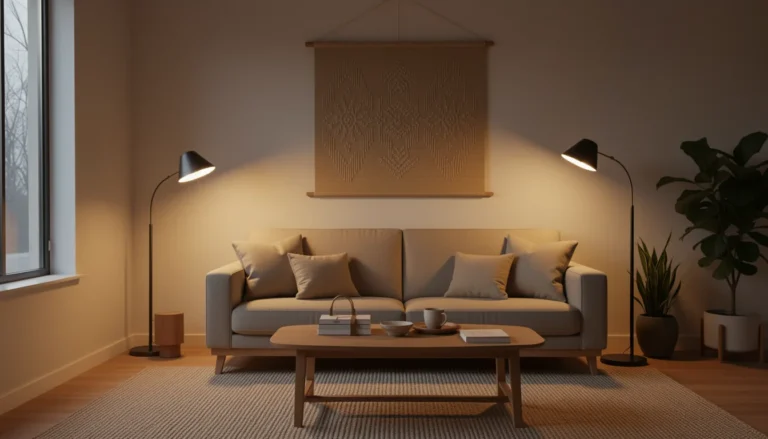
You need strategic lights to showcase your texture contrast. Layer warm spotlights and ambient fixtures. Uplighting hits velvet’s richness. Side-lighting reveals linen’s weave. Your dark bedroom transforms from boring to absolutely fire. Trust the vibe. Lighting literally makes textures pop. Don’t sleep on this step. 💡
Just as you’d match the correct red tone to your existing palette so accents feel deliberate, your lighting choices should feel equally intentional against your layered textures.
Layered Lighting Formula:
| Texture Type | Light Position | Fixture Example |
|---|---|---|
| Heavy velvet | Floor up-light | LED strip behind headboard |
| Rough linen | 45° side angle | Adjustable wall sconce |
| Faux fur | Soft overhead | Dimmable pendant with shade |
| Woven rattan | Backlighting | Rope light behind paneling |
Pro Entities to Consider:
- Color Temperature: 2700K warm white flatters most textiles
- Beam Angle: Narrow 15° spots create drama; wide 40° washes even out
- Dimmer Switches: Non-negotiable for texture play throughout the day
That bouclé throw you splurged on? It’s eating shadow without a dedicated reading lamp nearby. Position your sources. Watch the nap catch light differently from every angle.