How to Create a Scandinavian Kitchen That Looks Minimal but Practical
Start Your Scandinavian Kitchen: White, Gray, and Wood
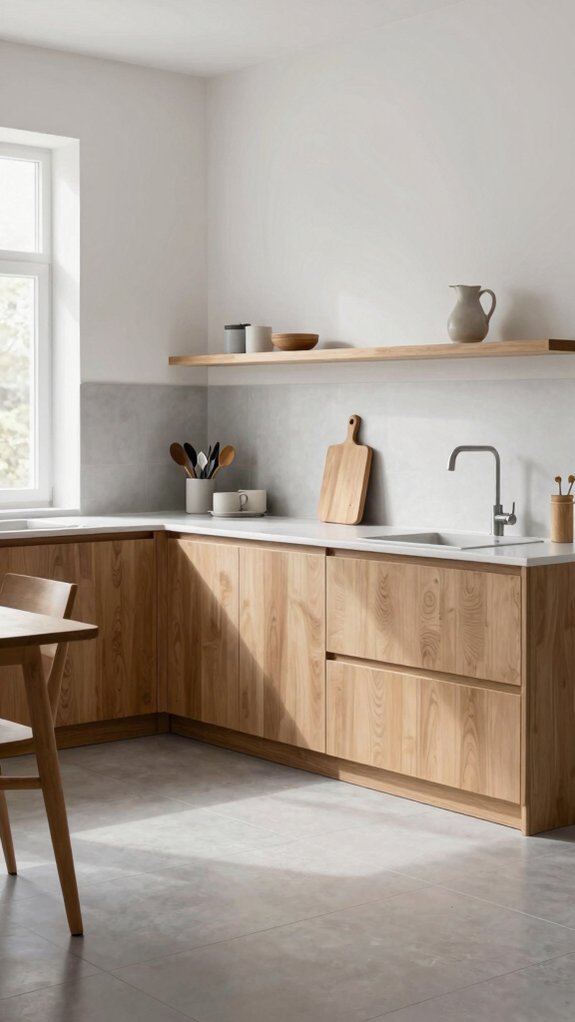
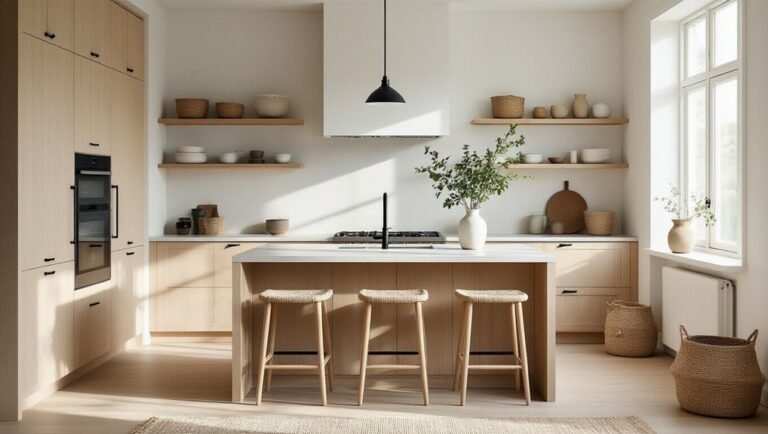
Why do Scandinavian kitchens feel both serene and functional? The answer lies in their deliberate color palette. White, gray, and natural wood form the foundation of this design philosophy. White cabinetry and walls create visual breathability, preventing spaces from feeling cramped. Gray accents introduce subtle sophistication through countertops or backsplashes. Natural wood elements—whether in flooring, shelving, or island tops—warm the minimalist aesthetic while grounding the space. This trio achieves balance: white provides cleanliness and light, gray adds depth and neutrality, and wood brings organic texture. Together, these colors establish kitchens that are simultaneously uncluttered and inviting, proving that minimalism needn’t sacrifice warmth.
Select Durable Materials Built to Last
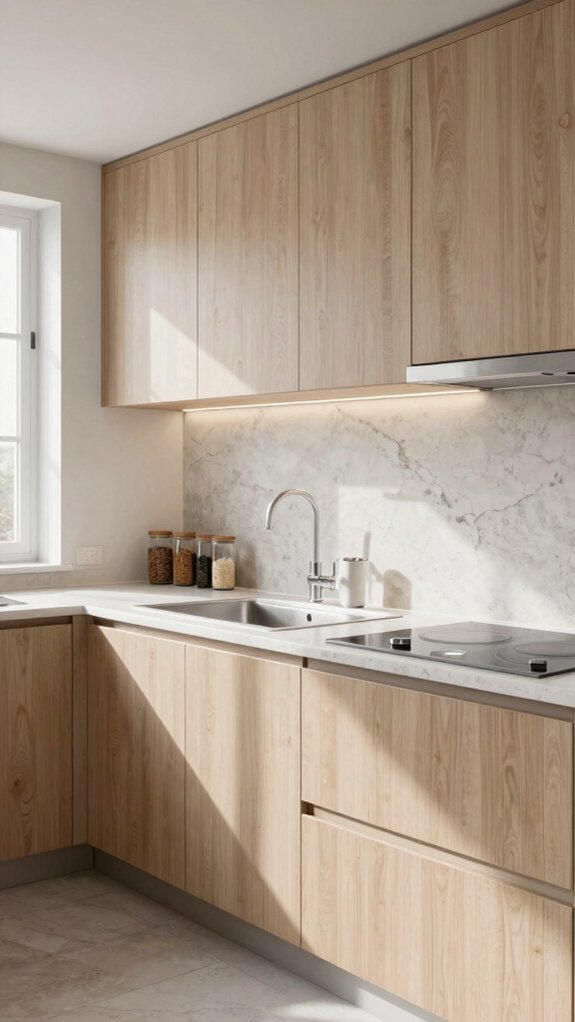
Establishing a Scandinavian kitchen’s aesthetic through color is only half the equation; the materials chosen determine whether that design endures.
Quality hardwoods like oak and birch resist warping while aging gracefully.
Stainless steel countertops and integrated appliances offer durability without compromising minimalist lines.
Matte finishes on cabinetry hide fingerprints and wear better than glossy alternatives.
Stone or concrete surfaces provide longevity and withstand daily use effortlessly.
Investing in premium materials upfront reduces replacement costs and maintenance demands over time, ensuring the kitchen remains both functional and visually cohesive for years ahead.
Design Your Layout Around Smart Storage
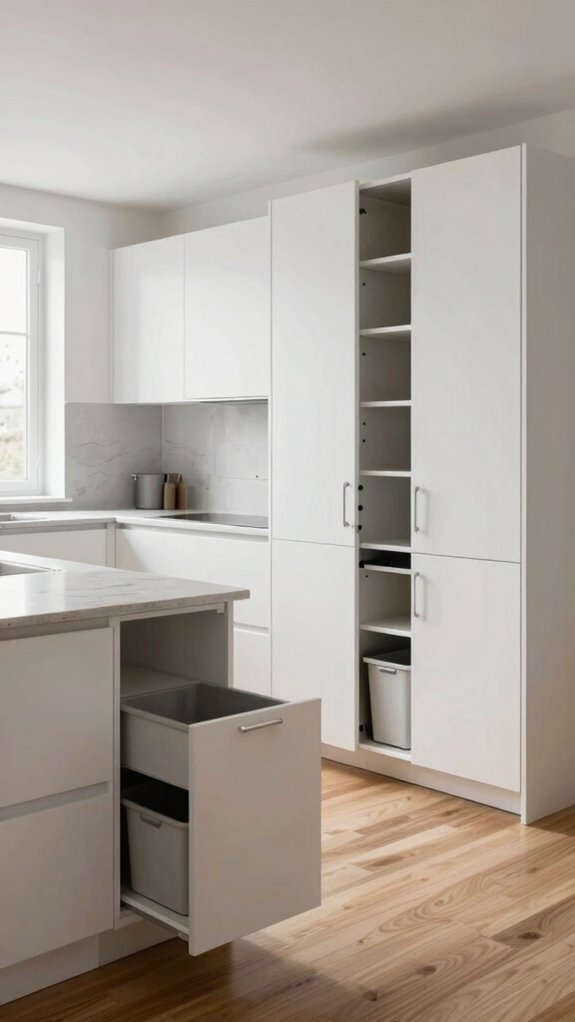
How does one maximize functionality in a minimalist space? Strategic layout planning prioritizes accessibility and concealment. Scandinavian kitchens benefit from designated zones that organize workflow efficiently. Appliance garages—cabinet spaces designed to hide small appliances—maintain the clean aesthetic while keeping essentials within reach. Vertical storage maximizes limited square footage through tall cabinetry and wall-mounted shelving. Drawer dividers compartmentalize utensils and tools systematically. Corner solutions eliminate wasted space. Pantry organization employs uniform containers for dry goods, reducing visual clutter. The key principle involves assigning every item a specific location, ensuring nothing remains permanently visible. This intentional arrangement creates an uncluttered environment without sacrificing convenience or daily usability.
Choose Multi-Purpose Pieces
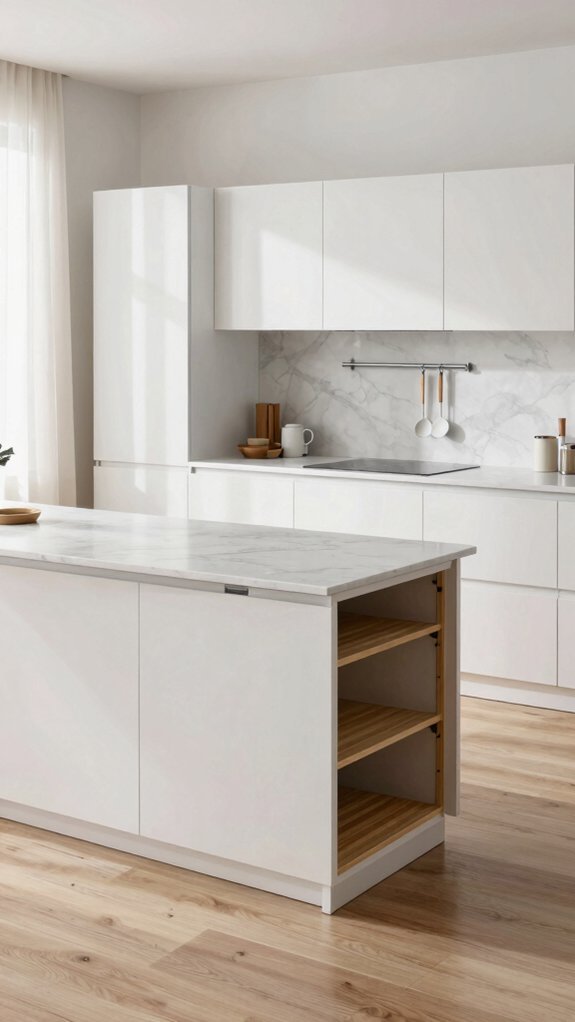
While strategic storage solutions establish the foundation of a functional Scandinavian kitchen, the selection of furniture and fixtures themselves determines whether the space remains truly minimal.
Multi-functional islands serve as centerpieces that combine food preparation, dining, and storage within a single structure. Selecting pieces with dual purposes—such as tables with integrated shelving or benches offering hidden compartments—maximizes utility without cluttering the environment. Scandinavia’s design philosophy emphasizes that every item must earn its place. By prioritizing versatile furniture over single-use pieces, homeowners achieve the balance between aesthetic simplicity and practical efficiency that defines contemporary Scandinavian kitchens.
Invest in Quality Over Trends
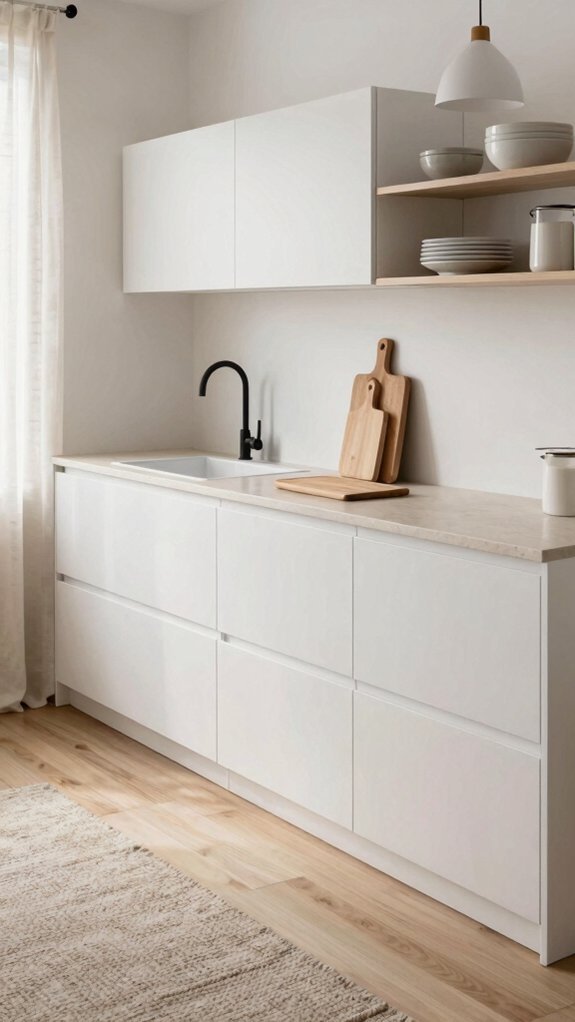
The foundation of a lasting Scandinavian kitchen rests on selecting timeless pieces over trendy items that quickly lose relevance. This philosophy aligns with lagom, the Swedish principle of balance and moderation. Investing in durable cabinetry, quality stainless steel appliances, and solid wood countertops ensures longevity and sustained functionality. Such pieces withstand daily wear while maintaining aesthetic appeal across decades. Prioritizing craftsmanship over fleeting design trends reduces waste and long-term costs. Scandinavian design emphasizes authenticity and substance, rejecting disposable aesthetics. By choosing enduring materials and classic forms, homeowners create kitchens that remain practical and beautiful without constant updates or replacements.
Keep Countertops Clear and Organized
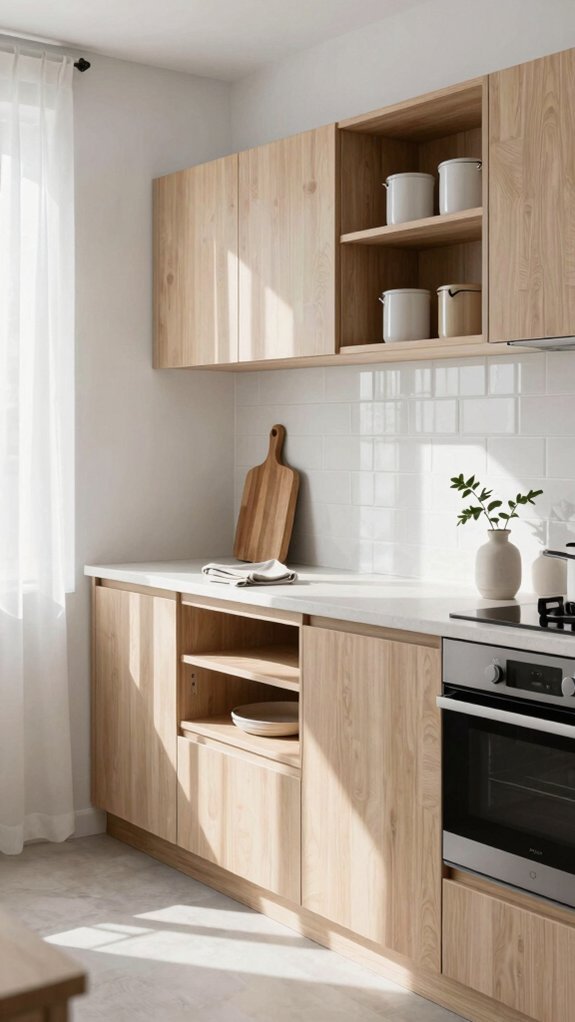
Why do Scandinavian kitchens feel so serene despite their functionality? Clear countertops are fundamental. Rather than cluttering thin-profile worktops with appliances and utensils, Scandinavian design advocates storing items away in cabinets or drawers. Only essential tools remain visible—a cutting board, knife block, or wooden spoon holder. This deliberate restraint creates visual calm while maintaining practicality.
Organizing drawers with dividers and containers ensures everything has a designated place. Regular decluttering prevents unnecessary accumulation. By treating countertops as functional workspaces rather than storage areas, kitchens achieve the hallmark Scandinavian balance: minimal aesthetics paired with maximum efficiency and accessibility.
Layer Lighting and Soft Textiles
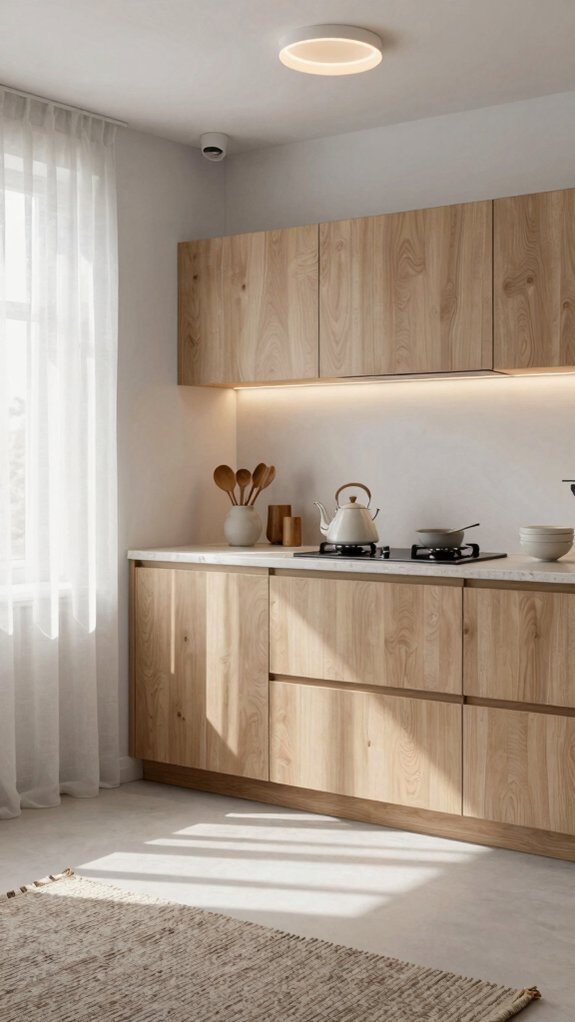
How do Scandinavian kitchens balance minimalism with warmth? Through strategic lighting and textile choices. Layered circadian lighting—combining ambient, task, and accent lighting—creates functionality while maintaining aesthetic simplicity. Pendant lights over islands and under-cabinet strips illuminate work zones without cluttering surfaces. Soft textiles introduce coziness without compromising clean lines. Natural linen or wool tea towels, runners, and cushions add texture and comfort. These elements soften the kitchen’s stark minimalist foundation, making the space inviting rather than cold. The key lies in selecting neutral-toned, high-quality textiles that serve practical purposes while enhancing the room’s serene Scandinavian atmosphere.
Use Empty Space Strategically
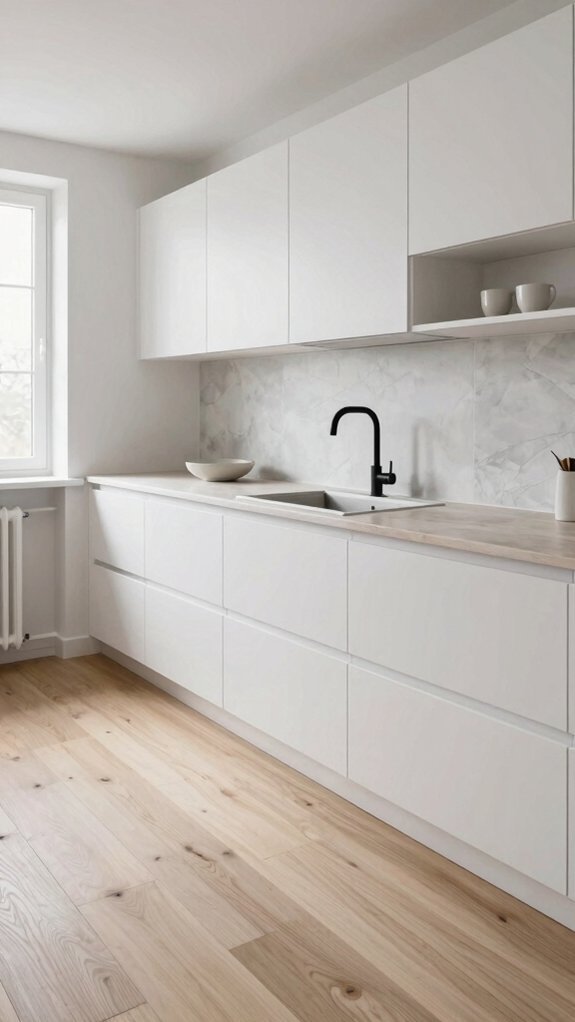
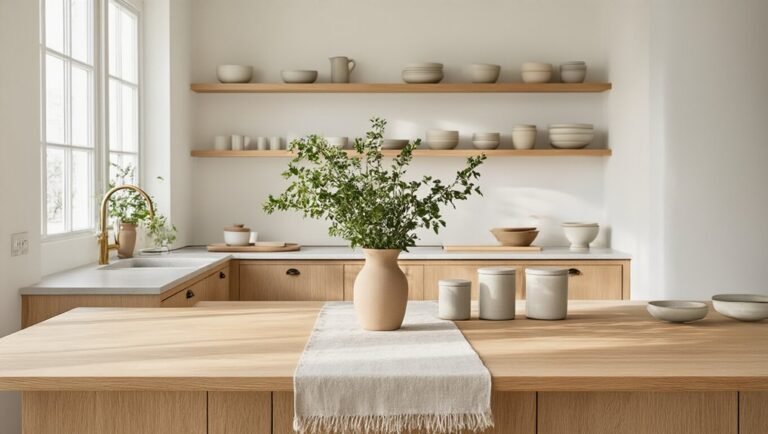
Negative space functions as a design element in Scandinavian kitchens, not merely an absence of objects. Strategic emptiness creates visual calm while supporting invisible functionality through hidden storage solutions. Countertops remain deliberately bare, with appliances and utensils concealed behind minimalist cabinetry. Open shelving displays only essential, aesthetically pleasing items—perhaps a few ceramic bowls or glass containers. This restraint prevents visual clutter while maintaining accessibility. Blank wall sections and unadorned surfaces allow the eye to rest, reinforcing the kitchen’s serene atmosphere. Thoughtful spacing between furniture and fixtures enhances movement and usability, proving that emptiness itself contributes to both beauty and practical efficiency.
Design for How You Actually Cook
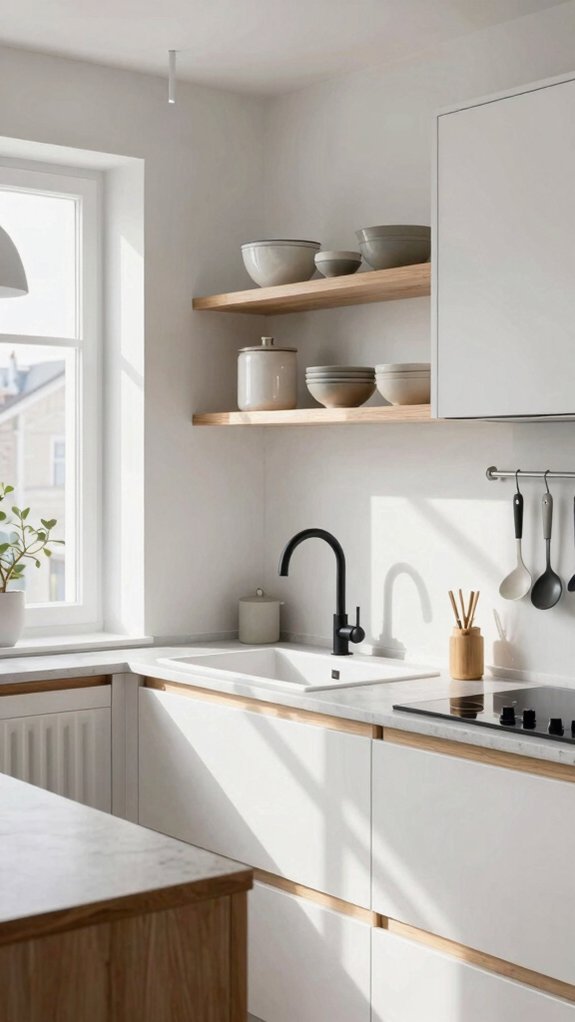
While empty space creates visual serenity, a truly functional Scandinavian kitchen must align its layout with actual cooking habits. Rather than following rigid design rules, homeowners should observe their daily routines and arrange zones accordingly.
Frequent bakers need accessible flour and mixing bowls near prep surfaces. Coffee enthusiasts benefit from appliances positioned for morning efficiency. Those who cook elaborate meals require logical workflow between refrigerator, stove, and sink.