How to Choose Scandinavian Lighting for a Warm and Balanced Home
The Five Principles Behind Scandinavian Lighting
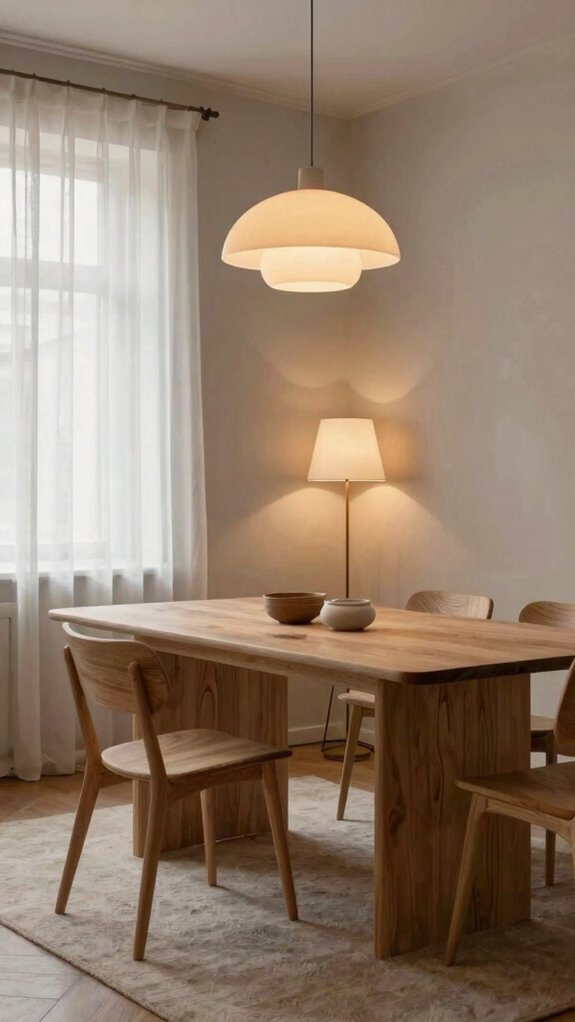
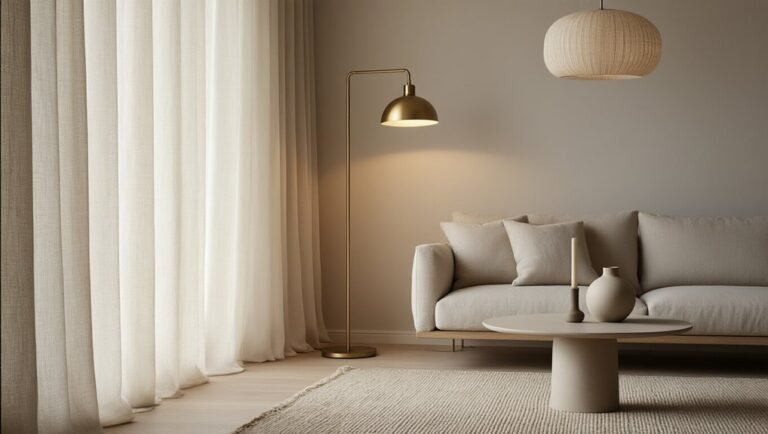
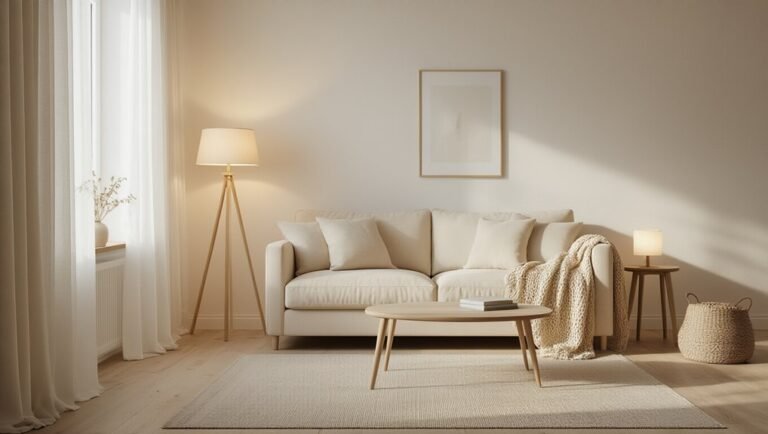
How does a design philosophy achieve such enduring appeal across decades and continents? Scandinavian lighting principles stem from practical necessity and aesthetic refinement. First, functionality prioritizes task illumination over decoration. Second, minimalism eliminates ornamental excess, emphasizing clean lines and purposeful design. Third, natural materials like wood and metal ground interiors authentically. Fourth, circadian lighting respects human biological rhythms by adapting color temperature throughout the day. Finally, layered lighting combines ambient, accent, and task sources for spatial versatility. These interconnected principles create environments that balance form with livability, ensuring spaces feel both sophisticated and genuinely comfortable.
Evaluate Natural Light and Layout in Your Space
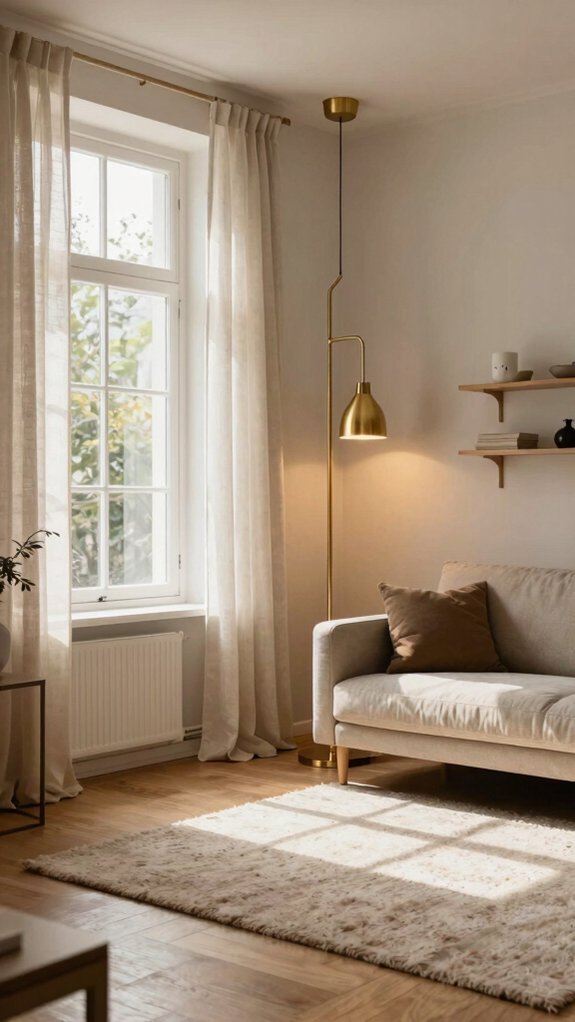
Before selecting artificial lighting fixtures, one must assess the existing natural light patterns and architectural layout of the space. Understanding how sunlight moves through rooms throughout the day determines optimal fixture placement and intensity requirements. North-facing rooms require warmer, brighter artificial light, while south-facing spaces need less supplementation. Consider ceiling height, window size, and obstructions like trees or buildings. Scandinavian design emphasizes maximizing daylight; therefore, prioritize unobstructed windows and reflective surfaces. Ribbed glass fixtures can diffuse natural light effectively while maintaining aesthetic coherence. This foundational evaluation ensures artificial lighting complements rather than replaces natural illumination, creating the characteristic balanced ambiance central to Scandinavian interiors.
Layered Lighting: How to Build a Complete Scheme
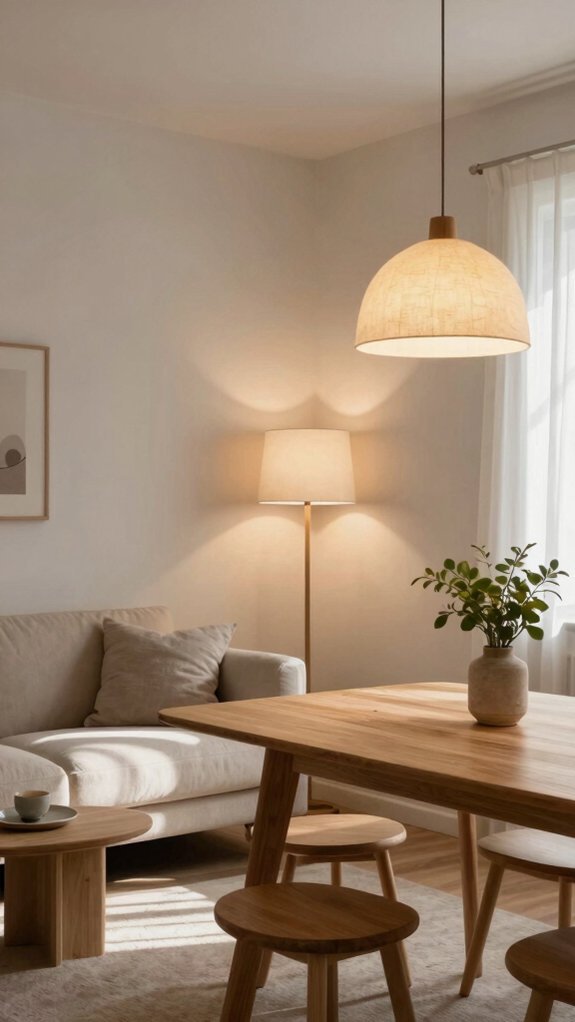
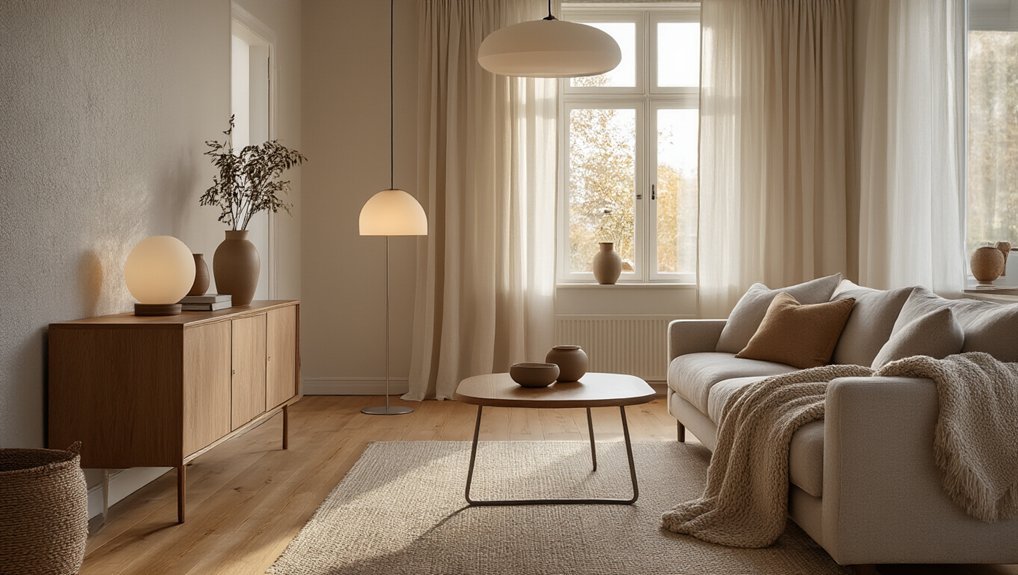
Why do interiors feel incomplete despite adequate illumination? The answer lies in layered lighting design. A complete Scandinavian scheme combines ambient, task, and accent lighting to create depth and functionality. Ambient lighting provides overall illumination through ceiling fixtures or wall sconces. Task lighting addresses specific activities like reading or cooking. Accent lighting highlights architectural features or artwork. The Louis Poulsen PH series exemplifies this approach, offering versatile pendant designs that work across all three layers. By strategically combining these elements, homeowners achieve balanced, inviting spaces that adapt to different times of day and activities, transforming merely lit rooms into thoughtfully illuminated environments.
Materials That Define Scandinavian Style
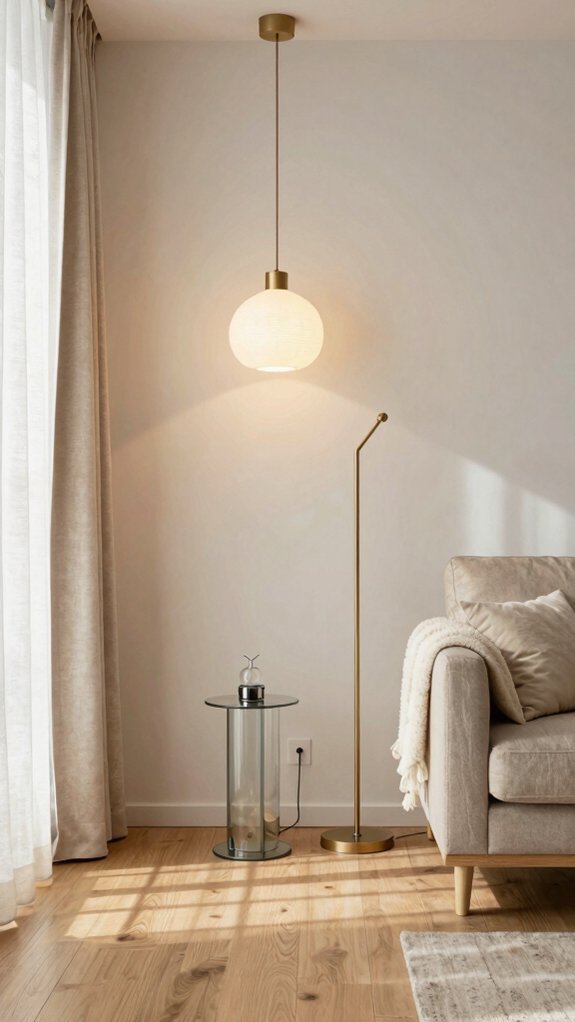
The aesthetic foundation of Scandinavian lighting rests on material choices that prioritize simplicity and natural beauty. Honest materials like wood, metal, and glass dominate Scandinavian design, each selected for inherent qualities rather than ornamentation. Light woods such as birch and oak introduce warmth, while matte metals provide understated elegance. Glass elements allow light diffusion without visual clutter. These materials age gracefully, developing patina that enhances authenticity over time. The philosophy emphasizes durability and sustainability, rejecting disposable trends. Natural finishes remain unadorned, celebrating material integrity. This restrained approach creates luminous spaces where craftsmanship and functionality coexist harmoniously, establishing lasting design value.
Warm vs. Cool Light: What Each Room Actually Needs
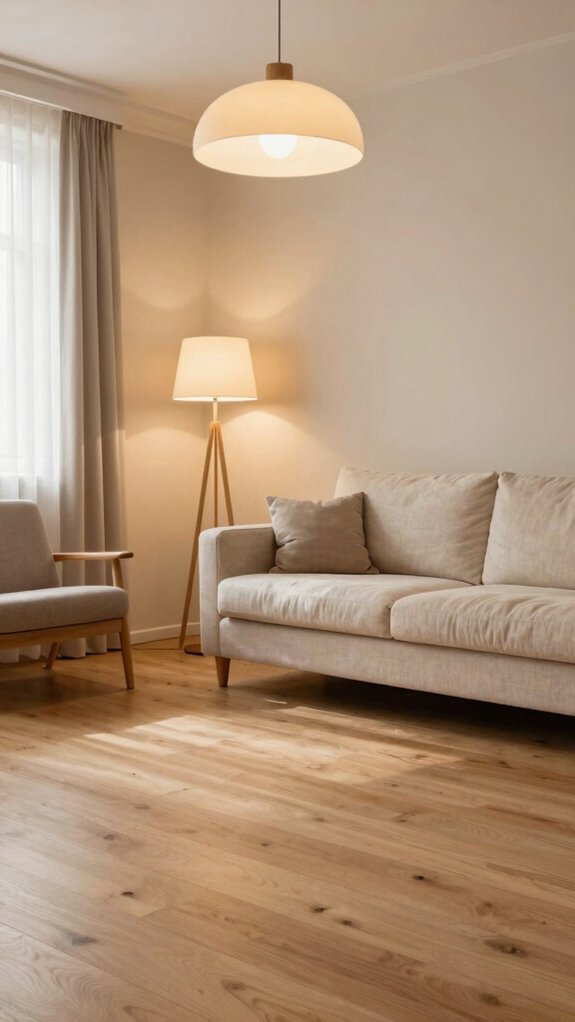
How one perceives a space depends largely on light temperature, measured in Kelvin (K), which ranges from warm yellows below 3000K to cool blues above 4000K. Scandinavian design advocates selecting appropriate temperatures for specific rooms to maximize visual comfort and functionality.
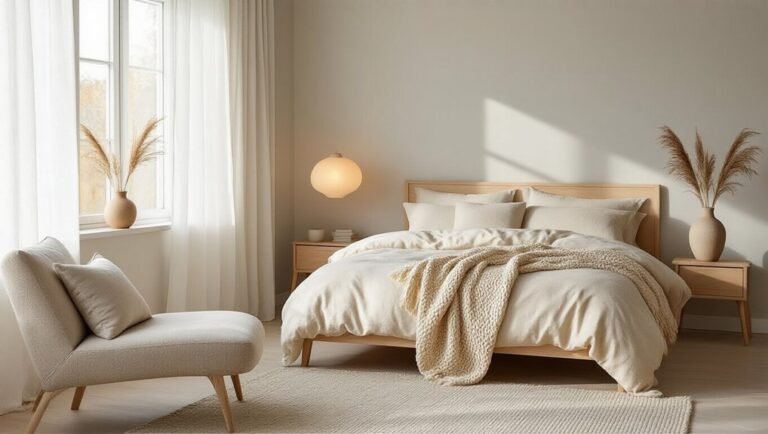
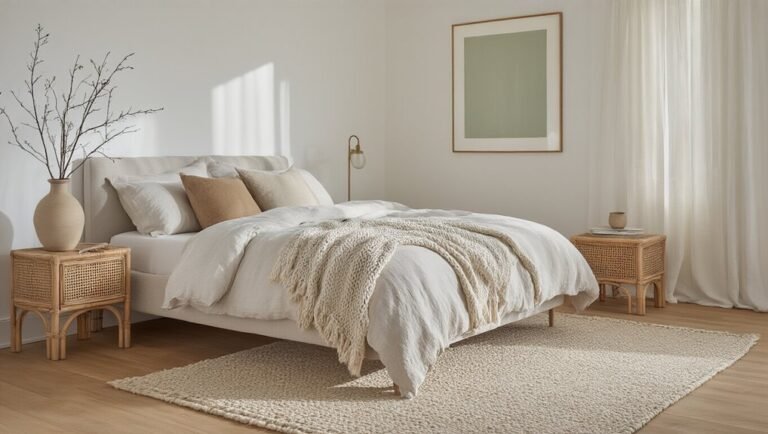
Bedrooms and living areas benefit from warm lighting around 2700K, promoting relaxation and coziness.
Kitchens and workspaces require cooler tones between 4000K and 5000K, enhancing focus and clarity.
Bathrooms suit neutral 3000-4000K lighting, balancing practicality with comfort.
This strategic approach to light temperature throughout the home creates cohesive environments that support daily activities while maintaining the minimalist warmth characteristic of Scandinavian interiors.
When to Choose a Bold Pendant Over Understated Fixtures
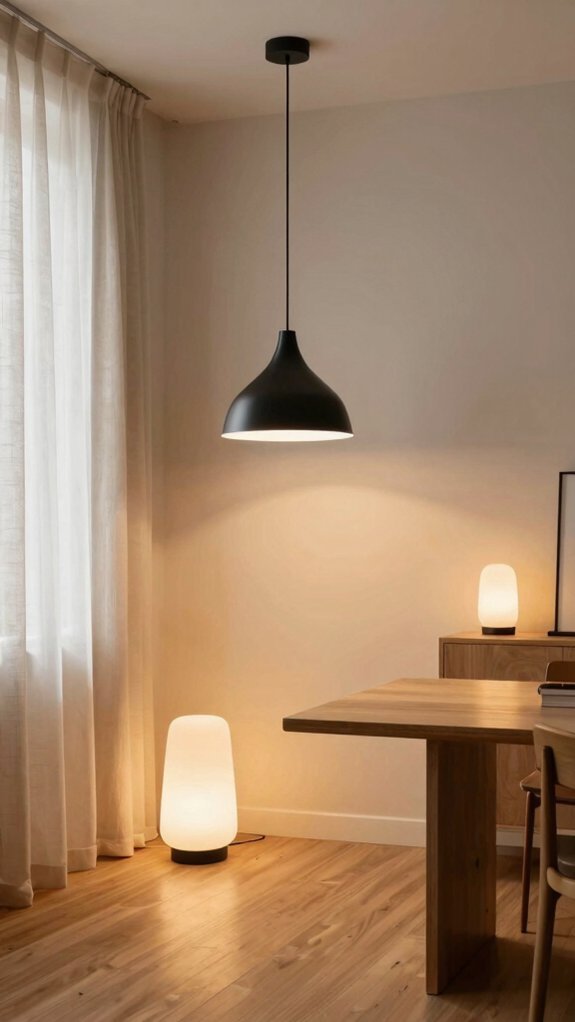
While light temperature establishes the foundation for functional Scandinavian interiors, fixture design itself shapes the visual identity of a space. Bold pendants work best in open-plan kitchens and dining areas where they become architectural focal points. A blackened bronze pendant draws the eye downward, anchoring the space while maintaining Scandinavian minimalism.
Conversely, understated fixtures suit bedrooms and hallways where subtlety promotes calm. Consider room function, ceiling height, and existing décor when deciding. Large pendants demand visual breathing room; smaller spaces benefit from restraint. The choice ultimately balances practical illumination with intentional design statements.
Coordinate Scandinavian Fixtures With Modern, Traditional, and Eclectic Spaces
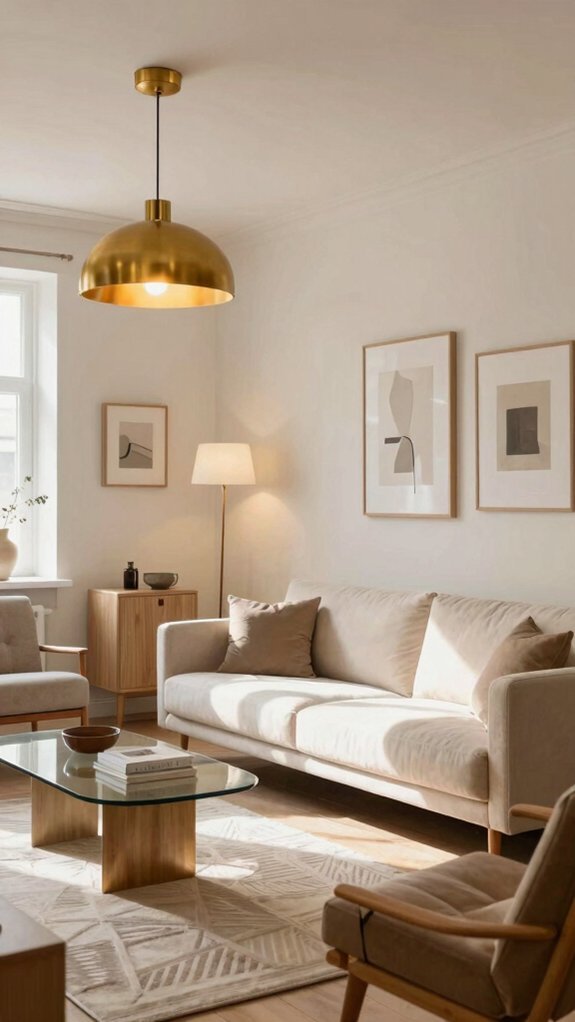
Scandinavian fixtures adapt seamlessly across design aesthetics precisely because their clean lines and functional simplicity complement rather than compete with surrounding styles.
In modern spaces, minimalist designs from brands like Nordlux enhance contemporary palettes without visual clutter.
Traditional interiors benefit from warm-toned Scandinavian pieces that bridge rustic and refined elements.
Eclectic rooms gain cohesion through Nordic fixtures’ neutral foundation, allowing bold artwork and varied furnishings to coexist harmoniously.
The versatility stems from Scandinavian design’s emphasis on form following function, creating fixtures that prioritize practical illumination over ornamental excess.
This restraint enables effortless integration regardless of existing décor direction.
Set a Realistic Budget for Scandinavian Fixtures
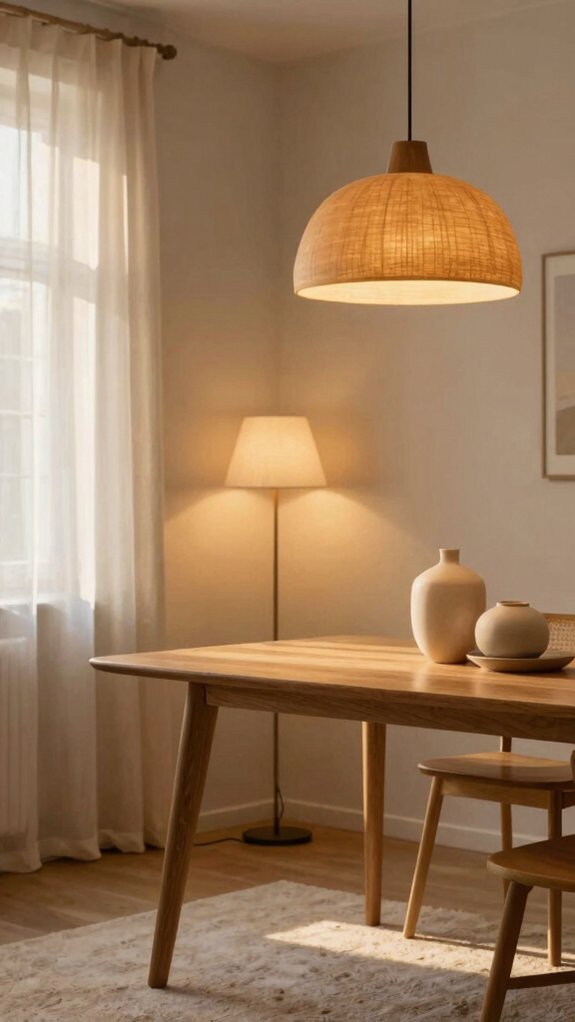
What price range accommodates quality Nordic lighting without financial strain? Mid-range Scandinavian fixtures typically cost between $100-$500, offering excellent quality without excessive expense. Designers like Jacob Jensen Design demonstrate that thoughtful Nordic aesthetics need not demand premium prices. Entry-level options begin around $50, while investment pieces exceed $1,000. Homeowners should identify essential fixtures—pendant lights or floor lamps—before purchasing accent pieces. Comparing prices across retailers reveals significant variations. Buying fewer, higher-quality items proves more effective than accumulating numerous mediocre fixtures. Strategic prioritization ensures a cohesive Nordic aesthetic remains financially achievable for most households.
Lighting Plans for Different Room Sizes
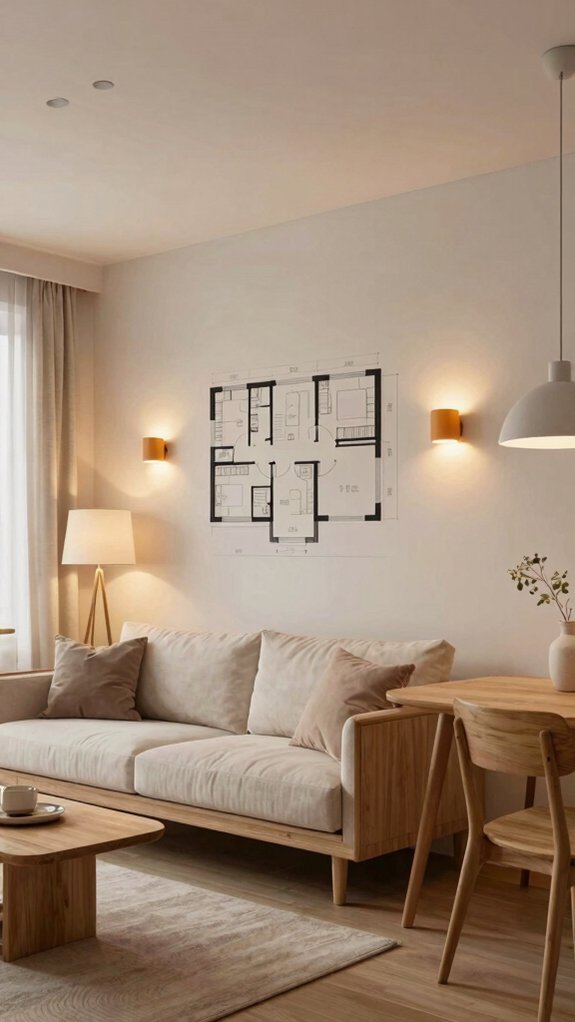
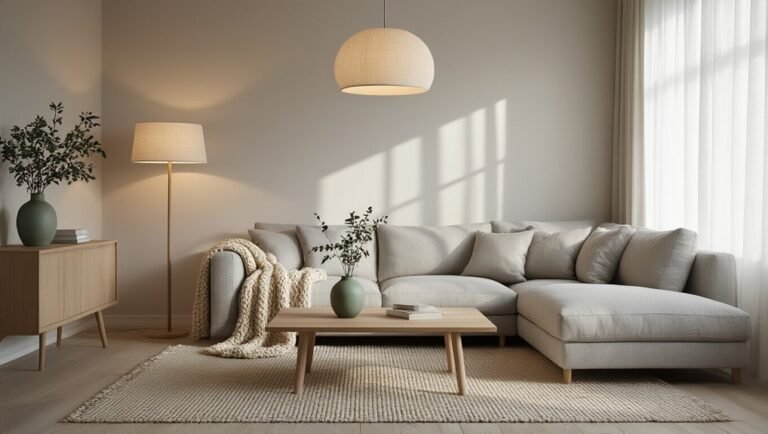
How do room dimensions influence lighting requirements in Nordic design? Smaller spaces benefit from compact pendant lights with linen or woven fiber shades that diffuse light efficiently without overwhelming the area. Medium-sized rooms accommodate multiple light sources, layering ambient and task lighting through fixtures with natural materials. Larger rooms require strategic placement of statement pieces combined with supplementary lighting to maintain the balanced, cozy aesthetic central to Scandinavian design. Selecting appropriately scaled fixtures ensures adequate illumination while preserving the minimalist principle. Room proportions ultimately determine fixture size, quantity, and material selection, guiding homeowners toward harmonious lighting solutions that enhance spatial functionality and warmth.