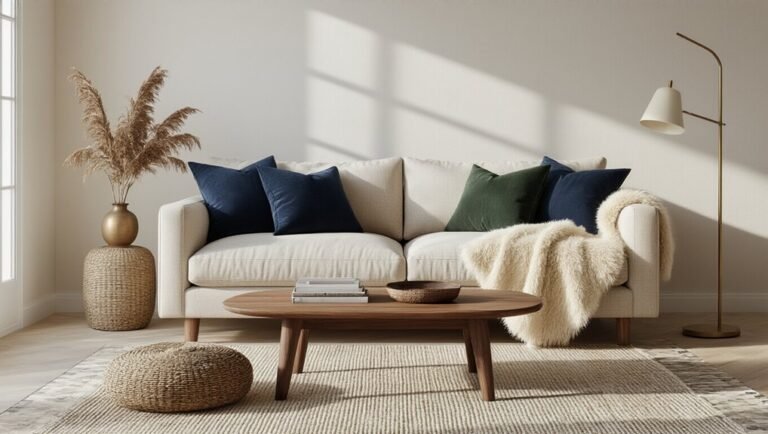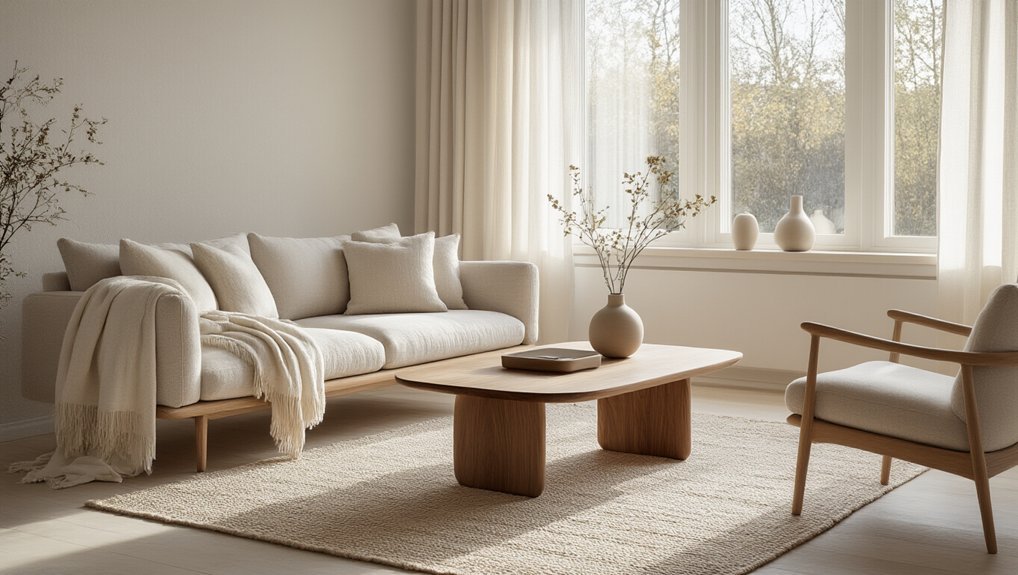
How to Choose Scandinavian Furniture That Looks Minimal but Comfortable
Start With Scandinavian Design Principles
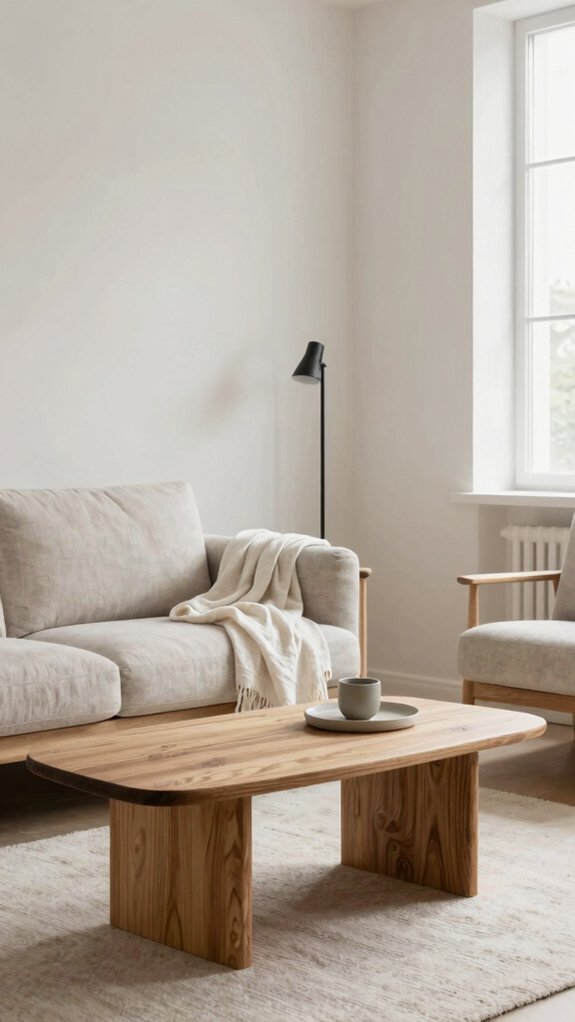
How do minimalist interiors maintain warmth and livability? Scandinavian design principles provide the answer through warm minimalism—a philosophy balancing austere aesthetics with human comfort. This approach emphasizes clean lines, functional forms, and uncluttered spaces while incorporating natural materials like wood and wool that evoke coziness.
Scandinavian designers prioritize quality over quantity, selecting pieces that serve practical purposes without unnecessary ornamentation. Neutral color palettes create visual calm, while thoughtful lighting and textured fabrics prevent sterile environments. The core principle acknowledges that simplicity needn’t sacrifice comfort; rather, it enhances livability by eliminating distractions and focusing on essentials that genuinely improve daily life.
Why Natural Materials Define Scandinavian Furniture
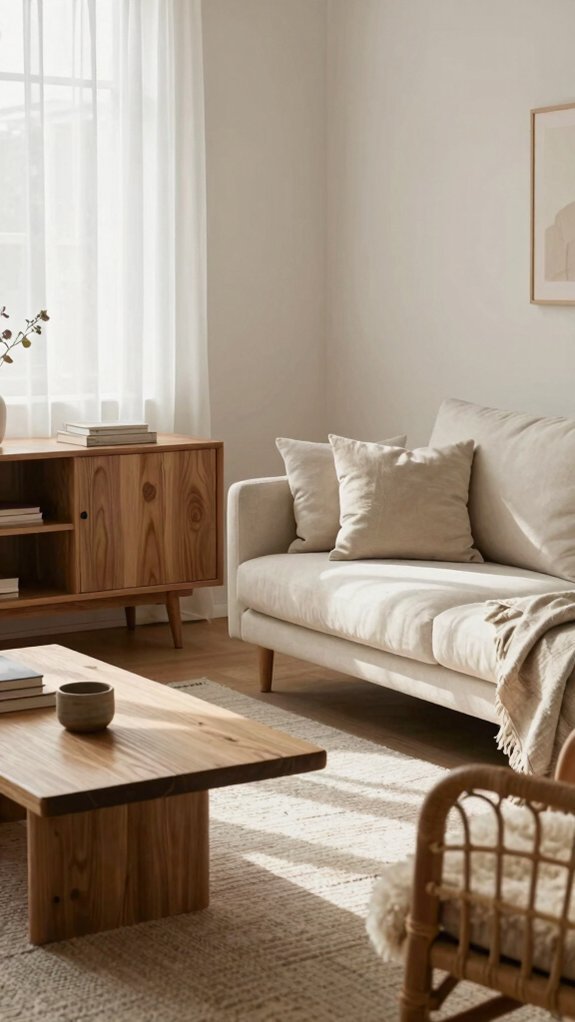
Natural materials form the backbone of Scandinavian furniture design, translating the warm minimalism discussed above into tangible, lived experiences.
Woods like solid honey oak and walnut serve as primary components, chosen for their durability and aesthetic qualities. These materials age gracefully, developing patina that enhances rather than diminishes their appeal. The grain patterns and natural variations eliminate the need for excessive ornamentation, allowing form and function to remain central. By prioritizing authentic materials over synthetic alternatives, Scandinavian furniture creates spaces that feel both sophisticated and inviting, connecting inhabitants to nature through everyday objects.
Scandinavian Lines: Clean, Curved, Comfortable
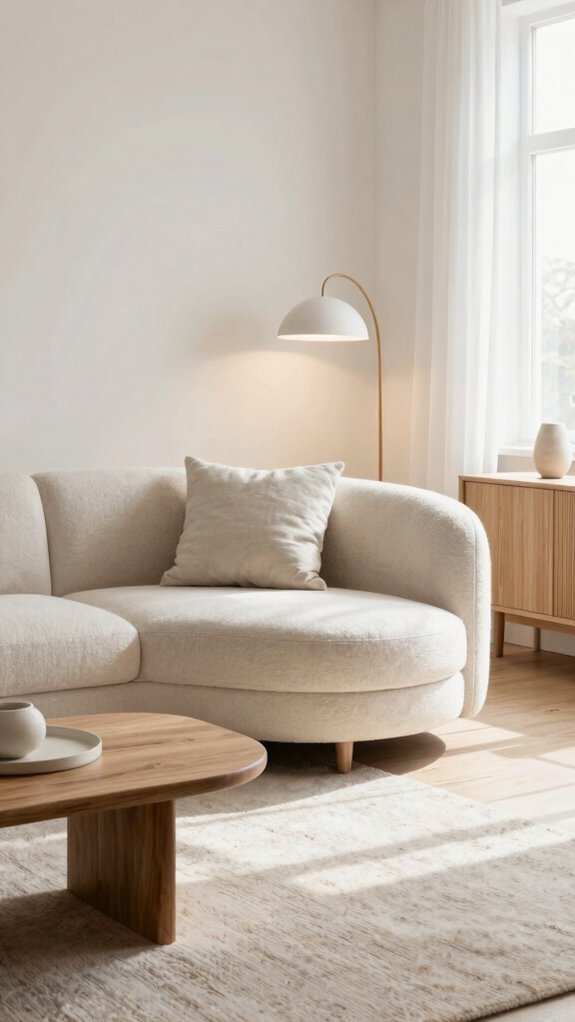
What distinguishes Scandinavian design from other minimalist movements is its deliberate balance between geometric precision and organic softness. Rather than embracing stark angularity, Scandinavian furniture employs curved profiles that soften spaces while maintaining visual simplicity. This approach creates pieces that appear uncluttered yet invite physical comfort. Clean lines establish order and sophistication, while gentle curves acknowledge human ergonomics and tactile experience.
Tables feature tapered legs paired with subtle edge roundings. Chairs showcase streamlined frames with gently arched backs. This fusion of strict geometric discipline with flowing contours defines Scandinavian aesthetics, proving that minimalism need not sacrifice comfort or warmth.
Choose Neutral Colors With Strategic Accents
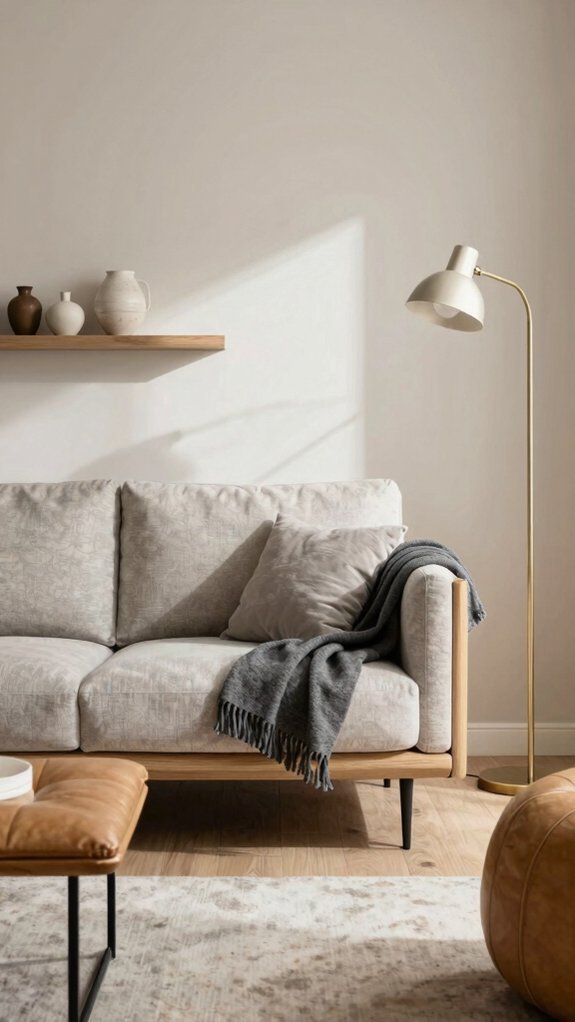
Why do Scandinavian interiors feel both serene and visually engaging despite their restrained palettes? The answer lies in strategic color composition. Neutral foundations—whites, grays, and soft beiges—create calm, minimal backdrops that prevent visual clutter. However, introducing deliberate accents through textiles, artwork, or single furniture pieces prevents spaces from feeling sterile or cold. Soft wood tones, muted blues, or carefully placed warm metallics provide visual interest without compromising the aesthetic’s peaceful essence. This balanced approach ensures rooms maintain their characteristic tranquility while remaining dynamic and inviting, proving that restraint and engagement need not be mutually exclusive.
Storage Solutions Built Into Scandinavian Pieces
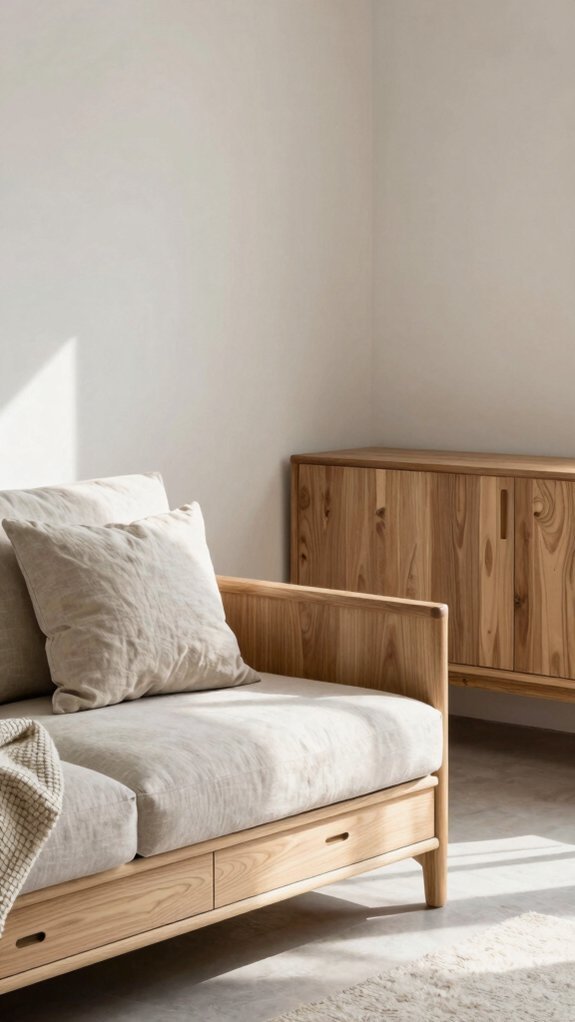
While a restrained color palette keeps Scandinavian rooms visually serene, the furniture itself must work harder to maintain that minimalist aesthetic. Scandinavian designers ingeniously integrate storage into essential pieces, eliminating clutter without sacrificing functionality.
Beds feature built-in drawers beneath the mattress, providing discreet space for linens and seasonal items. Coffee tables incorporate hidden compartments and shelving. A modular seating system offers ottomans with removable tops that reveal storage capacity. Wall-mounted shelving units combine display and organization seamlessly. These intelligent design solutions allow inhabitants to maintain clean sightlines while storing necessities conveniently, achieving the perfect balance between visual simplicity and practical living.
The Best Textures and Fabrics for Scandinavian Comfort
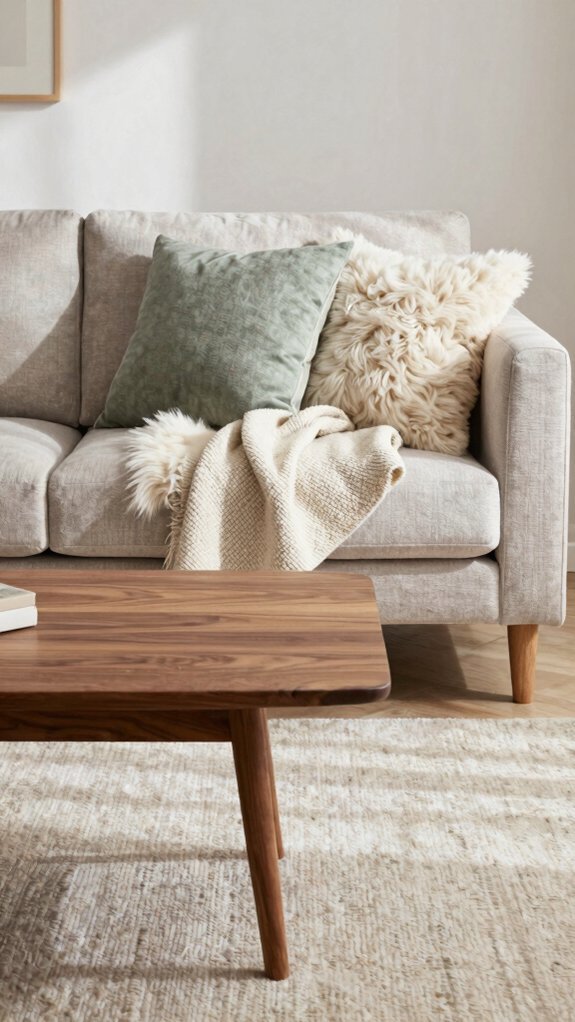
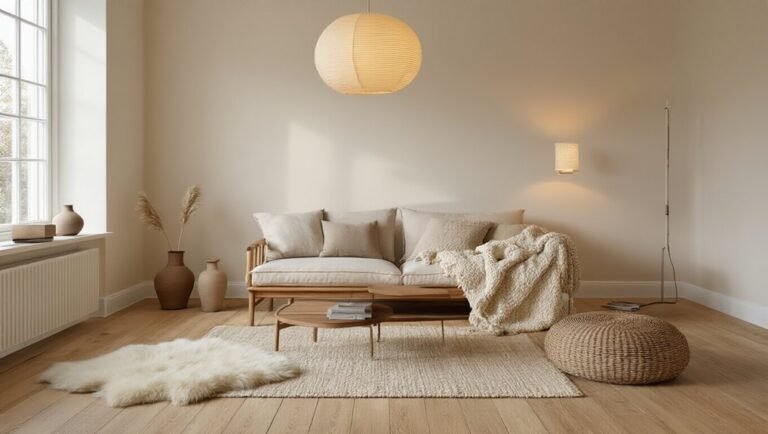
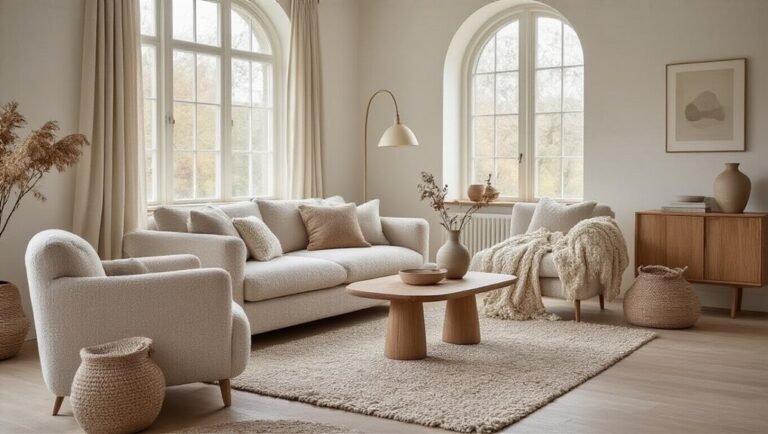
How do Scandinavian interiors maintain their signature minimalism without feeling austere? The answer lies in thoughtful fabric selection and texture layering. Natural materials like linen, wool, and leather create warmth against clean lines and neutral palettes. These fabrics embody emotional ergonomics—they satisfy both visual and tactile needs simultaneously. Chunky knit throws, soft sheepskin rugs, and quality upholstery in muted tones ground minimalist spaces with comfort. Wood textures add organic depth while maintaining aesthetic restraint. By prioritizing natural fibers and varied surface qualities, Scandinavian design achieves balance: serene environments that feel inviting rather than cold or unwelcoming to inhabitants.
Why Quality Matters in Scandinavian Design
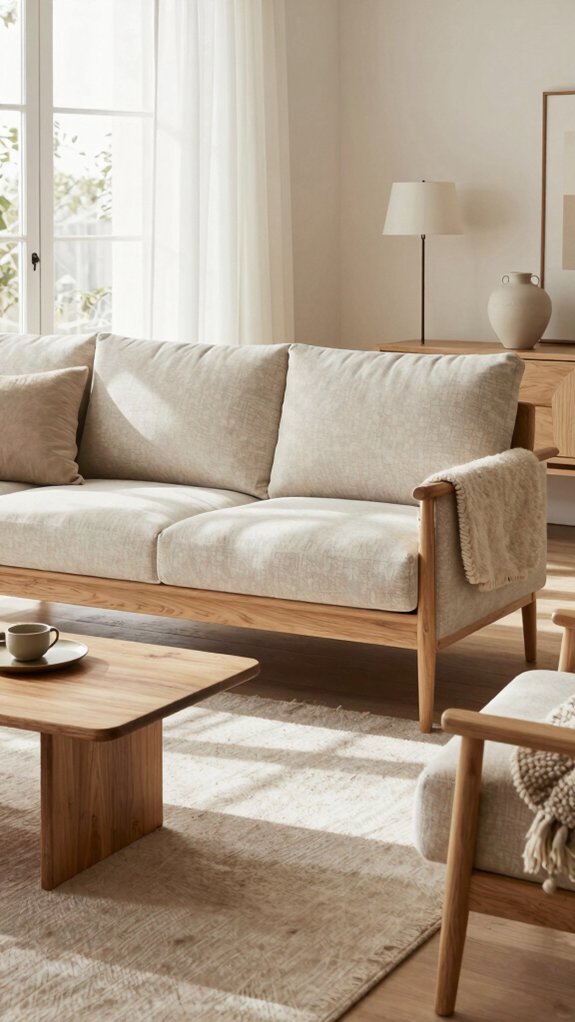
The longevity of Scandinavian interiors depends on more than aesthetic choices—it rests on deliberate investment in materials and craftsmanship. Quality construction ensures furniture withstands decades of daily use without deteriorating. Premium woods, sustainable bio-polymers, and durable textiles resist wear better than cheaper alternatives. Scandinavian designers prioritize timeless construction over trendy finishes, meaning pieces remain functional and attractive for generations. This philosophy reduces waste and eliminates frequent replacements. Superior joinery, reinforced joints, and thoughtful engineering translate to furniture that performs reliably. Investing in quality Scandinavian pieces ultimately proves economical, delivering enduring value through durability and sustained aesthetic appeal.
Layer Statement Pieces With Understated Basics
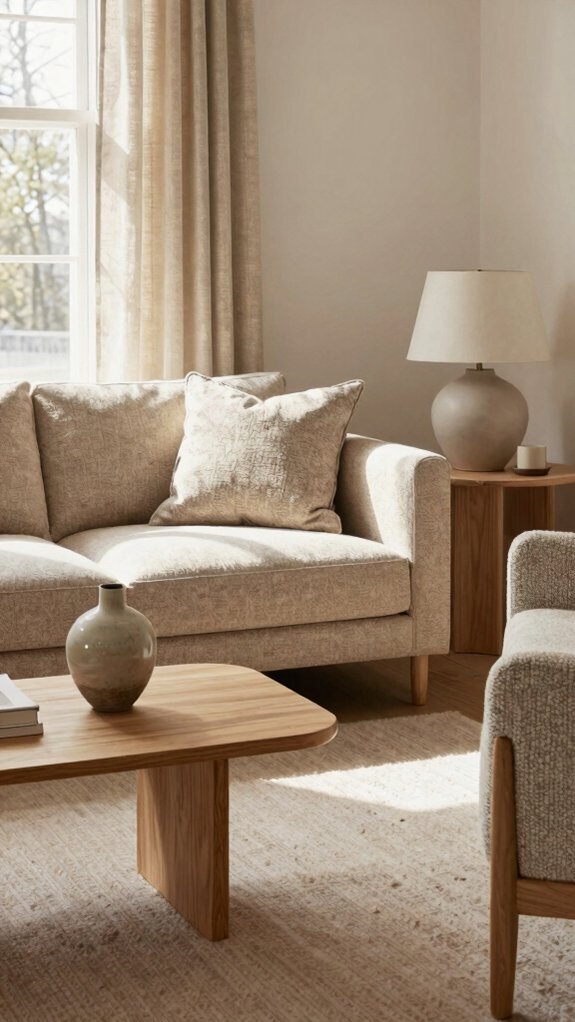
Achieving visual interest within minimalist interiors requires strategic restraint rather than abundance. Statement pieces—a sculptural lounge chair, striking pendant light, or textured area rug—anchor spaces when carefully selected. These focal points gain prominence against understated basics like neutral sofas, simple wooden tables, and plain wall treatments.
This layering approach supports flexible living by allowing residents to adapt rooms through seasonal swaps or lifestyle changes without overwhelming the design foundation.
The contrast between bold accents and subdued elements creates sophisticated depth while maintaining the serene, uncluttered aesthetic central to Scandinavian design principles. Restraint becomes the ultimate luxury.
Applying Selection Criteria: A Living Room Example
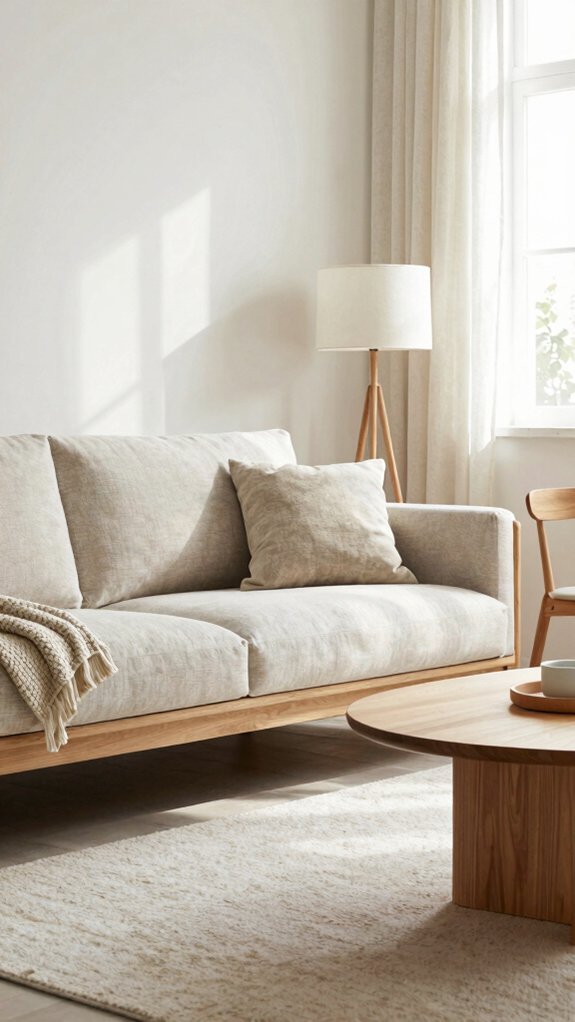
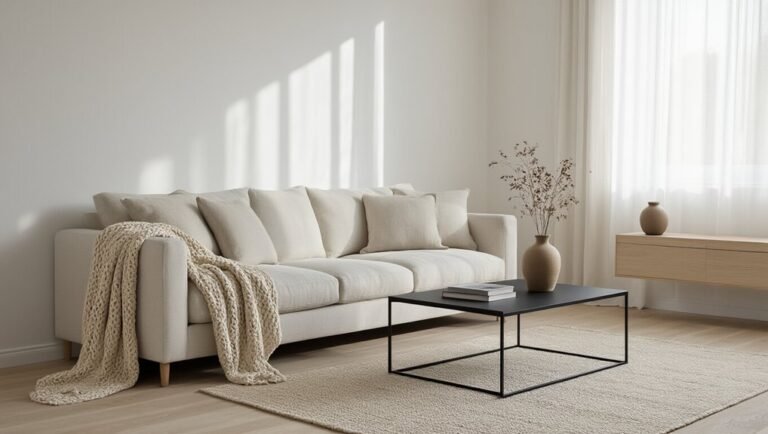
When should one move from abstract principles to concrete decisions? A living room exemplifies this transition. Consider a sofa in natural linen paired with a recycled aluminum coffee table—the upholstery provides comfort while the metal base maintains visual lightness.
Add a single artwork as the statement piece, then anchor it with neutral throw pillows and a wool area rug in cream tones. A Scandinavian pendant light in matte black completes the scheme. This approach demonstrates how layering quality basics with minimal accents creates spaces that balance aesthetic restraint with genuine livability, avoiding coldness while preserving simplicity.