Scandinavian Furniture Must-Haves for a Warm Minimal Interior
The Low-Profile Sofa: Comfort Without Visual Weight
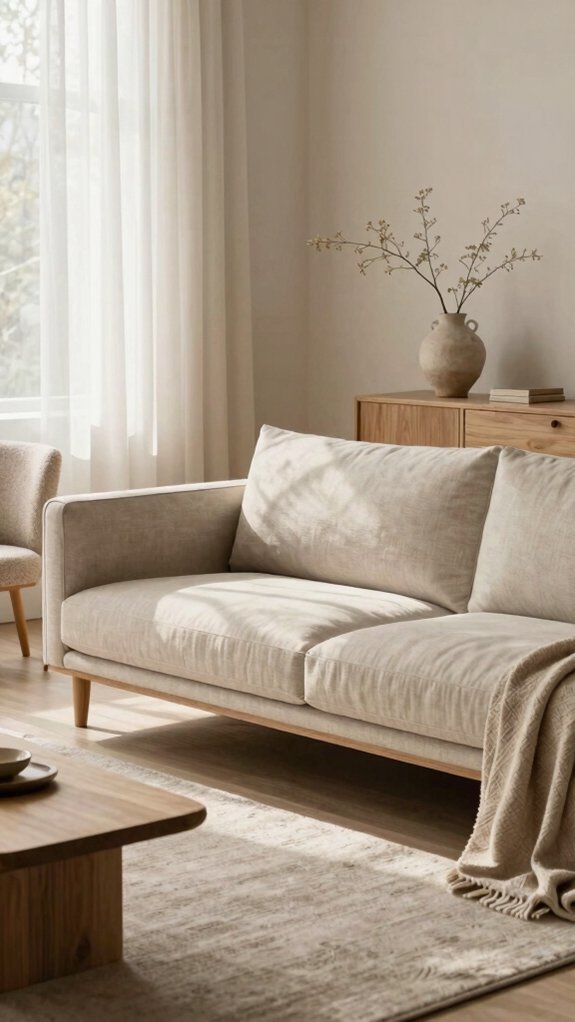
Why do so many Scandinavian interiors feel simultaneously inviting and spacious?
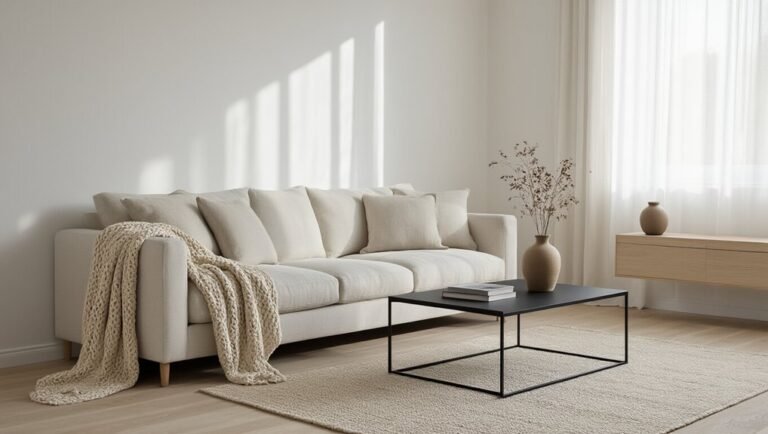
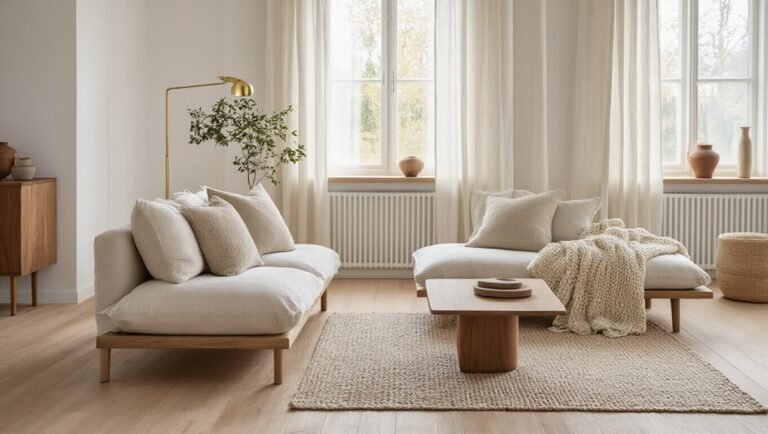
Low-profile sofas exemplify this design philosophy. These pieces prioritize horizontal lines over vertical bulk, creating breathing room within compact layouts. The Muuto In Situ sofa demonstrates this principle, featuring a modest frame that anchors living spaces without dominating them. Its modular structure adapts to various room configurations while maintaining visual lightness. Upholstered in natural materials like linen or wool, such sofas provide tactile warmth that contradicts their minimalist aesthetic. By eliminating ornate legs and excessive cushioning, Scandinavian designers achieve the optimal balance: furnishings that comfort inhabitants without cluttering visual space.
Light Wood Dining Tables That Anchor a Room
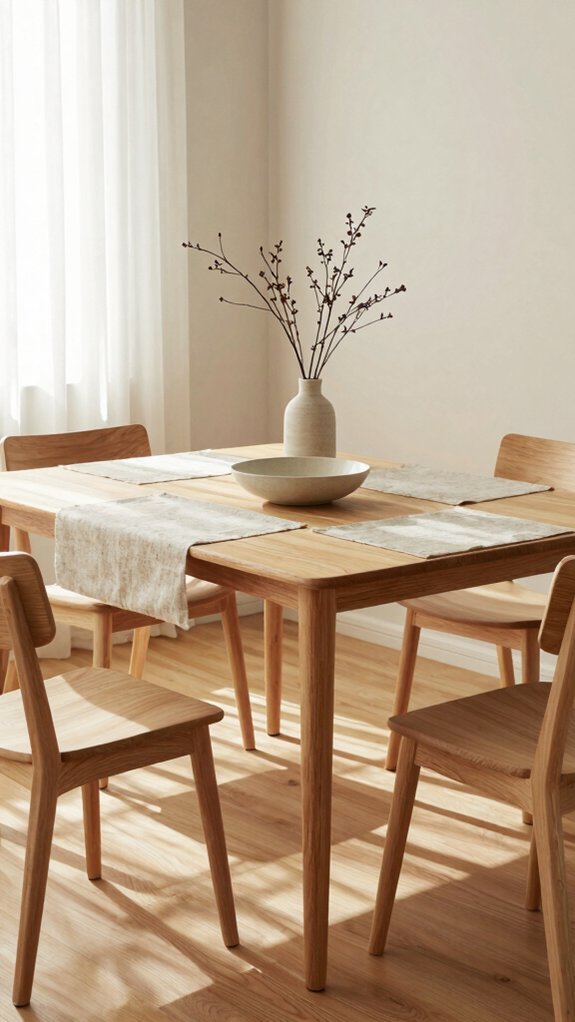
How do dining tables simultaneously ground a room and preserve its sense of openness?
Light wood dining tables achieve this balance through their inherent design philosophy. Natural grain patterns and pale finishes create visual lightness while their solid construction provides spatial anchoring.
A solid walnut console demonstrates how warm wood tones complement minimalist aesthetics without overwhelming the environment. These tables function as focal points that organize living spaces without cluttering them. Their clean lines and organic materials embody Scandinavian principles, bridging functionality and beauty. The understated elegance of light wood dining surfaces makes them essential anchors in contemporary interiors seeking warmth alongside restraint.
Storage That Hides Clutter and Celebrates Simplicity
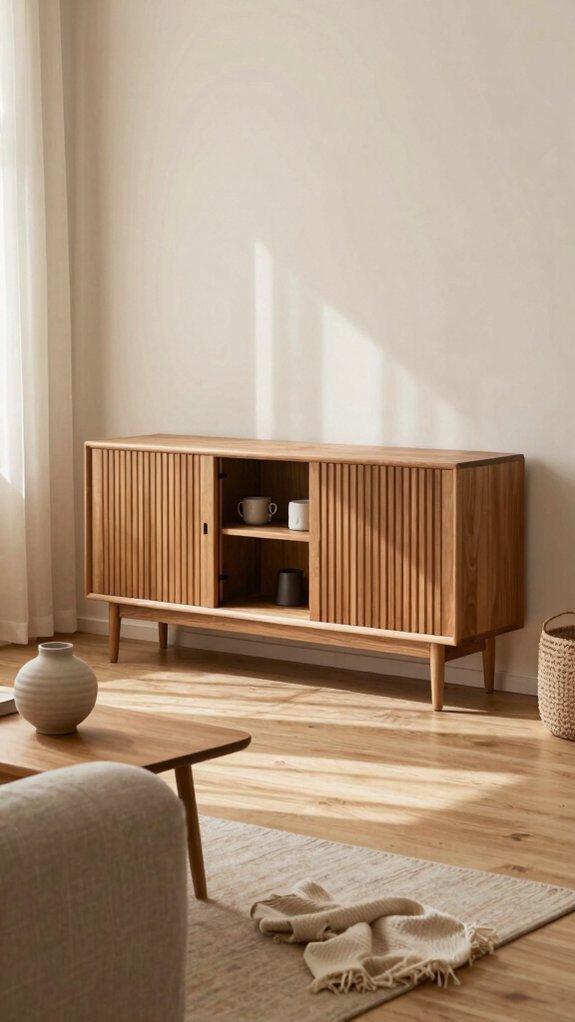
Storage in Scandinavian design operates as both a practical necessity and a philosophical statement. Clean-lined cabinets and modular systems like IKEA PAX wardrobes epitomize this approach, providing intelligent organization without visual excess. These pieces feature minimalist aesthetics with concealed storage that eliminates visible clutter while maintaining functionality.
Light wood finishes and neutral tones ensure storage solutions integrate seamlessly into living spaces. Floating shelves balance openness with containment, displaying curated objects while hiding everyday items. Scandinavian storage prioritizes accessibility and order, reflecting the region’s cultural emphasis on simplicity and purposeful living. Such furniture transforms interiors into serene environments where every element serves intention.
Layered Lighting for Warmth and Functionality
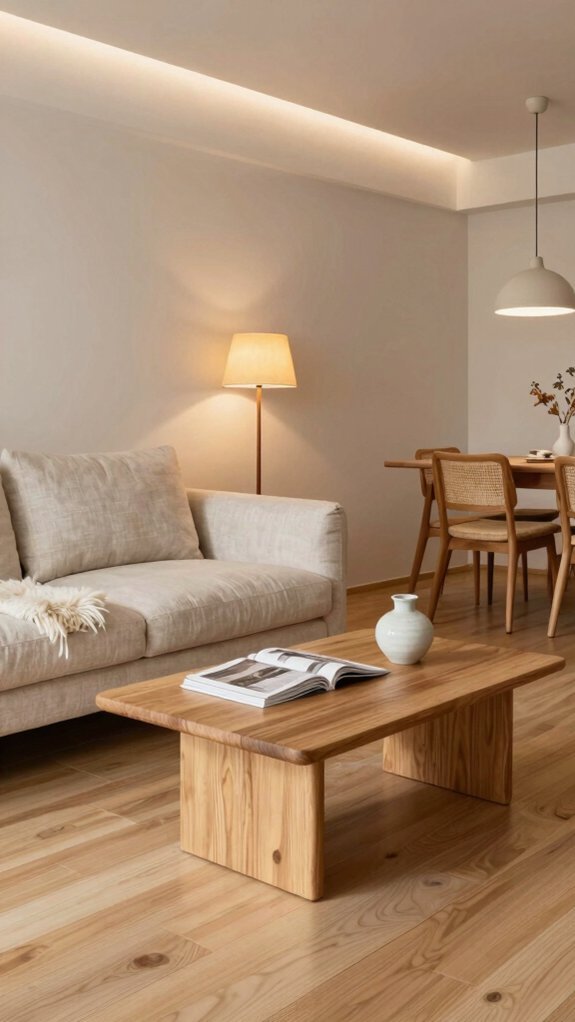
While Scandinavian storage systems create order and visual calm, lighting completes the design philosophy by adding warmth and functionality to minimal interiors. Layered lighting combines ambient, task, and accent sources to balance mood and practicality. Designers favor sculptural fixtures like those from Gubi, which blend artistic form with purposeful illumination.
Pendant lights over dining areas, floor lamps in reading corners, and wall sconces create depth without visual clutter. Warm color temperatures enhance coziness while maintaining the aesthetic’s clean lines. Strategic placement ensures each fixture serves dual purposes: practical task lighting and atmospheric enhancement.
Natural Fiber Rugs and Textiles for Softness
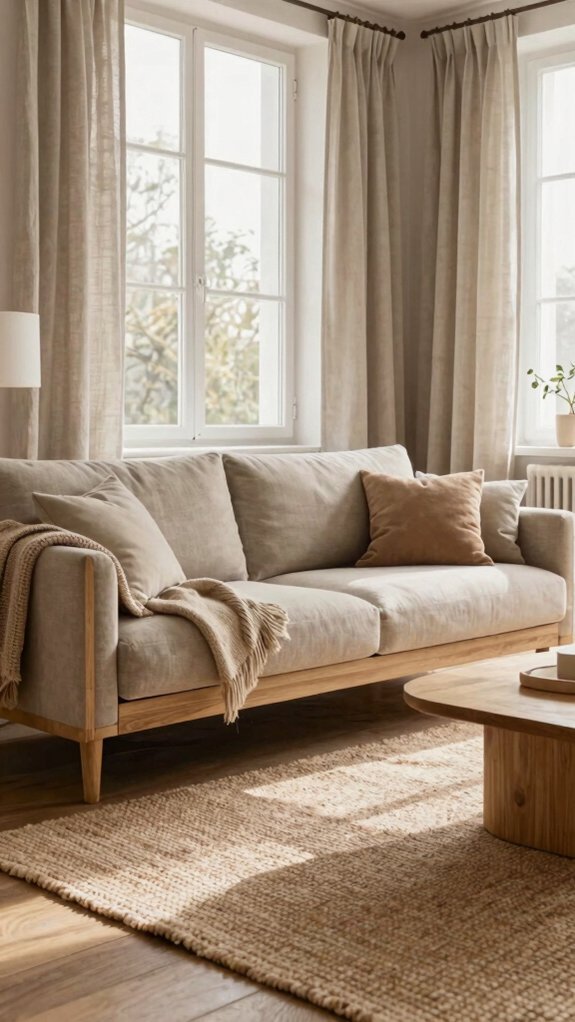
Natural fiber rugs and textiles form the tactile foundation of Scandinavian interiors, introducing softness and warmth that balance the aesthetic’s inherent minimalism. Materials like wool, linen, and jute create layered depth without visual clutter. A chunky wool rug anchors seating areas, while linen throw blankets draped over a bouclé lounge chair enhance comfort. These organic textures soften hard architectural lines and introduce subtle visual interest. Handwoven options add artisanal character, connecting interiors to traditional craftsmanship. Natural fibers also provide practical benefits: durability, breathability, and easy maintenance. By prioritizing quality textiles, designers achieve the signature Scandinavian balance between austere minimalism and inviting coziness.
Bedroom Foundations: Platform Beds and Minimal Nightstands
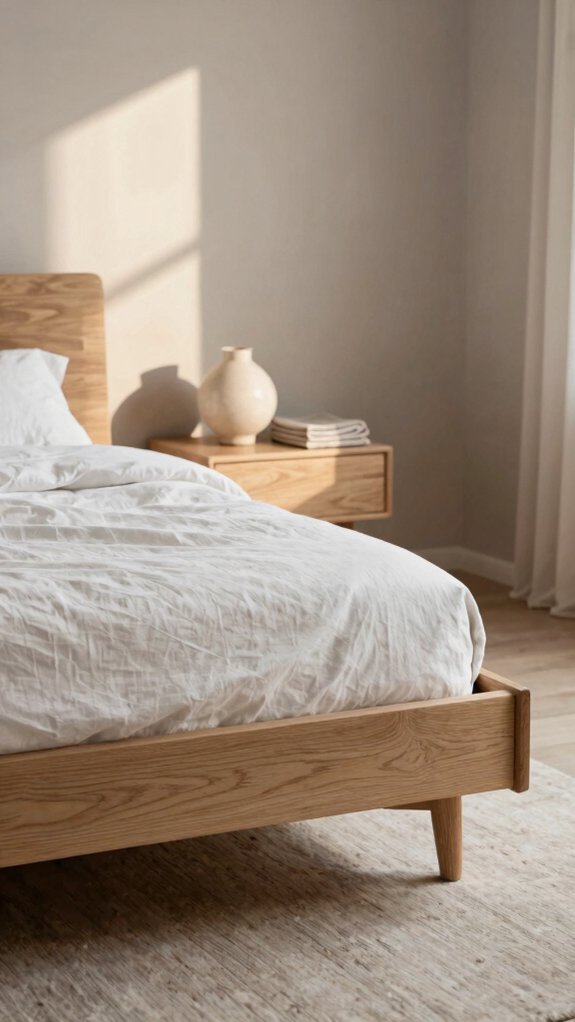
The bedroom demands the same thoughtful restraint that governs other Scandinavian spaces, where comfort need not compromise clean lines and uncluttered aesthetics. Platform beds serve as the ideal foundation, eliminating unnecessary visual bulk while providing sturdy support. Designs like the Ikea Söderhamn exemplify this principle—minimalist construction with understated elegance.
Paired nightstands should feature clean geometry and limited surface area, storing essentials without creating visual clutter. Natural wood finishes enhance warmth while maintaining the aesthetic’s integrity. These foundational pieces establish a serene bedroom environment where simplicity and comfort coexist effortlessly, embodying Scandinavian design philosophy.
Neutral Accent Chairs for Flexible Seating
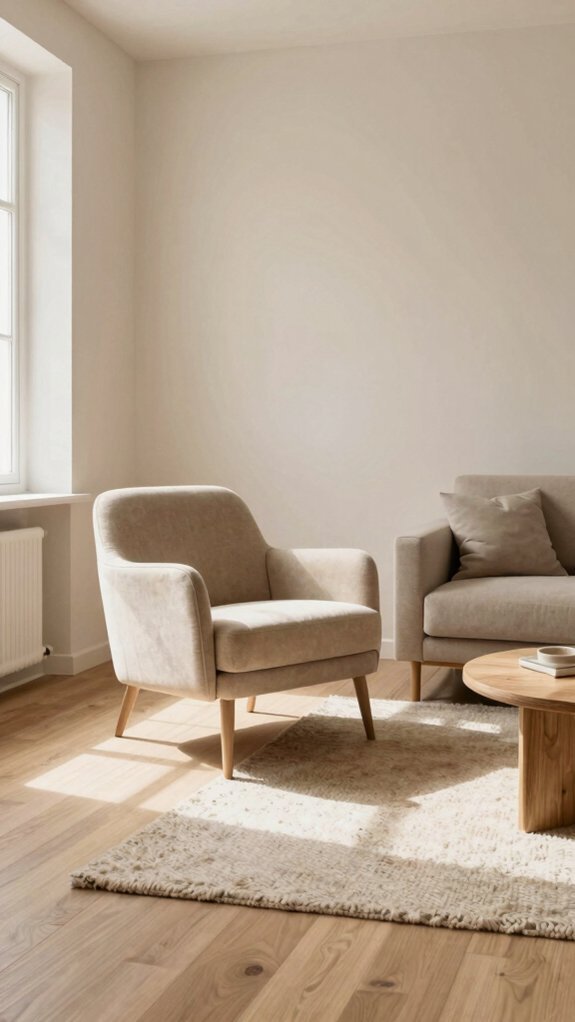
How does one maximize seating without disrupting the minimalist aesthetic? Neutral accent chairs provide the answer. These versatile pieces accommodate additional guests while maintaining visual harmony. The Ferm Living Rico Series exemplifies this approach, featuring clean lines and understated elegance in soft, neutral tones. Its streamlined silhouette complements Scandinavian interiors without overwhelming spaces. Strategic placement near windows or reading corners enhances functionality while preserving openness. Quality craftsmanship ensures durability, making accent chairs worthwhile investments. By selecting pieces in warm beiges, soft grays, or natural wood finishes, designers achieve flexible seating arrangements that honor minimalist principles while introducing subtle comfort and sophistication.
Mix Scandinavian Pieces Without Breaking Cohesion
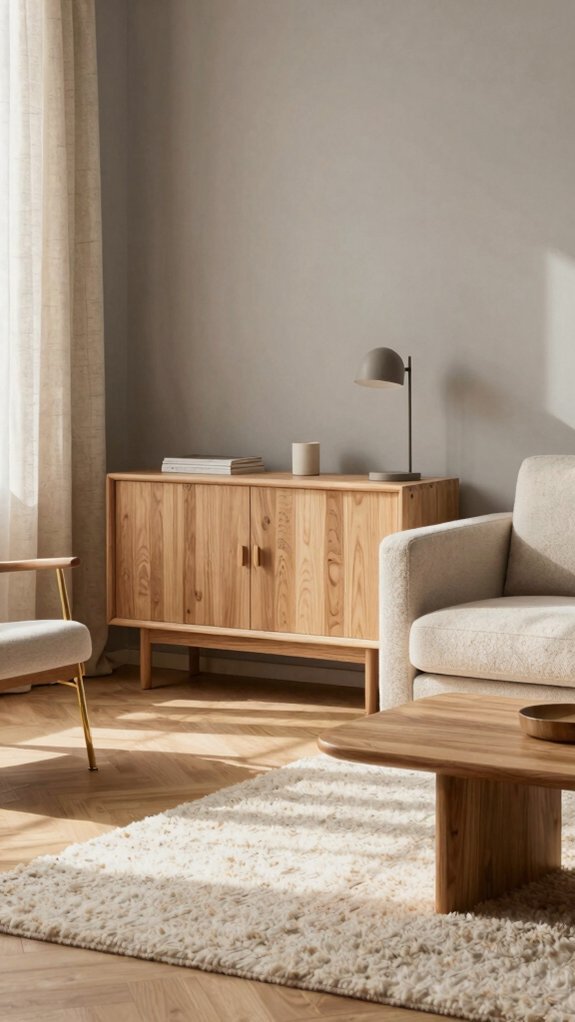
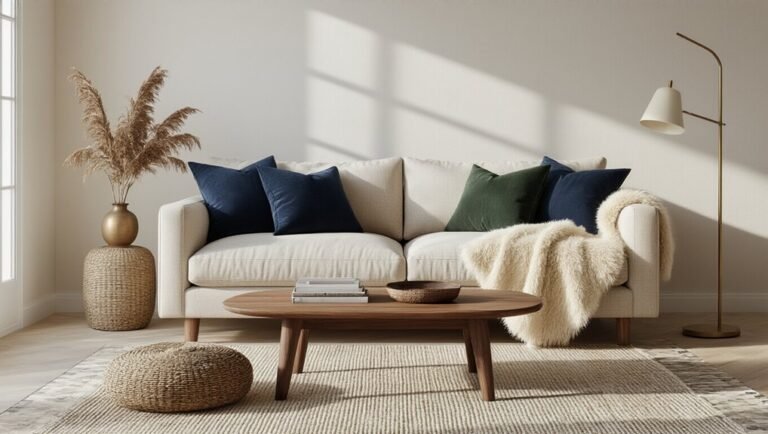
While accent chairs establish foundational seating comfort, layering multiple Scandinavian pieces requires deliberate curation to maintain visual consistency. The key lies in selecting items that share common design principles: clean lines, natural materials, and neutral palettes. A travertine side table complements wooden sofas and light upholstery seamlessly, creating cohesive groupings. Mixing textures—such as wool, linen, and stone—adds warmth without disrupting minimalist aesthetics. Designers should limit color choices to two or three complementary tones and ensure each piece serves functional purposes. This intentional approach prevents the space from feeling cluttered while preserving Scandinavian design integrity.