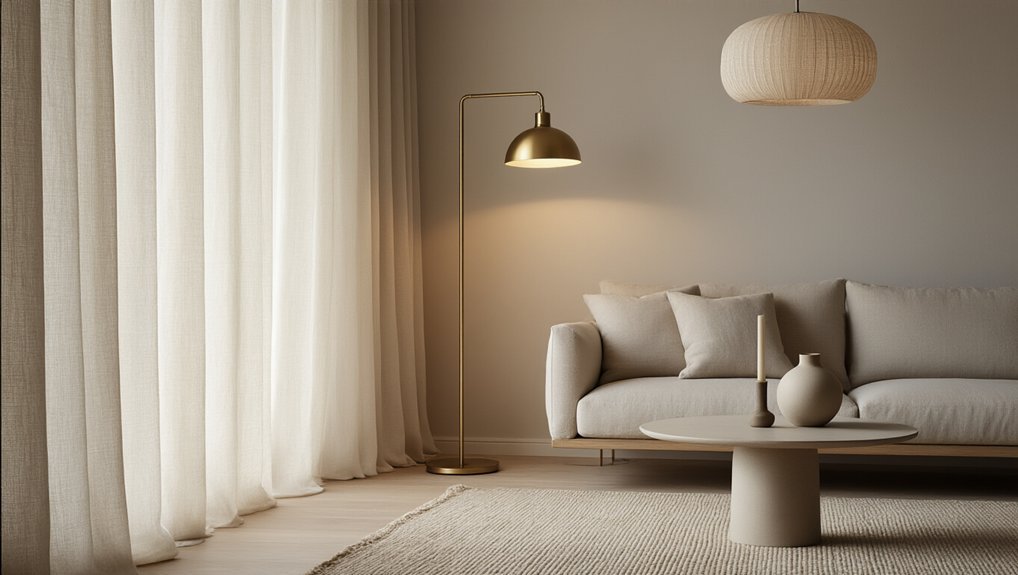
How to Layer Scandinavian Lighting Without Overdoing It
The Three Layers of Scandinavian Lighting Explained
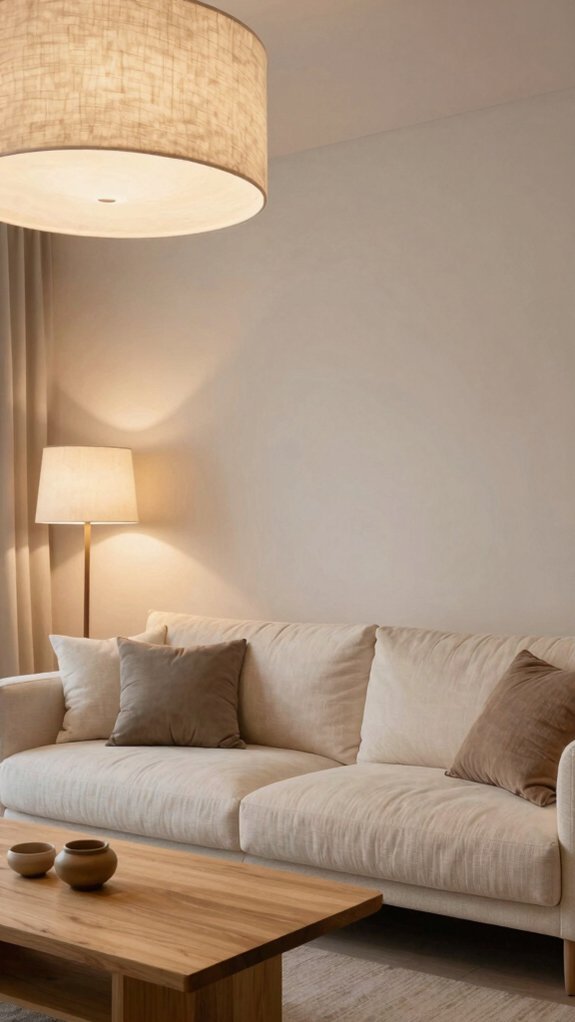
Why do Scandinavian interiors feel simultaneously bright and cozy? The answer lies in layered lighting, a strategic approach using three distinct levels. Ambient lighting provides overall illumination through ceiling fixtures or large windows, establishing the space’s foundation. Task lighting targets specific areas—desk lamps, kitchen counters—enabling functionality without glare. Accent lighting highlights architectural features or artwork, adding depth and visual interest. This three-tier system balances brightness with warmth, preventing harsh shadows while maintaining comfort. Each layer serves a purpose, working together to create spaces that feel neither sterile nor dim. Proper layered lighting distinguishes accomplished Scandinavian design from amateur attempts.
Ambient Light: Your Foundation
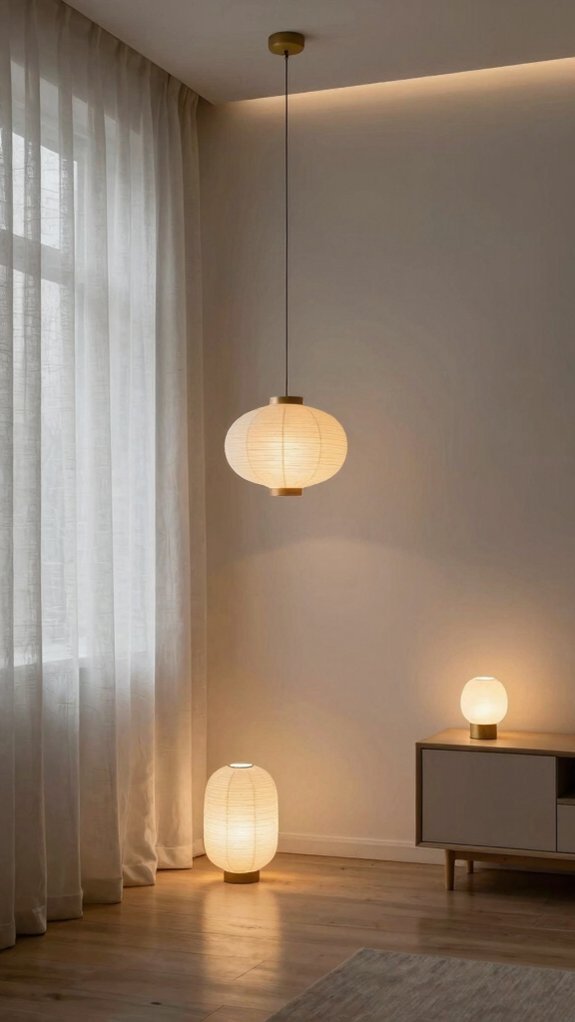
How does one establish proper ambient lighting in a Scandinavian interior? Ambient lighting serves as the foundational layer, providing uniform illumination throughout a space. In Scandinavian design, this typically involves ceiling-mounted fixtures or recessed lights that distribute soft, diffused light evenly. The goal is creating a comfortable baseline that eliminates harsh shadows without introducing excessive brightness. Designers favor warm color temperatures between 2700K and 3000K to maintain coziness. This layer should be dimmable, allowing occupants to adjust intensity according to time of day and seasonal variations. Proper ambient lighting establishes the groundwork upon which accent and task lighting layers build effectively.
Task Lighting: Practical Illumination
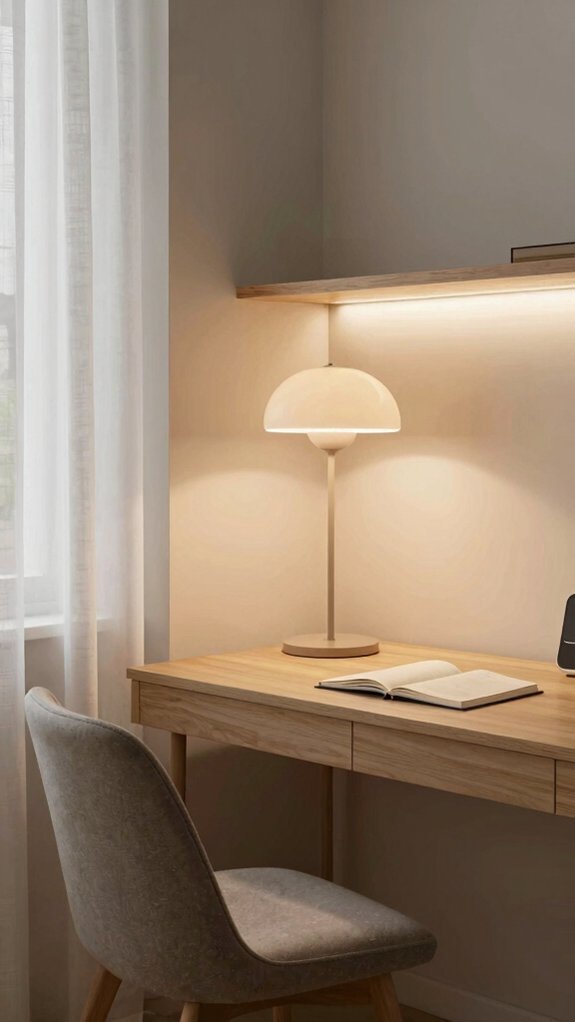
Where ambient lighting establishes comfort, task lighting addresses function—delivering concentrated illumination for specific activities like reading, cooking, or working. In Scandinavian design, task lighting remains understated yet purposeful, typically featuring clean-lined desk lamps, pendant lights above kitchen islands, or focused reading fixtures.
Placement matterS significantly; positioning task lighting directly over work surfaces minimizes shadows and eye strain. Materials like brushed metal and natural wood align with Nordic aesthetics. The key is selecting fixtures that provide adequate brightness without creating glare or visual competition with ambient layers, maintaining the cohesive, balanced approach fundamental to Scandinavian interiors.
Accent Lighting: Design Without Clutter
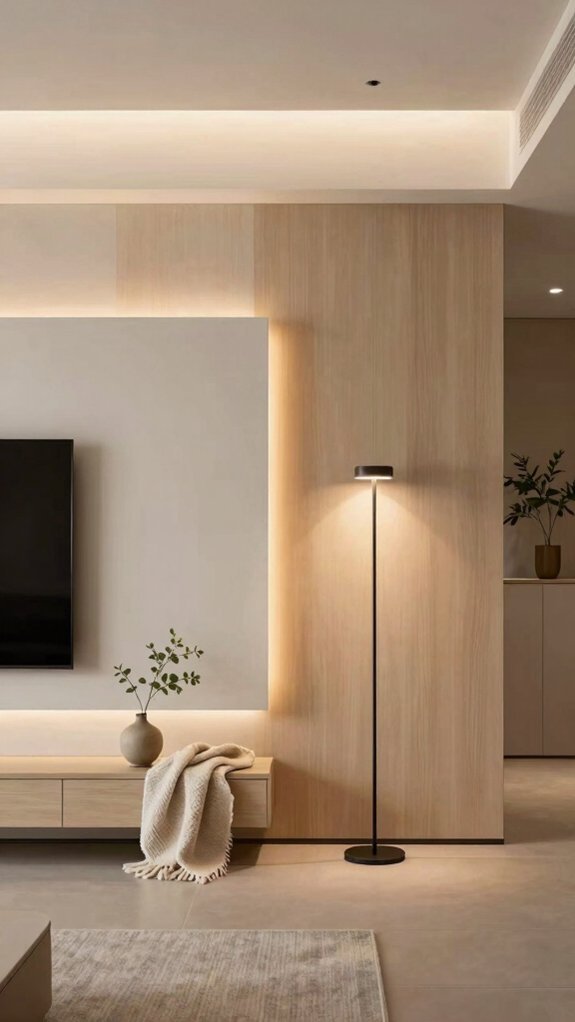
Once ambient and task lighting establish the foundation of a room, accent lighting introduces visual interest through selective highlighting—yet restraint remains essential in Scandinavian interiors. Rather than cluttering spaces with numerous fixtures, designers strategically place accent lighting to emphasize architectural features, artwork, or sculptural elements. Minimalist wall sconces, understated spotlights, or subtle pendant lights direct attention without overwhelming the environment. The approach prioritizes quality over quantity, allowing each accent piece to serve a distinct purpose. By limiting accent lighting to one or two focal points, Scandinavian design maintains its characteristic simplicity while achieving sophisticated visual depth and warmth throughout the space.
Scandinavian Fixtures: Why Minimalism Matters
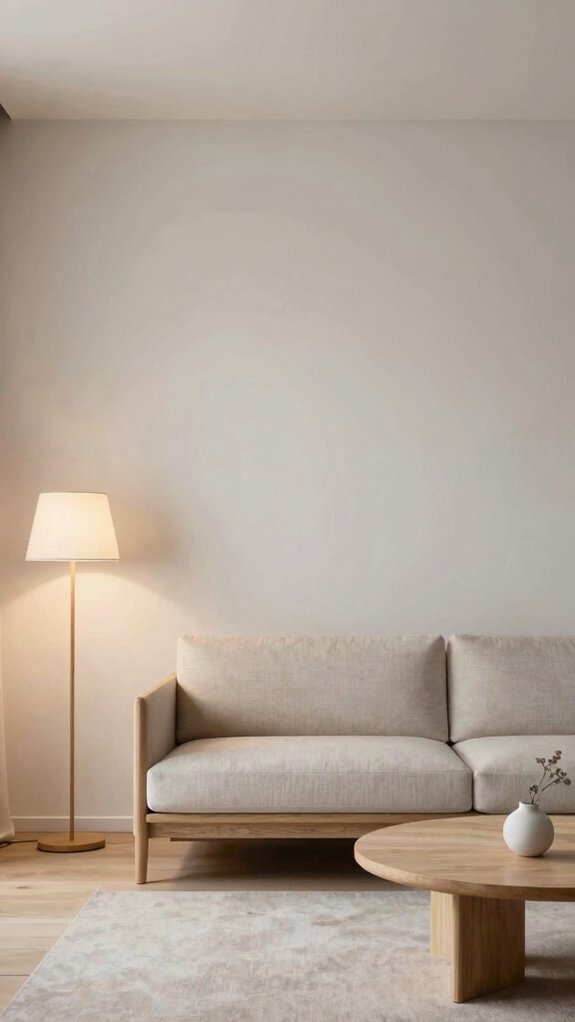
The foundation of Scandinavian lighting design rests on fixture selection itself. Minimalism matters because it establishes visual clarity and functional purpose in any space. Scandinavian fixtures emphasize clean lines, neutral finishes, and purposeful forms that eliminate unnecessary ornamentation. This restraint prevents visual fatigue and allows light quality to become the primary focus rather than decorative elements.
Simple geometric shapes in materials like wood, metal, and frosted glass create sophisticated aesthetics without demanding attention. By prioritizing essential design principles, these fixtures integrate seamlessly into layered lighting schemes, supporting overall ambiance without competing for prominence or creating spatial clutter.
Position Lights to Eliminate Shadows and Glare
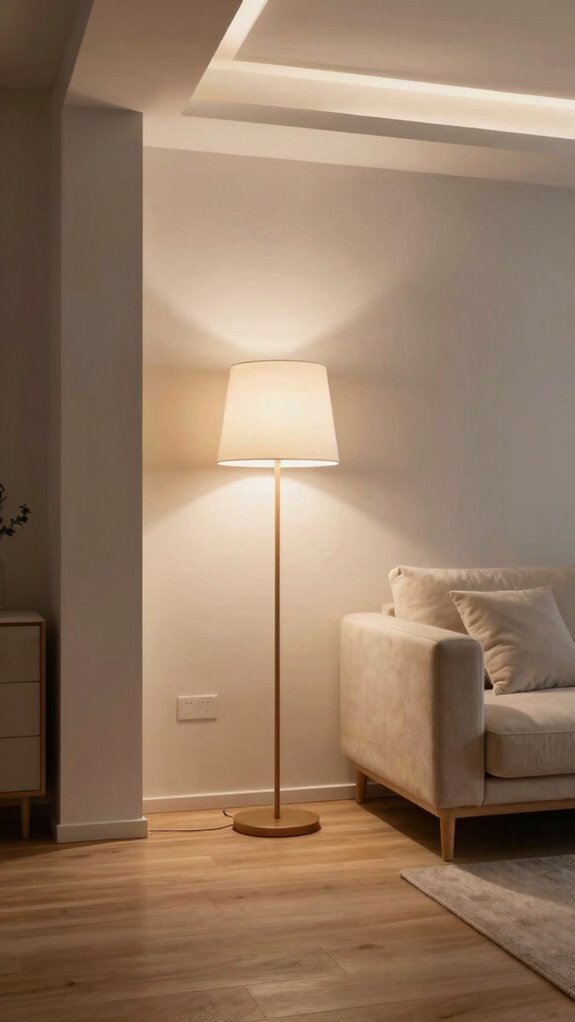
How effectively one positions Scandinavian lighting fixtures determines whether a space achieves balanced illumination or suffers from harsh shadows and reflective glare. Strategic placement prevents light from bouncing directly off surfaces, which causes discomfort and reduces visual clarity.
Positioning fixtures at angles eliminates concentrated bright spots while distributing illumination evenly throughout rooms. A low-level glow from floor lamps near walls softens transition between lit and dark areas.
Overhead lights should avoid direct line-of-sight from seated positions. Multiple light sources at varying heights create depth without creating shadows. This thoughtful arrangement maximizes functionality while maintaining Scandinavian design’s hallmark simplicity and visual restraint.
Warm Light (2700K–3000K): The Nordic Standard
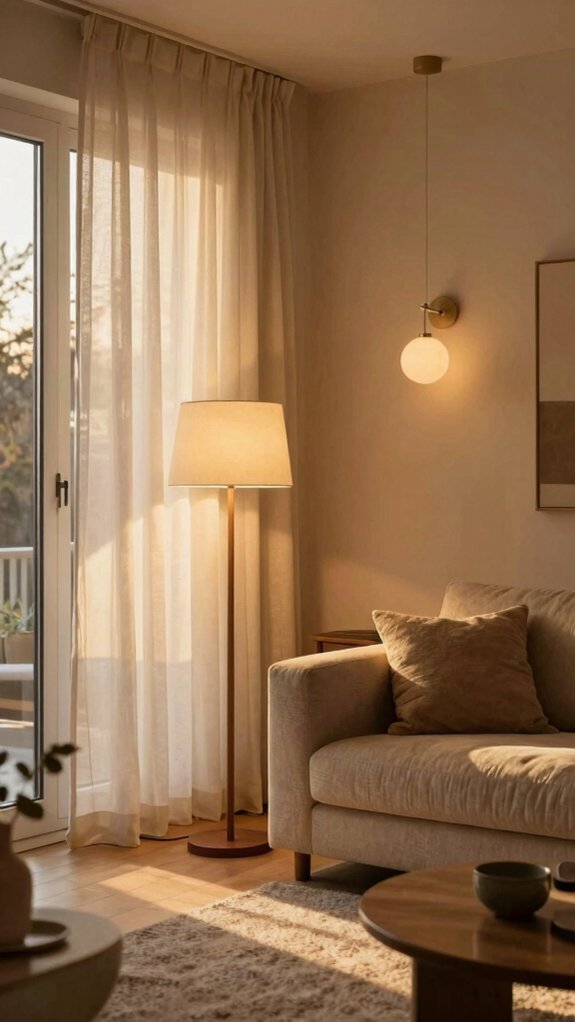
Why do Scandinavian interiors feel so inherently welcoming despite their minimalist aesthetic? The answer lies in color temperature. Scandinavian design favors warm light between 2700K and 3000K, mimicking natural daylight during Nordic winters. This warmth creates a warm evening glow that combats long, dark seasons while maintaining visual comfort.
Unlike cooler, clinical lighting, warm tones enhance skin tones and wood surfaces, essential elements in Nordic design. This temperature range reduces eye strain during extended indoor hours and establishes emotional comfort without requiring excessive fixtures. By adhering to this standard, designers achieve layered illumination that feels intentional and balanced rather than cluttered or cold.
Four Layering Mistakes That Destroy Balance
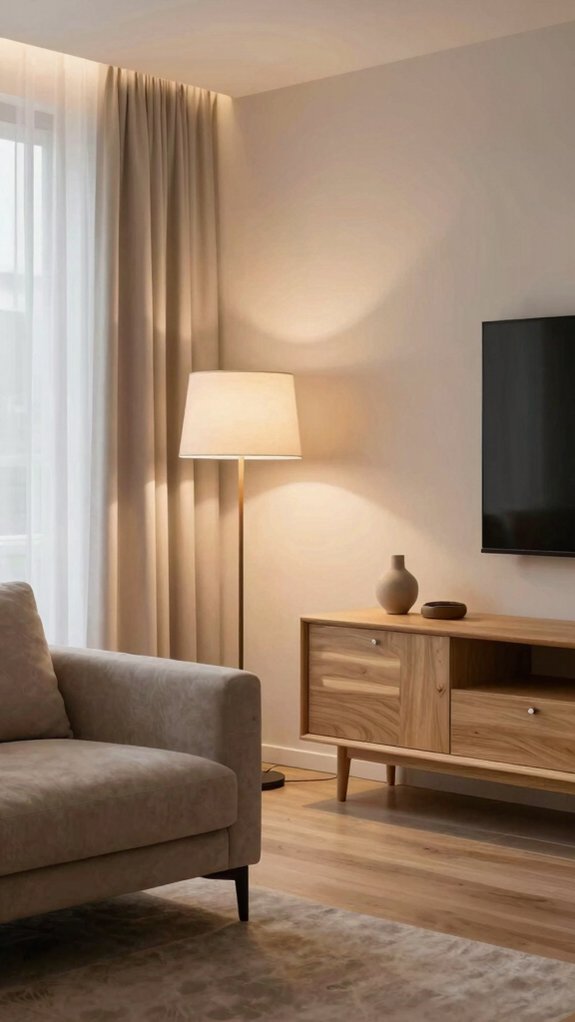
Even carefully selected warm lighting can falter when layering fundamentals are overlooked.
The first mistake involves neglecting ambient base lighting, forcing task lights to compensate inadequately.
Second, asymmetrical clusters of fixtures create visual confusion rather than cohesion.
Third, designers frequently ignore ceiling height, positioning lights too uniformly regardless of spatial dimensions.
Fourth, mixing incompatible color temperatures within a single room fragments the intended Nordic aesthetic.
These errors compound when fixtures lack dimming capability, eliminating flexibility for different times and activities.
Successful Scandinavian layering demands intentional placement, consistent warm tones, and strategic dimming options that work harmoniously together.
Plan Your Scandinavian Layers Before You Shop
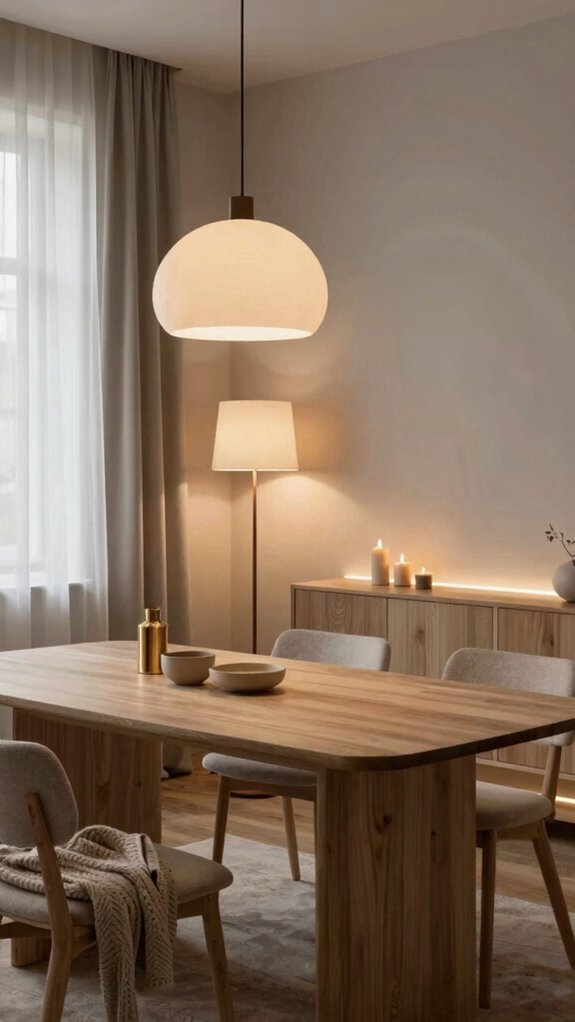
Before selecting a single fixture, designers should map out their layering strategy on paper. This planning phase involves identifying functional zones within each room—work areas, reading nooks, and circulation paths. Sketching the space with dimensions helps determine ideal fixture placement and quantity.
Designers should specify which zones require ambient, task, or accent lighting, then assign appropriate fixtures accordingly. This methodical approach prevents purchasing excessive pieces and guarantees cohesive illumination.
Documenting color temperatures, wattages, and fixture styles creates a reference guide during shopping. Strategic zoning eliminates guesswork and establishes a clear implementation roadmap before any financial commitment occurs.