How to Style a Scandinavian Kitchen Without Making It Feel Too Stark
Choose Your Foundation: Neutral Palette With Subtle Accents
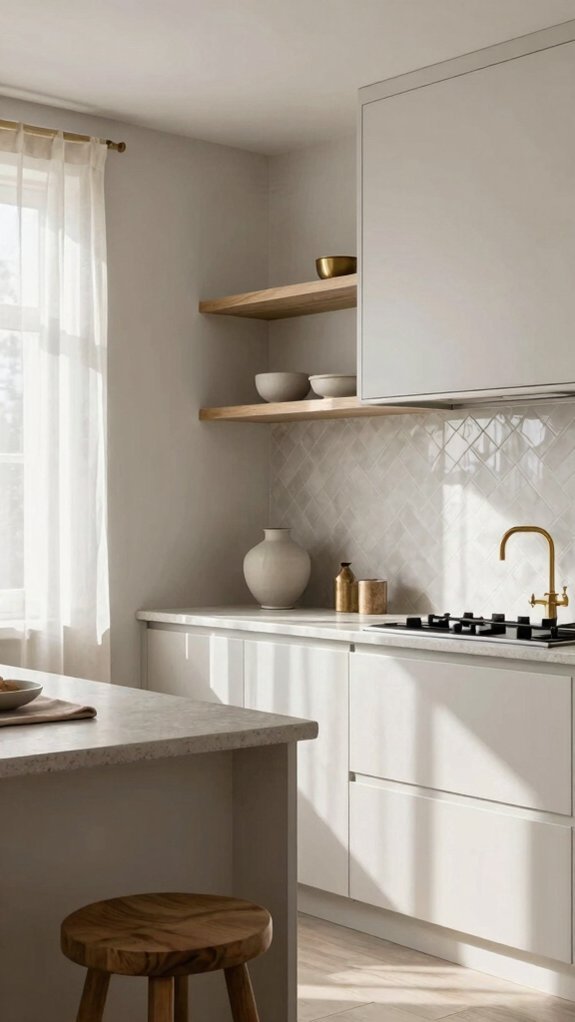
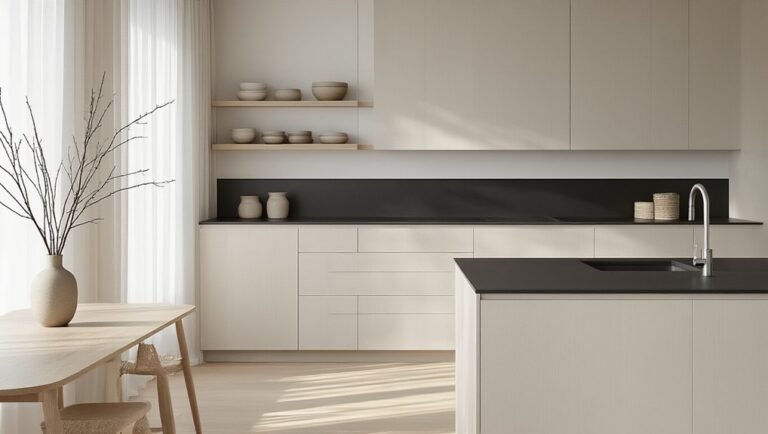
How does one balance minimalism with warmth? The foundation lies in selecting warm neutrals—oat, sand, crema, and mocha tones—that prevent sterility. Patinated brass fixtures and antique stainless steel introduce subtle visual interest without overwhelming spaces. Hand-glazed zellige tile and reeded, fluted glass add textural dimension. Open vitrines display curated ceramics, creating focal points through thoughtful arrangement rather than abundance. Soft glow styling from layered lighting ensures the kitchen feels inviting. This approach respects Scandinavian design principles while infusing spaces with human-centered comfort, avoiding the cold aesthetic often associated with minimalism.
Incorporate Natural Materials and Warm Wood Tones
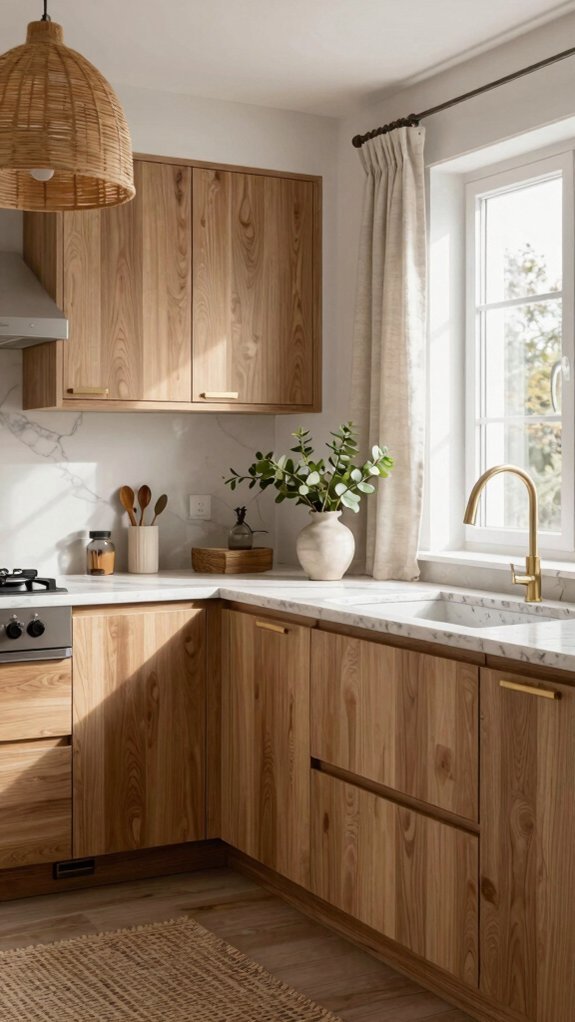
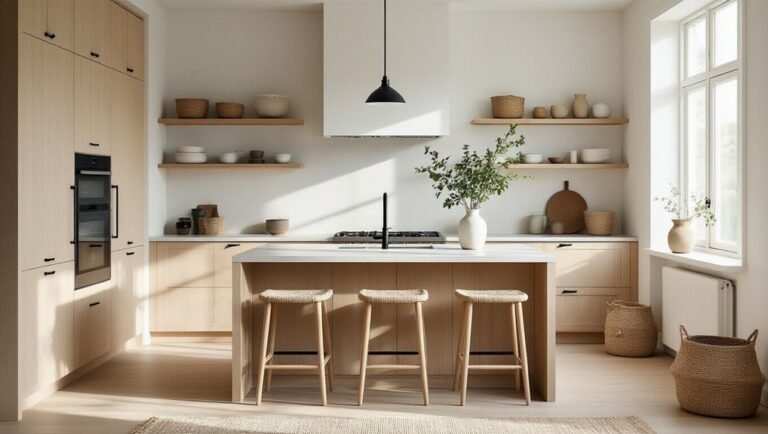
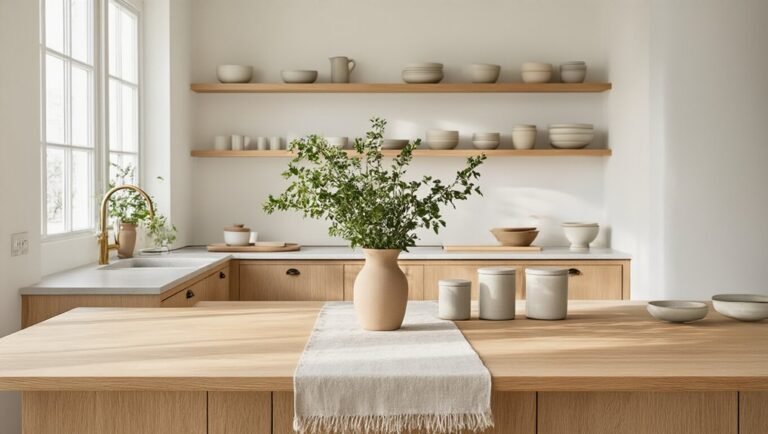
Why do Scandinavian kitchens feel inherently welcoming despite their minimalist roots? The answer lies in incorporating natural materials and warm wood tones that introduce softness and authenticity. Light oak, birch, or pine cabinetry creates visual warmth without sacrificing the clean aesthetic. Stone countertops, wooden cutting boards, and linen textiles add tactile richness. These elements cultivate hygge—that essential Scandinavian coziness—transforming stark spaces into inviting environments. Natural wood grain patterns provide subtle visual interest while maintaining simplicity. Combining raw materials with the neutral palette established previously ensures the kitchen remains both sophisticated and approachable, balancing minimalism with genuine comfort and lived-in charm.
Layer Textures to Add Depth Without Clutter
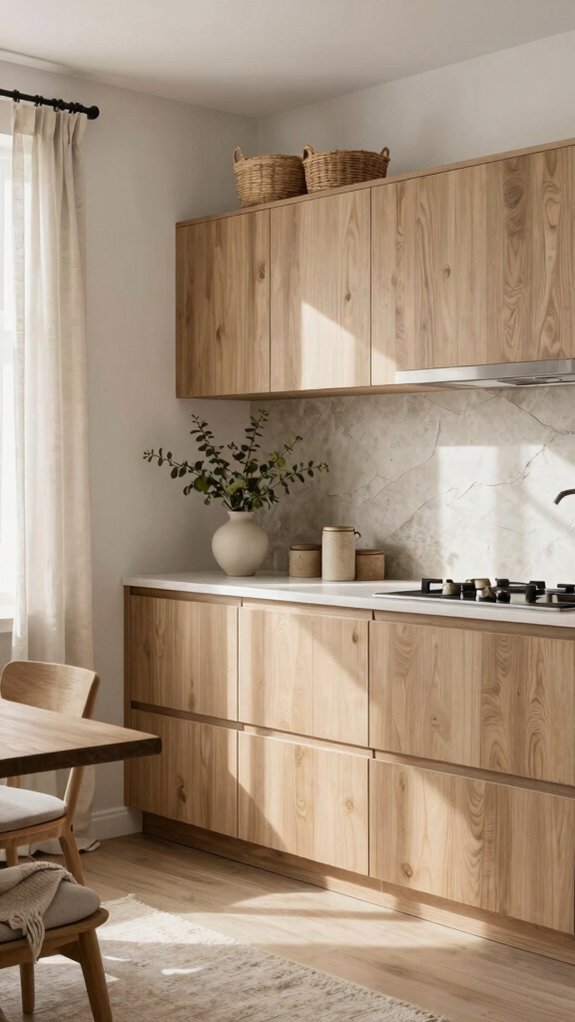
While natural materials establish warmth, layering diverse textures elevates the space from one-dimensional to visually compelling. Incorporating linen, wool, and stone creates tactile interest without overwhelming minimalist principles. A woven placemat beneath ceramic dishware, a chunky knit throw draped over a chair, or a textured backsplash introduces dimension purposefully. Soft glow styling through linen lampshades and matte finishes enhances these layers, preventing the kitchen from feeling cold. The key lies in intentional selection—each texture serves a function while contributing to cohesive visual depth. This approach maintains Scandinavian simplicity while infusing warmth and personality.
Why Lighting Is Your Secret to Cozy Minimalism?
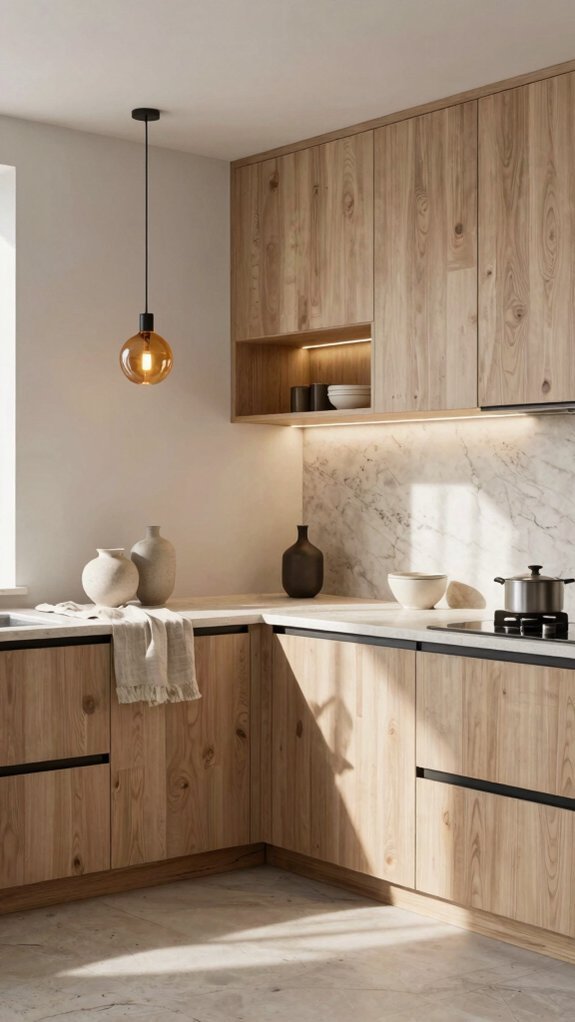
Lighting fundamentally transforms how a minimalist kitchen feels—the difference between austere and inviting often comes down to illumination choices.
Lighting transforms minimalist kitchens from austere to inviting—illumination choices fundamentally shape how a space feels.
Scandinavian design prioritizes natural light through unobstructed windows, maximizing daylight exposure.
For evenings, layered artificial lighting prevents harsh shadows.
Pendant lights above islands provide focused task illumination while contributing visual interest.
Warm-toned bulbs (2700K-3000K) soften the starkness of white cabinetry and pale surfaces.
Under-cabinet lighting adds functional depth without visual clutter.
Dimmer switches enable mood adjustment, allowing the same space to shift from practical workspace to relaxed gathering area.
Strategic lighting elevates minimalism from cold to genuinely welcoming.
Mix Open Shelves With Hidden Storage
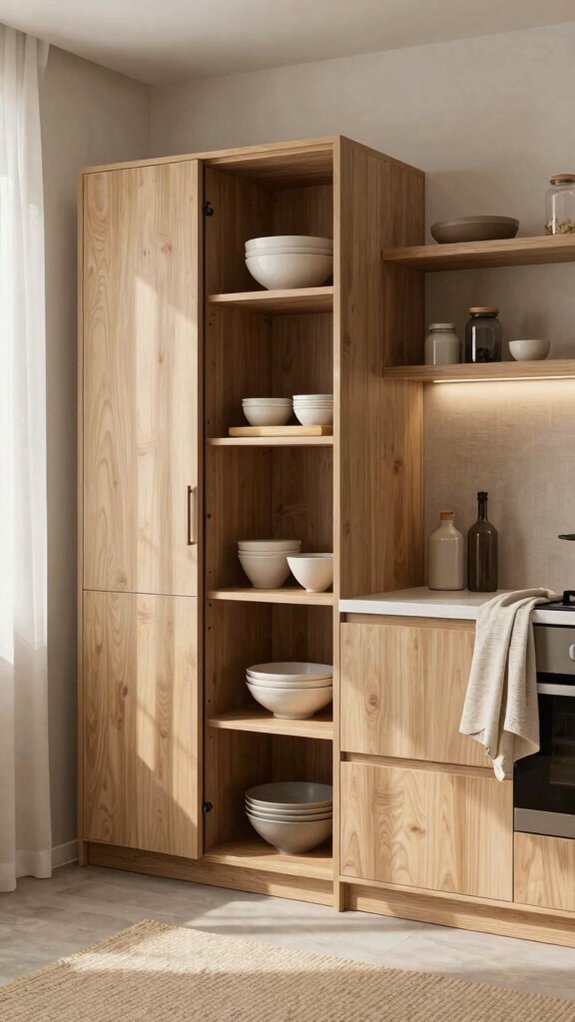
How does one maintain visual lightness while accommodating the practical storage demands of a functional kitchen? The answer lies in strategic balance. Open shelves display carefully curated dishware, glassware, and cookbooks, creating visual interest and accessibility. Simultaneously, closed cabinetry below countertops conceals less aesthetic items—small appliances, cleaning supplies, bulk ingredients. This hybrid approach prevents clutter accumulation while preserving the airy Scandinavian aesthetic.
Floating wooden shelves paired with minimalist white or natural wood cabinets establish rhythm throughout the space. The contrast between transparency and concealment prevents monotony, allowing the kitchen to feel both organized and inviting rather than austere.
Select Soft Furnishings That Feel Intentional, Not Cold
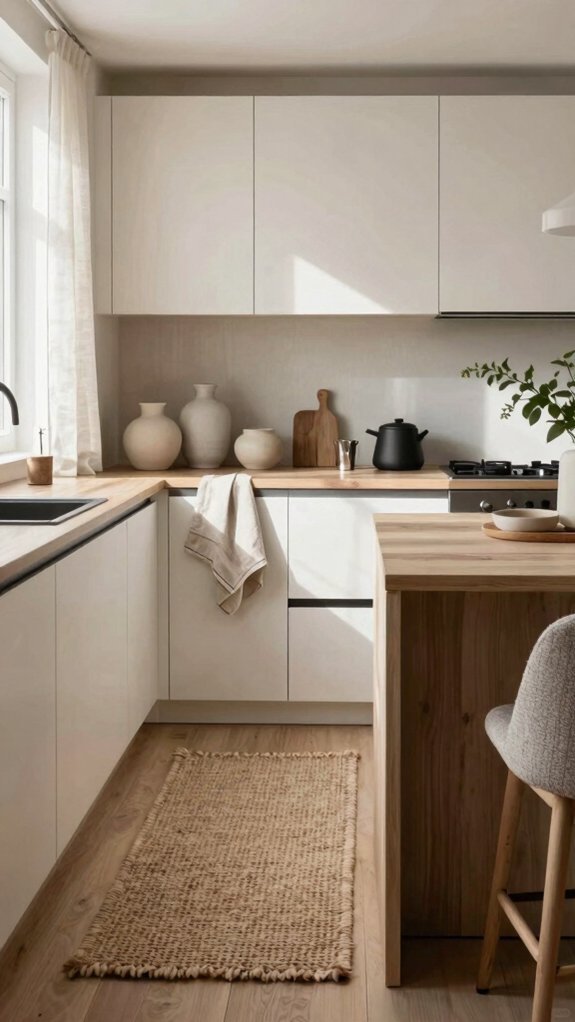
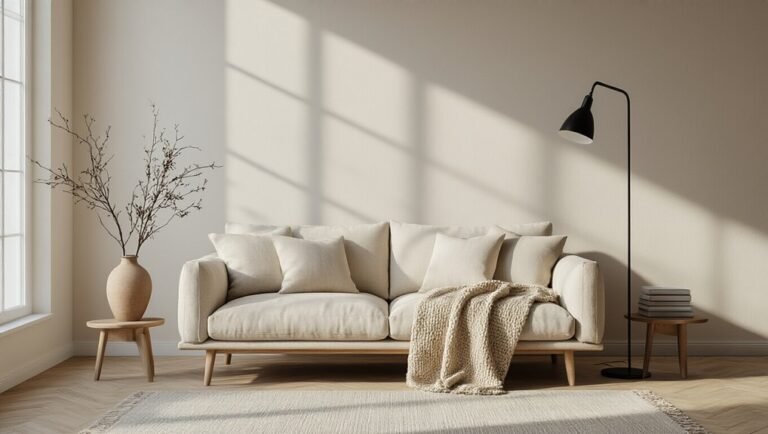
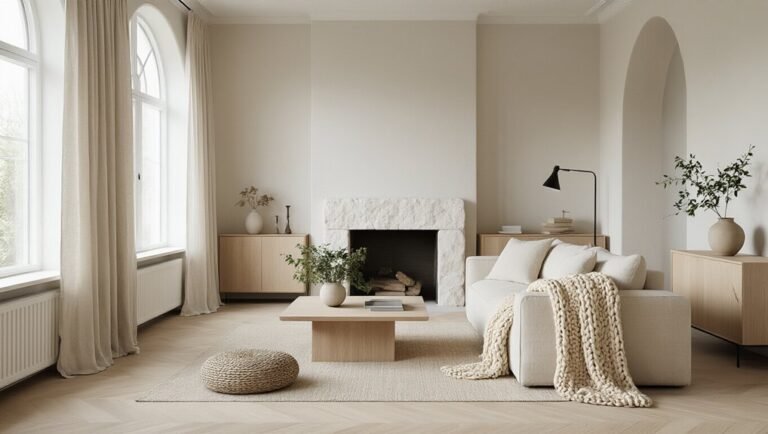
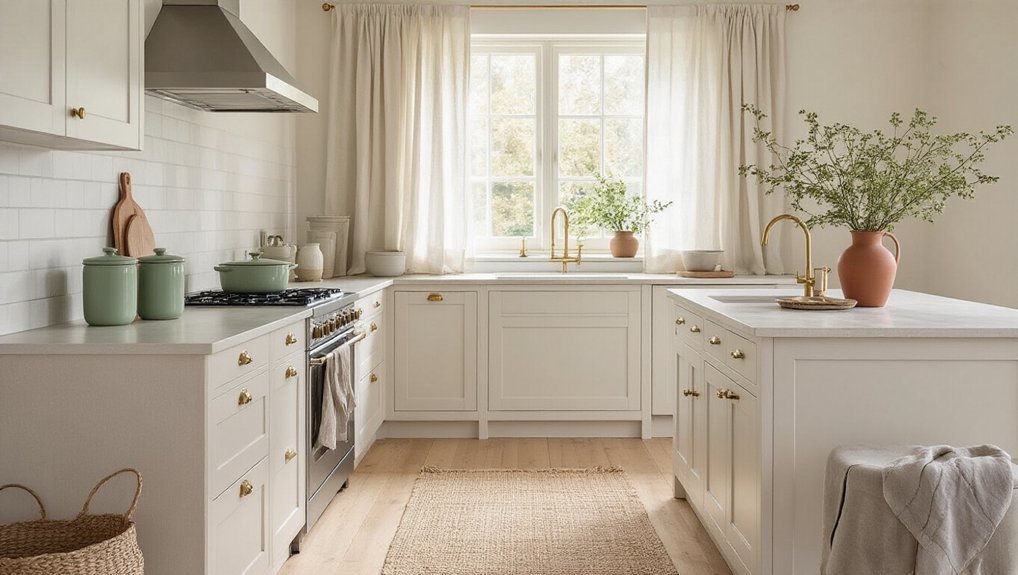
Scandinavian kitchens risk feeling sterile without deliberate textile choices that introduce warmth and texture. Incorporating linen kitchen towels, woven placemats, and natural fiber rugs creates layers of softness underfoot and at the table. A thoughtfully selected runner in muted tones anchors the space while maintaining minimalist aesthetics. Curtains in undyed linen filter light gently, avoiding heavy draping that contradicts Scandinavian principles. Even small touches—a wool throw draped over a stool or cotton napkins in cream tones—signal intentionality rather than coldness. These furnishings bridge functionality and coziness, transforming the kitchen into an inviting gathering space that honors both form and comfort.
Display Décor Pieces That Reflect Who You Are
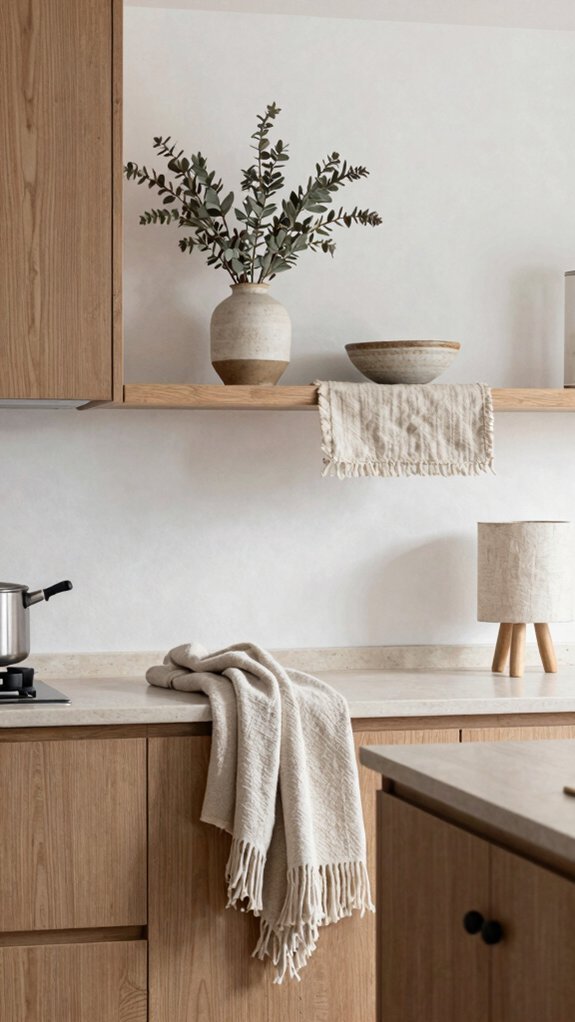
While soft furnishings provide the tactile foundation for warmth, the objects one chooses to display communicate personality and values within the space. Rather than adhering to generic Scandinavian aesthetics, homeowners should curate pieces with personal significance—vintage finds, artwork, or ceramics that tell their story. Selecting a few meaningful items prevents visual clutter while maintaining the minimalist ethos. Open shelving becomes an opportunity to showcase collections thoughtfully, mixing functional dishware with decorative objects. This intentional approach transforms a potentially impersonal kitchen into a distinctly individual environment, where Scandinavian design principles serve as a framework rather than a rigid formula.
Bring in Plants as Living, Breathing Accents
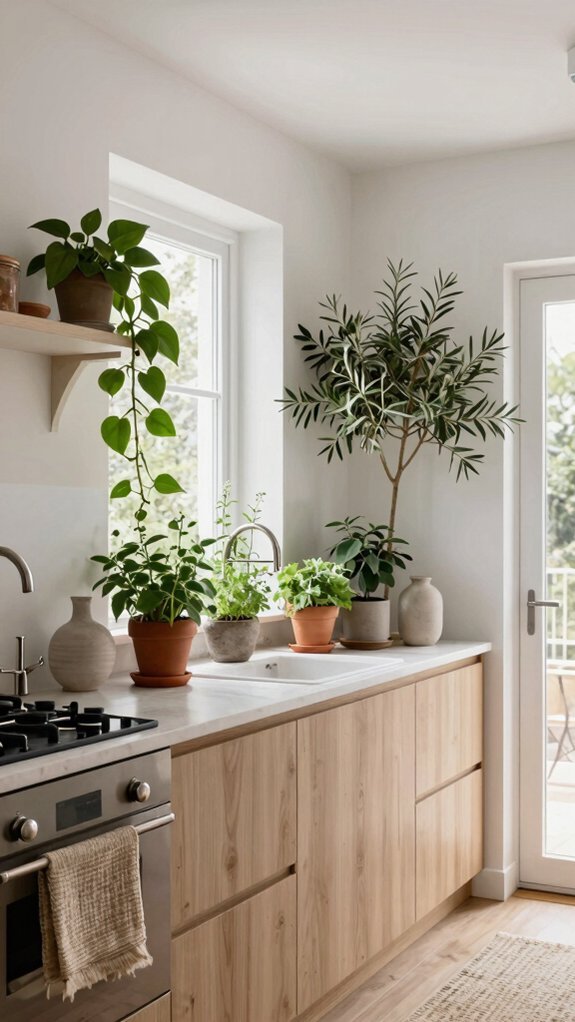
Incorporating greenery into a minimalist kitchen creates a striking counterpoint to hard surfaces and neutral palettes. Living plants soften Scandinavian design’s austerity while introducing organic texture and movement. Potted herbs on windowsills serve dual purposes: practical culinary ingredients and visual interest. Trailing vines in hanging planters draw the eye upward, adding dimension without clutter. Low-maintenance varieties like pothos, snake plants, and eucalyptus align with the aesthetic’s understated philosophy. Ceramic or concrete planters complement the Scandinavian palette, while plants themselves infuse warmth and vitality. This botanical integration transforms sterile minimalism into inviting, livable space that feels both curated and naturally welcoming.