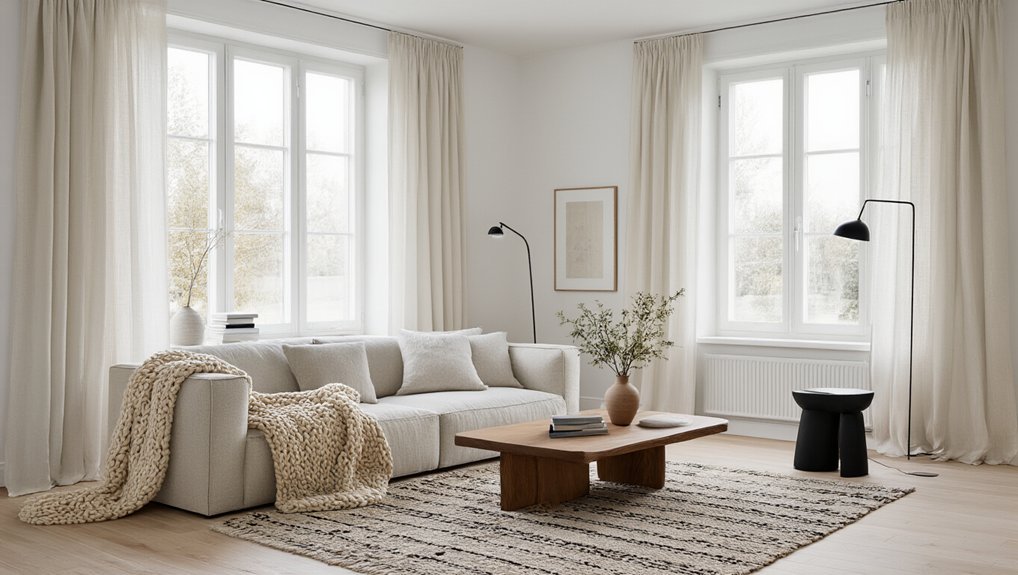
How to Style a Scandinavian Living Room Without Making It Look Plain
Build Your Foundation: Neutral Walls and Scandinavian Texture
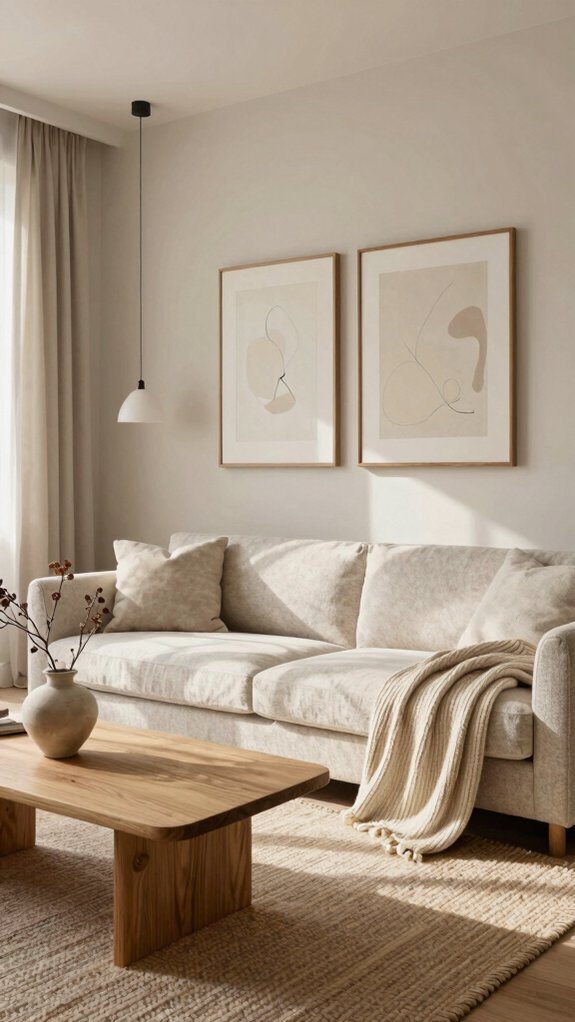
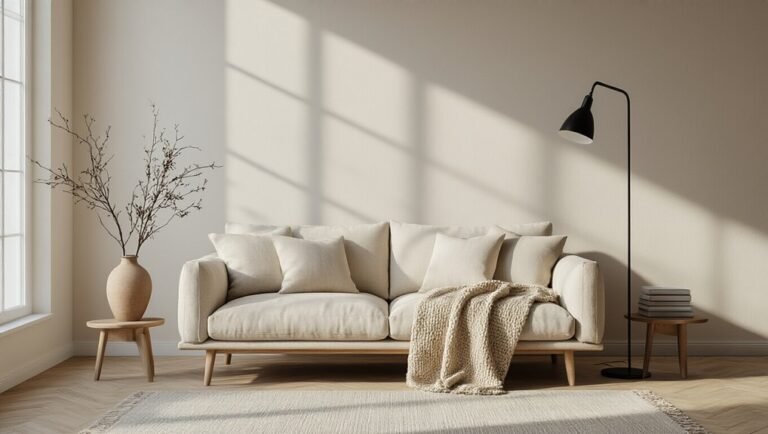
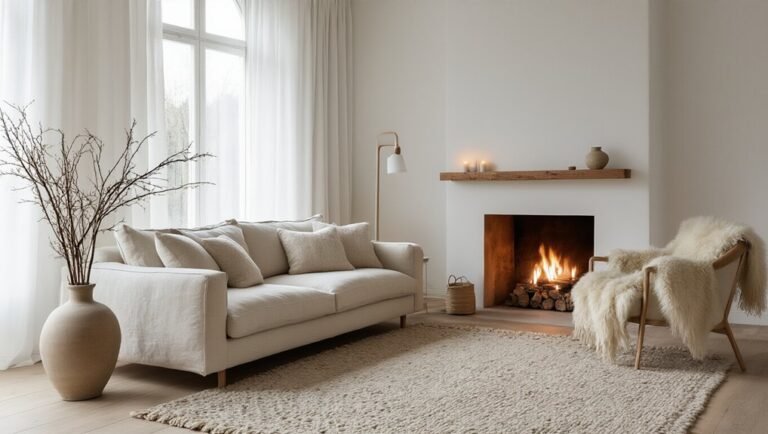
Why do so many Scandinavian interiors feel inviting despite their minimal color palettes? The answer lies in strategic texture and materiality. Neutral walls—soft whites, warm grays, or gentle beiges—serve as the perfect canvas. Rather than appearing sterile, these foundations gain depth through layered textures: exposed wood beams, plaster finishes, and woven elements. Incorporating natural materials like washed linen on upholstered pieces adds tactile warmth and visual interest. The key is selecting quality finishes that showcase imperfections and authenticity. By building a foundation of neutral tones enriched with varied textures, designers create spaces that feel both calm and characterful, preventing the common pitfall of looking cold or impersonal.
Layer Materials for Depth Without Clutter
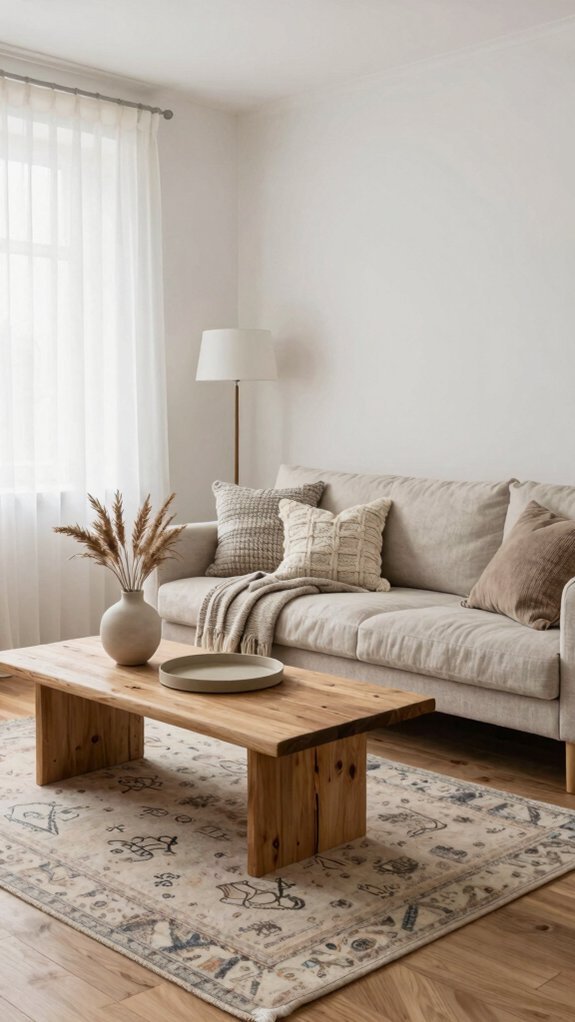
How does one achieve visual richness in a Scandinavian room without succumbing to overcrowding? Strategic material layering proves essential. Combining textures like soft bouclé upholstery with chunky chenille throws creates tactile interest while maintaining minimalist principles. Introducing handmade ceramics—whether as sculptural objects or functional pieces—adds artisanal character without visual noise. The key lies in intentional curation: select three to four complementary textures rather than many competing ones. Natural materials including wood, linen, and wool ground the space. This approach ensures depth emerges through quality and variation rather than quantity, allowing each element to breathe while contributing meaningfully to the room’s overall aesthetic.
Use Lighting to Define Cozy Zones
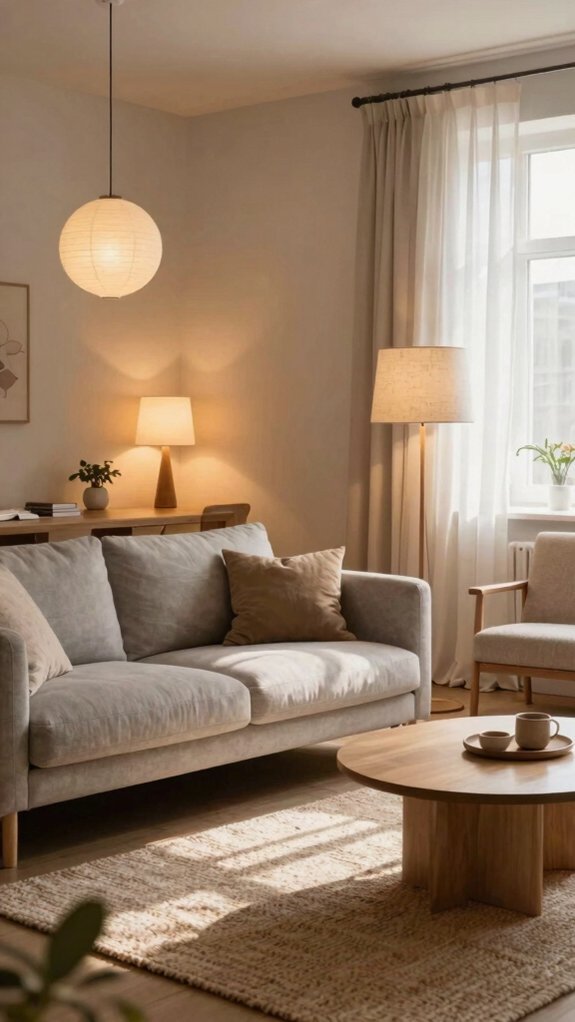
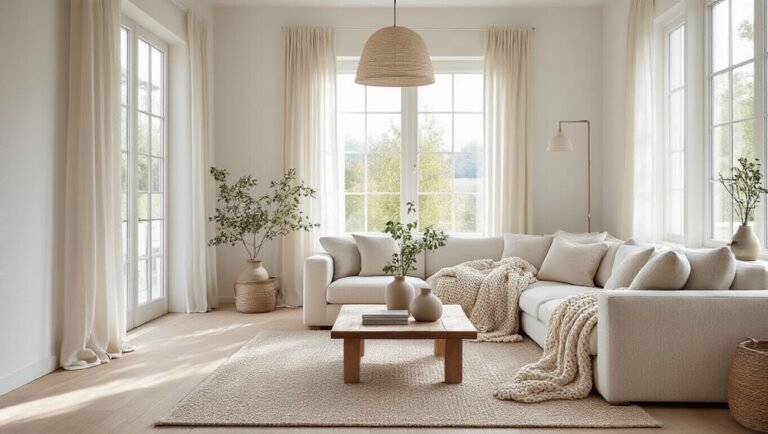
Strategic lighting transforms a Scandinavian living room from a uniform, flat expanse into intimate gathering spaces that feel both open and welcoming. Layered lighting creates distinct zones without visual heaviness. Pendant fixtures above seating areas establish focal points, while floor lamps beside reading nooks encourage relaxation. Dimmers allow adjustment throughout the day, supporting the hygge principle of comfort and coziness. Soft, warm-toned bulbs enhance the ambiance, contrasting with natural daylight streaming through windows. Placing lights at varying heights prevents monotony and guides movement through the space naturally, making the room feel purposefully designed rather than sparse.
Deploy Color Strategically Within a Neutral Base
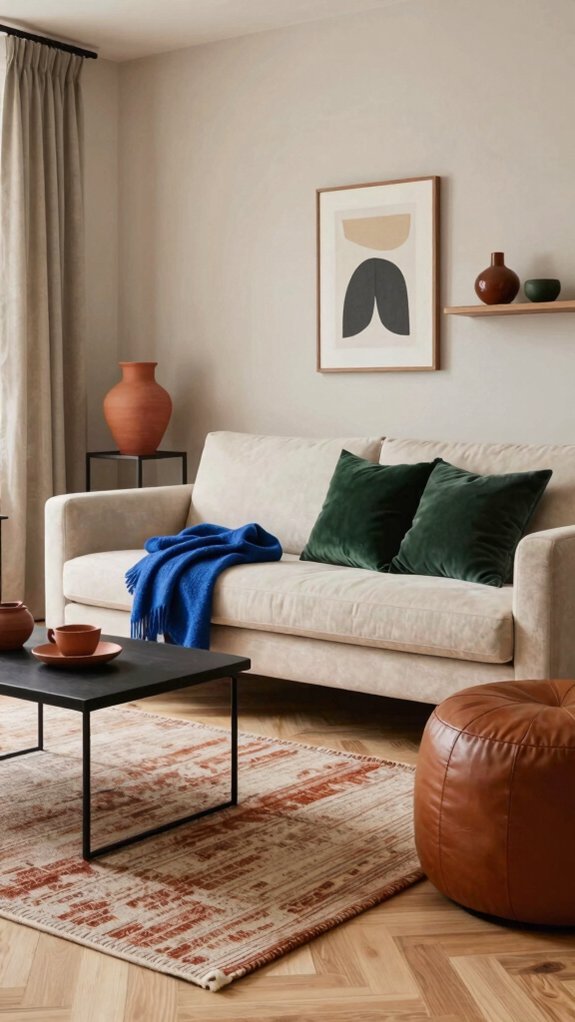
While Scandinavian design favors neutral palettes, introducing color thoughtfully prevents the space from feeling sterile or institutional. Strategic pops of color create visual interest without compromising minimalist principles. Soft terracotta accents on throw pillows or artwork warm the environment, while deeper tones like dusty rose appear in textiles or wall panels, adding sophistication. These muted jewel tones maintain the design’s understated elegance while breaking monotony. Limiting the color palette to two or three secondary hues ensures cohesion. Placing colored elements intentionally—on focal points like accent walls or statement furniture—maximizes impact while respecting Scandinavian restraint. This balanced approach achieves visual richness without sacrificing the style’s signature calm aesthetic.
Choose Artwork That Reflects Your Taste
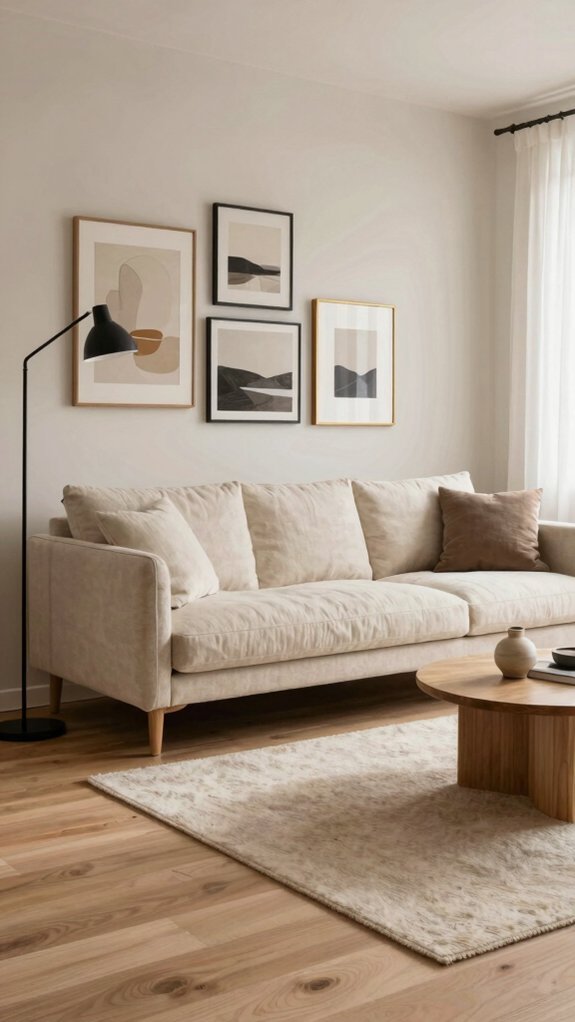
Can artwork truly anchor a Scandinavian interior while expressing individual personality? Absolutely. The key lies in curated styling that balances minimalist aesthetics with personal taste. Rather than filling walls indiscriminately, selecting pieces that resonate emotionally creates visual interest without clutter. Black-and-white photography, abstract prints, or nature-inspired illustrations complement Scandinavian design principles while allowing inhabitants to showcase their preferences. Consider scale, placement, and negative space carefully. A single striking piece often proves more impactful than multiple smaller works. This intentional approach ensures artwork functions as a meaningful focal point, transforming a neutral foundation into a space that genuinely reflects the inhabitant’s identity and sensibilities.
Blend Vintage Nordic Finds With Contemporary Pieces
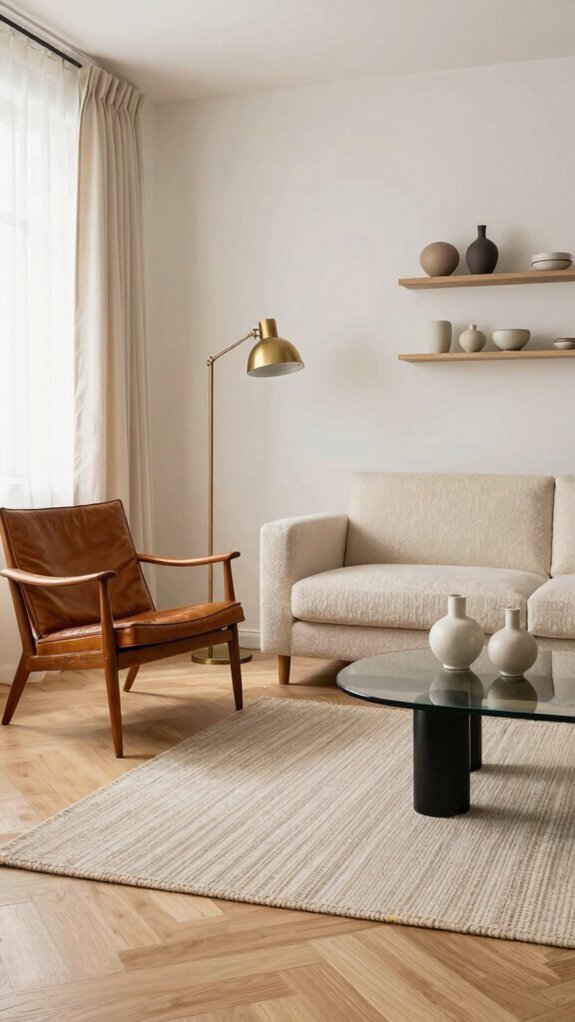
Once artwork establishes visual anchors throughout the space, the foundation is set for layering in furnishings and decorative objects. Blending vintage Nordic finds with contemporary pieces creates visual interest and prevents the space from feeling sterile. Incorporating mid-century classics like wishbone chairs alongside modern furnishings establishes dynamic contrast. Vintage teak cabinets pair effectively with sleek minimalist tables, while antique textiles complement current-season accent pillows. This layering approach respects Scandinavian design principles while injecting personality.
The key lies in selecting pieces that share similar proportions and materials, ensuring cohesion despite their different eras. This balanced fusion elevates the room beyond basic minimalism.
Bring in Plants and Natural Materials
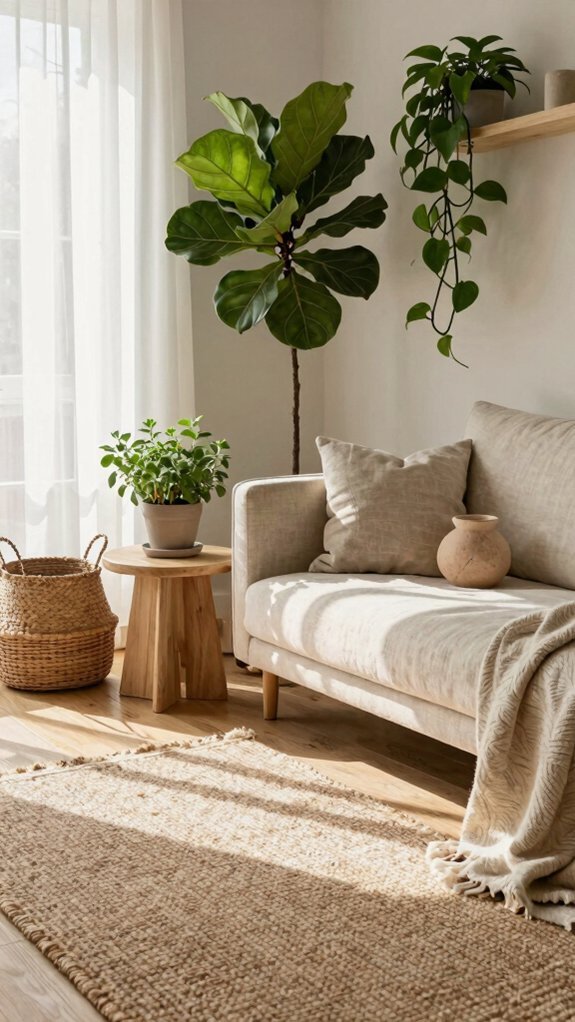
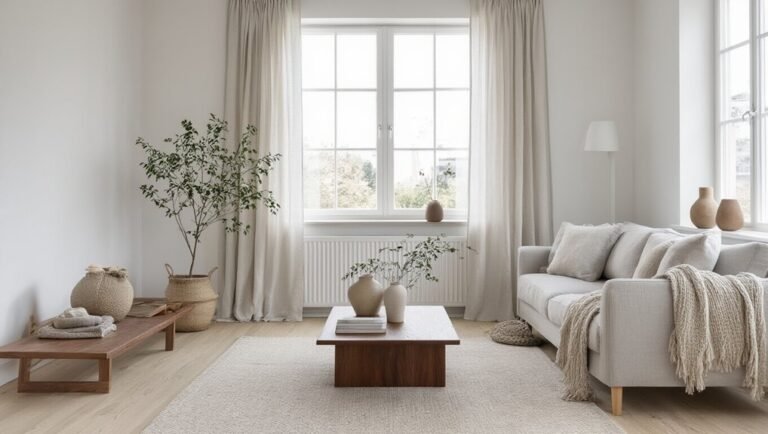
How do Scandinavian interiors maintain their connection to nature despite minimalist restraint? By incorporating abundant greenery and organic materials. Living plants introduce life and vitality to neutral spaces, transforming sterile rooms into welcoming environments. Potted ferns, monstera, and snake plants thrive in Scandinavian homes, their verdant foliage contrasting beautifully against white walls.
Natural materials like wood, wool, and soft clay ground the aesthetic further. Wooden beams, jute rugs, and ceramic vessels crafted from soft clay add tactile warmth and authenticity. These elements prevent spaces from feeling cold or austere, infusing character and depth while maintaining the clean, uncluttered philosophy central to Scandinavian design.
Arrange Open Shelving With Intention
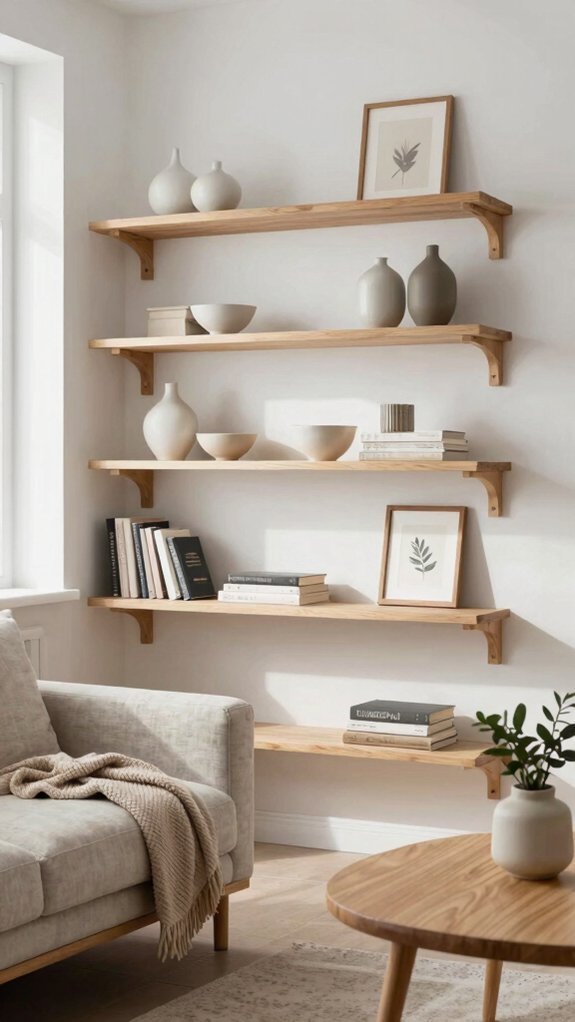
Why do open shelves so often become visual clutter in otherwise refined Scandinavian rooms? Intentional curation prevents this common pitfall. Each item displayed should earn its place through function or aesthetic merit. Grouping objects by color, height, or material creates visual harmony. Incorporating patinated bronze accents—such as shelf brackets or decorative objects—adds warmth and sophistication while maintaining minimalist principles. Leaving negative space between arrangements prevents overcrowding. Books, ceramics, and carefully selected decorative pieces should follow a cohesive design narrative. Rotating seasonal items keeps displays fresh without abandoning restraint. This deliberate approach transforms open shelving from potential eyesore into a curated, intentional design element that enhances the room’s overall sophistication.
Select Accessories That Balance Function and Story
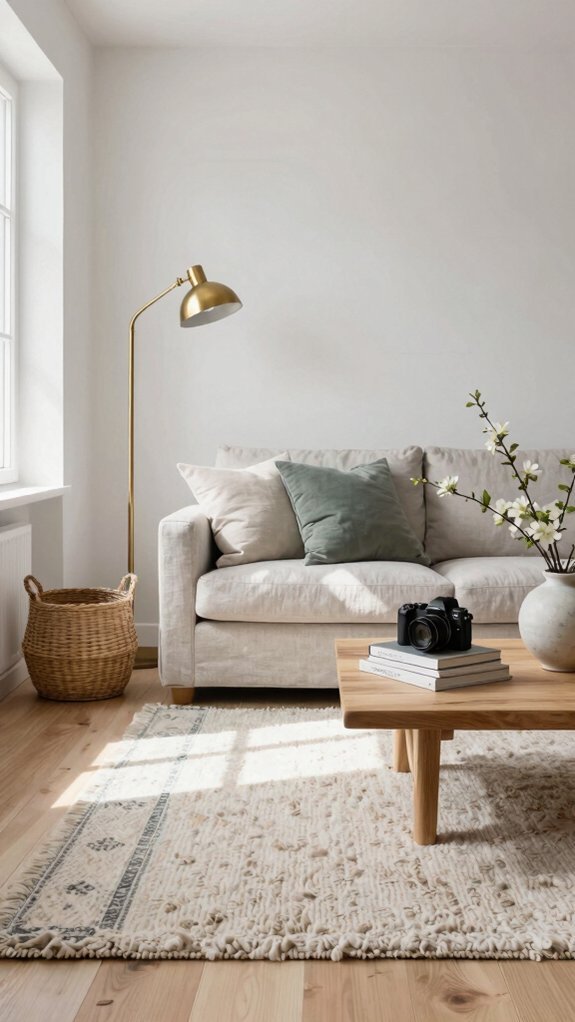
The most compelling Scandinavian interiors feature accessories that serve dual purposes—they perform a practical role while simultaneously conveying personal narrative. Rather than displaying purely decorative items, curated pieces like vintage ceramics, woven baskets, and handcrafted textiles contribute to daily living while revealing the homeowner’s aesthetic values and travels.
A weathered wooden bowl holds fruit and adds visual warmth. Linen throws provide comfort and texture. Meaningful objects—perhaps a treasured photograph or artisan-made vessel—anchor the space authentically. This thoughtful curation prevents minimalism from feeling sterile, transforming the living room into a genuine reflection of its inhabitants.