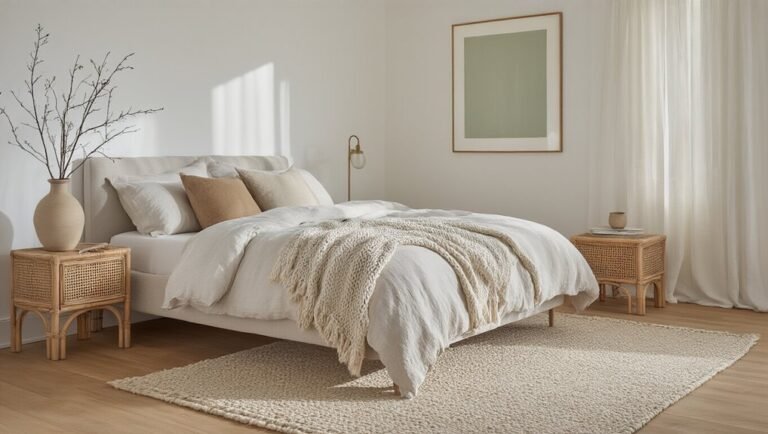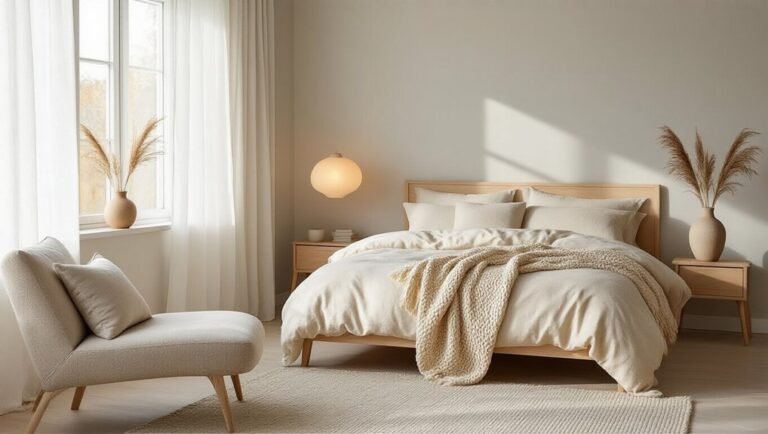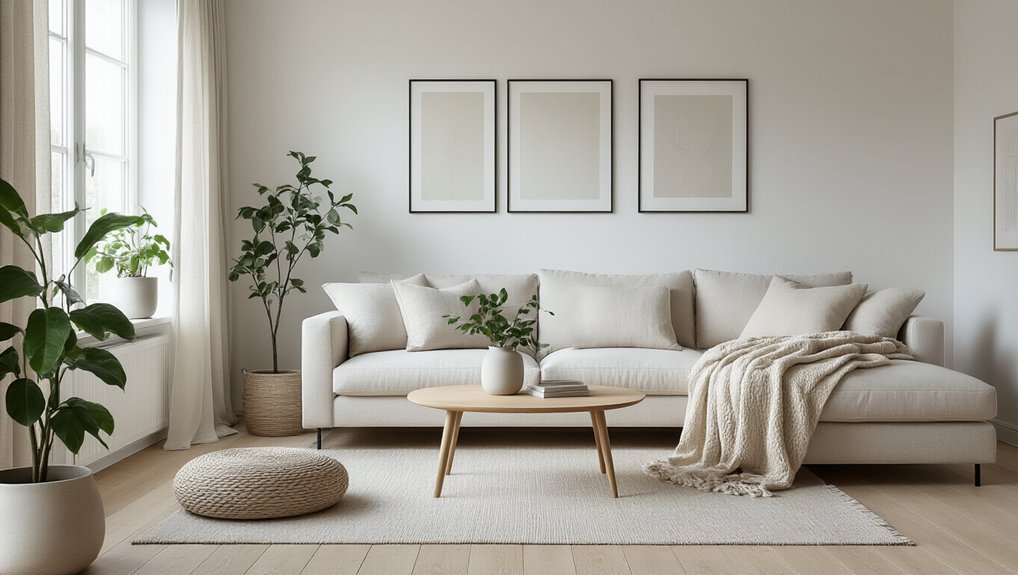
9 Scandinavian Interior Design Rules That Make Any Space Look Better
Embrace Minimalism: The Foundation of Scandinavian Design
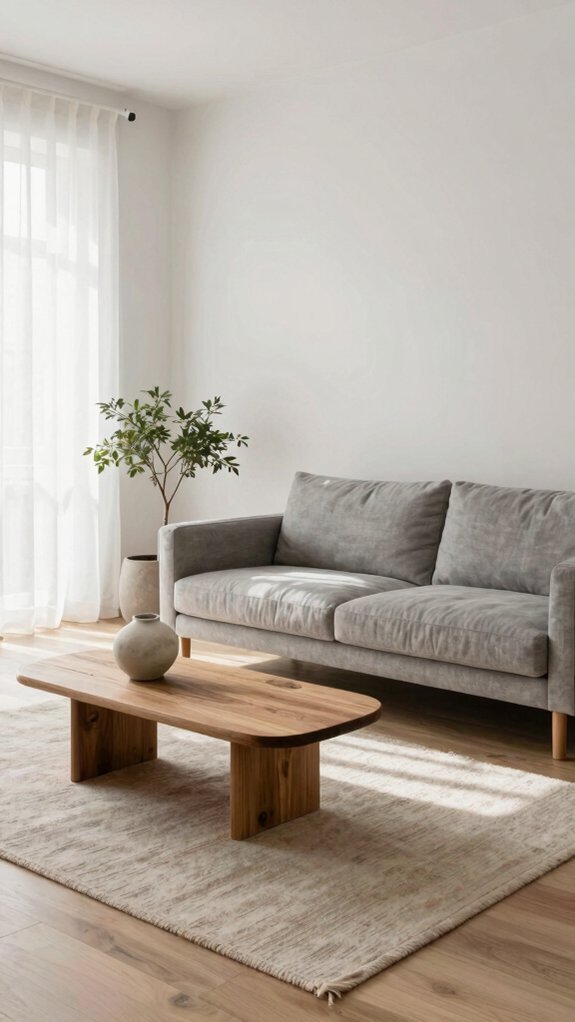
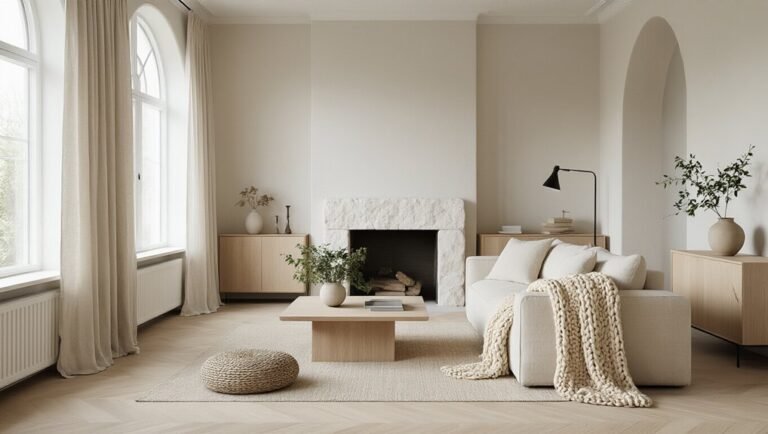
Why do Scandinavian interiors feel so effortlessly calm? The answer lies in minimalism, the cornerstone of Nordic design philosophy. Scandinavian minimalism embraces *lagom*—the Swedish principle of “just the right amount”—rejecting excess while avoiding starkness. This approach strips away unnecessary clutter, keeping only functional and meaningful pieces. Neutral color palettes, clean lines, and unadorned surfaces create visual harmony.
Rather than deprivation, Scandinavian minimalism represents intentional curation: every object serves a purpose or sparks joy. By eliminating distractions, spaces breathe freely. Natural light flows unobstructed, and the eye rests peacefully. This foundational principle transforms interiors into serene sanctuaries where simplicity becomes sophistication.
Let Natural Light Fill Your Rooms
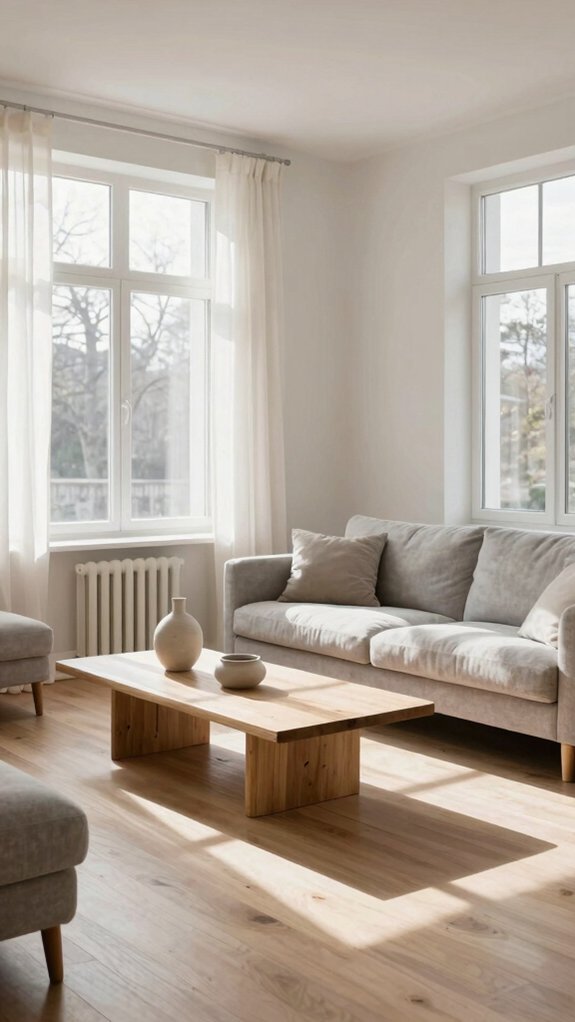
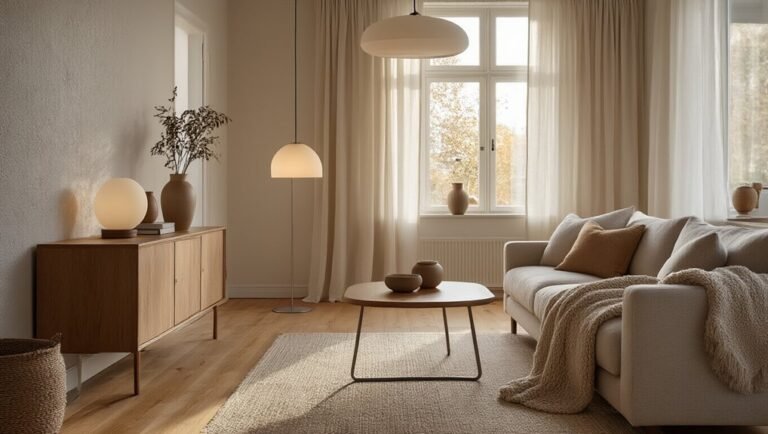
How do Scandinavian interiors achieve their characteristic luminosity? Natural light forms the cornerstone of Scandinavian design philosophy, reflecting the region’s commitment to friluftsliv—the practice of embracing outdoor living and natural environments. Designers maximize daylight through expansive windows, minimal window treatments, and strategically positioned mirrors that amplify illumination throughout spaces. Light-colored walls and reflective surfaces further enhance brightness during long winter months. This deliberate approach connects inhabitants to seasonal rhythms while creating airy, uplifting environments. By prioritizing unobstructed natural light, Scandinavian interiors maintain visual clarity and foster psychological well-being, transforming ordinary rooms into serene sanctuaries that celebrate nature’s presence indoors.
Choose a Neutral Color Palette With Purpose
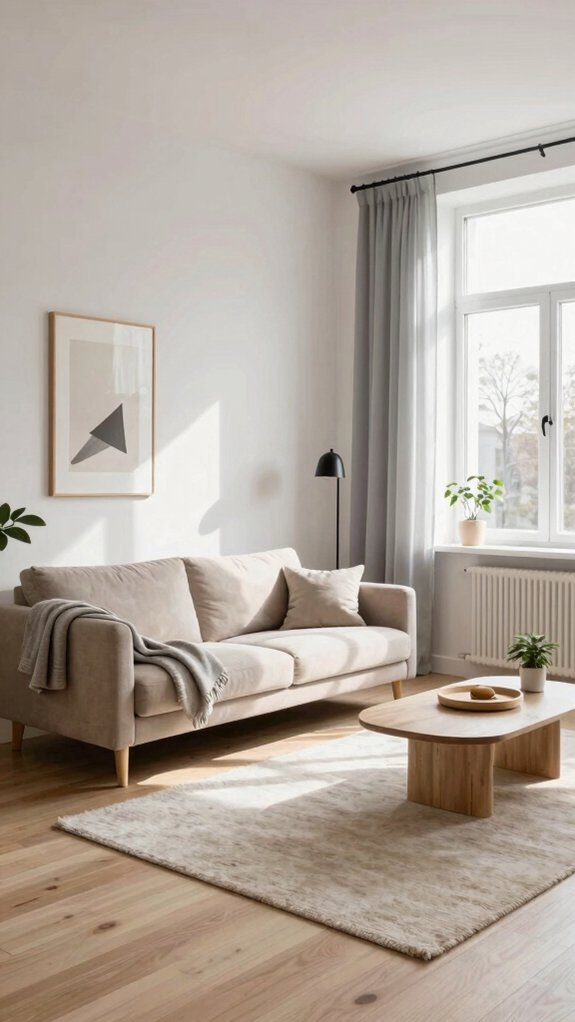
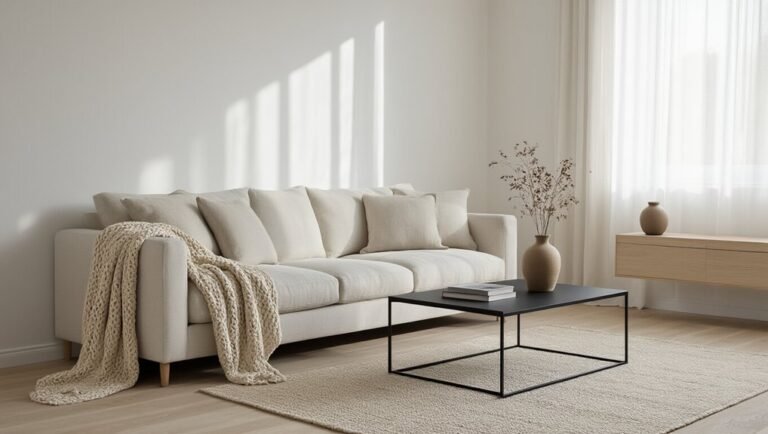
Neutral colors form the visual foundation of Scandinavian interiors, creating cohesive backdrops that emphasize form and function over decorative excess.
Rather than defaulting to bland uniformity, designers intentionally select warm whites, soft beiges, cool greys, and slate tones that complement natural light and architectural elements.
This restrained palette allows furniture, textures, and carefully chosen accent pieces to command attention without visual competition.
The strategy reflects Nordic minimalism’s core principle: eliminating distractions to highlight quality craftsmanship and purposeful design.
Invest in Quality Wood Furniture and Fixtures
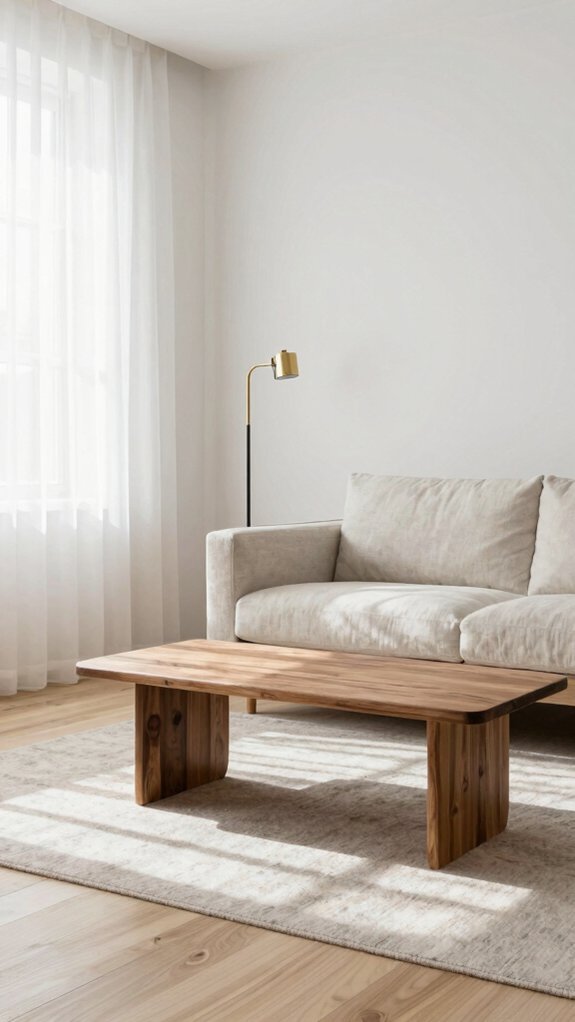
Wood stands as the cornerstone material of Scandinavian design, embodying the region’s deep connection to natural forests and sustainable craftsmanship. Quality wooden pieces form the foundation of authentic interiors, prioritizing durability and timeless aesthetics over trends.
Wood embodies Scandinavian design’s commitment to natural forests, sustainable craftsmanship, and timeless quality over fleeting trends.
Scandinavian functionalism demands that furniture serve multiple purposes while maintaining visual simplicity. Light woods like birch and ash dominate, reflecting minimalist principles and brightening spaces naturally.
Investing in well-crafted wood furniture ensures longevity and environmental responsibility. Fixtures and structural elements showcase wood’s inherent beauty, requiring minimal embellishment.
This commitment to quality materials and honest design creates spaces that age gracefully, developing character while remaining perpetually relevant and inviting.
Add Layered Textures for Warmth
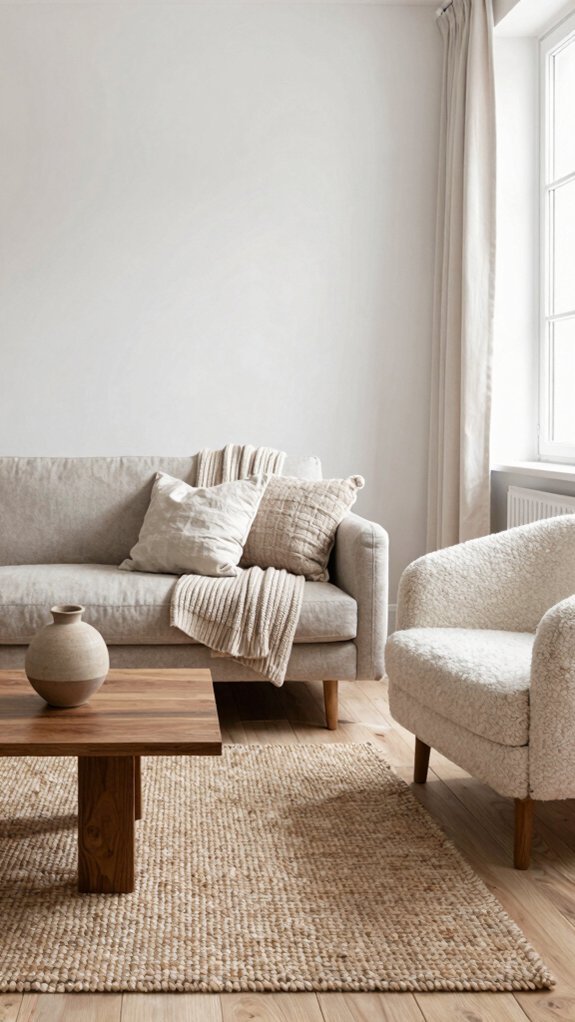
While Scandinavian minimalism prioritizes clean lines and open spaces, it deliberately incorporates varied textures to prevent interiors from feeling cold or austere. Layering diverse materials creates visual interest and tactile warmth essential to Nordic design philosophy.
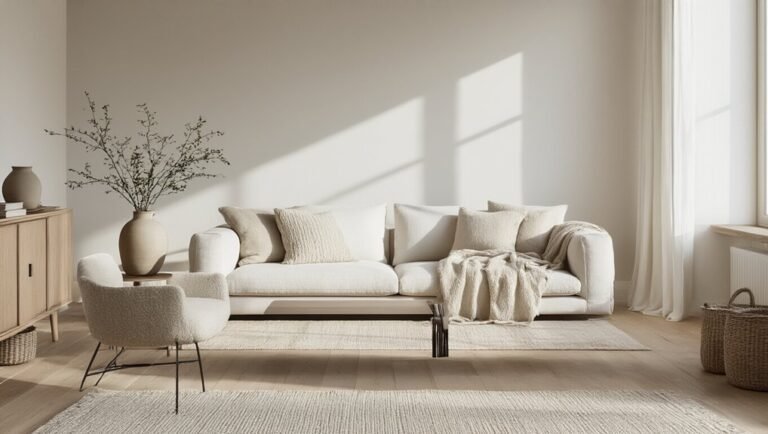
Natural fibers form the foundation of this textural approach. Linen drapes soften windows, while jute and sisal rugs anchor living spaces with earthy sophistication. These materials complement wooden furniture seamlessly, establishing cohesive environments that balance simplicity with comfort.
Combining smooth ceramics, chunky knits, and woven textiles generates depth without cluttering spaces. This strategic texture layering transforms minimalist interiors into inviting sanctuaries that feel both refined and genuinely livable.
Design Rooms That Actually Work for Your Life
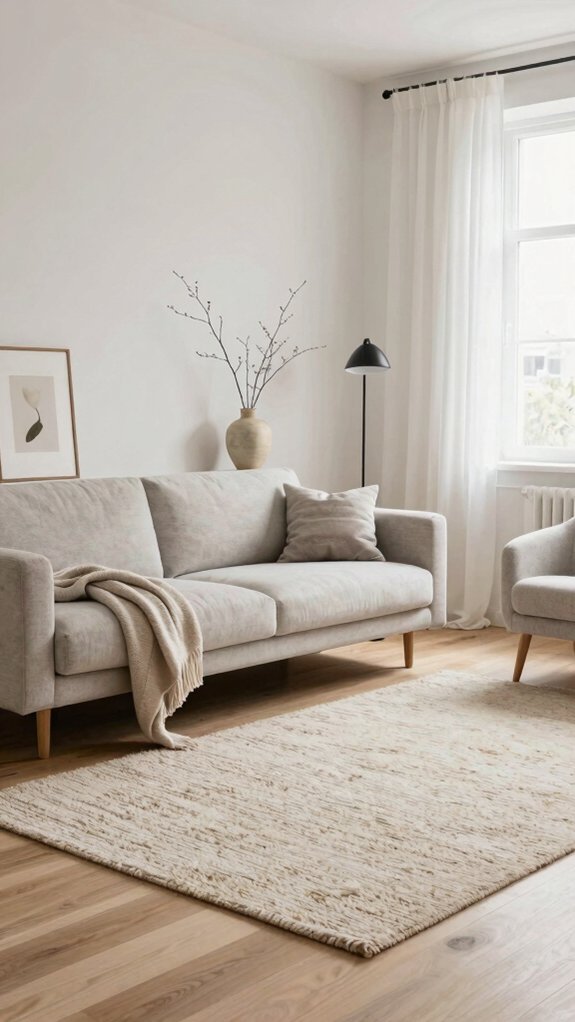
How often do interior spaces fail to accommodate the practical demands of daily living? Scandinavian design prioritizes functionality alongside aesthetics, ensuring rooms serve their inhabitants’ actual needs. This philosophy emphasizes multi-functional workspace solutions that adapt to modern lifestyles. Storage remains integrated rather than ornamental, maximizing usable space without clutter. Furniture selection focuses on pieces that perform multiple duties—ottomans offering seating and storage, tables adjusting heights for various activities. Layouts facilitate movement and natural workflow patterns. By designing with intention and acknowledging how people genuinely inhabit their environments, Scandinavian interiors become both beautiful and practical, avoiding the common pitfall of form overshadowing function.
Use Plants and Natural Elements to Soften Spaces
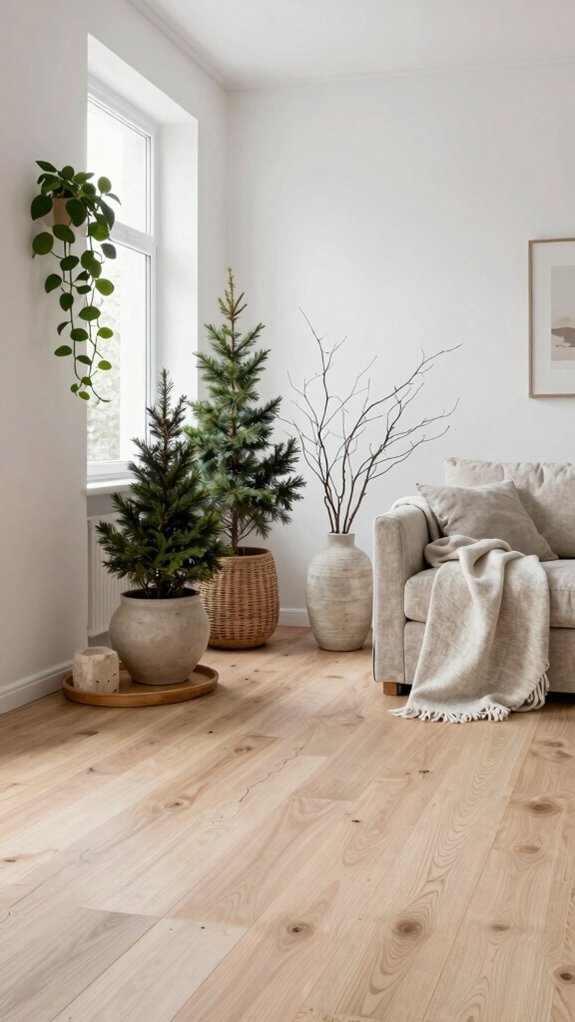
Scandinavian interiors often incorporate plants and natural elements to counterbalance minimalist aesthetics and create warmth within spare environments.
Living greenery breathes vitality into otherwise austere spaces, softening hard lines and neutral palettes.
Wood accents, stone surfaces, and raw textures introduce organic character that complements clean design principles.
Plants serve dual purposes: they enhance air quality while visually bridging the gap between stark furnishings and inviting comfort.
Natural elements like branches, moss, or unfinished materials connect interiors to the outdoors, embodying Scandinavian design’s core philosophy of respecting nature’s inherent beauty and functionality within contemporary homes.
Build Cozy Gathering Spots You’ll Actually Use
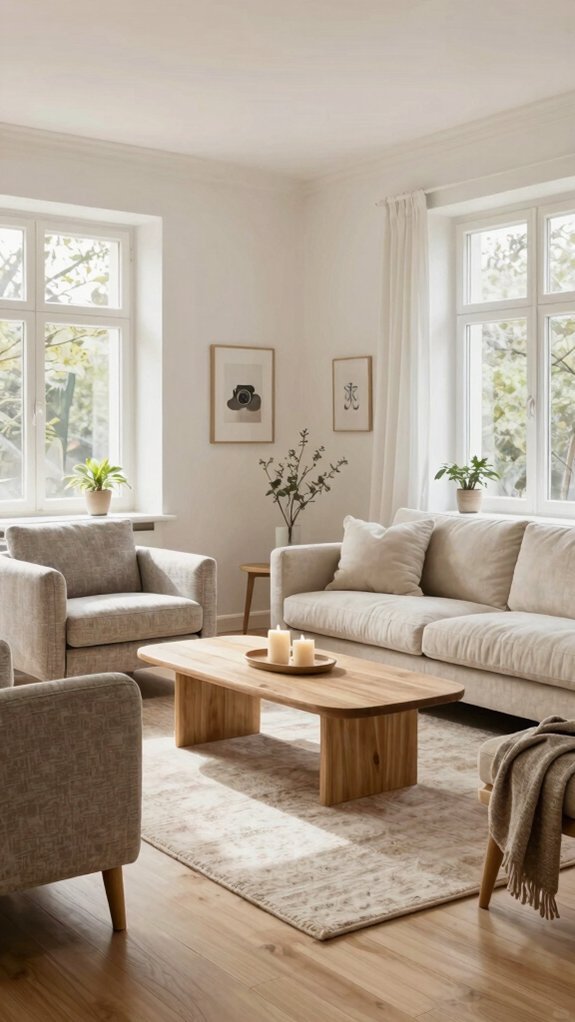
Minimalism loses its purpose when spaces feel uninviting and unused. Scandinavian design emphasizes functional gathering areas that encourage daily living. A well-designed seating nook with layered textiles and soft lighting creates natural congregation points. The mudroom exemplifies this principle—organized yet welcoming, it serves as both practical entryway and gathering transition space. Designers strategize placement of furniture to foster conversation and connection. Tables positioned near windows, comfortable chairs arranged in intimate groupings, and accessible storage in the mudroom all transform minimalist interiors into lived-in homes. These intentional spaces balance aesthetic restraint with genuine usability, making minimalism feel both beautiful and genuinely habitable.
Keep Counters, Shelves, and Surfaces Clear
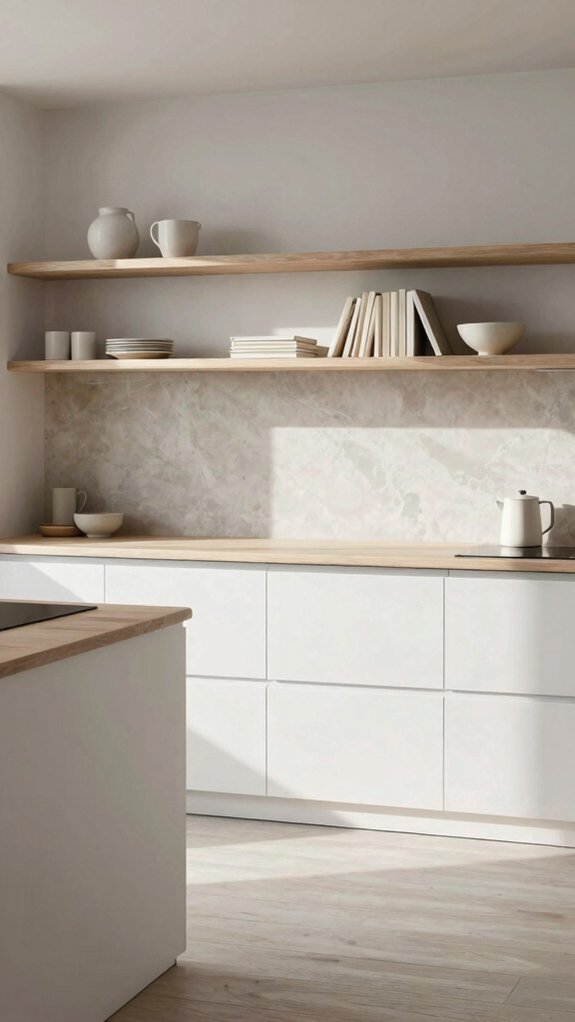
Why do cluttered surfaces undermine the visual calm that Scandinavian design seeks to achieve? Clutter disrupts the geometric simplicity that characterizes Nordic interiors, creating visual noise that contradicts minimalist principles.
Scandinavian design prioritizes function and intentionality—every object displayed should serve a purpose or bring genuine joy.
Clear counters, shelves, and surfaces allow architectural elements and carefully selected pieces to breathe and command attention. This restraint creates spaciousness, even in compact rooms.
By eliminating unnecessary items, inhabitants establish environments that promote mental clarity and relaxation.
Strategic storage solutions keep daily essentials hidden, maintaining the uncluttered aesthetic that defines Scandinavian spaces.