9 Scandinavian Lighting Tips for a Softer and More Inviting Space
Layer Your Light Sources (Skip Overhead Fixtures)
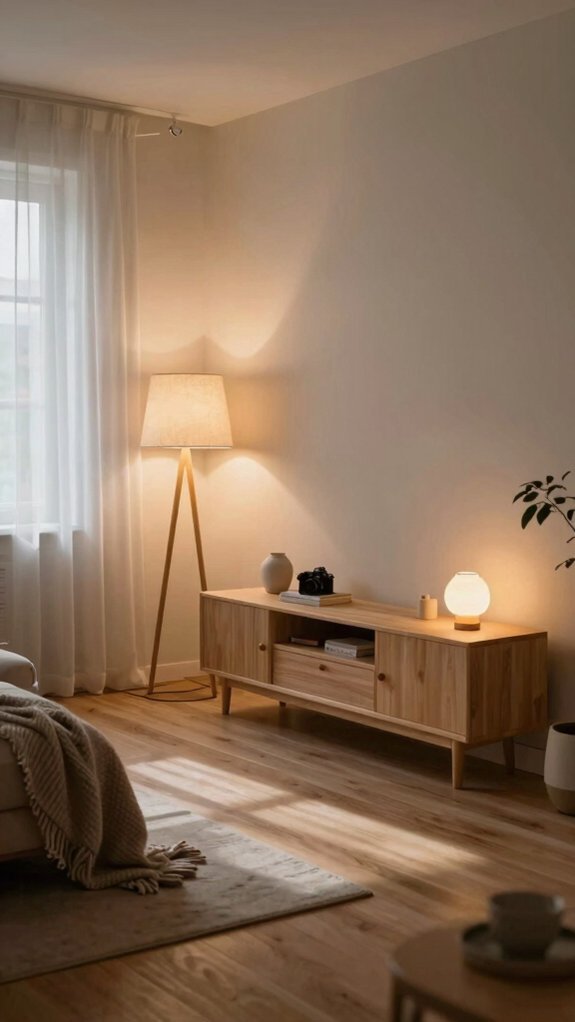
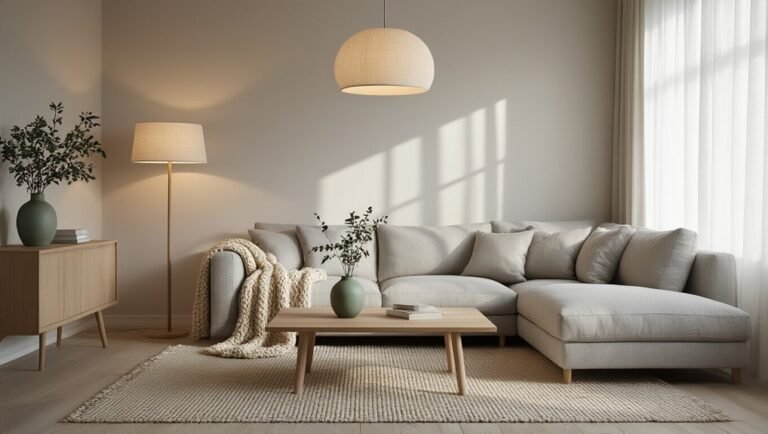
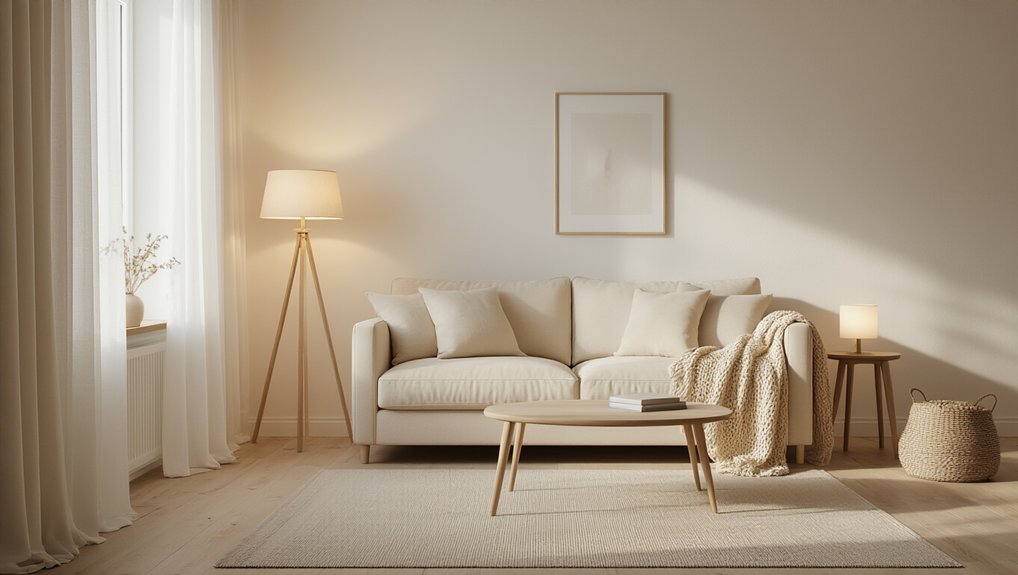
Why do so many Scandinavian interiors feel warm and intimate despite their minimalist aesthetic? The answer lies in layered lighting. Rather than relying on harsh overhead fixtures, Scandinavian designers employ multiple light sources at varying heights and intensities. Table lamps, floor lamps, and wall sconces work together to create depth and flexibility. This approach allows inhabitants to adjust ambiance according to mood and time of day. Layered lighting eliminates shadows and glare while establishing visual interest. By distributing illumination throughout spaces instead of concentrating it overhead, rooms achieve both functionality and coziness, embodying the Scandinavian principle of creating welcoming environments through thoughtful design choices.
Maximize Daylight First, Then Layer Warm Artificial Light
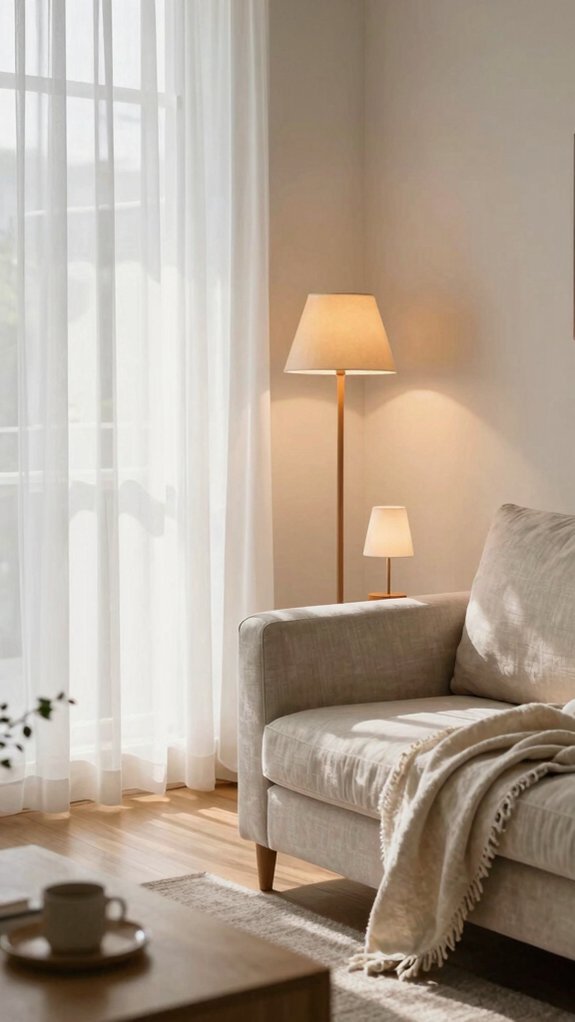
How do Scandinavian interiors sustain their luminous quality throughout the day and into evening? By prioritizing natural light exposure first. Large windows and minimal window treatments allow daylight to dominate daytime hours, reducing reliance on artificial illumination. As darkness falls, residents layer warm artificial light strategically throughout spaces. Tunable white lighting systems prove invaluable, enabling adjustment of color temperature from cooler daylight hues to warmer evening tones. This approach aligns artificial lighting with natural circadian rhythms while maintaining visual continuity. Pendant lights, wall sconces, and table lamps provide supplementary illumination without harsh overhead glare, creating seamless transitions between day and night.
Embrace Warm Color Temperatures for Coziness

What transforms a well-lit room into a genuinely welcoming sanctuary? The strategic selection of warm color temperatures. Scandinavian design embraces bulbs ranging from 2700K to 3000K, creating intimate atmospheres that counteract harsh overhead lighting. This approach mimics the komorebi effect—dappled, filtered light that feels natural and soothing.
Warm lighting reduces visual strain while promoting relaxation, making spaces feel more human-centered. When layered with natural daylight during transitions, warm artificial light creates seamless continuity throughout the day. This philosophy prioritizes comfort over clinical brightness, reflecting Scandinavian values of coziness and connection.
Choose Minimalist Scandinavian Fixtures That Fade Into the Background
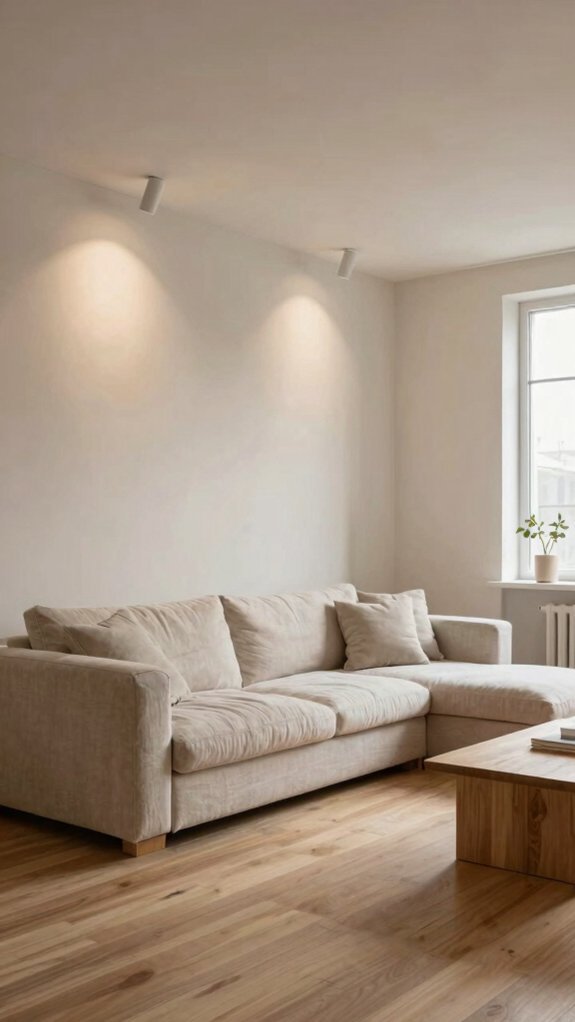
In Scandinavian design philosophy, the fixture itself should never compete for attention—instead, it serves as a vehicle for light. This principle guides the selection of understated pieces that prioritize function over ornamentation. Articulated wall sconces exemplify this approach, offering adjustable illumination without visual bulk.
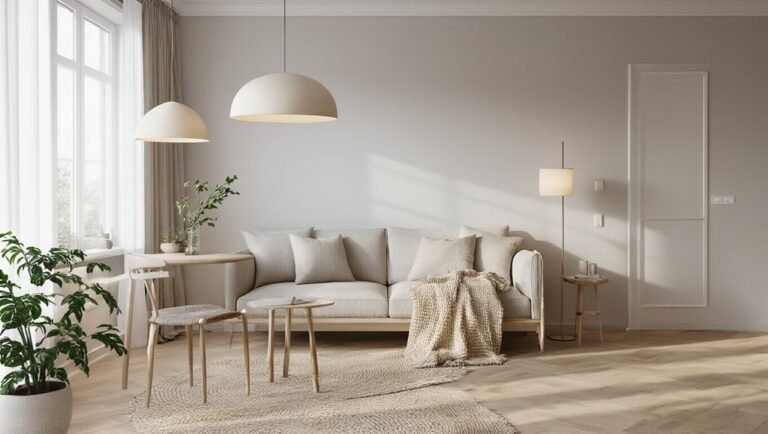
Sleek pendant lights with simple geometries, matte finishes, and neutral tones blend seamlessly into interiors. Minimalist fixtures disappear into architectural surroundings, allowing inhabitants to focus on the quality and warmth of illumination rather than the hardware itself. This restraint creates sophisticated spaces where light becomes the true design element.
Use Floor and Table Lamps to Create Intimate Focal Points
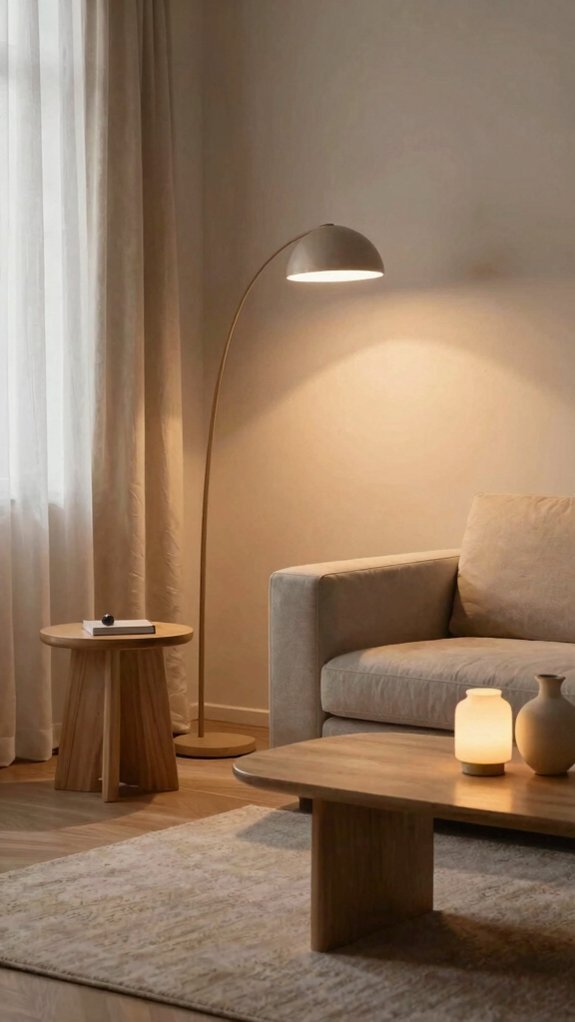
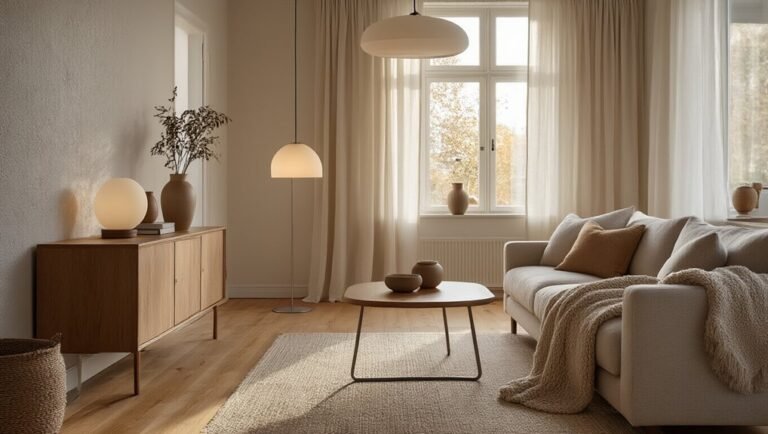
While minimalist fixtures establish the visual foundation of Scandinavian interiors, floor and table lamps serve a distinctly different purpose—they become intimate gathering points that draw inhabitants closer. Strategically positioned beside seating areas, these lamps create warm pools of light that encourage conversation and relaxation. Modern rechargeable cordless lamps offer flexible placement without visual clutter from cords. Soft, diffused illumination from these sources softens harsh shadows and establishes cozy corners throughout the home. By layering ambient and task lighting through thoughtfully selected floor and table lamps, designers craft welcoming spaces that feel both intentional and naturally inviting.
Diffuse Light Through Natural Materials Like Wood and Linen
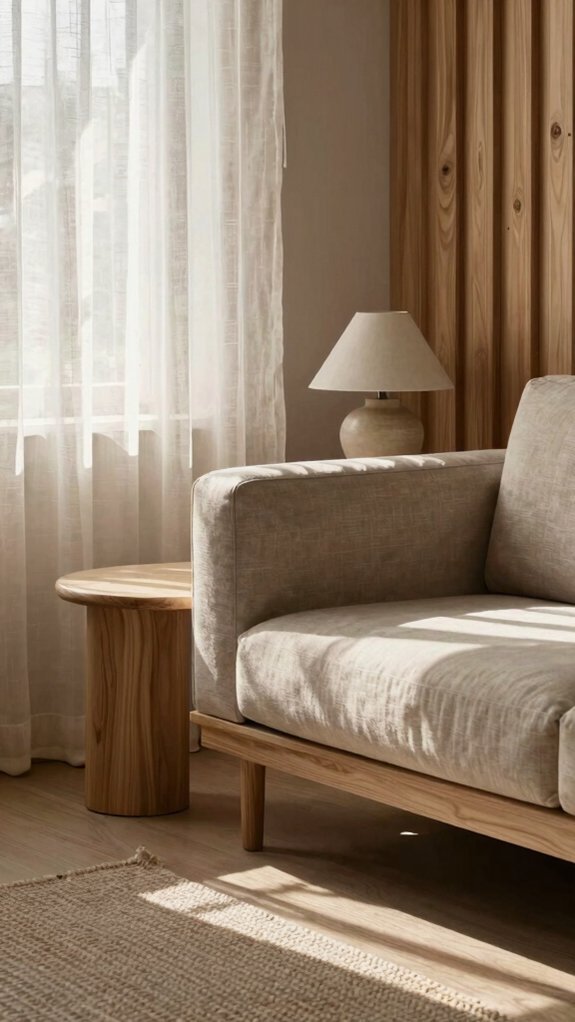
Natural materials like wood and linen transform harsh artificial light into soft, warm illumination that defines Scandinavian design. Wooden lampshades with sand and clay finishes diffuse light beautifully, creating ambient glow while maintaining visual interest.
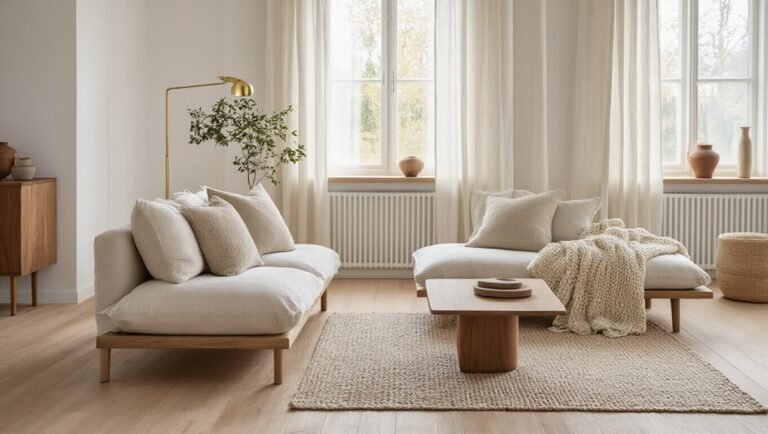
Linen fabric softens brightness without eliminating it, allowing luminescence to permeate spaces evenly and naturally.
These materials work synergistically with pendant lights and wall sconces, filtering glare and reducing eye strain. Wood grain patterns catch light subtly, adding texture and depth. Linen’s translucent quality distributes illumination gently throughout rooms, establishing cozy atmospheres essential to Nordic interiors. This layered approach to lighting emphasizes comfort and functionality while honoring Scandinavian minimalist principles.
Incorporate Candles and Soft Ambient Lighting Throughout
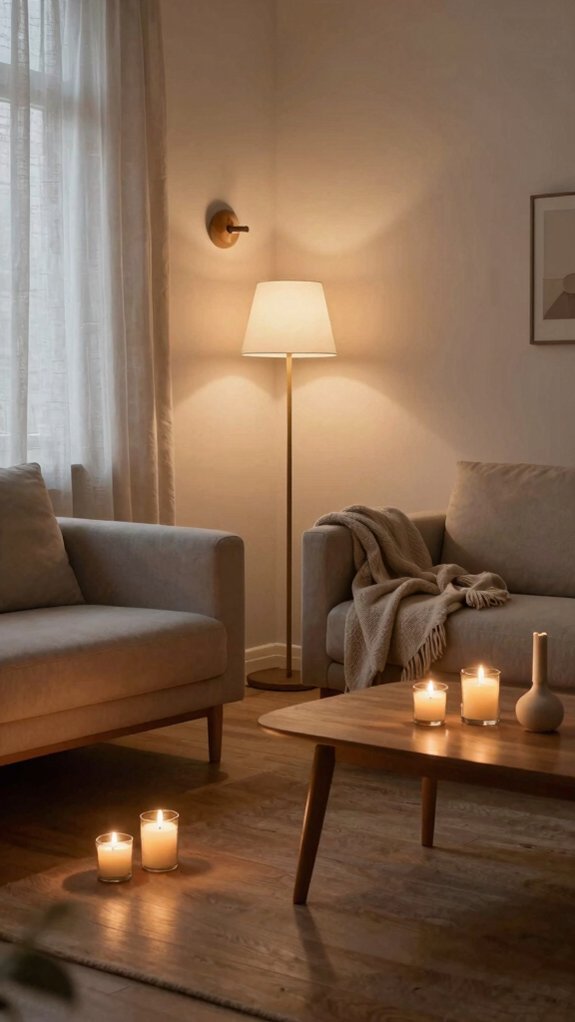
Why do Scandinavian interiors feel so inherently calming? Candles form the foundation of this aesthetic. Strategically placed throughout homes, they create layered lighting that softens harsh shadows and establishes intimacy. Scandinavian designers favor smoked and opal glass candleholders, which diffuse flames beautifully while maintaining minimalist elegance. These fixtures complement existing ambient lighting without overwhelming spaces.
Combining candles with dimmable electrical fixtures allows residents to adjust warmth throughout the day. The practice encourages mindfulness and connection to natural rhythms. Candles serve as both functional light sources and decorative elements, embodying Scandinavian design’s principle that beauty and utility must coexist seamlessly.
Adjust Lighting by Time of Day and Season
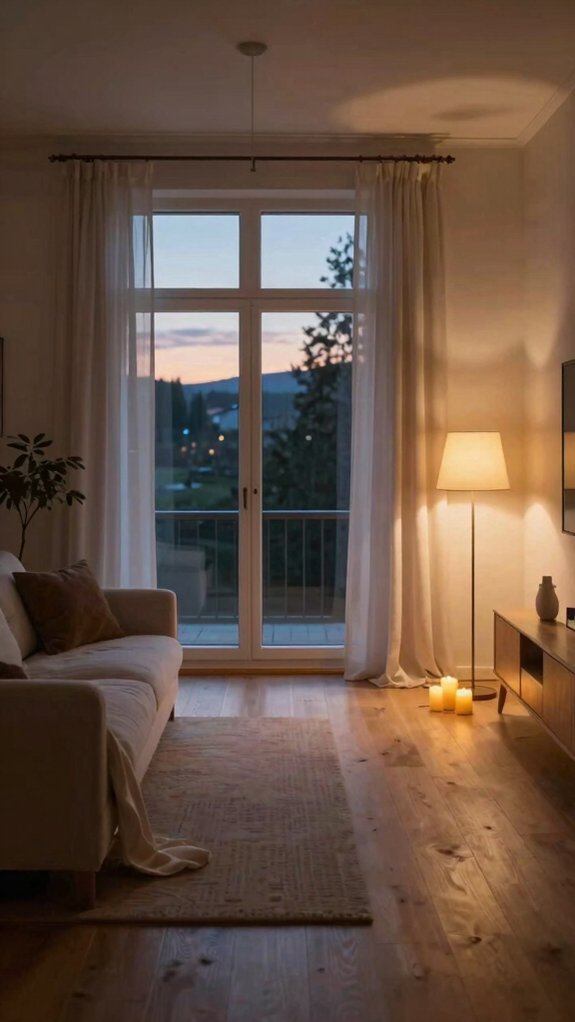
How does lighting transform across seasons and daylight cycles in Scandinavian homes? This human-centric design approach recognizes that lighting needs fluctuate dramatically throughout the year. During winter’s extended darkness, layered lighting becomes essential, combining ambient, task, and accent sources to combat seasonal affective patterns.
Summer’s prolonged daylight allows for minimalist approaches, emphasizing natural illumination.
Scandinavian interiors adjust brightness and color temperature seasonally, utilizing dimmers and warm bulbs during darker months while embracing cooler tones when daylight dominates. This adaptive strategy aligns artificial lighting with circadian rhythms, promoting wellness while maintaining aesthetic consistency year-round.
Install Dimmers to Control Mood and Energy
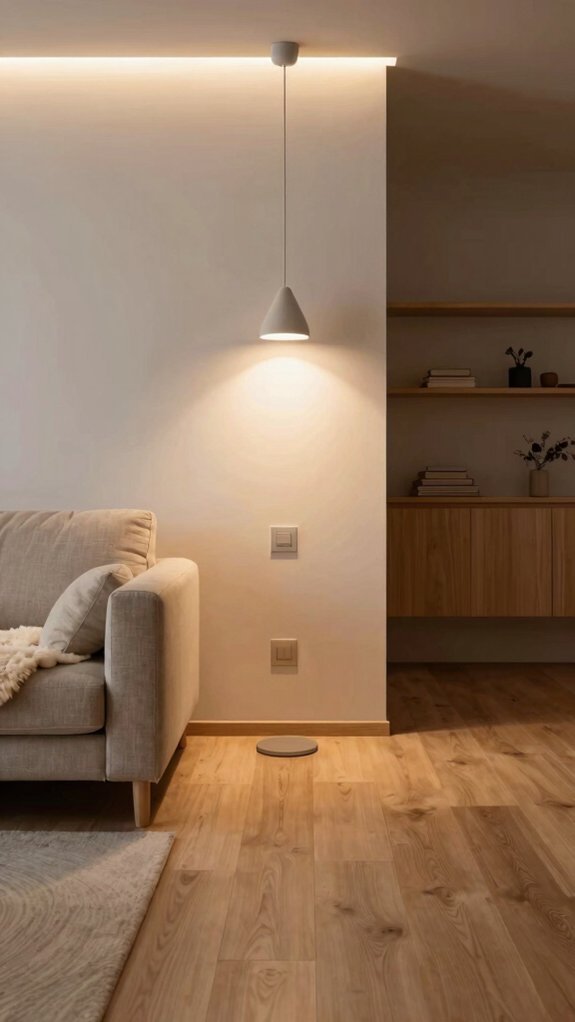
Dimmers represent the practical mechanism through which Scandinavian homes operationalize the seasonal and circadian adjustments discussed above. By installing dimmers on lighting fixtures throughout living spaces, residents gain granular control over illumination levels without replacing bulbs or fixtures. This flexibility enables seamless shifts between bright, energizing morning light and warm, subdued evening ambiance. Dimmers also reduce energy consumption and extend bulb lifespan. In Scandinavian design philosophy, this adaptability proves essential for managing the dramatic seasonal shifts in natural daylight. Quality dimmers ensure smooth, flicker-free dimming that maintains the aesthetic integrity of minimalist interiors while supporting occupant wellbeing and comfort year-round.