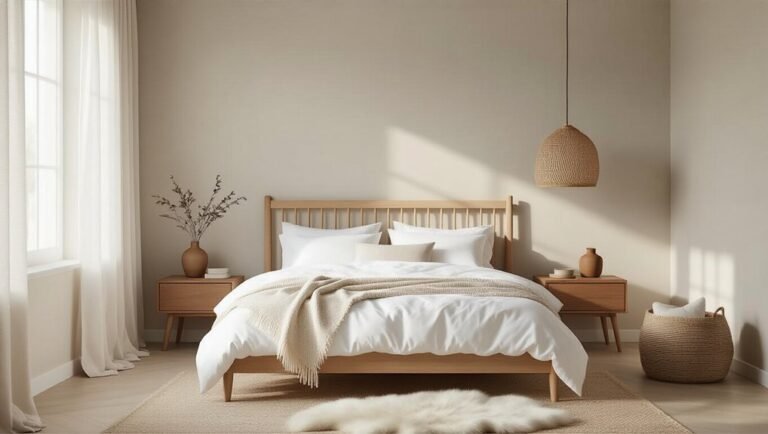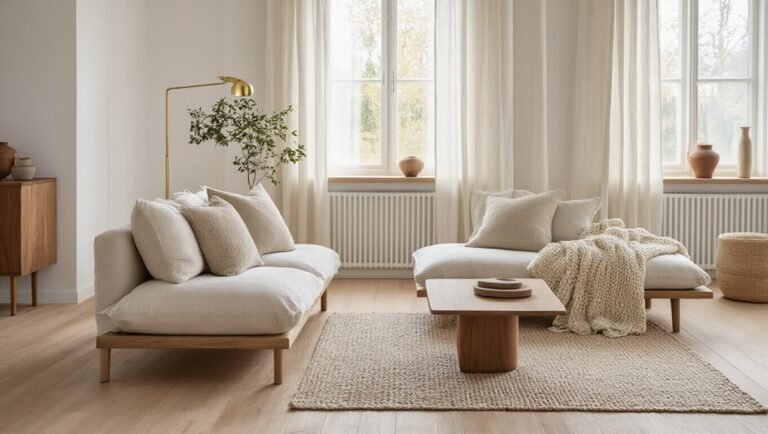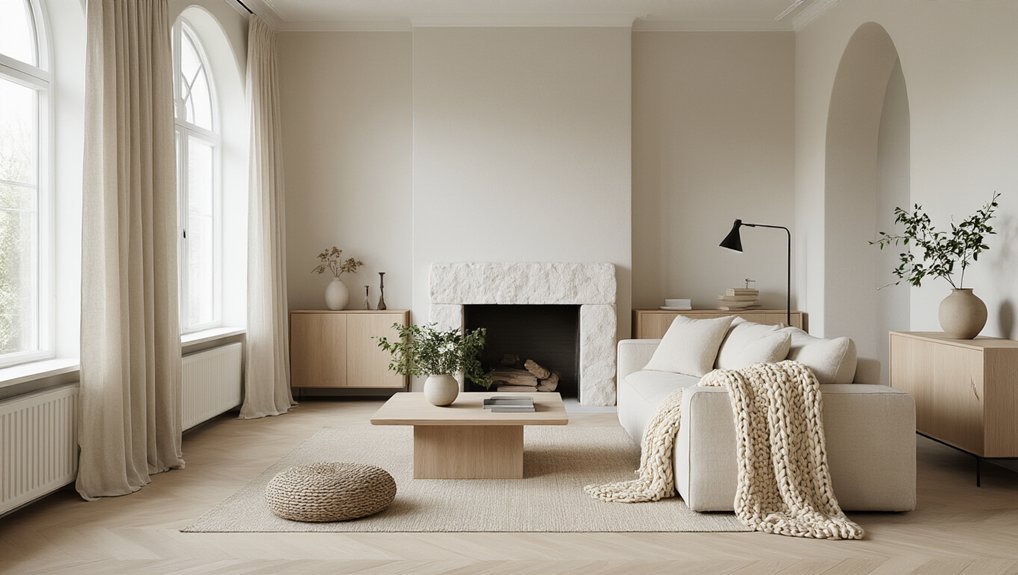
12 Scandinavian Interior Design Ideas for a Calm, Warm, Modern Home
What Makes Scandinavian Design Timeless
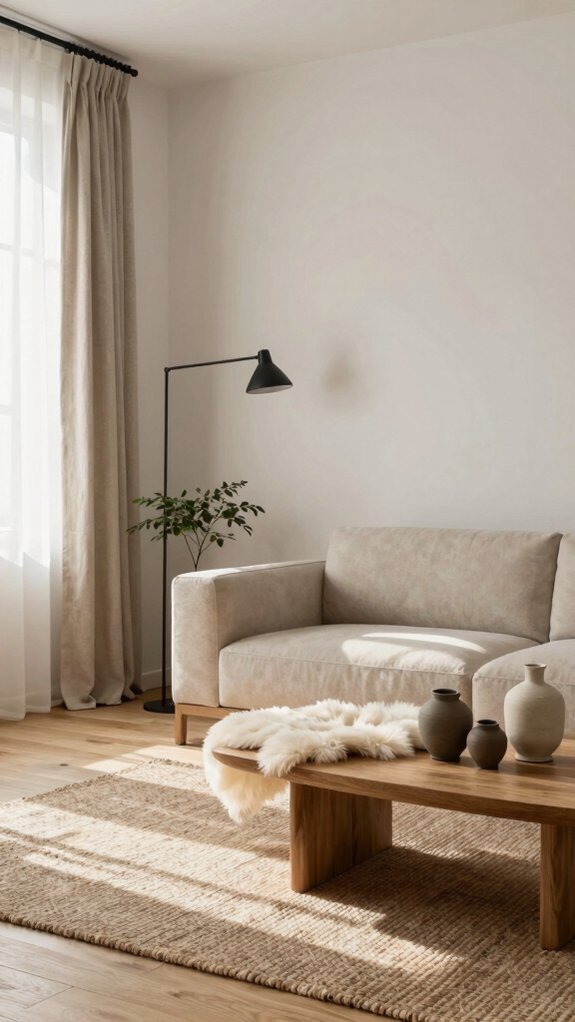
Why has Scandinavian design remained relevant for decades while trends come and go? The answer lies in its fundamental principles of functionality and simplicity. Scandinavian interiors prioritize purposeful design over ornamentation, creating spaces that adapt to evolving lifestyles. The aesthetic embraces hygge—a sense of warmth and coziness—through natural materials like light oak and ash wood, which age gracefully and maintain their appeal. Negative space plays a key role, preventing visual clutter and promoting mental clarity. This balance between comfort and minimalism, warmth and restraint, creates timeless environments that transcend seasonal design fads. The philosophy values longevity over novelty.
Build Your Foundation With Neutral Colors
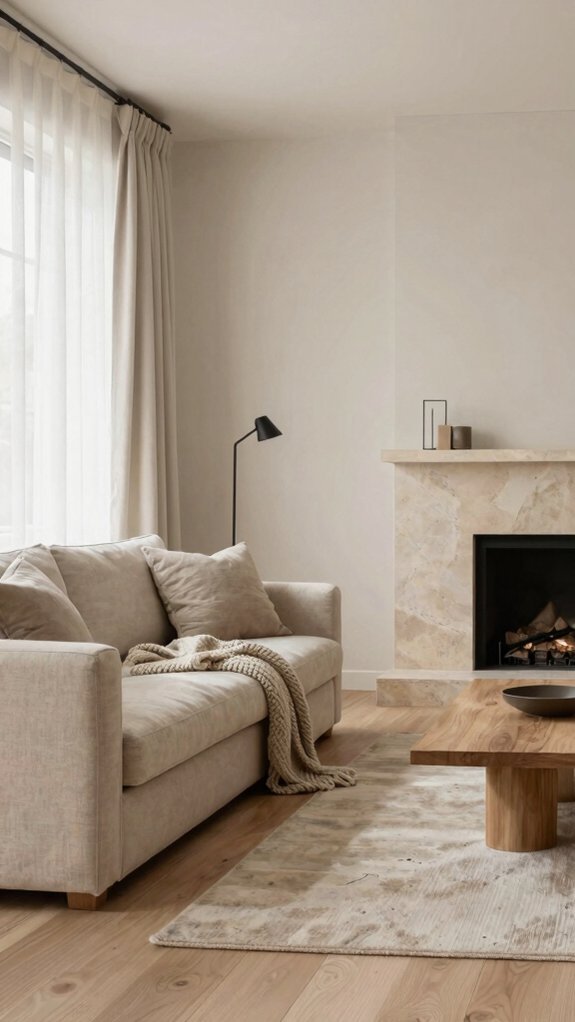
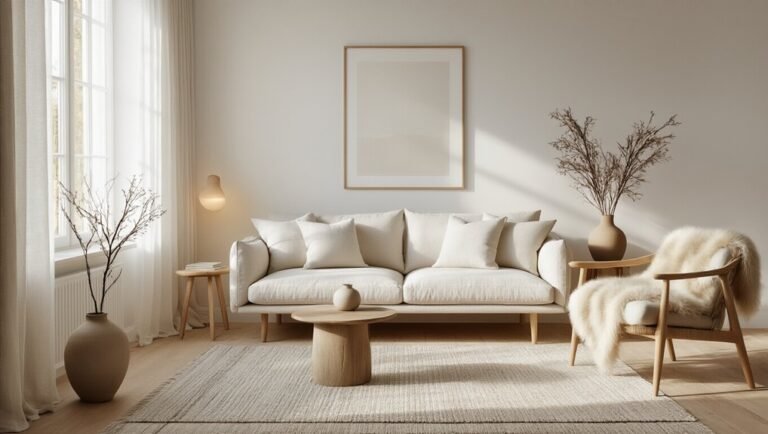
The timeless appeal of Scandinavian design rests on a deliberate color palette that serves as the backbone of any cohesive interior. A neutral palette of whites, grays, and beiges creates visual calm while allowing other design elements to shine. Off-white walls provide a clean canvas that reflects natural light, essential in Nordic climates with limited daylight hours. This foundational approach to Scandinavian design isn’t minimalist emptiness; rather, it establishes sophistication through restraint. Neutral tones reduce visual clutter, promote relaxation, and age gracefully without becoming trendy or dated. This strategic color foundation enables homeowners to introduce texture, wood tones, and carefully curated accents that define personal style while maintaining the serene aesthetic characteristic of Scandinavian interiors.
Layer Warmth Through Textures and Fabrics
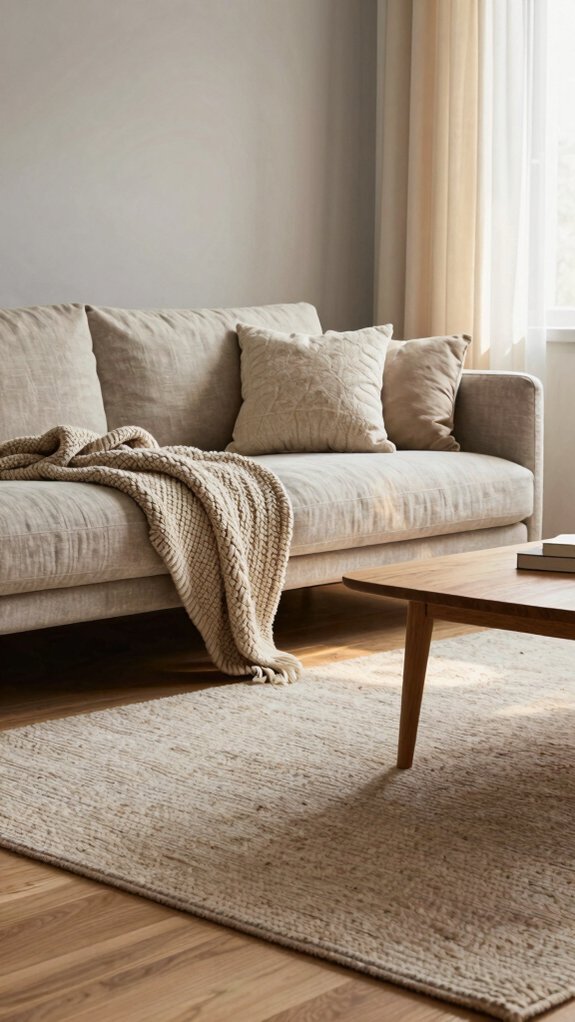
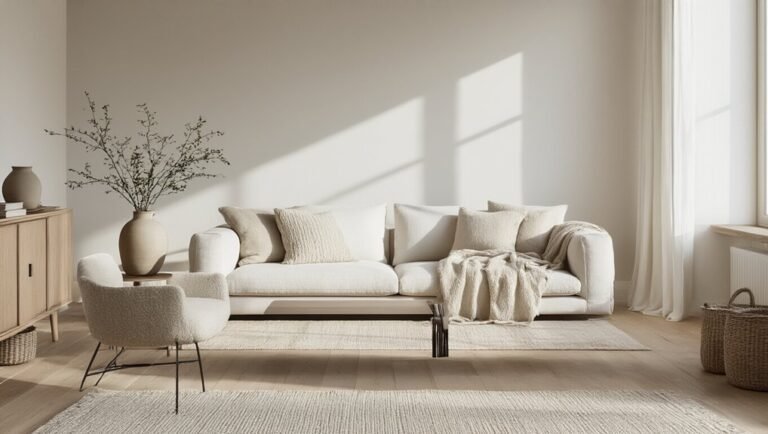
How does one transform a calm neutral palette into a genuinely inviting sanctuary? The answer lies in strategic layering of textiles and fabrics. Scandinavian design embraces this principle through thoughtfully selected materials that introduce warmth without compromising minimalist aesthetics. Soft wool throws draped over furniture, chunky knit blankets, and linen cushions create tactile depth. Natural fibers like sheepskin rugs and cotton upholstery add subtle comfort underfoot and on seating surfaces. This approach to layering textures prevents sterile environments while maintaining the clean lines characteristic of Nordic design. The result is spaces that feel both serene and genuinely welcoming.
Choose Furniture That Earns Its Place
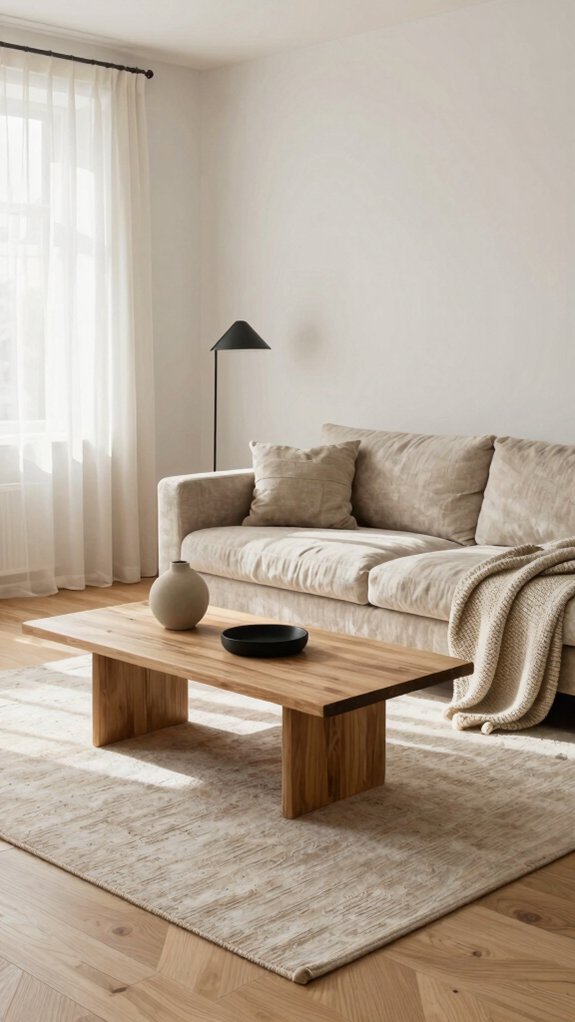
In Scandinavian interiors, every piece of furniture serves a deliberate purpose rather than merely filling space. This philosophy eliminates unnecessary clutter and promotes intentional living. Minimalist furniture selections emphasize clean lines and functional design, ensuring each item contributes meaningfully to the home’s aesthetic and usability.
Floating shelves exemplify this principle, providing storage without visual heaviness. Off-white toned pieces maintain the calm palette while offering practical solutions. Scandinavian designers prioritize quality over quantity, selecting versatile furnishings that adapt to evolving needs.
Multi-functional pieces, such as storage benches or nesting tables, maximize utility while maintaining visual simplicity. This curated approach creates uncluttered spaces that feel both sophisticated and livable.
Maximize Light as Your Best Design Tool
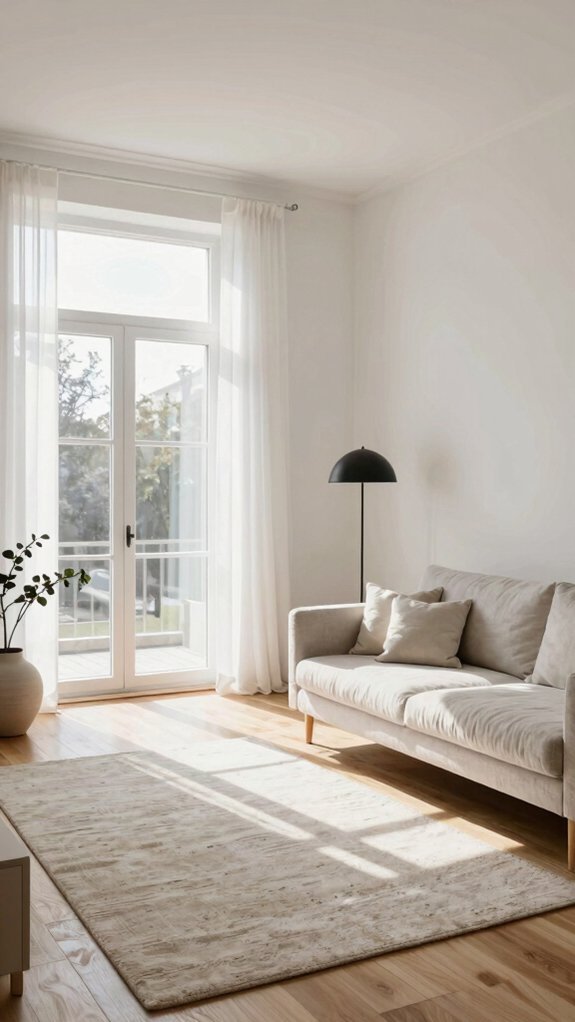
Why does light matter more in Scandinavian design than in other interior styles? Scandinavian interiors prioritize natural light as a fundamental design element, especially in regions with limited daylight hours. This philosophy emphasizes maximizing illumination through strategic window placement and minimal obstructions.
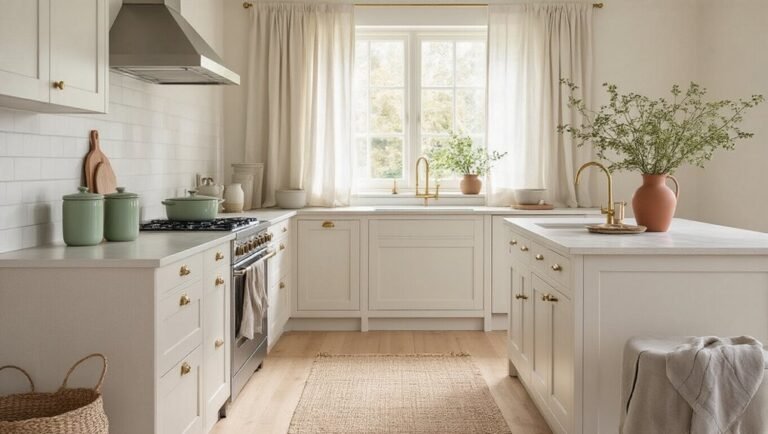
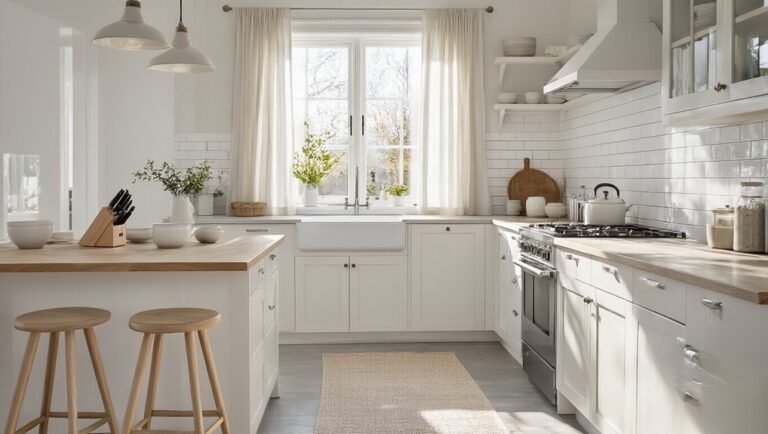
Open-plan layouts facilitate light distribution throughout spaces, while minimalism ensures uncluttered surfaces that reflect brightness effectively. Designers incorporate light-maximizing techniques like pale color palettes, reflective surfaces, and sheer window treatments. Artificial lighting complements natural sources through layered, warm fixtures that create ambient warmth.
Bring in Wood, Stone, and Natural Elements
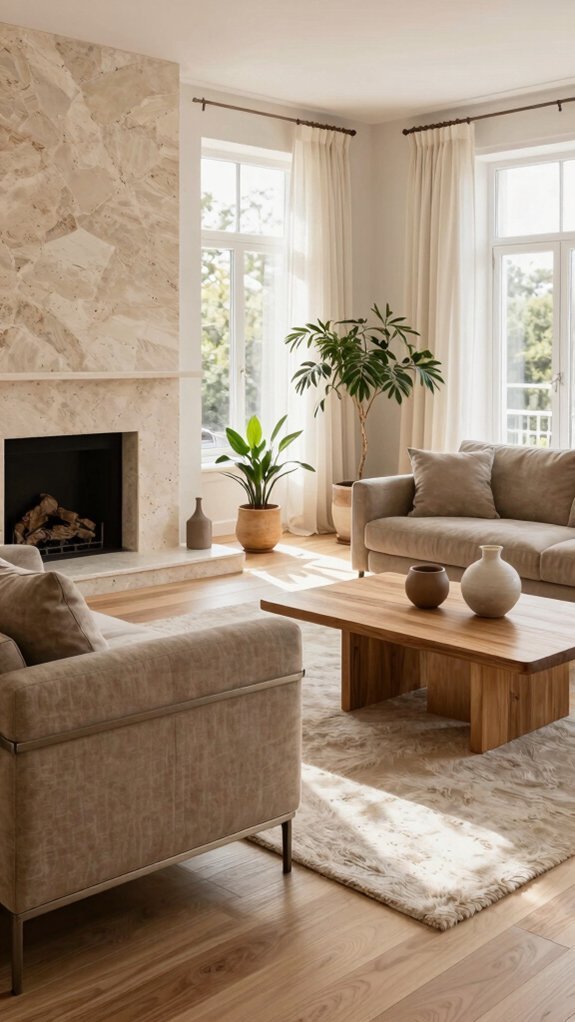
Natural materials form the tactile foundation of Scandinavian design, grounding interiors with authenticity and warmth. Wood serves as a primary element, appearing in furniture, flooring, and architectural features that showcase natural grain patterns and light finishes. Stone accents provide visual interest and durability through countertops, fireplaces, or accent walls. This minimalism approach emphasizes quality over quantity, allowing each natural material to breathe within carefully curated spaces.
Incorporating raw textures and organic elements creates a sensory connection to nature, essential to Scandinavian philosophy. These materials age gracefully, developing patina that enhances rather than diminishes their character and beauty over time.
Embrace Minimalism Without Feeling Cold
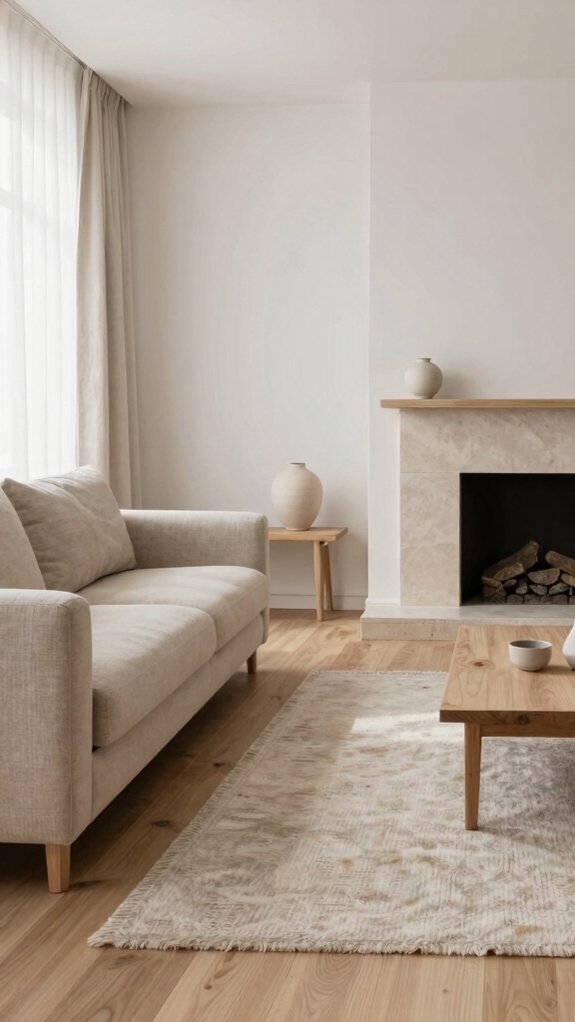
Scandinavian minimalism distinguishes itself through deliberate warmth rather than austere emptiness. Nordic minimalism prioritizes functional beauty by selecting fewer, higher-quality pieces that serve both aesthetic and practical purposes. Off-white walls and furnishings create a serene foundation while layered textures—wool throws, linen cushions, and natural wood surfaces—prevent spaces from feeling sterile. Pendant lighting with warm tones adds intimate ambiance without visual clutter. This approach strips away unnecessary elements while maintaining comfort and coziness. The result is uncluttered rooms that feel inviting rather than cold, proving minimalism need not sacrifice the human warmth essential to Scandinavian design philosophy.
Blend Hygge and Simplicity
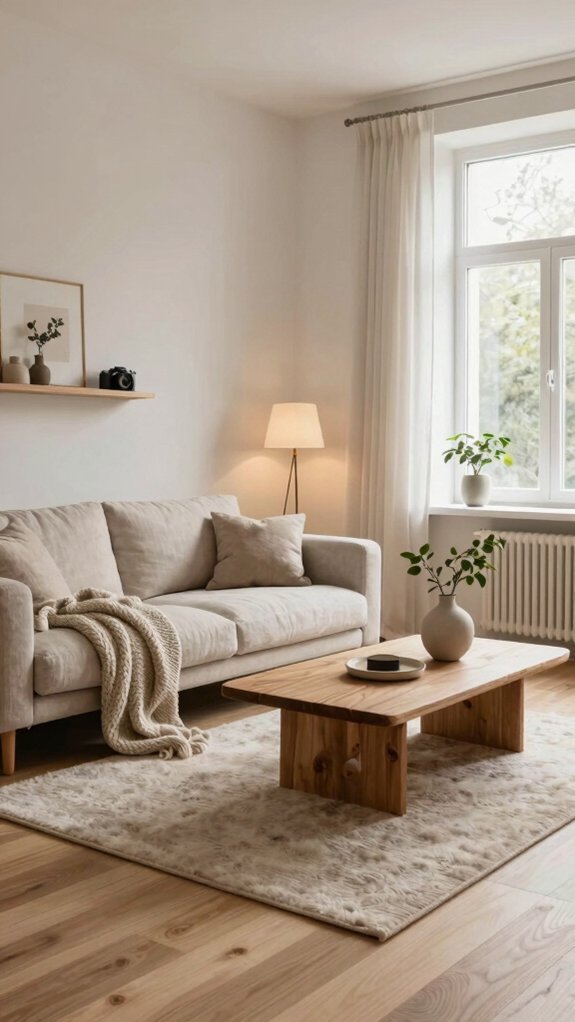
How does one cultivate warmth without surrendering to clutter? The answer lies in blending hygge with simplicity. Scandinavian interiors achieve this through off-white and alabaster palettes that create serene backdrops while maintaining coziness through layered textures—soft throws, natural wood, and ambient lighting. Open-plan living spaces eliminate visual barriers, allowing warmth to flow freely throughout. Statement greenery introduces life and connection to nature without overwhelming the minimalist framework. Plants serve dual purposes: they soften stark spaces and purify air. This balanced approach transforms homes into sanctuaries that feel both expansive and intimate, modern yet timeless, proving that calm aesthetics need not sacrifice comfort.
Light Fixtures That Work as Décor
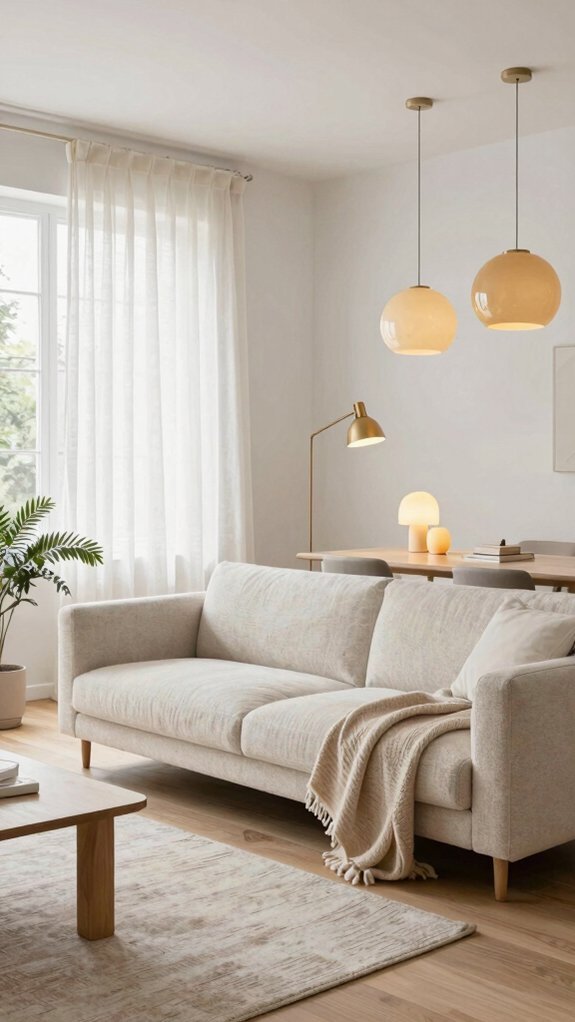
Why settle for functional lighting when fixtures can anchor a room’s aesthetic? Scandinavian design elevates lighting beyond mere illumination by selecting pieces that serve as sculptural focal points. Pendant lights with minimalist silhouettes in warm metals or natural wood complement neutral palettes effortlessly. Paper lanterns and dome shades diffuse light softly while maintaining visual interest. Floor lamps with clean lines become statement pieces in corner spaces. Track lighting offers flexibility without compromising design integrity. The key lies in choosing fixtures with thoughtful geometry and quality materials that harmonize with surrounding furnishings, transforming practical necessities into deliberate design choices.
Let Plants Soften Hard Edges
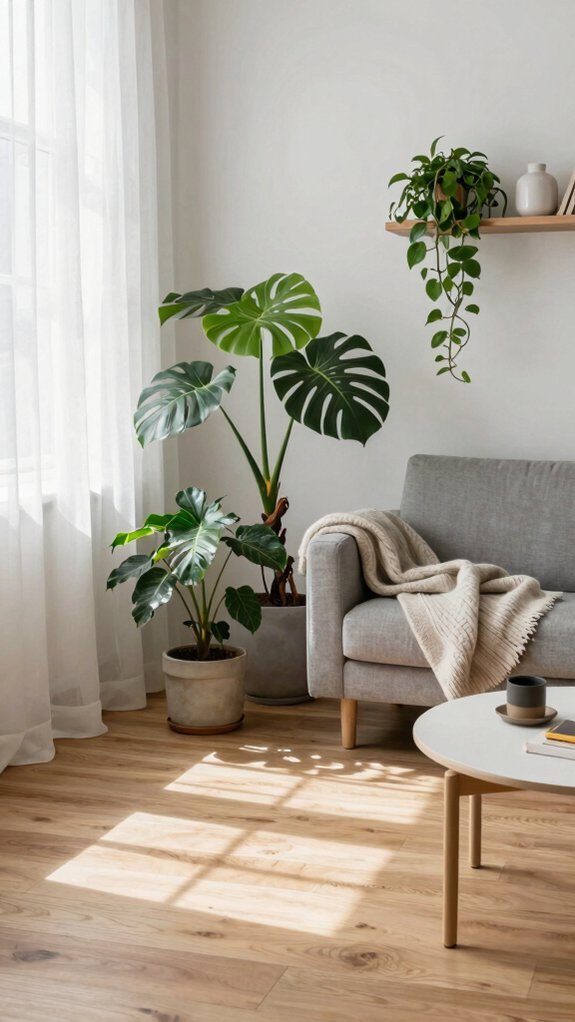
Plants introduce organic softness to interiors dominated by geometric furniture and clean lines. In Scandinavian design, greenery serves as a counterbalance to minimalist aesthetics, humanizing stark spaces with natural texture and movement. Potted plants positioned strategically around rooms—on shelves, windowsills, or corners—break up rigid angles while maintaining the style’s understated elegance. Low-maintenance varieties like snake plants, pothos, and monstera thrive in Nordic climates with minimal sunlight. The interplay between botanical forms and angular furnishings creates visual interest without sacrificing the calm, ordered atmosphere essential to Scandinavian interiors. Plants thus function as both functional décor and atmospheric enhancers.
Mix Heirloom and Modern Scandinavian Pieces
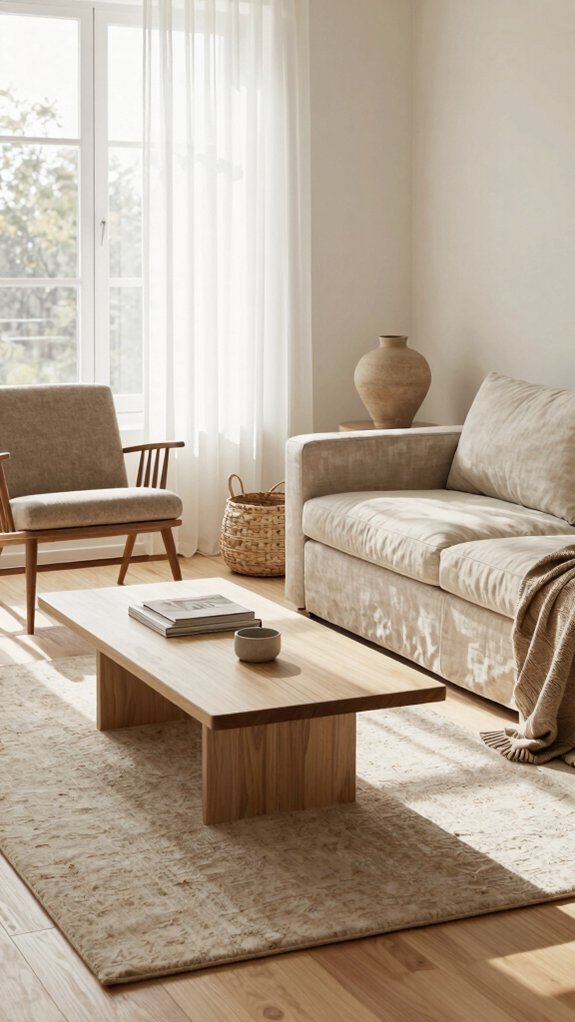
Blending vintage family pieces with contemporary Scandinavian furniture creates layered interiors that honor tradition while embracing modern minimalism. Heirloom items—antique wooden tables, inherited textiles, or vintage ceramics—introduce history and authenticity to neutral, clean-lined spaces. This approach prevents sterile aesthetics by anchoring rooms with personal narrative.
Mixing periods requires restraint; select heirlooms that complement muted palettes and functional design principles. A mid-century credenza pairs seamlessly with modern lighting; grandmother’s quilt drapes naturally over contemporary seating.
Combining old and new generates depth, warmth, and individuality within Scandinavian design’s serene framework, transforming functional spaces into homes rich with meaning.
Start Small: Transform One Room First
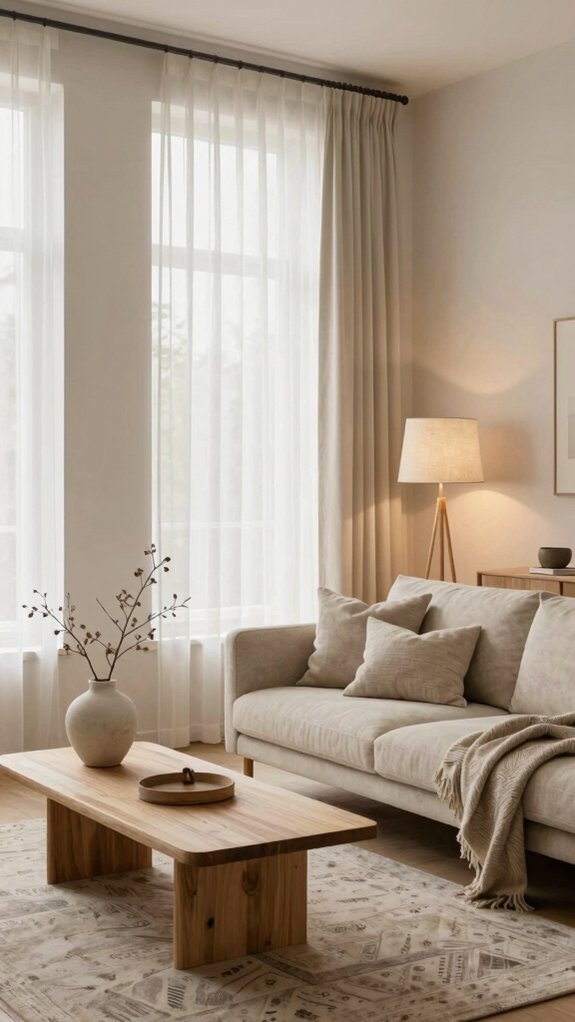
Rather than overhauling an entire home at once, adopting Scandinavian design principles in a single room allows for thoughtful experimentation and refinement. Selecting a bedroom or home office provides an ideal starting point, as these intimate spaces require fewer design elements and facilitate easier assessment of minimalist aesthetics. This approach enables residents to evaluate which design choices resonate personally before expanding to other areas.